
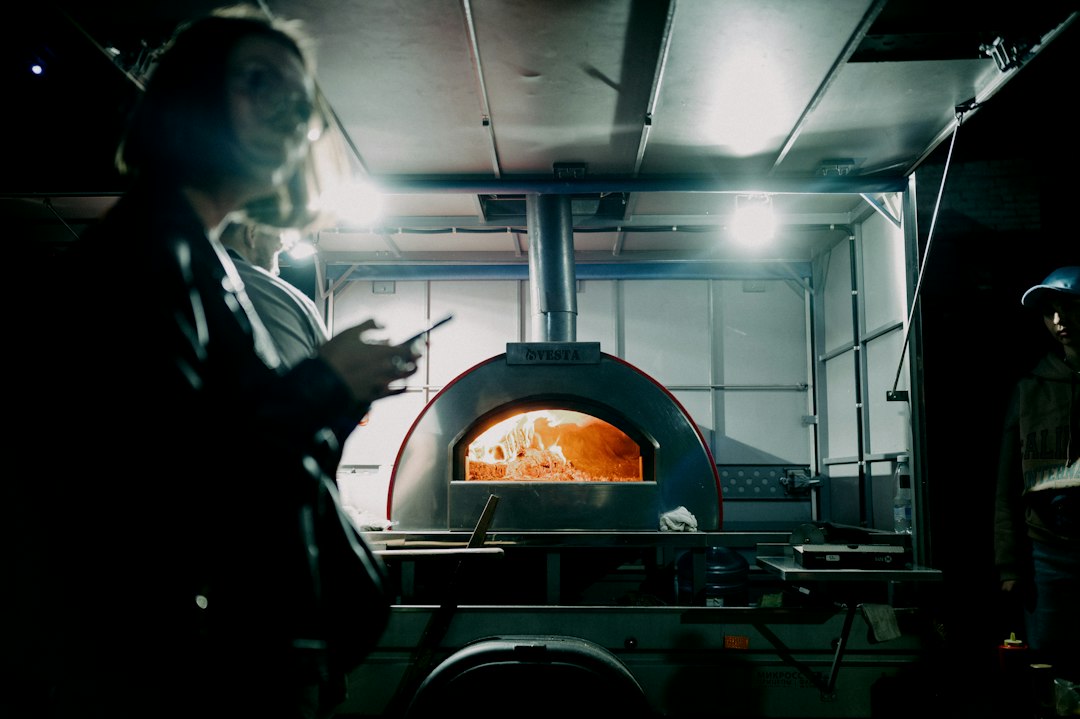
What to Do When a Commercial Oven Breaks Down
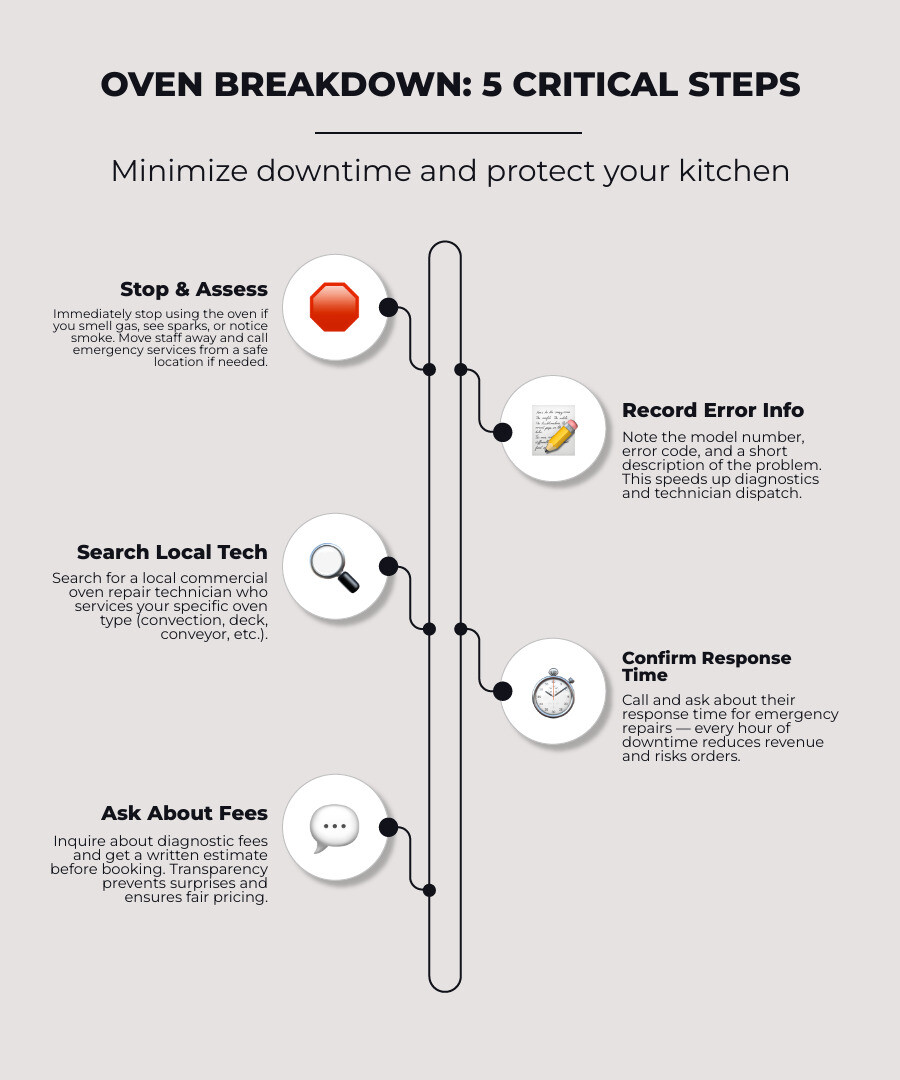
Stop using the oven if you smell gas, see sparks, or notice smoke. Move staff away and call emergency services from a safe location if you suspect a gas leak or fire. For other failures, search for a local commercial oven repair technician who services your oven type, confirm their response time, and ask about diagnostic fees before booking.
An oven or food warmer breakdown can slow service and put orders at risk. Have the model number, error code, and a short description of the problem ready when you call. According to the National Fire Protection Association, cooking equipment is a leading cause of commercial kitchen fires, making prompt professional attention essential.
I’m Vasyl Turetsky, founder and appliance repair specialist at iFix Appliances, where I diagnose and repair household ovens and ranges in the Raleigh area. If you’re searching for commercial oven repairs near me, this guide will help you find and vet a technician with experience on your specific kitchen equipment.
Commercial oven repairs near me helpful reading:
- commercial kitchen appliance repair
- The Essential Checklist for Restaurant Cooking Equipment Repair and Maintenance
- 5 Ways to Find Local Commercial Appliance Repair Like a Pro
Immediate Safety Protocols: Handling Gas Smells, Sparks, and Sudden Failures
When high-output cooking equipment malfunctions during a busy shift, safety takes precedence over ticket times. Operating compromised gas or high-voltage equipment poses real hazards to your staff and facility.
If you detect the sharp, sulfurous odor of unburned gas or see active electrical sparking, execute these emergency protocols immediately:
- Evacuate the Immediate Area: Instruct kitchen personnel to step back from the line. Do not attempt to ignite pilot lights, flip electrical switches, or plug/unplug adjacent appliances, as small electrical arcs can ignite ambient gas.
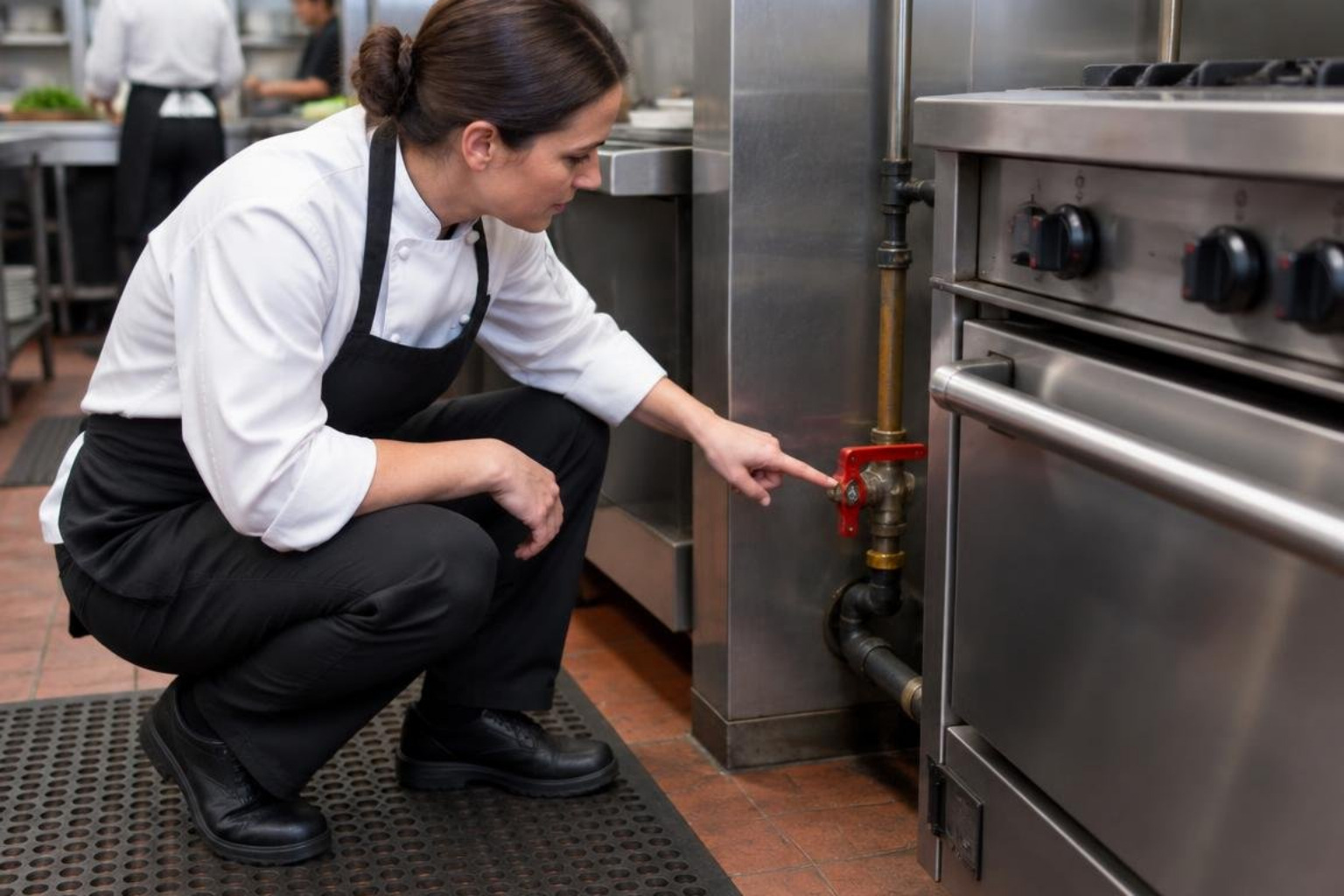
- Shut Off the Fuel Source: Locate the manual emergency gas shutoff valve located directly behind the appliance or at the main line manifold and turn the lever perpendicular to the pipe.
- Isolate Electrical Power: For electric deck ovens, combi units, or holding cabinets throwing visible sparks, locate your commercial breaker panel and trip the dedicated circuit breaker to cut current safely.
- Ventilate and Call Emergency Services: If gas odor persists after closing the manual valve, evacuate the building and contact your local emergency services or gas utility provider from outside the premises.
For structured safety standards and routine operational guidelines, reviewing The Essential Checklist for Restaurant Cooking Equipment Repair and Maintenance helps staff spot hazards before they escalate into structural threats.
Warning Signs of Imminent Equipment Breakdown
Equipment rarely fails without dropping hints first. Catching these early operational warnings prevents surprise mid-rush shutdowns:
- Temperature Instability and Thermal Drift: When baked items burn on one side while staying raw in the center, your heating elements, internal temperature sensors, or control boards are losing calibration. If you find your oven not heating properly, inspecting these components promptly is crucial.
- Loud Convection Fan Noise: Screeching, grinding, or rattling sounds typically signal worn motor bearings or unbalanced fan blades, which can quickly seize and overheat the drive motor.
- Damaged Door Gaskets: Brittle, cracked, or loose silicone and rubber door seals allow hot air to escape continuously, leading to undercooked food and overworked heating elements.
- Intermittent Ignition or Burner Flutter: Yellow, lifting, or delayed burner flames point to clogged burner ports, bad ignition modules, or improper gas pressure delivery.
Step-by-Step Emergency Triage Before Calling a Technician
Before reaching out to a service provider, completing a rapid 3-minute triage helps dispatchers send the right technician with the right replacement parts:
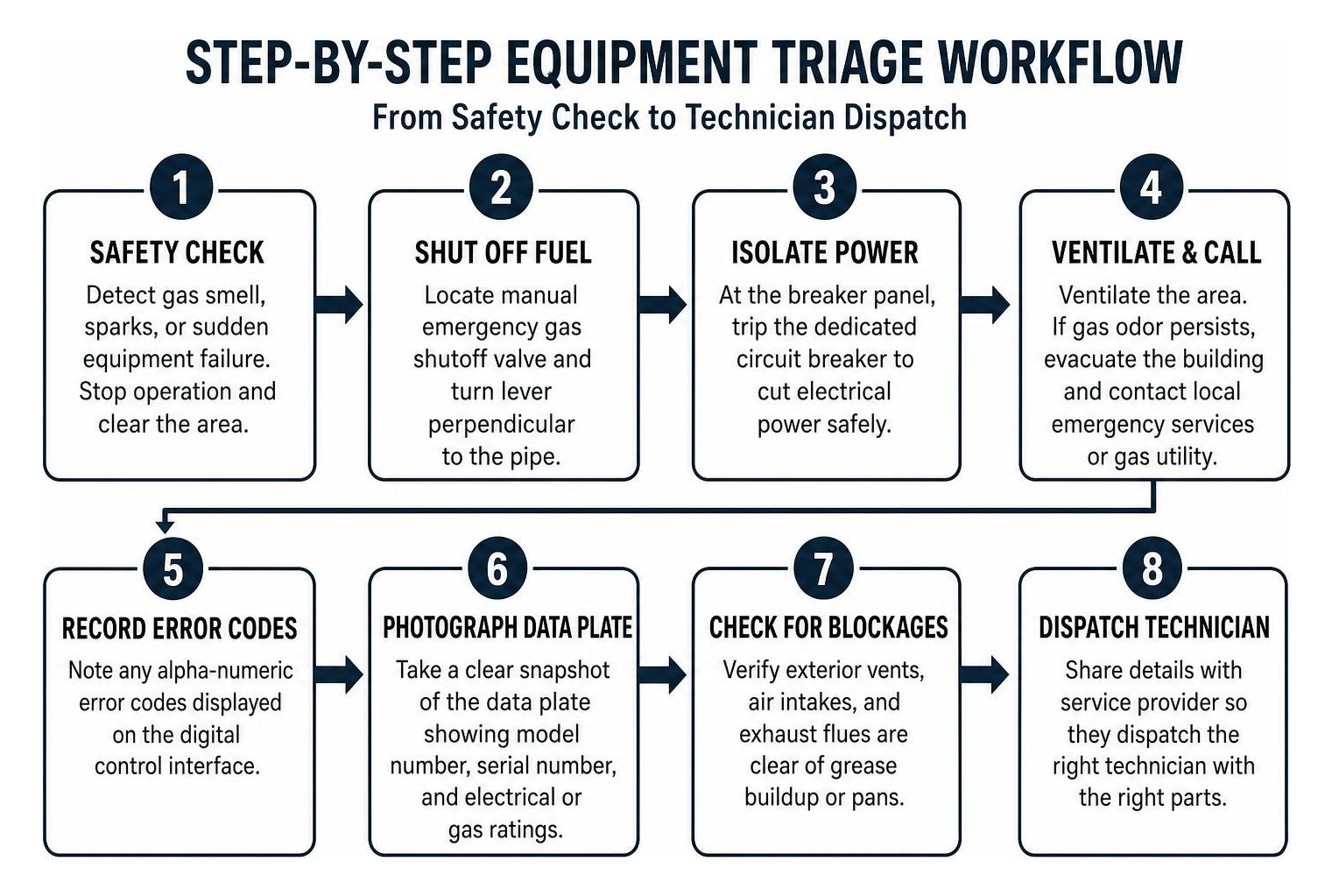
- Record Digital Error Codes: Note any alpha-numeric error codes displayed on the digital control interface (e.g., E01, F3, open sensor alerts).
- Photograph the Data Plate: Take a clear snapshot of the manufacturer’s data plate showing the exact model number, serial number, and electrical or gas rating specifications.
- Verify Obvious Physical Blockages: Ensure exterior ventilation louvers, combustion air intakes, and internal exhaust flue passages are completely clear of grease buildup or pans.
- Reorganize Prep Stations: Shift priority menu items to backup griddles, warmers, or secondary ranges to keep food service moving while service is dispatched.
Finding Reliable Commercial Oven Repairs Near Me for Critical Kitchen Equipment
Every hour a primary oven stays offline directly reduces ticket volume and revenue. When sourcing local repair support across areas like Raleigh, Cary, Durham, Apex, Chapel Hill, Morrisville, Wake Forest, and Garner, focus on technicians with demonstrated commercial experience, broad parts access, and fast emergency response times.
To streamline your search and identify trusted service partners, follow the strategies outlined in our guide on 5 ways to find local commercial appliance repair like a pro.
Key Questions to Ask When Searching for Commercial Oven Repairs Near Me
When vetting repair providers over the phone, ask targeted questions to ensure they can resolve your issue on the spot:
- “What is your typical emergency response time for commercial cooking line failures?”
- “Do your technicians carry common OEM elements, igniters, and safety valves in their service vans?”
- “What is your first-visit fix rate for commercial convection and deck equipment?”
- “Are your diagnostic fees applied directly toward the total cost of the approved repair?”
- “What specific parts and labor warranties do you provide on completed commercial repairs?”
A company that regularly requires multiple visits for basic component replacements adds unnecessary downtime. Working with established specialists provides the most effective solution for commercial kitchen appliance repair when time is critical.
Commercial Oven and Food Warmer Types Covered by Repair Services
Commercial foodservice operations use diverse heating equipment designed for distinct cooking methods. The table below details primary failure modes and repair priorities across common commercial units:
| Equipment Type | Primary Function | Common Failure Points | Repair Urgency Level |
|---|---|---|---|
| Convection Ovens | High-volume baking & roasting | Blower motor failure, heating elements, door seals | High (Stops core production) |
| Deck & Pizza Ovens | Direct stone deck heat transfer | Cracked baking stones, safety valves, pilot assemblies | Critical (High thermal load risk) |
| Conveyor Ovens | Continuous pass-through baking | Drive motor burnout, speed controller, gear chains | Critical (Halts automated line flow) |
| Combi Steamers | Steam and convection cooking | Boiler scale buildup, steam injectors, drain valves | High (Complex digital/water systems) |
| Salamander Broilers | Finishing, melting, & browning | Infrared burner tiles, gas regulator, thermocouple | Medium (Secondary line bottleneck) |
| Industrial Food Warmers | Safe-temp hot holding (>140°F) | Calrod heating units, humidity pans, thermostat dials | Critical (Health code compliance) |
Understanding these operational differences ensures dispatchers allocate the right components on the first trip, whether resolving an uncalibrated warmer or an industrial baking range. You can also review our dedicated oven stove repair resources for additional breakdown insights.
What to Expect During a Professional Commercial Oven Repair Visit
A professional service call should follow a structured, transparent process designed to get your kitchen back up and running with minimal disruption:
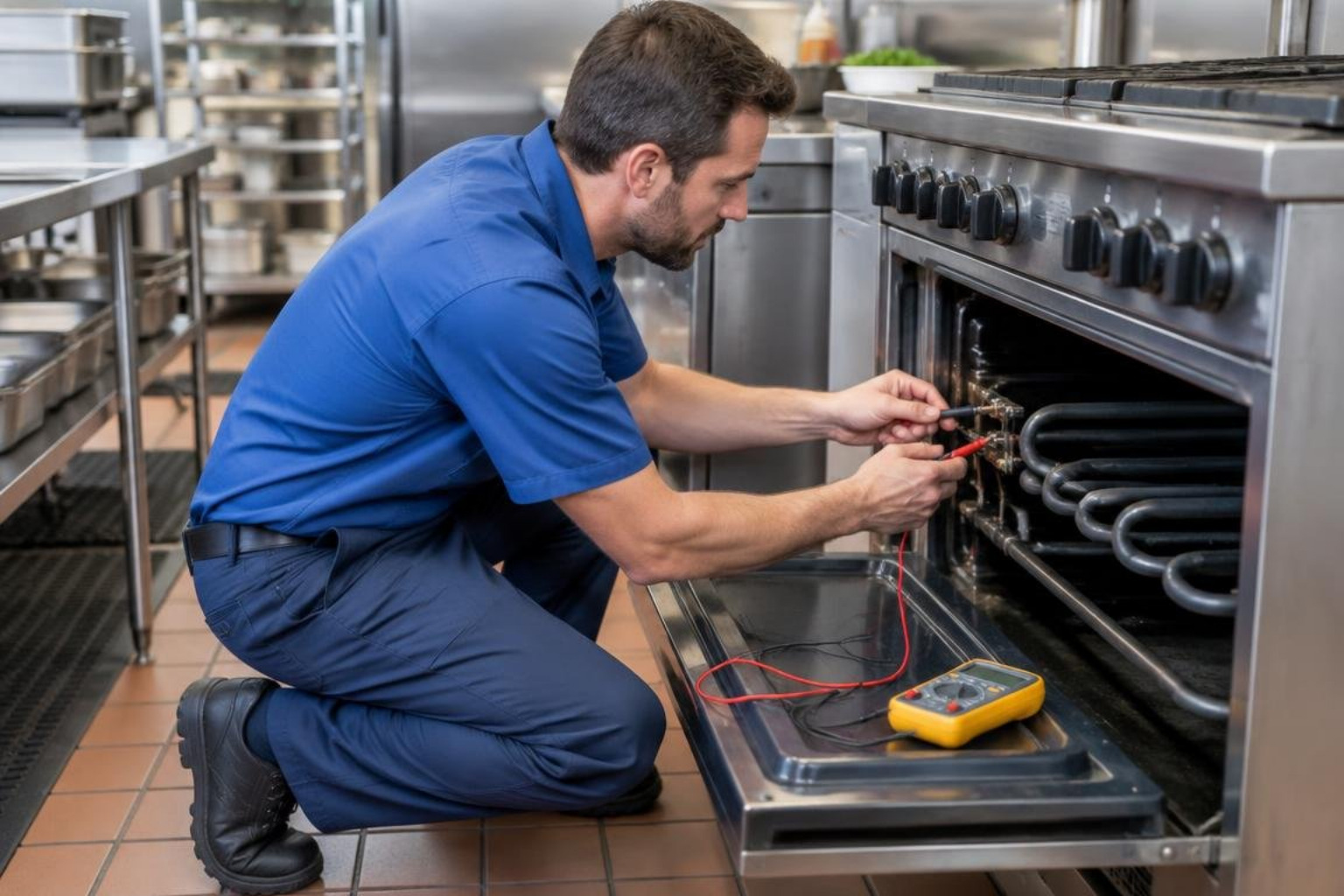
- Comprehensive Safety Check & Diagnostics: The technician begins by verifying gas line pressures, inspecting wiring harnesses, and testing electrical current loads using digital multimeters to confirm supply voltage stability.
- Component-Level Testing: Technicians systematically isolate thermostats, thermal fuses, solid-state relays, spark modules, and high-limit switches to identify the root cause rather than guessing.
- Transparent Estimate Delivery: Before replacing parts, the technician should explain the failure, present the necessary repairs, and outline all parts and labor costs clearly.
- OEM Part Installation & Calibration: Defective parts are replaced with OEM components, followed by temperature recalibration against factory specifications.
- Post-Repair Functional Testing: The unit runs through a complete heating cycle under load to verify proper burner ignition, steady convection airflow, and consistent thermostat cycling.
Warranties on Commercial Parts and Labor
Reputable repair providers back their workmanship. Quality replacement components should come with manufacturer-backed warranties—frequently ranging from 90 days up to 1-year coverage on select commercial components—alongside clear guarantees on diagnostic labor.
Always keep repair invoices and service receipts organized. Clear documentation simplifies future warranty claims and ensures compliance during local health and fire safety inspections.
Same-Day vs. Scheduled Service: Weighing the Costs
Unplanned equipment downtime costs significantly more than the price of a technician’s visit. Consider these real business impacts:
- A single mid-rush oven breakdown can trigger hundreds or thousands of dollars in lost orders, comped meals, and negative guest reviews.
- Emergency after-hours callouts often carry premium rates compared to standard scheduled visits.
- Routine semi-annual inspections cost a fraction of an emergency service call, parts expediting, and lost capacity during peak hours.
To keep your entire kitchen operating reliably alongside your cooking appliances, explore our guide to the commercial kitchens lifeline catering fridge repairs explained for end-to-end operational planning.
Preventive Maintenance Strategies to Eliminate Future Downtime
Consistent preventive maintenance keeps commercial equipment running efficiently while avoiding costly emergency service calls.
Incorporate these core practices into your kitchen’s daily and seasonal routines:
- Daily End-of-Shift Interior Cleaning: Remove crumb trays, scrape baked-on grease from cavity walls, and wipe down stainless steel surfaces. Grease accumulation restricts interior airflow and creates a persistent fire risk.
- Weekly Door Gasket Inspections: Inspect perimeter seals for rips, hardening, or food debris. Clean seals with mild, food-safe warm soapy water to preserve elasticity and maintain an airtight door fit.
- Monthly Blower Fan & Vent Clearing: Vacuum external intake louvers, motor housings, and exhaust cooling fans. Dust and grease buildup causes drive motors to overheat and fail prematurely.
- Bi-Annual Professional Safety Checks: Schedule formal preventative maintenance visits twice per year. A qualified technician will clean burner orifices, check electrical contactors, test microswitches, and calibrate thermostats.
For a deeper dive into extending commercial kitchen equipment lifespan, check out our commercial cooking equipment repair guide for busy restaurant owners along with our article on serving up solutions for your commercial food service equipment repair needs.
Frequently Asked Questions About Commercial Kitchen Repairs
Where Can I Book Immediate Commercial Oven Repairs Near Me for Same-Day Service?
Local appliance repair companies offering emergency dispatch often provide same-day booking windows for critical kitchen failures. When scheduling, provide your complete unit model number, describe active symptoms, and specify whether you are running natural gas, LP, or dedicated high-voltage electric lines to expedite technician dispatch.
What Should I Have Ready Before the Technician Arrives?
Have the following items prepared to speed up diagnosis:
- A clear, unobstructed workspace around the equipment.
- The unit’s exact model and serial numbers (take a photo of the data plate).
- Any digital error codes observed prior to system shutdown.
- A concise summary of when the issue started (e.g., during preheat, after heavy cleaning, or midway through service).
Can a Broken Door Gasket Cause Uneven Cooking in Commercial Ovens?
Yes. A torn, brittle, or misaligned gasket allows heated air to escape constantly around the door perimeter. This drops overall thermal efficiency by up to 30%, forces heating elements to run continuously, creates cool spots in the front corners, and leads to unevenly baked or roasted dishes.
Conclusion
A sudden breakdown of your commercial oven or holding warmer can halt kitchen production, but quick and structured action helps protect your staff, minimize food waste, and restore cooking capacity. By following clear safety protocols, recording critical diagnostic details, and maintaining regular preventive care, you can eliminate unexpected downtime throughout the year.
If you also need to schedule your commercial refrigerator service before food spoils or require skilled diagnostic support, iFix Appliances delivers dependable service across Raleigh, Cary, Durham, Apex, Chapel Hill, Wake Forest, and surrounding Triangle communities. Discover our full selection of residential and light-commercial support by visiting our dedicated Commercial Appliance Repair page to get your appliances back in working order.

0 Comments