
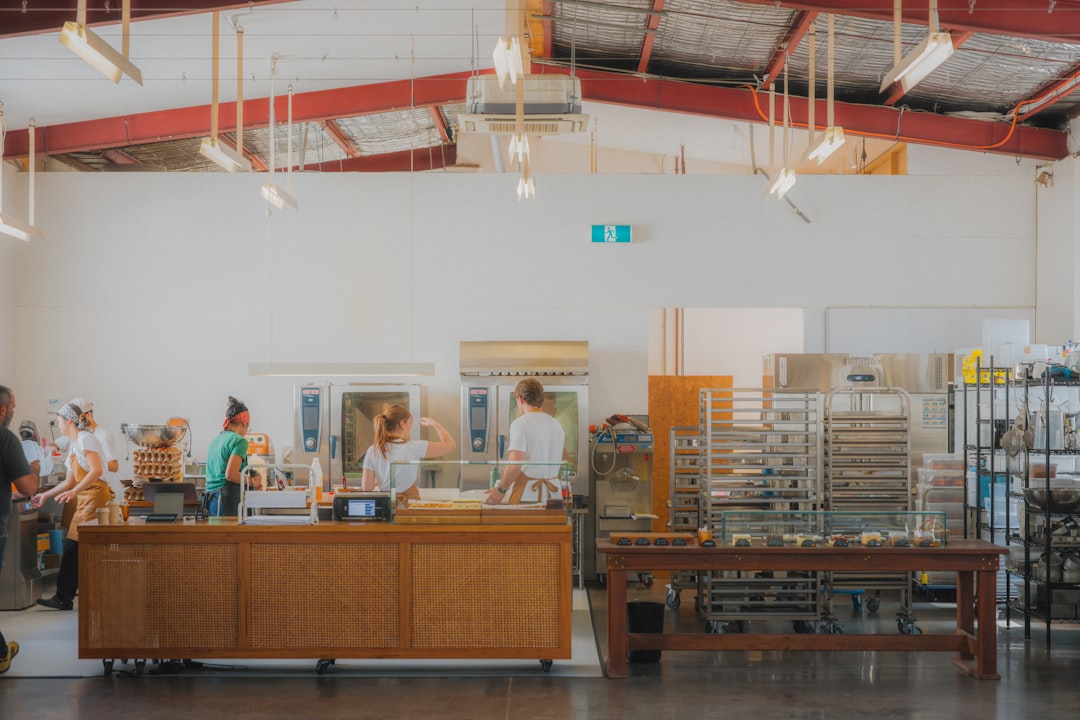
When Your Catering Fridge Fails, Every Minute Costs You Money
Catering fridge repairs are urgent — a broken commercial fridge can mean spoiled stock, health code violations, and lost revenue within hours.
Quick answer: What should you do when a catering fridge breaks down?
- Stop using the unit and move perishables to a working fridge or insulated storage immediately
- Check the basics — power supply, thermostat settings, and door seals
- Call a certified commercial refrigeration technician as soon as possible (look for F-Gas certified or EPA-compliant engineers)
- Document the fault — note any unusual sounds, error codes, or temperature readings to help the technician diagnose faster
- Don’t attempt DIY repairs on commercial refrigeration — it can void warranties and cause further damage
The stakes in a commercial kitchen are high. Refrigeration failures can cost businesses thousands of dollars in lost food inventory alone — and that’s before factoring in downtime, emergency sourcing, and potential food safety compliance issues.
Unlike a fridge at home, a catering unit runs hard, often around the clock, in hot and greasy kitchen environments. When it goes down, your whole operation can grind to a halt.
This guide covers everything you need to know — from diagnosing the most common faults to choosing the right repair service and keeping your equipment running year-round.
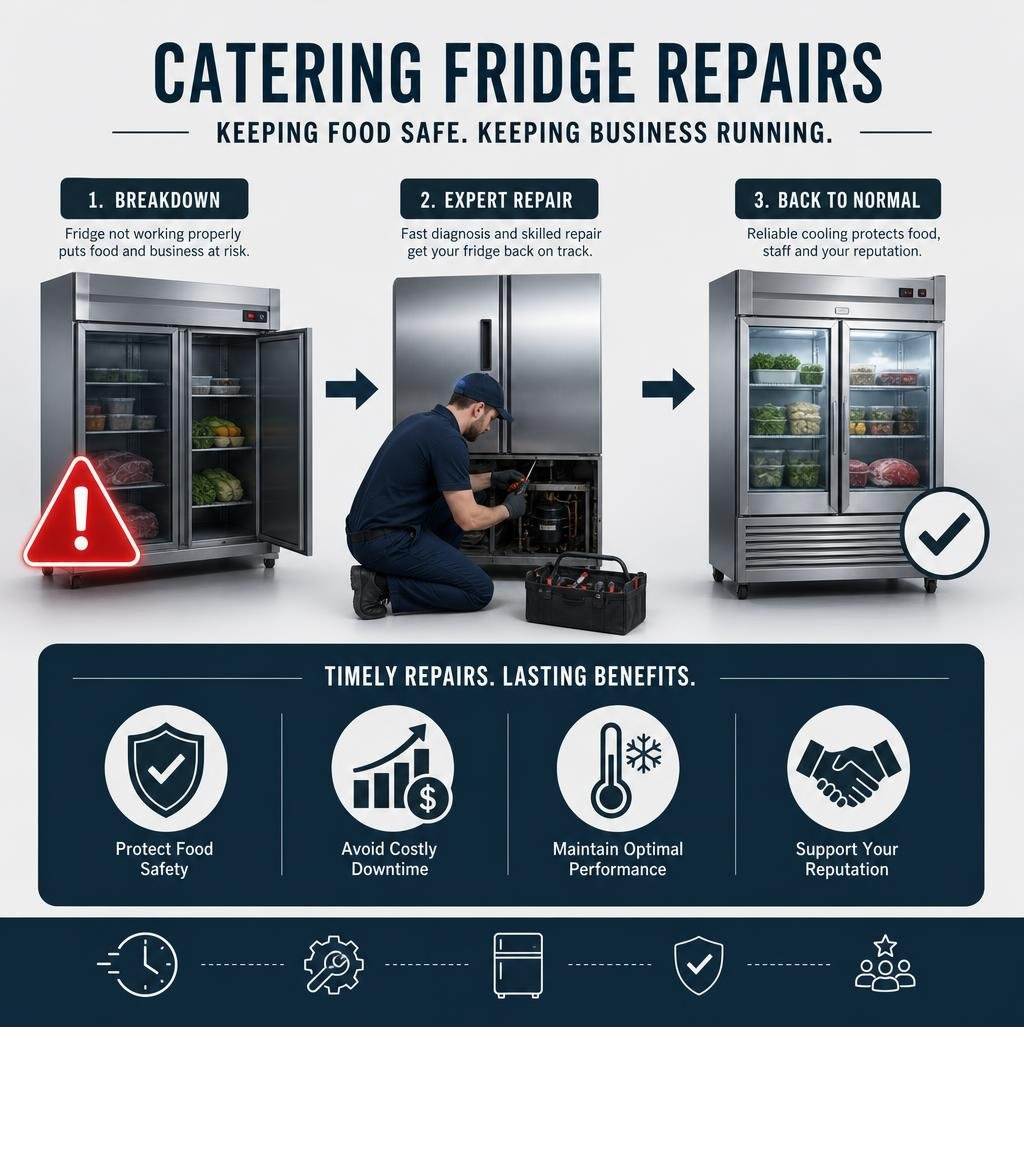
Why Prompt Catering Fridge Repairs Save Your Business Money
In the high-speed world of the foodservice industry, your refrigeration systems are the silent champions of your bottom line. When a commercial cooler starts acting up, ignoring the warning signs is a recipe for financial disaster.
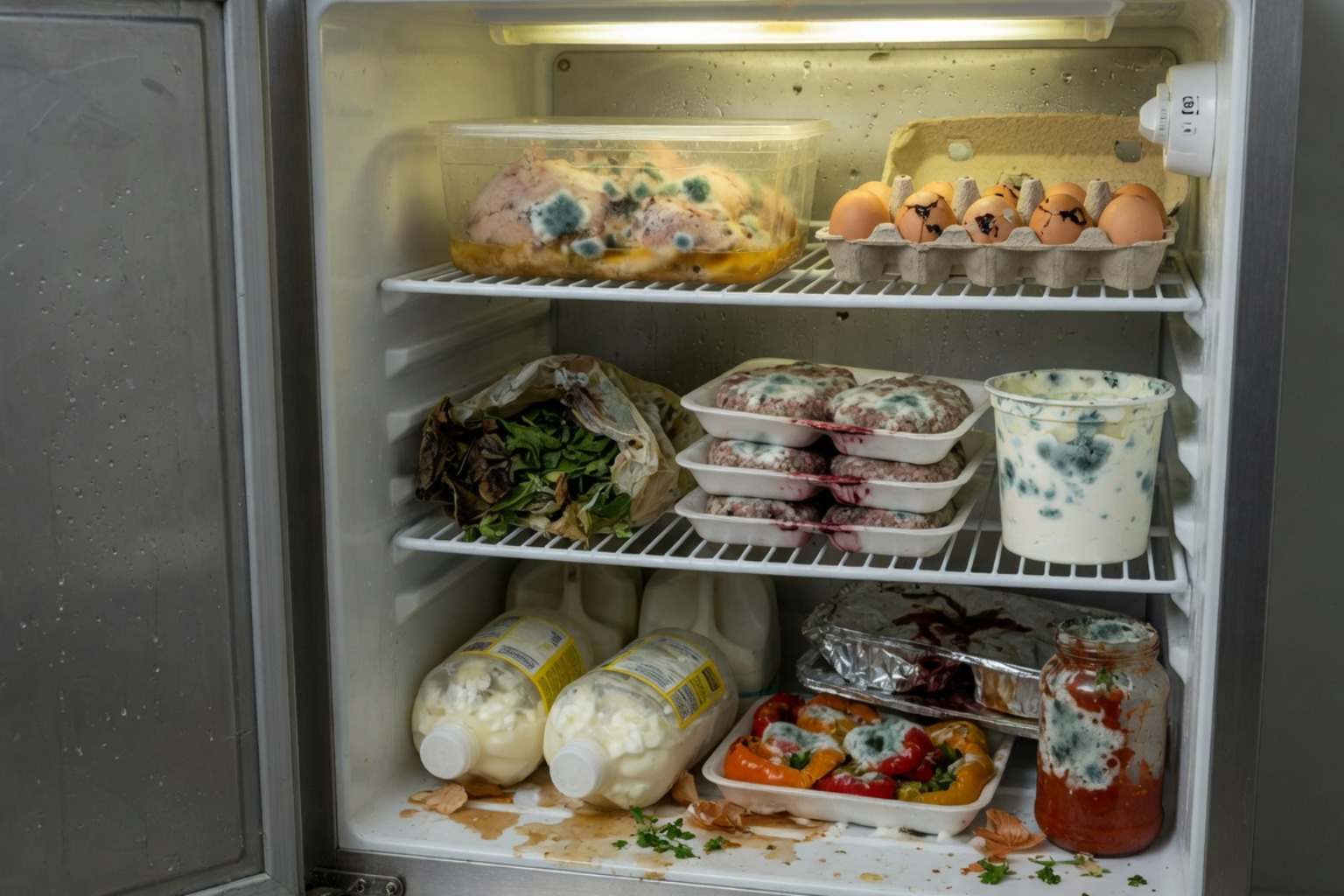
Every hour that a commercial refrigerator operates outside its safe temperature zone increases the risk of food spoilage. Under strict local health regulations in North Carolina, food stored above 41°F (5°C) must be discarded if it remains in the danger zone for more than two hours. If a health inspector walks in during a cooling failure, your business could face severe compliance penalties, negative reviews, or even temporary closure.
Promptly addressing refrigeration issues does more than just prevent food waste. A struggling refrigerator draws significantly more electricity as its compressor works overtime to keep temperatures down. By scheduling immediate commercial appliance repair, you protect your stock, keep your utility bills from skyrocketing, and avoid the massive cost of emergency food inventory replacement.
Common Equipment Requiring Catering Fridge Repairs
Commercial kitchens rely on a diverse fleet of cooling equipment, each designed for specific culinary tasks. When things go wrong, you need a service provider capable of handling all of them:
- Walk-In Coolers and Freezers: The heavy-duty storage rooms of any large restaurant. Because they hold the bulk of your inventory, a breakdown here is an absolute emergency.
- Reach-In Fridges and Freezers: These upright cabinets are the workhorses of the prep line, opened and closed hundreds of times a day.
- Display Units and Merchandisers: Commonly used in bakeries, cafes, and grab-and-go spots to showcase food while maintaining safe holding temperatures.
- Prep Counters (Pizza and Salad Prep Tables): These units keep ingredients cold and accessible right on the cooking line, where ambient temperatures are at their highest.
- Bottle Coolers and Bar Refrigeration: Under-counter units designed to keep beverages perfectly chilled in high-volume bar environments.
- Blast Chillers: Specialized systems engineered to rapidly drop the temperature of hot food to safe storage levels, protecting texture and preventing bacterial growth.
Key Differences Between Domestic and Catering Fridge Repairs
It is a common misconception that a refrigerator is just a refrigerator. In reality, residential units and commercial catering systems are entirely different beasts. Attempting to apply domestic repair techniques to commercial systems can result in costly mistakes.
Commercial kitchens are harsh environments. They are filled with airborne grease, flour dust, and high ambient heat from ovens and ranges. Catering fridges are engineered with heavy-duty compressors, larger condenser coils, and high-velocity fans to handle these extreme conditions. They also feature rapid temperature recovery systems to counteract the constant opening and closing of doors during a busy dinner service.
| Feature | Domestic Refrigeration | Commercial Catering Refrigeration |
|---|---|---|
| Usage Intensity | Opened 10–20 times a day in a climate-controlled home. | Opened hundreds of times a day in a hot, humid kitchen. |
| Environmental Hazards | Minimal dust; virtually no airborne grease. | High grease exposure, flour dust, and extreme ambient heat. |
| Cooling Capacity | Moderate; slow temperature recovery. | High; rapid temperature recovery to maintain food safety. |
| Refrigerants & Controls | Standard residential gases; simple mechanical thermostats. | High-pressure commercial refrigerants; complex digital controllers. |
| Maintenance Needs | Low; occasionally cleaning dust off the back. | High; professional servicing required every 3 to 6 months. |
Diagnosing Common Commercial Refrigeration Failures
To keep your kitchen running smoothly, it helps to understand what goes on behind the stainless steel panels. When a system fails, our technicians focus on a root-cause analysis rather than simply treating the symptoms.

Commercial refrigeration relies on a delicate balance of electrical, mechanical, and chemical components. The most common failures we encounter include:
- Compressor Failure: The compressor is the heart of the refrigeration cycle. If it overheats, locks up, or suffers electrical failure, the unit will stop cooling entirely.
- Thermostat and Controller Issues: Modern catering fridges use digital controllers to manage defrost cycles and maintain precise temperatures. A faulty sensor or control board can cause the unit to freeze your lettuce or let your meat warm up.
- Evaporator Coil Icing: If the defrost heater fails or airflow is restricted, ice will build up on the evaporator coils, insulating them and preventing heat exchange.
For complex issues, seeking professional diagnostics through our dedicated commercial appliance repair page ensures your system is evaluated safely and accurately.
Troubleshooting Temperature Fluctuations and Cooling Issues
If your commercial unit is running but struggling to maintain the correct temperature, you may be dealing with restricted airflow or dirty components.
First, check the internal loading of the unit. Stacking boxes too close to the evaporator fans blocks the circulation of cold air, creating warm spots. Second, inspect the condenser coils. In a busy kitchen, these coils quickly become caked with grease and dust, preventing the system from releasing heat.
If cleaning the coils doesn’t resolve the problem, the issue could be a failing evaporator fan motor or a miscalibrated temperature sensor. For a deeper dive into why your unit isn’t holding its temperature, read our guide on what to do when your refrigerator is not cooling.
Fixing Refrigerant Leaks and Door Seal Problems
Two of the most frequent culprits behind temperature loss are refrigerant leaks and worn door seals.
Refrigerant leaks not only ruin your food but also harm the environment and violate federal environmental standards. In the United States, commercial systems must comply with EPA Section 608 regulations regarding refrigerant management. (Similarly, international standards such as the UK’s F-Gas regulations emphasize strict compliance for handling fluorinated greenhouse gases, as noted by industry specialists like Northern Catering Equipment and Walker Catering Supplies). If your unit is low on refrigerant, a technician must perform pressure testing and leak detection before adding more gas.
Door gaskets are another critical point of failure. Over time, grease and constant slamming cause gaskets to split, tear, or lose their magnetic pull. This allows warm, humid kitchen air to seep into the cabinet, causing rapid frost buildup and forcing the compressor to run constantly. Replacing damaged gaskets is a quick, cost-effective way to restore efficiency. If you suspect your unit has a leak or a bad seal, check out our comprehensive options for refrigerator repair to get it resolved.
What to Expect from Professional Repair Services
When you call in the professionals, you aren’t just paying for a quick fix; you are investing in the continuity of your business.
A reputable commercial repair service understands that time is money. That is why we focus on rapid dispatch and high first-time fix rates. Industry-leading standards show that top-tier commercial repair services maintain an 80% first-call completion rate and average response times that are 25% faster than competitors. In fact, with a fully stocked service vehicle, up to 90% of all common callouts can be resolved on the very first visit.
If your commercial freezer is the source of your kitchen headache, you can learn more about specialized solutions through our freezer repair service.
Technician Qualifications and Certifications
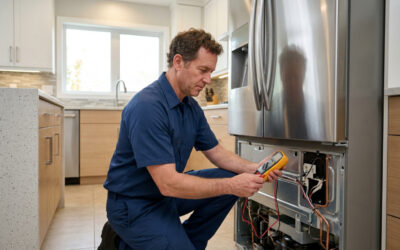
Commercial refrigeration systems are complex and contain high-pressure gases and high-voltage electrical connections. Because of this, you should never let an unqualified person attempt a repair.
In North Carolina and across the United States, technicians working on commercial cooling systems must hold EPA Section 608 Certification to legally handle refrigerants. This ensures they know how to safely recover, recycle, and dispose of chemical refrigerants without releasing them into the atmosphere. (In other parts of the world, equivalent strict standards apply, such as F-Gas certification in Europe or ARCtick licensing in Australia). Furthermore, look for technicians who are factory-trained and fully insured to perform electrical and mechanical testing safely.
Repair Costs, Warranties, and Off-Site Procedures
Commercial repair pricing depends on several factors, including the type of equipment, the cost of replacement parts, and whether the service is scheduled during normal business hours or as an emergency after-hours call.
Reputable companies believe in transparent, upfront pricing so there are no surprises on your final invoice. Most professional repairs are backed by clear warranties. For example, we offer a solid warranty on both parts and labor to give you peace of mind.
In the rare event that a commercial fridge cannot be repaired on-site—usually due to a backordered specialized part or a complete system failure—a professional service provider will work with you to find a temporary cooling solution or expedite the sourcing of a replacement unit to minimize your operational downtime.
Preventative Maintenance and Service Contracts
The best way to handle a refrigeration emergency is to prevent it from happening in the first place. This is where preventative maintenance contracts come in.
Industry data shows that commercial refrigeration equipment should be serviced every 3 to 6 months. However, busy restaurants with high grease exposure and constant foot traffic often benefit from monthly service visits. A typical preventative maintenance checklist includes:
- Deep cleaning the condenser and evaporator coils.
- Checking refrigerant levels and inspecting lines for leaks.
- Testing temperature controls, sensors, and defrost timers.
- Inspecting door gaskets, hinges, and latches.
- Checking electrical connections and fan motor amp draws.
- Clearing and sanitizing drain lines to prevent clogs and water pooling.
Investing in a regular maintenance plan keeps your equipment running at peak efficiency, extends its operational lifespan, and helps you catch minor issues before they turn into costly emergency breakdowns. For more tips on keeping your cold storage units in top shape, explore our guide to preventative freezer repair.
Frequently Asked Questions about Commercial Refrigeration
How often should commercial catering fridges be serviced?
As a general rule, commercial refrigeration systems require professional servicing every 3 to 6 months. If you operate a high-volume restaurant, a busy bakery with airborne flour, or a kitchen with heavy grease exposure, monthly maintenance visits are highly recommended to prevent dust and grime from choking your system.
What are the signs that a commercial fridge needs immediate repair?
You should call for professional help immediately if you notice:
- Temperatures rising above the safe 41°F (5°C) threshold.
- Unusual or loud noises, such as grinding, clicking, or heavy vibrating from the compressor.
- Water pooling around the base of the unit or inside the food cabinet.
- Heavy ice or frost buildup on the evaporator coils or around the door frame.
- The compressor cycling on and off constantly (short-cycling) or running continuously without stopping.
What major brands of commercial refrigeration are commonly serviced?
Professional technicians service a wide array of leading commercial brands, including True, Beverage-Air, Turbo Air, Traulsen, Foster, Hoshizaki, and Polar. To maintain your equipment’s warranty and ensure long-term reliability, always verify that your repair service uses high-quality OEM (Original Equipment Manufacturer) parts.
Conclusion
Your commercial refrigeration is the backbone of your catering or foodservice business. When a unit fails, you need a local, reliable partner who understands the urgency of the situation and can get your kitchen back up to temperature fast.
At iFix Appliances, we are proud to be a family-owned appliance repair company serving business owners across North Carolina. We provide same-day diagnostics, upfront pricing, and expert service delivered by certified technicians. Whether your business is located in Raleigh, Cary, Durham, Wake Forest, Chapel Hill, Fuquay-Varina, Apex, Garner, Holly Springs, or Morrisville, we are ready to keep your kitchen running smoothly.
For more information on our local services, visit our page on fridge repair in Raleigh NC. Don’t let a breakdown ruin your inventory — schedule your commercial appliance repair today and let our family take care of yours!
Additional Resources
For further reading on commercial refrigeration standards, industry regulations, and regional service directories, you can explore these external resources:
- Learn about national commercial kitchen service networks through the Hobart Raleigh Office.
- Explore local business listings and reviews on Yelp Wake Forest and Yelp Chapel Hill.
- For international perspectives on commercial catering standards, consult resources from Prospect Catering.

0 Comments