
Is Your Fridge Warm? Here’s What to Do Right Now
Evaporator fan replacement is often the fix when your fridge feels warm but the freezer still seems cold. Here’s a quick overview of the process:
- Unplug your refrigerator before doing anything else
- Identify the symptoms — warm fridge, unusual noises, or frost buildup near the fan
- Access the evaporator fan by removing the freezer back panel
- Disconnect the old motor and transfer any reusable parts to the new one
- Install the replacement motor, reconnect wiring, and reassemble
- Restore power and confirm the fan is running
Your refrigerator works hard every day to keep your food safe. At the center of that process is a small but critical component — the evaporator fan motor. It pushes cold air over the evaporator coils and circulates it through both the freezer and fresh food sections.
When that fan fails, your fridge stops cooling properly — even if the compressor is still running fine. Food spoils. Leftovers become a health risk. And what started as a minor appliance issue turns into a stressful, expensive problem.
The good news? This is one of the more manageable refrigerator repairs you can tackle yourself — or have a technician fix quickly without replacing the whole appliance.
This guide walks you through everything: how to spot a failing fan, how to replace it, and when it makes more sense to call a pro.
Understanding the Evaporator Fan Motor and Its Role
To understand why your refrigerator is suddenly acting like a lukewarm closet, we have to look behind the scenes. Your refrigerator doesn’t actually “create” coldness. Instead, it removes heat.
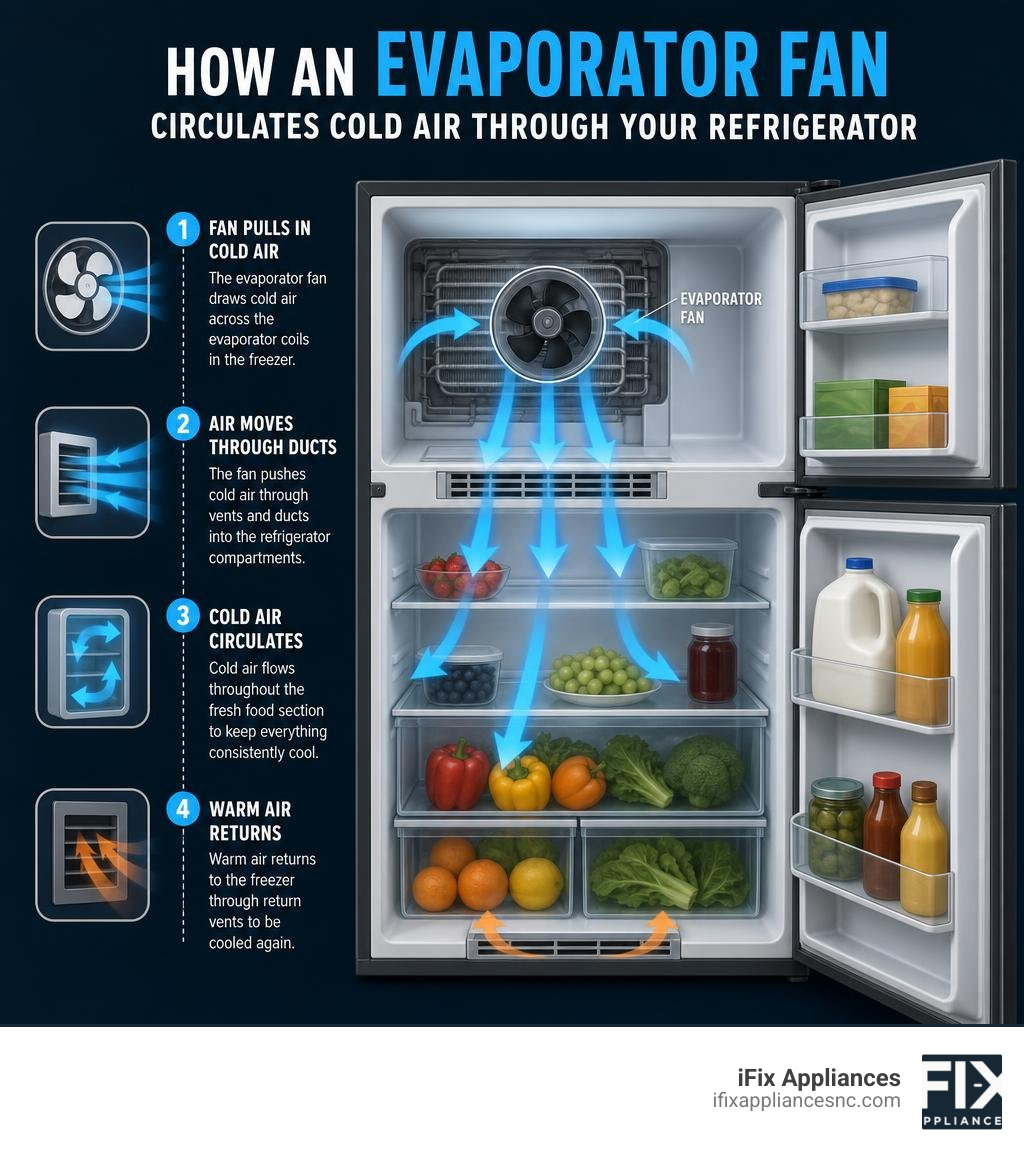
This heat-extraction magic happens via the refrigeration cycle, where refrigerant flows through the evaporator coils. As the coils get incredibly cold, frost would naturally build up and the cold air would just sit there if not for one crucial component: the evaporator fan motor assembly.
If you are experiencing cooling issues, the culprit is often this fan. When the fan stops spinning, the cold air remains trapped in the freezer compartment, leaving your fresh food compartment to slowly warm up. If you find yourself in this situation, scheduling a professional Refrigerator Repair can save your groceries from going to waste.
What is an Evaporator Fan Motor?
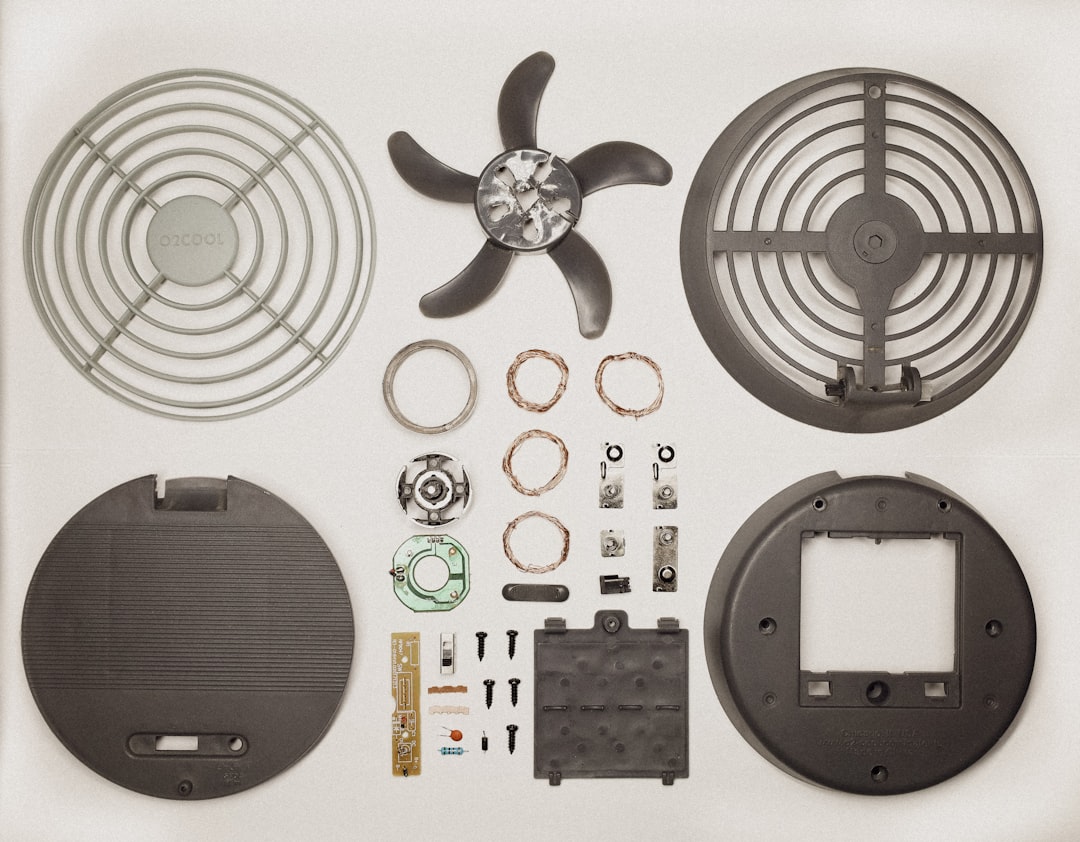
The evaporator fan motor is a small, electric motor typically located in the freezer compartment, positioned directly behind the back wall panel. Attached to its metal shaft are plastic fan blades.
During the cooling cycle, this motor spins the blades at high speeds to draw warm air from the refrigerator’s compartments, blow it over the freezing-cold evaporator coils to facilitate heat exchange, and then distribute the newly chilled air back into the cabinet.
Because it operates in a high-moisture, freezing environment, the motor is sealed to prevent moisture intrusion. However, years of constant spinning can wear down its internal bearings, or electrical surges can burn out its coils, causing the motor to seize entirely.
How the Fan Motor Maintains Temperature
Your refrigerator relies on a delicate balance of airflow. When the temperature inside the cabinet rises above the set point, the thermostat signals the main control board. The control board then sends voltage to start both the compressor (which pumps the refrigerant) and the evaporator fan motor.
As cold air distribution begins, the fan ensures that the temperature drops evenly throughout the entire unit. It also plays a massive role in temperature recovery. Every time you open the fridge door to grab a snack, warm ambient air rushes in. The evaporator fan immediately kicks into high gear to circulate the air over the coils, pulling the heat out and restoring safe food preservation levels within minutes.
Symptoms of a Failing Evaporator Fan Motor
How do you know if your cooling issues are caused by a bad fan motor rather than a failing compressor or a broken thermostat? Recognizing the classic signs of a failing motor can help you narrow down the problem before you pull out your toolkit.
If your freezer is working but the fresh food section is slowly climbing in temperature, you are likely dealing with a classic case of a Refrigerator Not Cooling: Fast & Reliable Refrigerator Repair in Raleigh, NC.
Common Warning Signs of Motor Failure
- Squealing, Whining, or Rattling Noises: This is usually the very first warning sign. If your freezer sounds like a jet engine taking off or makes a high-pitched chirping sound, the bearings inside the motor are failing. Sometimes, the noise will stop when you open the freezer door (as some models automatically cut power to the fan when the door is opened) and start right back up when you close it.
- Weak or Nonexistent Airflow: If you place your hand near the vents in the freezer or the fresh food compartment and feel no air moving—even though you can hear the hum of the compressor running—the fan motor has likely seized.
- Excessive Frost Build-up: When the fan stops moving air, the moisture in the freezer settles directly onto the evaporator coils and the back wall panel, turning into a thick block of ice. This ice can eventually grow so large that it physically blocks the fan blades from turning, creating a loud clicking or grinding noise as the blades strike the ice.
- Warm Fresh Food Section: Because the freezer is right next to the cooling coils, it may manage to stay relatively cold through passive cooling. However, without the fan to force air through the damper vents into the refrigerator side, your fresh food section will rapidly warm up.
How to Test Your Evaporator Fan Motor
Before ordering a replacement part, it is always a good idea to perform a quick diagnostic check.
First, with the refrigerator still plugged in, listen closely to the freezer wall. If you hear a humming sound but no air is blowing, the motor is getting power but cannot spin.
Next, unplug the refrigerator and remove the back panel of the freezer to expose the fan. Give the fan blades a manual spin with your finger. If the blades are stiff, tight, or refuse to spin freely, the motor bearings are completely shot, and you need an evaporator fan replacement.
If the blades spin freely, you can use a multimeter to perform a continuity check. Set your multimeter to the Rx1 setting or resistance mode and place the probes on the motor’s terminal contacts. If the multimeter reads infinity (open circuit) or shows no continuity, the electrical windings inside the motor have burned out.
For a visual walkthrough on how to perform these diagnostic tests, check out this helpful video on How to Test & Replace an Evaporator Fan (Refrigerator) – YouTube.
DIY Evaporator Fan Replacement: A Step-by-Step Guide
If your diagnosis confirms that the motor is dead, don’t panic. Replacing an evaporator fan motor is a highly rewarding DIY project that can save you hundreds of dollars in professional service fees.
Before you start dismantling your appliance, make sure to review the basic safety precautions. Always unplug the refrigerator from the wall outlet or shut off the circuit breaker before touching any electrical components. If your refrigerator has an active water line for an ice maker, turn off the water supply valve as well.
If you are uncomfortable working with electrical wiring or removing heavy freezer components, you can always rely on professional Freezer Repair services to handle the job safely.

Preparing for Your Evaporator Fan Replacement
To complete this repair smoothly, gather the necessary tools beforehand so you don’t have to run back and forth to your garage.
- 1/4-inch nut driver or socket wrench
- #2 Phillips screwdriver
- Flat-blade screwdriver
- Needle-nose pliers
- Work gloves (to protect your hands from sharp sheet metal edges)
- Safety glasses
- A hair dryer or towels (in case you need to melt away frost build-up)
Before starting, it is also helpful to review manufacturer-specific instructions. For example, if you own a GE appliance, reading up on How to replace GE Freezer Evaporator Fan Motor and Felt Seal will give you a detailed look at how to handle model-specific quirks like the delicate felt seals.
Step-by-Step Removal and Installation
While the exact steps can vary slightly depending on whether you have a side-by-side, top-freezer, or French-door model, the general replacement process remains highly consistent across most major brands.
Step 1: Clear the Freezer and Remove Shelves
Empty all food items from the freezer compartment and store them in a cooler with ice to keep them from thawing. Remove all freezer shelves, drawers, and ice bins to give yourself a clear workspace.
Step 2: Remove the Ice Maker (If Applicable)
If your freezer has an ice maker blocking the rear panel, use your nut driver to unfasten the mounting screws holding it in place. Carefully lower the ice maker, squeeze the locking tabs on the electrical wire harness to disconnect it, and set the entire unit aside.
Step 3: Remove the Evaporator Cover Panel
Locate the screws securing the rear evaporator cover panel. Once the screws are removed, use a flat-blade screwdriver to gently pry the panel away from the back wall. Be careful not to force it—if there is heavy ice build-up behind the panel, use a hair dryer to melt the ice first so you don’t crack the plastic panel or damage the delicate evaporator coils behind it.
Step 4: Disconnect the Wire Harness and Ground Wire
With the panel removed, you will see the evaporator fan motor mounted in its bracket. Locate the electrical wire harness leading to the motor. Squeeze the connector tabs and pull to disconnect it. If your model has a green ground wire screwed to the metal evaporator frame, unfasten it.
Step 5: Remove the Fan Motor Assembly
Unfasten the mounting screws holding the metal or plastic fan bracket to the freezer wall. Carefully pull the entire assembly out of the freezer.
Step 6: Transfer the Fan Blade and Mount the New Motor
Pull the plastic fan blade straight off the shaft of the old motor (you can use needle-nose pliers to gently lever it off if it is stuck). If you are using a model-specific OEM part like the WR60X10318 Evaporator Fan Motor Assembly (Dc) | Genuine Ge OEM In Stock, it may come as a complete assembly.
If you purchased a universal kit like the Official Frigidaire 5303918549 Evaporator Fan Motor Kit – 120V 60Hz – PartSelect.com or the Evaporator Motor Kit – 60Hz 115V 12002744 | Official Whirlpool Part | Fast Shipping | PartSelect.ca, you may need to transfer the rubber mounting grommets, silencer cushions, and the fan blade to the new motor shaft. Ensure the fan blade is pressed onto the new shaft to the exact same depth as the old one so it doesn’t rub against the cover plate.
Step 7: Reinstall and Reassemble
Mount the new motor assembly back onto the freezer wall. Reconnect the electrical wire harness and the ground wire. Spin the fan blade manually to ensure it rotates freely without hitting any wires or metal brackets. Reinstall the evaporator cover panel, the ice maker, and the freezer shelves. Plug the refrigerator back in and listen for the quiet, smooth hum of your new fan!
When to Choose Professional Evaporator Fan Replacement
While a DIY replacement is highly achievable, there are several scenarios where calling in a professional technician is the smarter, safer, and more cost-effective choice:
- Complex Wiring Configurations: Some modern smart refrigerators feature complex variable-speed DC fan motors integrated with thermistors, defrost thermostats, or control boards. Splicing or pinning these connections incorrectly can destroy your refrigerator’s expensive main control board.
- Sealed System Issues: If the fan replacement doesn’t restore cooling, you might be dealing with a refrigerant leak or a compressor failure, which legally requires a certified technician to diagnose and repair.
- Warranty Protection: If your refrigerator is still under manufacturer warranty, attempting a DIY repair can void your coverage. Professional service ensures your warranty remains completely intact.
- Time Constraints: If you have a busy schedule and can’t afford to leave your food in coolers for hours while you troubleshoot, a professional can complete the diagnosis and repair in a fraction of the time.
If you live in North Carolina, finding reliable local help is easy. You can search online for community recommendations, such as Who are recommended refrigerator repair technicians in Wake Forest? to find trusted local experts.
Frequently Asked Questions About Refrigerator Fans
Navigating appliance repairs often brings up a lot of questions. Here are the answers to the most common queries homeowners have when dealing with a failing evaporator fan.
How much does it cost to replace an evaporator fan?
The cost of an evaporator fan replacement depends heavily on whether you choose to go the DIY route or hire a professional.
If you choose to do it yourself, a replacement OEM fan motor typically costs between $60 and $150, depending on your refrigerator’s brand and model.
If you hire a professional appliance repair company, the total cost generally ranges from $250 to $400. This price includes the cost of the replacement part, diagnostic fees, and professional labor rates (which typically run between $50 and $125 per hour).
When deciding whether to repair or replace, you should always consider the age and overall condition of your appliance. For example, if you are debating a major repair on an aging system, you might ask yourself questions similar to those asked by homeowners facing HVAC choices, such as: Should I replace or repair my 7-year-old Lenox HVAC unit?. If your refrigerator is under 8 to 10 years old, replacing a simple fan motor is almost always the most cost-effective decision compared to buying a brand-new appliance.
Can a bad evaporator fan cause ice buildup?
Yes, absolutely. A failing or completely seized evaporator fan motor is one of the leading causes of rapid frost and ice accumulation in the freezer.
During normal operation, the refrigerator’s defrost cycle melts away any frost that collects on the evaporator coils. However, this cycle relies on the fan to circulate air and dry out the compartment afterwards.
When the fan fails to blow air across the coils, moisture from the air constantly condenses and freezes onto the cold metal surfaces. This creates a snowball effect: the frost builds up into a solid block of ice, which blocks the defrost thermostat, chokes off all airflow, and completely stops the refrigerator from cooling.
If you need a durable, high-quality replacement motor to prevent this issue, parts like the Official Whirlpool W11024089 Motor Evaporator – PartSelect.com are designed to handle high-moisture environments and maintain correct defrost cycles.
How do I find the correct replacement fan motor?
Finding the correct part is crucial because fan motors are not “one size fits all.” Installing a fan with the wrong voltage, dimensions, or rotation direction can damage your refrigerator.
To find the exact part you need, locate your refrigerator’s model number plate. This is typically printed on a sticker located on the inside wall of the fresh food compartment, behind the crisper drawers, or on the ceiling of the fridge.
Once you have the model number, you can look up the official manufacturer parts diagram online to find the exact OEM part number.
| Feature | Genuine OEM Fan Motors | Aftermarket/Generic Fan Motors |
|---|---|---|
| Compatibility | Guaranteed 100% fit and exact plug-and-play wiring | May require splicing wires or modifying mounting brackets |
| Warranty | Typically comes with a 1-year manufacturer warranty | Limited or no warranty coverage |
| Lifespan | Highly durable, built to original factory specifications | Variable quality; bearings may fail sooner |
| Price | Moderate to high ($60 – $250) | Budget-friendly ($20 – $50) |
If you are looking for a highly compatible aftermarket option that balances cost and performance, parts like the Edgewater Parts 61004888, AP6010038, PS11743214 Evaporator Fan Motor C — Grill Parts America offer excellent compatibility with a wide range of popular refrigerator models.
Conclusion
A warm refrigerator doesn’t mean you need to run out and buy a brand-new appliance. In many cases, a simple evaporator fan replacement is all it takes to restore your fridge to peak performance, saving your groceries and your budget.
If you are located in the Triangle Area of North Carolina, you don’t have to tackle this repair alone. At iFix Appliances, we are a family-owned appliance repair company dedicated to keeping your home running smoothly. We proudly serve homeowners across:
- Raleigh, NC
- Cary, NC
- Durham, NC
- Wake Forest, NC
- Chapel Hill, NC
- Fuquay-Varina, NC
- Apex, NC
- Garner, NC
- Holly Springs, NC
- Morrisville, NC
Our certified technicians offer same-day diagnostics and repairs for all major refrigerator brands. With our transparent, upfront pricing, you will always know exactly what to expect before we begin any work.
If your refrigerator is warm, making strange squealing noises, or showing heavy frost build-up, let us take the stress out of the repair. We also specialize in Fridge Repair in Raleigh, NC: Fast, Honest Service, as well as Ice Maker Repair to ensure your entire cooling system is operating perfectly.
For more helpful appliance maintenance tips, check out our full Category: Refrigerator Repair library.
Ready to get your fridge cooling again? Contact us at iFix Appliances today to schedule your same-day Refrigerator Repair service!




0 Comments