
When Commercial Cooking Equipment Repair Can’t Wait
Commercial cooking equipment repair is a time-sensitive need — and if you’re a restaurant owner dealing with a broken fryer, oven, or range, here’s what you need to know fast:
Quick answers for restaurant owners:
- Who to call: A CFESA-certified commercial kitchen repair technician
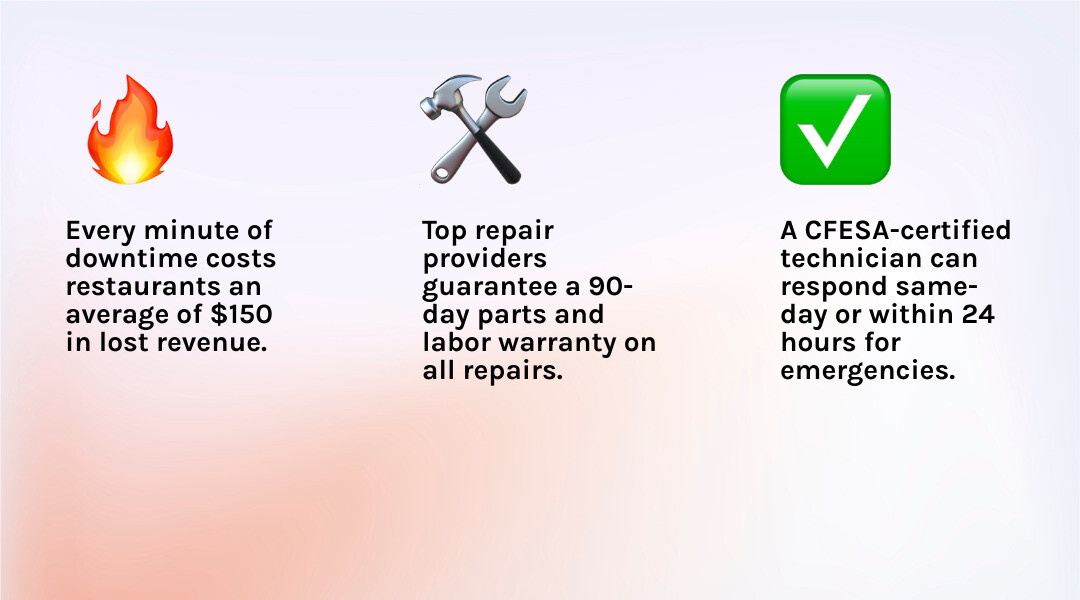
- Response time: Same-day or emergency 24/7 service is available from many providers
- What’s covered: Hot-side equipment (ovens, ranges, fryers, griddles) and cold-side equipment (refrigerators, freezers, ice machines)
- Average guarantee: Look for a 90-day parts and labor warranty
- Top priority: First-time fix rate — the best providers resolve issues on the first visit
A broken piece of kitchen equipment doesn’t just cause frustration — it can bring your entire operation to a standstill. Every minute your fryer, range, or walk-in cooler is down, you’re losing revenue, turning away customers, and stressing out your staff.
Commercial kitchens run on tight margins. One unexpected breakdown at the wrong time — a packed Friday dinner service, a catering event, a school lunch rush — can be costly in ways that go beyond the repair bill.
This guide covers everything you need to know: what types of equipment break down most often, warning signs to watch for, what repairs typically cost, and how to choose a repair partner you can actually trust.
I’m Vasyl Turetsky, founder and appliance repair specialist at iFix Appliances, and I’ve spent years diagnosing and repairing commercial-grade cooking and refrigeration equipment — including brands like Wolf, Viking, Thermador, and Sub-Zero — across Raleigh and surrounding North Carolina communities. In this commercial cooking equipment repair guide, I’ll walk you through everything I’ve learned from real-world kitchen repairs so you can make fast, informed decisions when it matters most.
Commercial cooking equipment repair terms to remember:
Hot-Side vs. Cold-Side Kitchen Equipment
In the foodservice industry, we divide the kitchen into two distinct zones: the “hot-side” and the “cold-side.” Understanding this distinction is crucial because the technical skills, tools, and certifications required to service them are completely different. Some technicians specialize exclusively in one side, while full-service commercial kitchen repair companies employ specialists across both fields to keep your entire system running smoothly.

Hot-Side Equipment
The hot-side refers to any commercial appliance that generates heat to cook, bake, steam, or hold food. These units are the workhorses of your cookline. Because they operate under extreme heat and constant use, they rely on a diverse mix of power sources:
- Gas Systems: Natural gas or liquid propane (LP) burners, pilots, and safety valves.
- Electric Systems: High-voltage heating elements, contactors, and solid-state relays.
- Steam Systems: High-pressure steam lines, boilers, and condensation traps.
- Electronic Systems: Digital control boards, programmable timers, and precise temperature probes.
Because hot-side units handle open flames, high electrical currents, and pressurized steam, safety is paramount. A minor gas leak or a faulty high-limit thermostat can quickly escalate from an operational nuisance to a major safety hazard.
Cold-Side Equipment
The cold-side covers your entire refrigeration infrastructure. This includes walk-in coolers, reach-in freezers, prep tables, and ice makers. While hot-side equipment focuses on adding heat, cold-side units are all about heat extraction. They rely on complex thermodynamic refrigeration cycles, compressors, evaporators, and chemical refrigerants.
If you want a deep dive into how refrigeration systems function and why they break down, check out our guide on The Commercial Kitchen’s Lifeline: Catering Fridge Repairs Explained.
Utility Requirements and Interdependence
Modern commercial kitchens are highly integrated. A single high-volume restaurant, catering company, or bakery often combines multiple business models under one roof. This means a breakdown in one area—like a commercial dishwasher failing to sanitize or a walk-in freezer losing temperature—can cause a cascading failure across your entire workflow.
Furthermore, these appliances require professional utility connections. Whether it’s a 240V three-phase electrical line for a convection oven, a dedicated water filtration line for a steam kettle, or a commercial gas hookup for your main range, professional installation and repair are non-negotiable to keep your kitchen compliant with North Carolina building and health codes.
Common Hot-Side Appliances and Brands
When your cookline is down, your menu suffers. Let’s look at the most common hot-side appliances that require professional commercial cooking equipment repair and the brands that dominate commercial kitchens in the Triangle Area.
Ranges and Stoves
The commercial range is the heart of the kitchen. Whether gas or electric, these units experience massive thermal stress daily. Common issues include clogged burner ports, failing thermocouples, broken infinite switches, and faulty gas control valves. If your range burners are burning yellow instead of blue, or if your electric burners won’t heat up, you need professional Range Repair to restore proper fuel-to-air mixtures or replace worn-out elements. Proper calibration and safety checks are essential to keep your kitchen running efficiently and safely.
Ovens (Convection, Combi, and Pizza Ovens)
Commercial ovens rely on precise air circulation and temperature control. Convection ovens use heavy-duty blower motors to distribute heat evenly, while combi ovens introduce steam to cook food faster without drying it out. When these units fail, you’ll often see broken door gaskets, failing door switches, blown convection fan motors, or cracked igniters. Our team specializes in commercial Oven/Stove Repair to address these exact mechanical and electrical faults before they ruin your dinner service.
Fryers and Griddles
A commercial fryer that can’t maintain its temperature is a major bottleneck. Fryers rely on high-limit thermostats to prevent oil from overheating and catching fire. If your fryer won’t light or keep its temperature, the culprit is usually a failing thermopile, a clogged pilot burner, or a faulty gas valve.
Similarly, flat-top griddles and charbroilers must have completely even heat distribution to cook proteins safely. If you are experiencing cold spots on your flat top, professional technicians can diagnose burner manifolds and surface warping to restore consistent cooking temperatures.
Common Cold-Side and Warewashing Systems
A fully functional kitchen requires more than just cooking heat; you must keep food fresh and clean your smallwares efficiently.
Commercial Refrigeration and Freezers
Your cold-side system is your primary defense against food spoilage and health department violations. If a walk-in freezer or reach-in cooler climbs above 40°F, you are looking at thousands of dollars in wasted inventory. Common refrigeration failures include dirty condenser coils, failing evaporator fan motors, worn door gaskets, and refrigerant leaks. When these emergencies strike, prompt Refrigerator Repair or Freezer Repair is the only way to save your stock.
Ice Makers
Commercial ice machines are notoriously sensitive. They require a delicate balance of water flow, refrigeration, and electrical timing. Scale buildup from hard water is the number one cause of ice maker failure, leading to freeze-ups, small harvests, or complete system shutdowns. Regular Ice Maker Repair and professional descaling are essential to keep your beverage service moving.
Warewashing and Commercial Dishwashers
Sanitation is the backbone of any food service operation. Commercial dishwashers must reach specific high temperatures (often 180°F for high-temp sanitizing machines) or utilize precise chemical sanitizers to meet local health codes. When booster heaters fail, wash pumps leak, or control boards glitch, your kitchen will quickly pile up with dirty dishes. Booking a professional Dishwasher Repair specialist ensures your machine sanitizes correctly and keeps your plates sparkling.
Troubleshooting and Signs of Equipment Failure
Before you call in the pros, it helps to understand what is happening inside your machines. Diagnostic accuracy is the difference between a quick, affordable fix and a costly, prolonged shutdown.

Signs You Need Commercial Cooking Equipment Repair
Your appliances will almost always warn you before they fail completely. Watch for these common red flags:
- Uneven Heating: If one side of your flat-top is scorching hot while the other is lukewarm, or if your oven is baking unevenly, you likely have a failing heating element, a blocked gas burner, or a broken convection fan.
- Pilot Light and Ignition Issues: If your gas burners or oven pilots constantly blow out or refuse to light, you are likely dealing with a worn thermocouple, a clogged pilot orifice, or a faulty spark igniter.
- Strange Noises: Squealing, grinding, or rattling sounds from your ovens or refrigerators usually point to failing motor bearings, worn belts, or compressor issues.
- Electrical Faults: If an appliance is constantly tripping your kitchen’s circuit breakers, there is a serious electrical short, a damaged power cord, or a failing heating element that requires immediate professional attention.
The Cost of Commercial Cooking Equipment Repair
When budgeting for commercial repairs, it is important to understand how the industry structures its pricing. Unlike residential repairs, commercial service involves heavier machinery, specialized certifications, and high-stakes timelines.
- Diagnostic Fees: Most commercial repair companies charge a flat diagnostic fee to send a certified technician to your location to identify the root cause of the issue.
- Hourly Rates: Labor is typically billed at an hourly rate, which can increase for after-hours, weekend, or holiday emergency calls.
- OEM Parts: Sourcing genuine Original Equipment Manufacturer (OEM) parts is critical. While aftermarket parts might be cheaper upfront, they rarely last under high-volume commercial use and can void your appliance’s warranty.
- Repair-vs-Replace Analysis: A professional technician won’t just fix your machine; they will help you evaluate its overall health. If a 15-year-old convection oven needs a new $1,200 control board, we will provide an honest cost-of-ownership analysis to help you decide if it’s time to invest in a replacement.
| Appliance Type | Common Repair | Est. Repair Cost | Est. Replacement Cost | Action Recommendation |
|---|---|---|---|---|
| Commercial Range | Thermocouple / Burner Replacement | $250 – $600 | $3,500 – $8,000+ | Repair (unless structural frame is damaged) |
| Convection Oven | Blower Motor / Igniter Replacement | $450 – $1,200 | $4,500 – $12,000+ | Repair if under 10 years old |
| Commercial Fryer | High-Limit Thermostat / Thermopile | $300 – $700 | $2,000 – $6,000+ | Repair (highly cost-effective) |
| Walk-In Cooler | Evaporator Fan / Compressor | $600 – $2,500 | $8,000 – $20,000+ | Repair (highly dependent on overall box condition) |
The Power of Preventive Maintenance
The single best way to reduce the need for emergency commercial cooking equipment repair is to implement a planned preventive maintenance program. Regular cleaning, calibration, and component inspections keep your kitchen running efficiently and extend the lifespan of your expensive investments.

Furthermore, do not overlook water quality. Installing and maintaining high-quality water filtration systems is critical for any appliance that uses water—such as combi ovens, steamers, ice makers, and dishwashers. Unfiltered water causes rapid scale buildup, which clogs internal lines, coats heating elements, and leads to premature component failure.
Daily Kitchen Maintenance Checklist for Staff:
- Clean Cookline Surfaces: Wipe down griddles, range tops, and charbroilers daily to prevent grease buildup.
- Inspect Door Gaskets: Check oven and refrigerator door seals for tears, cracks, or gaps that allow heat or cold air to escape.
- Clear Debris Screens: Clean out fryer crumb screens and dishwasher scrap baskets after every shift.
- Monitor Temperatures: Log refrigerator, freezer, and oven temperatures twice daily to catch drifting calibrations early.
Choosing the Right Commercial Cooking Equipment Repair Partner
When a machine goes down, you don’t just need a technician; you need a reliable partner who understands the high-pressure nature of the foodservice industry.
Here is what you should look for when selecting a repair company:
- CFESA Certification: The Commercial Food Equipment Service Association (CFESA) is the gold standard for technician training. A CFESA-certified technician has undergone rigorous testing and continuous education to handle complex gas, electric, steam, and electronic systems safely.
- Factory Training: Ensure the repair company has direct factory training and authorized service relationships with major manufacturers. This guarantees they have access to official tech support, wiring diagrams, and genuine OEM parts.
- Licensing and Insurance: Never let an unlicensed or uninsured technician touch your commercial gas or electrical lines. Working with fully licensed professionals protects your staff, your property, and your business liability.
- Comprehensive Local Guides: If you want a step-by-step framework for evaluating local providers, read our expert guide on 5 Ways to Find Local Commercial Appliance Repair Like a Pro.
Technician Certifications and Response Times
In a busy kitchen, time is literally money. Look for service providers that boast a high first-time fix rate (the industry benchmark for top-tier companies is a 90% first-time fix rate). This means the technician arrives with a fully stocked service vehicle, diagnoses the issue quickly, and has the necessary parts on hand to complete the repair during the initial visit, minimizing your operational downtime.
For local business owners in the Triangle Area, utilizing regional specialists who understand local health codes and building regulations is highly beneficial. Working with a local repair partner ensures your kitchen remains fully compliant with North Carolina health standards while minimizing operational disruptions.
Frequently Asked Questions about Commercial Kitchen Repairs
How quickly can a technician respond to a kitchen emergency?
Most professional commercial repair companies offer rapid-response service, same-day support, or priority scheduling for active commercial accounts. Because a major breakdown can halt your entire business, many providers offer 24/7/365 emergency services to get your hot-side or cold-side equipment back online during off-hours or holiday weekends, ensuring your kitchen experiences minimal downtime.
What happens if a repair part is out of stock?
A common frustration for restaurant owners is paying for a technician to diagnose a machine, only to find out the required part must be ordered. To make this process fairer, some leading commercial service companies have a policy where they do not charge a return-trip fee if they do not have the required replacement part on their truck during the first visit. Additionally, working with a provider that has close relationships with local OEM parts counters ensures faster parts procurement and minimal waiting times.
What brands of commercial cooking equipment do you service?
We service a wide variety of high-end and commercial-grade brands commonly found in professional kitchens, corporate dining facilities, and upscale restaurants. This includes specialized diagnostic and repair services for:
- Cooking Ranges and Ovens: Wolf Repair Service, Viking Repair Service, and Thermador Repair Service.
- Premium Kitchen Suites: Dacor Repair Service and DCS Repair Service.
- Refrigeration & Specialty Systems: GE Monogram Repair Service, Sub-Zero Repair Service, Scotsman Repair Service, and Marvel Repair Service.
Conclusion: Keep Your Kitchen Cooking with iFix Appliances
Managing a busy kitchen in the Triangle Area is stressful enough without the added headache of unexpected equipment failures. Whether you run a bustling restaurant in downtown Raleigh, a catering company in Durham, a bakery in Cary, or a corporate kitchen in Morrisville, you need a dependable partner to handle your appliance emergencies.
At iFix Appliances, we provide professional, fast, and honest commercial and high-end residential appliance repair services throughout Raleigh, Cary, Apex, Garner, Durham, Morrisville, Wake Forest, Chapel Hill, Holly Springs, Fuquay-Varina, and the surrounding Triangle Area. Our team is dedicated to providing honest diagnostics, transparent pricing, and long-term repair solutions that keep your business running smoothly.
Don’t let a broken range, oven, or refrigerator steal the show. Contact us today to schedule your preventative maintenance check-up or book an emergency repair call.
Need professional service right now? Visit our Commercial Appliance Repair page to request fast, reliable support from our local experts!


0 Comments