
Garbage Disposal Repair in Cary, NC: What to Check First
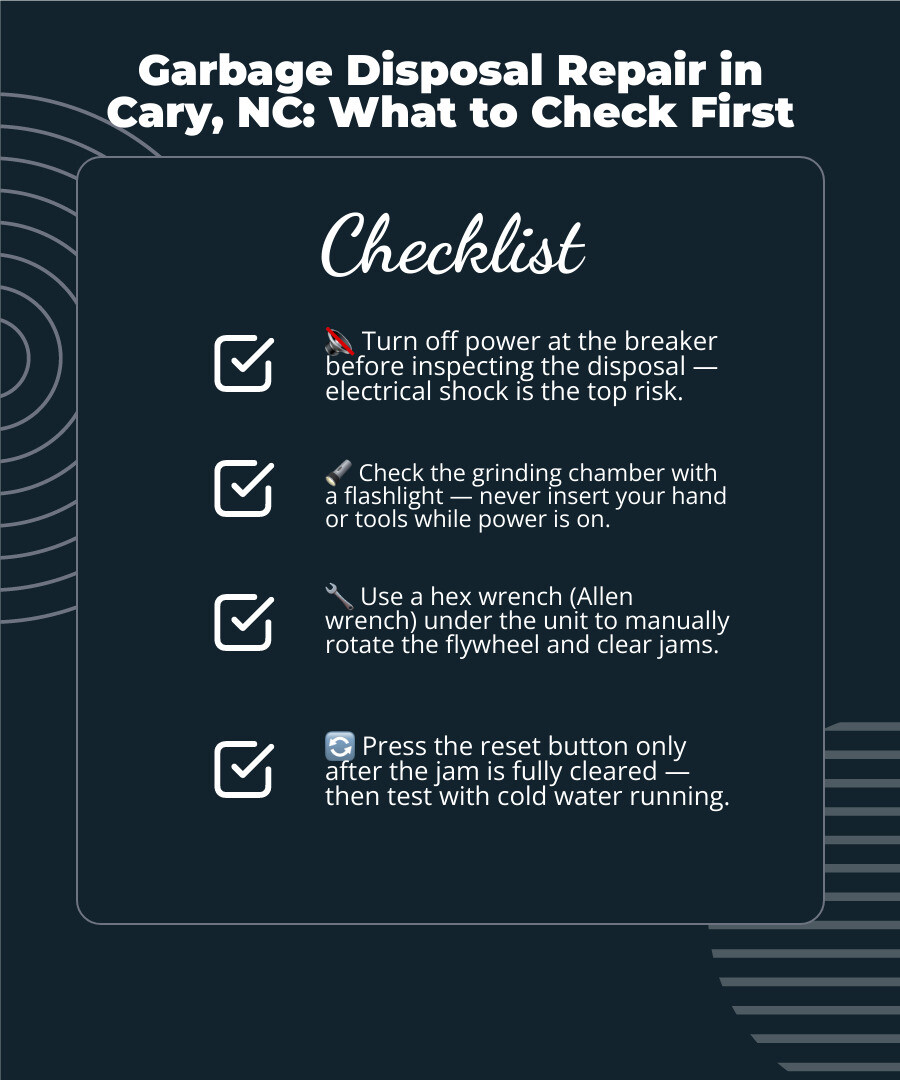
If your disposal hums but will not spin, switch it off immediately. Turn off power at the breaker, then check the grinding chamber with a flashlight. Never put your hand inside. If your model has a hex socket underneath, use the correct wrench to turn the mechanism and free a jam. Restore power and try the reset button only after the jam is clear.
If the unit leaks, trips the breaker again, or still will not run, stop using it and arrange a professional diagnosis. A loose drain connection may be repairable; a leaking housing or failed motor often means replacement.
I’m Vasyl Turetsky, founder of iFix Appliances and an appliance repair specialist serving Cary and nearby communities. If you are dealing with a malfunctioning kitchen drain and need garbage disposal repair in Cary, NC, my guide explains what to inspect first and when scheduling professional appliance service is the safest choice.
Helpful appliance care resources for local homeowners:
Identifying Common Disposal Breakdowns and Symptoms
When a kitchen disposal malfunctions, it immediately disrupts your meal prep and post-dinner cleanup. Over my years servicing homes across Wake County, I have seen kitchen drain problems range from simple clogs to complex electrical shorts. Recognizing the specific symptoms of your machine helps prevent secondary water damage or motor burnout.
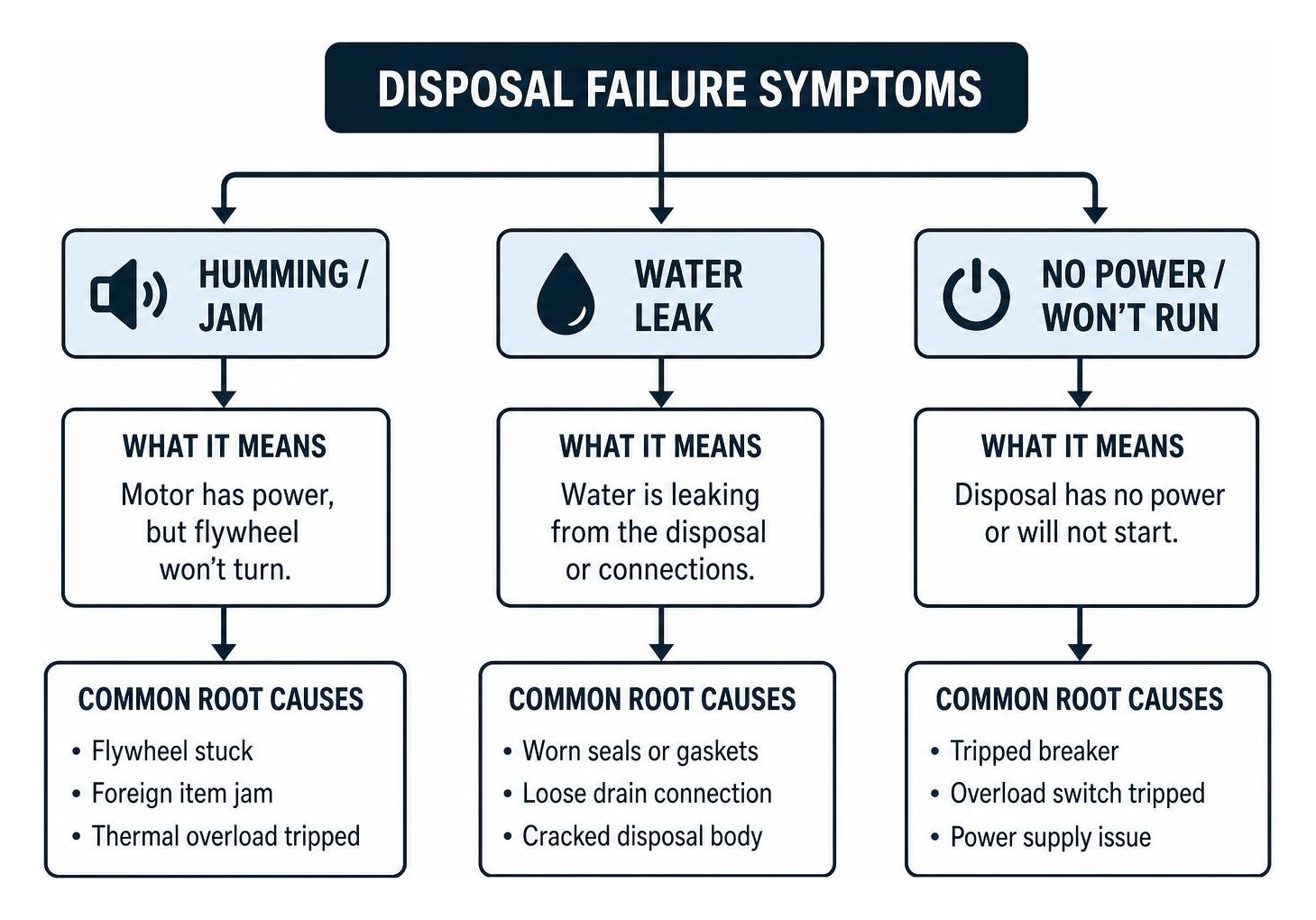
Kitchen disposal symptoms generally fall into three categories: mechanical blockages, fluid leaks, and electrical disruptions. Diagnosing these issues safely requires understanding how the mechanical grinding plate interacts with your plumbing and power supply.
Fixing a Humming Motor and Stubborn Jams
A low humming sound accompanied by an unmoving flywheel is one of the most common service calls I receive in Cary. This hum indicates that the electric motor is receiving power, but an obstruction is preventing the grinding plate from spinning freely.
When this occurs, leaving the wall switch on will rapidly overheat the motor windings, causing the internal thermal overload protector to trip. Common culprits behind these jams include:
- Small fruit pits or stray cherry stones wedged between the impeller and shredder ring.
- Cutlery, such as teaspoons or small cocktail forks, accidentally dropped into the chamber.
- Hard organic materials like fibrous artichoke leaves or thick animal bones.
To prevent permanent motor damage, turn off the wall switch immediately when you hear a hum without rotation.
Locating and Sealing Leaks Under the Sink
Water pooling beneath your kitchen sink can rot wooden cabinetry and foster mold growth if left unresolved. Finding the exact origin of a leak requires inspecting four key zones:
- The Sink Mounting Flange: Located at the very top of the unit where it locks against the sink basin. If the plumber’s putty dries out or the mounting bolts loosen over time, water seeps past the seal during sink use.
- The Dishwasher Drain Inlet: Located near the upper side of the housing. Water leaking here often points to a degraded rubber hose, a loose clamp, or drainage backflow requiring integrated dishwasher repair.
- The Waste Drain Pipe Connection: Positioned on the lower side where the disposal discharges into the home’s P-trap. A worn rubber gasket or a loose slip nut can allow wastewater to escape.
- The Bottom Housing Seam: If water drips directly from the bottom vents or motor casing, internal seals have failed, allowing moisture to breach the motor assembly.
While top and side connection leaks can frequently be resealed with new gaskets or fresh plumber’s putty, bottom casing leaks invariably require unit replacement.
Restoring Power to an Unresponsive Unit
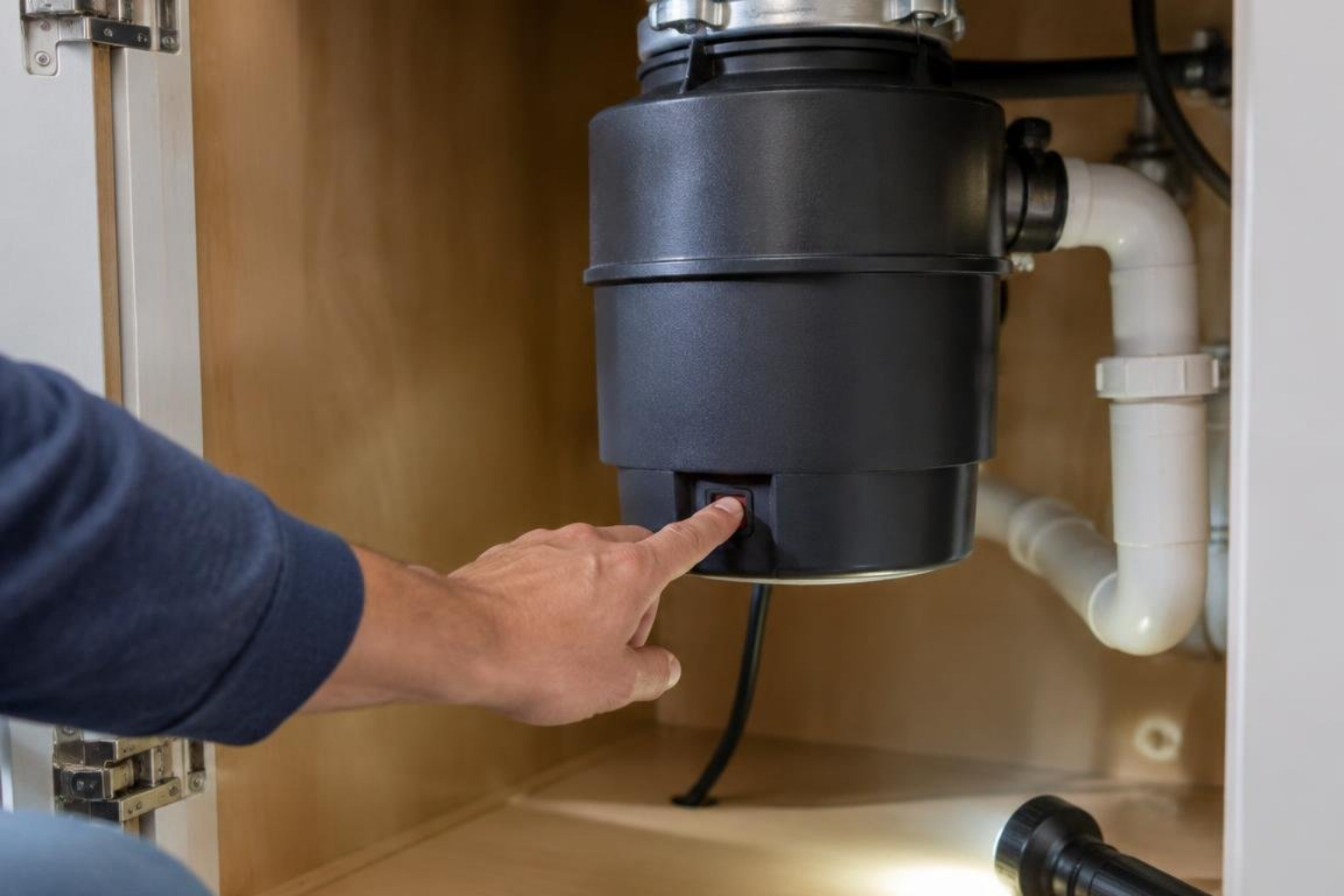
If flipping the wall switch produces complete silence, the unit is not drawing electrical current. Modern disposal units are equipped with a red thermal overload switch located on the bottom or lower backside of the chassis. When the motor experiences excessive resistance or heat, this button pops outward to cut power and prevent electrical fires.
If resetting this button does not restore operation, the issue may involve a tripped circuit breaker in your service panel, a failed wall switch, or broken wiring connections within the disposal junction box.
Troubleshooting and Garbage Disposal Repair Cary NC
Safe troubleshooting begins with strict electrical isolation. Never insert your fingers, hands, or metal tools into a disposal chamber while it is connected to a live circuit. By following systematic diagnostic protocols and securing quality appliance parts in Cary, you can address minor issues quickly and safely.
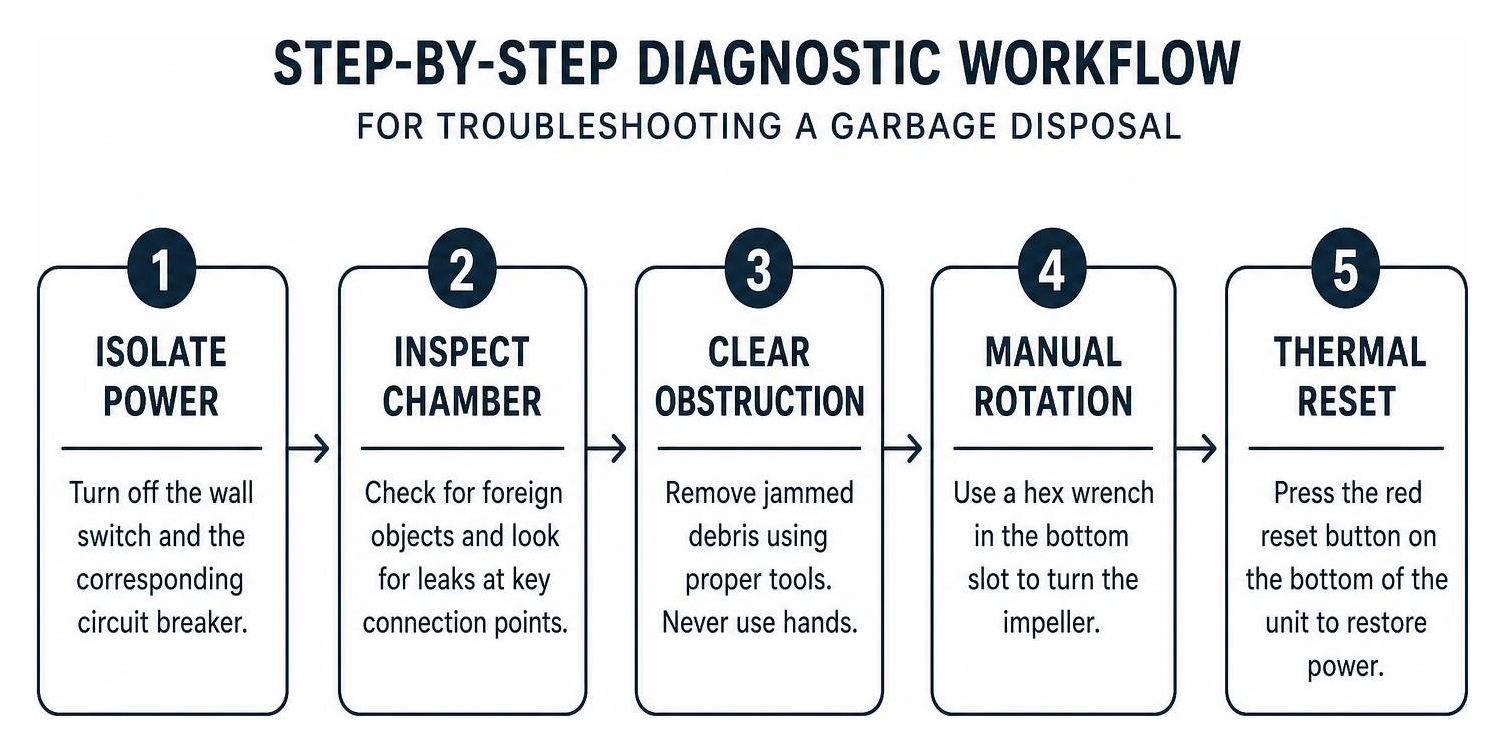
Step-by-Step DIY Fixes Before Calling for Garbage Disposal Repair Cary NC
Before booking a service call, you can safely perform several initial checks using basic household tools:
- Cut the Power: Turn off the wall switch and switch off the corresponding circuit breaker at your main electrical panel.
- Conduct a Visual Inspection: Shine a bright flashlight straight down into the grinding chamber. Look for foreign debris, fallen bottle caps, or bones trapped near the outer shredder ring.
- Remove Visible Obstructions: Use a pair of long needle-nose pliers or kitchen tongs to extract any lodged items. Never use your bare hands.
- Manually Rotate the Flywheel: Locate the hex socket (breaker socket) in the center of the unit’s underside. Insert a 1/4-inch Allen wrench (or disposal jam wrench) into this socket. Rock the wrench back and forth clockwise and counterclockwise until you achieve a complete 360-degree rotation without resistance.
- Reset the Overload Protector: Press firmly on the small red reset button on the bottom of the housing until it clicks inward.
- Perform a Test Run: Restore electrical power at the breaker panel. Run cold tap water into the sink at full volume, then flip the wall switch to verify normal operation.
When to Schedule Professional Garbage Disposal Repair Cary NC
While clearing a physical jam is manageable for many homeowners, certain mechanical and electrical failures require professional diagnostic equipment. Schedule a service visit if you encounter any of the following scenarios:
- Persistent Electrical Trips: The unit instantly trips the main house breaker every time it is activated, indicating an internal electrical short.
- Motor Burnout: The unit emits a distinct burning electrical odor or hums despite the flywheel turning freely by hand.
- Heavy Vibration and Rattling: Excessive vibration accompanied by harsh metal-on-metal screeching suggests broken impellers or worn motor bearings.
- Internal Shell Fractures: Water leaks steadily through the internal motor housing or lower casing seams.
When dealing with complex electrical circuits or structural wear, relying on reliable appliance installation and repair ensures code-compliant, long-lasting results. Most standard disposal repairs take between 30 and 60 minutes during a single visit.
Repair Versus Replacement: Sizing, Costs, and Options for Cary Kitchens
Deciding whether to repair an existing disposal or install a new model comes down to the machine’s age, the extent of damage, and total replacement costs.
| Evaluation Metric | Repair Existing Disposal | Replace with New Unit |
|---|---|---|
| Typical Cost in Cary | $75 – $200 (jams, seals, switches) | $200 – $500 (unit + professional installation) |
| Expected Lifespan | Extends life of current unit | Fresh 8 – 15 year operational lifespan |
| Component Condition | Retains existing motor & grinding ring | Upgraded stainless steel grinding components |
| Sound Insulation | Standard baseline sound dampening | Modern advanced sound-baffling technologies |
| Best Suited For | Units under 8 years with minor faults | Units over 8–10 years, cracked bodies, burnt motors |

Sizing Horsepower and Feed Types for Your Household
Choosing the right motor horsepower prevents chronic clogs and premature motor failure. Household size and cooking frequency dictate your kitchen’s power requirements:
- 1/3 Horsepower (HP): Best suited for 1-to-2 person households with light cooking routines. These units feature compact grinding chambers and are designed strictly for soft, easily digestible food scraps.
- 1/2 Horsepower (HP): The standard entry-level size for small families (2 to 3 people). It handles routine daily vegetable peelings and soft plate scrapings efficiently.
- 3/4 Horsepower (HP): Ideal for active family kitchens (3 to 5 people). Models in this tier typically feature heavy-duty stainless steel grinding components and superior sound-dampening insulation.
- 1 Horsepower (HP) & Above: Designed for large households, home chefs, and heavy meal prep. These heavy-duty motors effortlessly grind stubborn materials such as small cooked bones, fibrous stalks, and dense fruit rinds without stalling.
| Feature | Continuous Feed Disposal | Batch Feed Disposal |
|---|---|---|
| Activation Method | Wall-mounted switch or air switch | Magnetic sink stopper cover |
| Operation Style | Runs continuously while water flows | Operates only when stopper is locked in place |
| Kitchen Safety | Open drain; requires splash guard | Prevents foreign objects/utensils from falling in |
| Processing Speed | Faster for large volumes of scraps | Requires loading in individual batches |
| Initial Cost | Budget-friendly to mid-range | Higher initial purchase price |
Evaluating Repair Costs Against New Unit Installation
If your disposal is approaching 8 to 10 years of age and exhibits internal corrosion or structural leaks, replacing the unit is generally the more cost-effective choice. Standard diagnostic service calls in the Cary area typically range from $75 to $150, while comprehensive jam clearing or external component replacements fall between $100 and $250.
A brand-new professional installation typically ranges from $150 to $400 for labor, bringing the total project cost to roughly $200 to $500 depending on the horsepower and brand you select. When replacing aged hardware, utilizing professional appliance installation and removal ensures safe disposal of old units and supports sustainable recycling and carbon reduction.
Preventive Care to Keep Cary Drains Clear and Odor-Free
Regular preventive care preserves motor efficiency and prevents offensive kitchen odors caused by decomposing food particles trapped inside the grinding chamber.
Safe Foods and Prohibited Kitchen Scraps
Your garbage disposal is designed to break down soft food remnants, not act as a catch-all trash bin. Knowing what can and cannot enter your drain protects your plumbing:
Safe to Process (in moderate amounts):
- Soft fruit and vegetable scraps (apple cores, citrus peels, berries)
- Small cooked meat remnants and soft table scraps
- Cold water ice cubes (to clean buildup from internal impellers)
- Cooked pasta and rice in tiny, well-flushed portions
Items to Never Put Down the Disposal:
- Fats, Oils, and Grease (FOG): Hot grease solidifies inside cold drainage pipes, creating stubborn grease blockages.
- Fibrous Vegetables: Corn husks, celery ribs, artichokes, and onion skins contain long strings that wrap tightly around the motor shaft.
- Expanding Starches: Large amounts of pasta, potato peels, or rice absorb water to form a thick paste that clogs drain traps.
- Coffee Grounds and Eggshells: Finely ground coffee and shell membranes settle into heavy sediment that accumulates at the base of your P-trap.
- Non-Food Items: Bottle caps, twist ties, plastic wrappers, glass, and metal utensils.
Cleaning Routines and Local Water Hardness Considerations
Cary’s municipal water supply has a water hardness rating of approximately 50 parts per million (ppm), which is considered moderately soft. While soft water minimizes severe scale buildup, regular grease and mineral films can still coat internal components over time.
To maintain a clean, odor-free system:
- Always Use Cold Water: Run cold water for 10 to 15 seconds before, during, and after running your disposal. Cold water keeps fats solid so the impellers can break them apart before they coat your pipes.
- Weekly Ice and Salt Scrub: Drop two cups of ice cubes and a half-cup of coarse rock salt into the chamber. Run cold water and turn on the disposal. The churning ice chips mechanically scour food films off the impellers without dulling the blades.
- Monthly Deep Deodorizing Clean: Pour one-half cup of baking soda into the chamber, followed by one cup of white distilled vinegar. Allow the mixture to fizz for 10 minutes to break down organic slime, then flush thoroughly with hot tap water.
- Citrus Peel Finish: Grind small slices of lemon, lime, or orange peel with cold running water to eliminate residual odors and leave your sink smelling fresh.
Frequently Asked Questions About Kitchen Disposal Care
Can a disposal be installed in any kitchen sink configuration?
Most modern kitchen sinks featuring a standard 3.5-inch drain opening can accommodate a garbage disposal unit. Whether you have a single-basin or double-bowl sink made of stainless steel, composite granite, or fireclay, mounting assemblies fit securely with the correct gaskets and sink adapters. Ensure you have an unshared 120-volt grounded electrical outlet beneath the sink base cabinet.
How long does a typical kitchen disposal last in North Carolina homes?
A well-maintained disposal in North Carolina homes typically lasts between 8 and 15 years. Lifespan depends heavily on motor construction quality (such as stainless steel vs. galvanized components), household cooking frequency, and how carefully hard items are kept out of the chamber.
How quickly can a technician resolve an emergency kitchen sink jam?
Most standard disposal jams and connection leaks can be diagnosed and fully resolved within 30 to 60 minutes during a single service visit. Experienced technicians arrive with fully equipped service vehicles carrying universal mounting parts, replacement gaskets, switches, and standard replacement units.
Conclusion
A well-maintained garbage disposal keeps your kitchen clean, prevents foul odors, and protects your household plumbing. By operating your machine with plenty of cold water, avoiding prohibited food waste, and performing simple maintenance routines, you can expect dependable performance year after year.
Whenever you encounter stubborn mechanical jams, persistent leaks, or electrical failures, seek experienced diagnostic help. For trusted maintenance, prompt repairs, and seamless new installations, schedule your service with expert garbage disposal and appliance services in Cary.


0 Comments