
Find a Qualified Repairman for GE Refrigerator Problems Fast
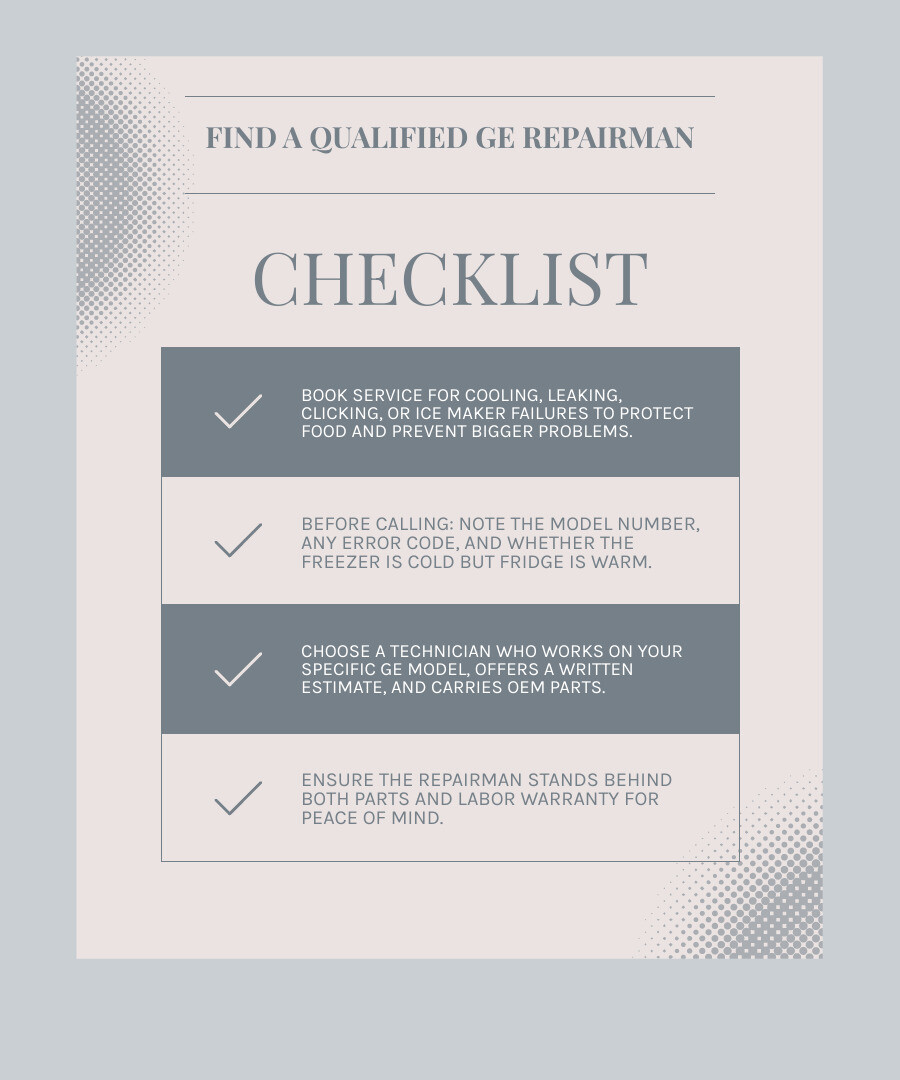
To find a reliable repairman for GE refrigerator trouble, choose a technician who works on your GE model, provides a clear diagnostic fee and written estimate, carries appropriate replacement parts, and stands behind parts and labor. For a refrigerator that is not cooling, leaking, clicking, or failing to make ice, book service promptly to help protect food and prevent a small problem from becoming a larger repair.
Before scheduling, write down the model number, any display code, and the symptoms you notice. Simple details – such as whether the freezer is cold while the fresh-food section is warm – can help the technician arrive prepared.
I’m Vasyl Turetsky, Founder and Appliance Repair Specialist at iFix Appliances, and I diagnose and repair GE refrigerators throughout the Raleigh area, including cooling, ice maker, water dispenser, defrost, and control problems. This guide explains how to choose the right repairman for GE refrigerator service and what to check before your appointment.
Important repairman for ge refrigerator terms:
When to Call a Repairman for GE Refrigerator Issues
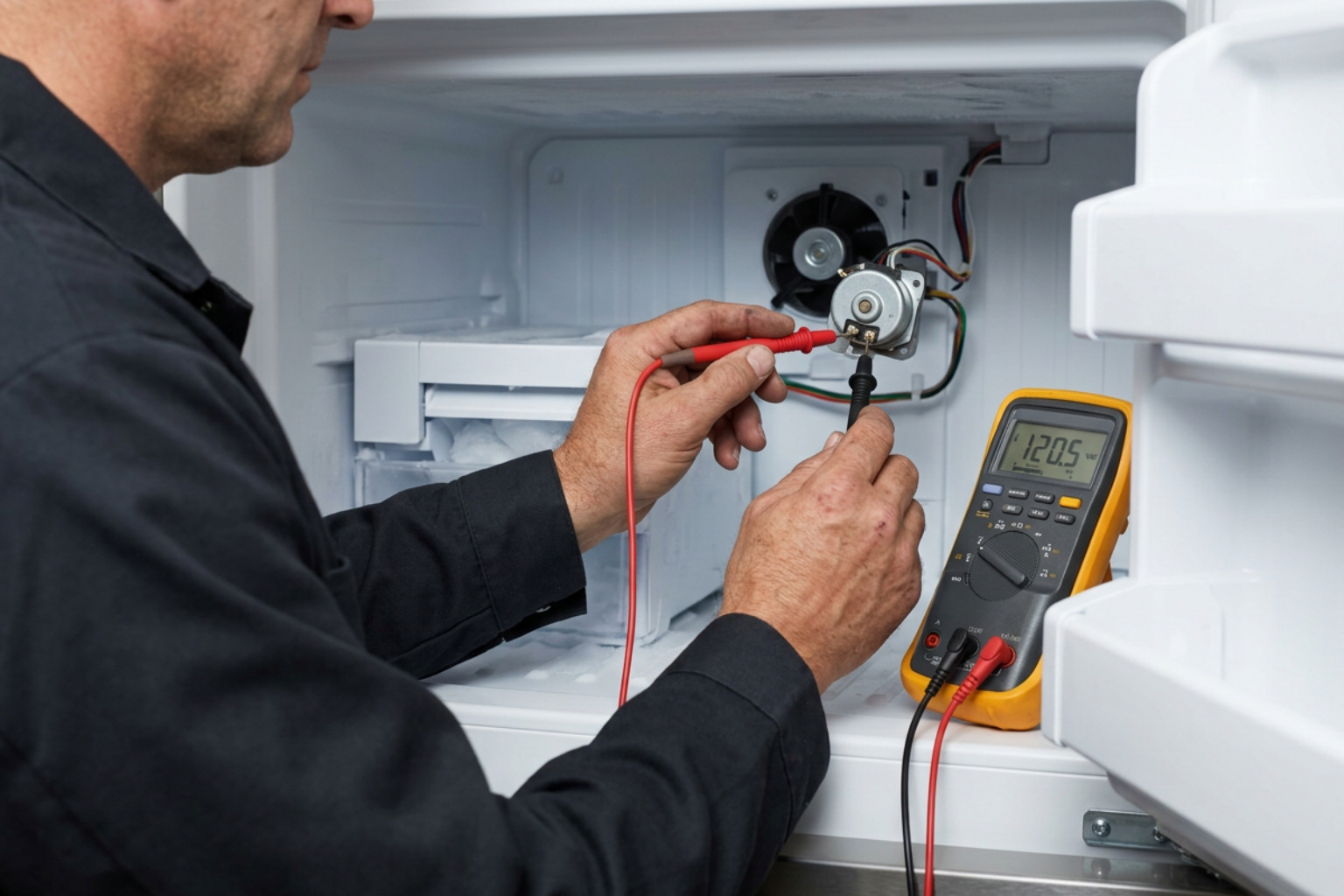
Modern refrigerators are marvels of food preservation, but when internal systems fall out of sync, problems escalate quickly. Knowing the dividing line between a minor quirk and a mechanical failure saves both time and groceries. If your unit runs constantly without reaching the set temperature or you notice food spoiling before its expiration date, reaching out for fast and reliable refrigerator repair is the smartest step forward.
I always advise homeowners to treat persistent temperature swings or puddle formations as urgent calls. Delaying service often forces the compressor to overwork, shortening the overall lifespan of the appliance.
Cooling Failures and Temperature Inconsistencies
A classic GE failure scenario occurs when the freezer section remains freezing cold while the fresh-food compartment warms up to room temperature. This symptom usually points toward an airflow restriction caused by a malfunctioning evaporator fan motor, a failed damper control door that regulates cold air transfer, or heavy frost buildup on the evaporator coils due to a broken defrost component.
In advanced French door and built-in configurations, specialized GE Profile refrigerator service is often required to address electronic damper failures, variable-speed inverter boards, or sealed system leaks. If the compressor hums quietly or runs non-stop while temperatures climb in both sections, an expert must inspect the refrigerant charge, inverter output, and start relay components.
Ice Maker Glitches and Dispenser Malfunctions
Ice and water dispenser issues are among the most frequent service calls I receive across the Triangle area. When an ice maker stops producing crescent cubes entirely, the failure typically stems from:
- A failed electromechanical ice maker module or broken feeler arm.
- A defective dual water inlet valve coil that prevents water from reaching the mold.
- A frozen water fill tube, often caused by low municipal water pressure or a dripping internal valve seat.
- A faulty door interlock switch or dispenser actuator paddle that stops sending voltage signals to the main board.
In many GE French-door models, the ice maker is housed directly in the fresh-food door, relying on dedicated air ducting from the freezer. If the door gasket leaks warm air, moisture builds up and freezes the dispenser mechanics solid.
Strange Noises, Defrost Issues, and Diagnostic Error Codes
Refrigerators naturally hum and click softly during valve activations, but loud, persistent sounds signal trouble:
- Rhythmic clicking every few minutes: Typically indicates a failing compressor start relay (PTC device) or an overloaded compressor motor struggling to turn over.
- Loud buzzing or rattling: Often caused by a worn condenser fan motor bearing or an evaporator fan blade hitting frost accumulation.
- Thick ice sheets on the freezer back panel: Points to a failure in the defrost system—such as an open defrost heater, a tripped bimetal defrost thermostat, or a failed defrost control board timer.
When modern electronic control boards detect an operational anomaly, they display alphanumeric error codes on the digital interface to guide diagnostics.
Troubleshooting Basic GE Fridge Problems Before Booking Service
Before calling a professional technician, you can check a few straightforward items yourself. Simple maintenance lapses or accidental setting changes frequently mimic mechanical breakdowns. Understanding common refrigerator repair baselines can prevent unnecessary service trips.
Checking Power, Temperature Settings, and Condenser Coils
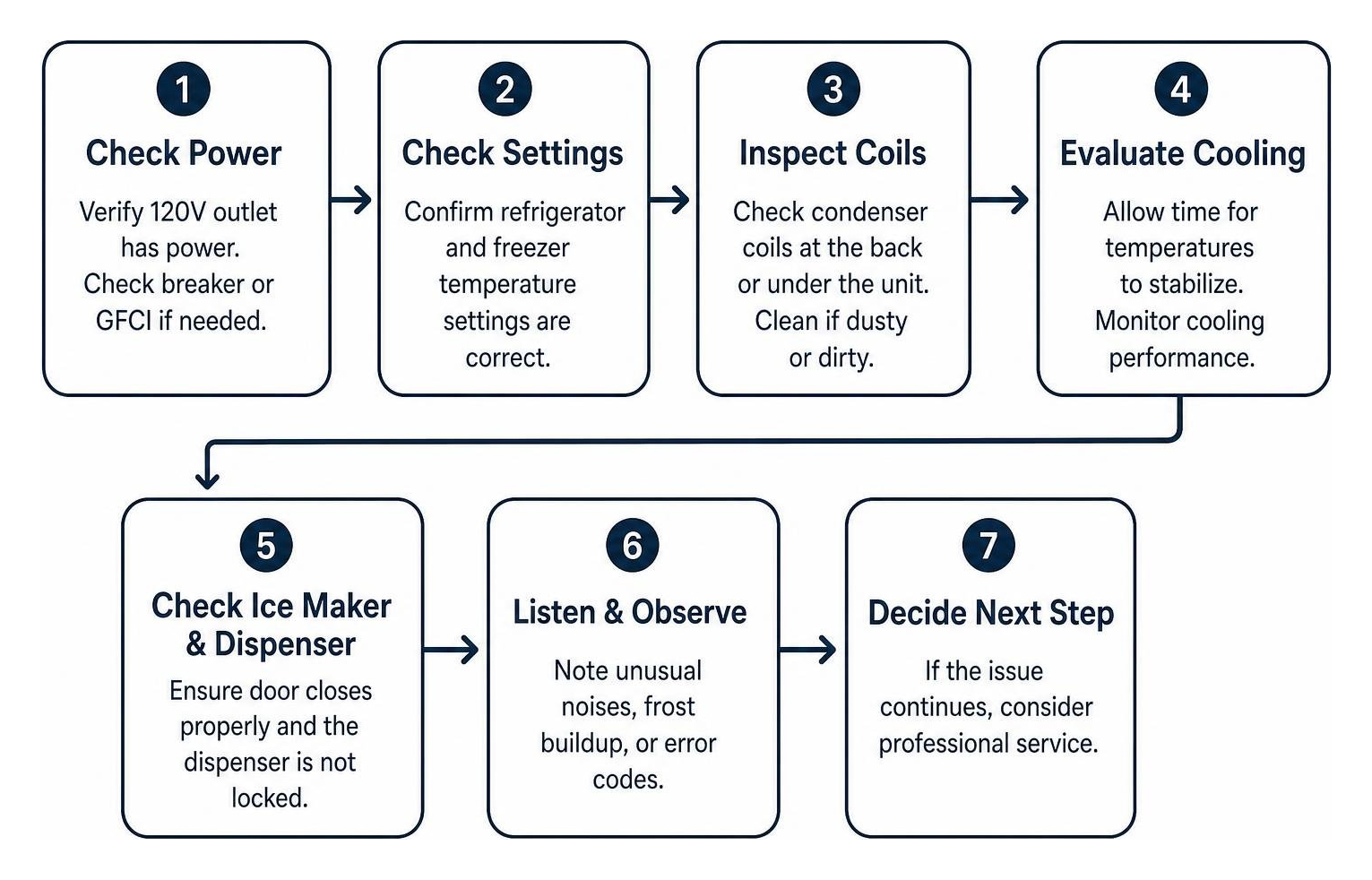
If the refrigerator appears dead or the cooling performance drops suddenly, perform these straightforward checks:
- Verify Electrical Supply: Ensure the dedicated 120V wall outlet is supplying power. Inspect your home’s breaker panel for a tripped breaker or a tripped GFCI outlet upstream.
- Review Control Settings: Check whether the temperature displays were accidentally adjusted to warmer settings or switched into “Sabbath Mode” / “Demo Mode.” Factory recommended settings for GE units are typically 37°F for fresh food and 0°F for the freezer.
- Inspect the Condenser Coils: Dust-clogged condenser coils prevent the sealed system from shedding heat. When heat cannot escape, the compressor runs excessively hot and cooling efficiency plummets. If you need immediate assistance after cleaning, contact a technician for honest fridge repair.
Inspecting Door Gaskets, Defrost Drains, and Water Filters
Physical blockages and worn seals can quickly create moisture problems inside your unit:
- Check Door Gasket Seals: Close a dollar bill in the refrigerator door. If it slides out with zero resistance, the magnetic gasket is warped or torn, letting humid ambient air enter and cause severe internal frost buildup.
- Clear Defrost Drains: If you discover a sheet of ice under the bottom freezer drawer or water pooling beneath the vegetable crispers, the defrost drain tube is likely clogged with algae, ice, or food debris.
- Examine the Water Filter: An old, mineral-clogged water filter reduces dispenser water flow to a trickle and starves the ice maker. Always swap filters every six months.
- Inspect the Light Switch: In select GE models, a physically stuck interior light switch or door sensor disables the water dispenser circuitry entirely while keeping the cabinet dark.
How to Choose the Right Repairman for GE Refrigerator Models
Selecting an appliance technician requires balancing diagnostic capability, availability, parts access, and customer protection.
| Factor | Authorized Factory Service | Certified Independent Pro (iFix Appliances) | Handyman / Generalist |
|---|---|---|---|
| Response Time | Often 3 to 7 business days | Same-day or next-day appointments | Variable |
| Parts Used | Genuine OEM Parts | Genuine OEM GE Parts | Generic / Aftermarket |
| Parts Warranty | Standard 1-Year | Up to 1-Year Manufacturer Warranty | Rarely offered |
| Labor Guarantee | Standard 30-Day Limited | Extended Workmanship Warranty | None or minimal |
| Smart Diagnostics | Specialized factory tools | Dedicated diagnostic software & meters | Basic visual checks |
| Pricing | Fixed high-tier corporate pricing | Transparent, competitive local rates | Unpredictable estimates |
To make an informed decision, review our guide on finding a reliable GE repairman to protect your investment.
Vetting an Independent Repairman for GE Refrigerator Units vs. Authorized Service
While large factory service operations provide standardized processes, local certified independent specialists often deliver faster scheduling, personalized customer care, and direct communication with the technician handling your appliance.
When vetting an independent pro, confirm that they carry factory-approved OEM components rather than low-grade universal aftermarket parts. Using OEM parts ensures exact electrical tolerances and prevents repeat failures. Always clarify the details of your refrigerator warranty coverage to see if your repairs qualify under active manufacturer terms or third-party protection plans.
Essential Qualifications to Look for in a Repairman for GE Refrigerator Repairs
When hiring a technician for complex repairs, verify these essential qualifications:
- EPA Section 608 Universal Certification: Required by federal law for any technician who handles, recovers, or charges refrigerants in sealed compressor systems.
- Proper Licensing and Liability Insurance: Protects your home and property against accidental damage during appliance handling.
- Specialized High-End Experience: If you own luxury architectural appliances, make sure the technician is trained in specialized platforms like GE Monogram repair service or custom built-in configurations.
- Transparent Diagnostics: Look for companies that provide upfront diagnostic fees and clear, written estimates before beginning physical repairs. You can quickly locate certified fridge service techs with a proven local track record.
What to Expect During a Professional GE Refrigerator Service Visit
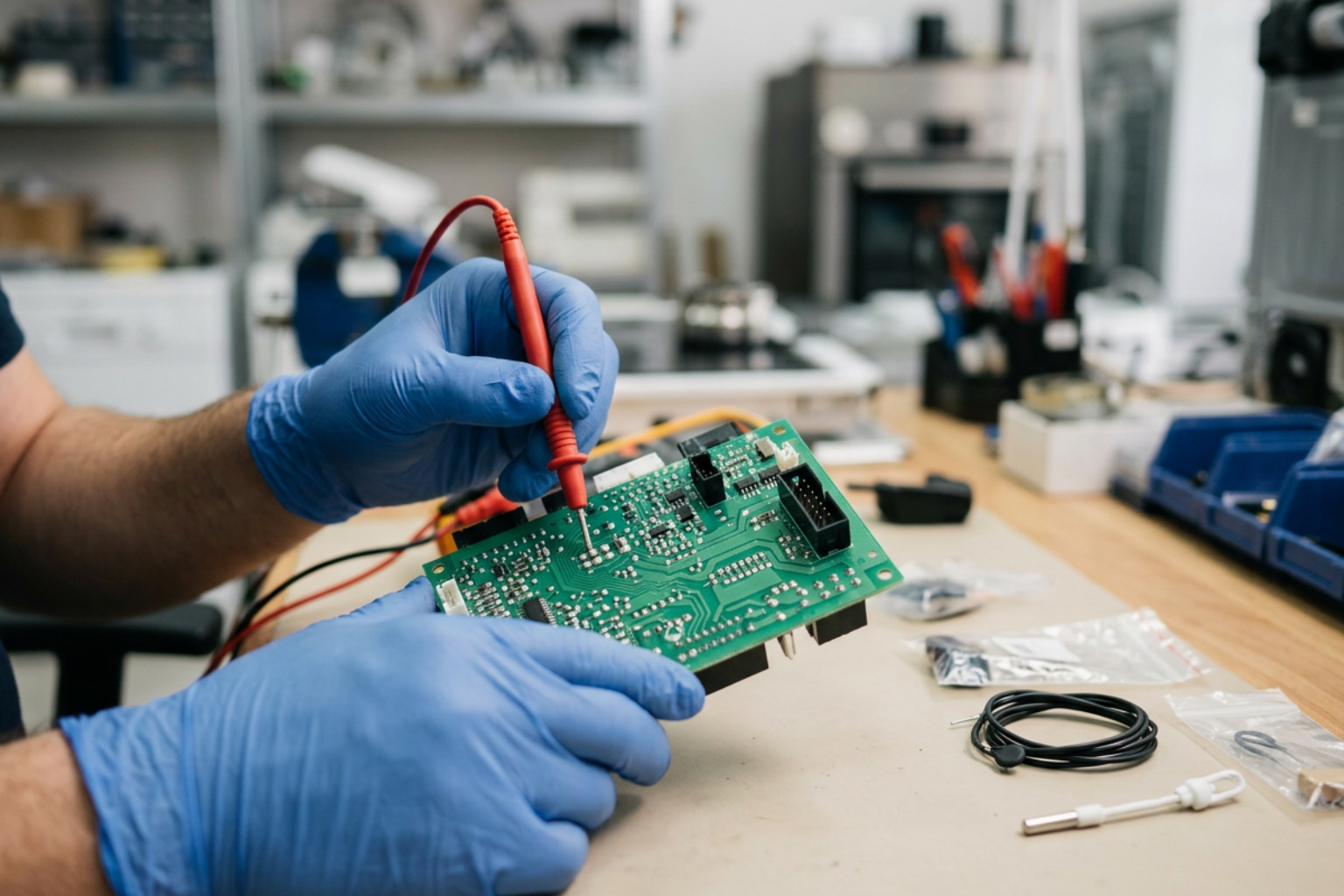
When you schedule an appointment with a dedicated specialist, the service process follows a structured diagnostic protocol. Working with a trusted refrigerator repair service ensures you are informed at every step of the diagnostic and repair process.
Diagnostic Software, Sensor Checks, and OEM Parts Replacement
Modern GE refrigerators rely heavily on complex control electronics, thermistors, and variable-speed fan motors. During a diagnostic visit, a technician will typically:
- Perform Electronic Diagnostics: Connect diagnostic tools or enter factory service test modes directly through the front dispenser panel or main control board to read active error logs.
- Test Thermistors and Sensors: Use digital multimeters to measure resistance values across temperature sensors (thermistors) at specific temperatures to identify drifting sensors.
- Inspect Sealed System Pressures: Check the compressor operation, inverter drive board frequency, and condenser airflow.
- Install OEM Replacements: Replace failed components—such as main control boards, defrost timers, or inverter modules—using genuine, factory-specified parts calibrated for your specific model.
Understanding Repair Costs, Labor Guarantees, and Warranty Coverage
A reputable service provider will present a full cost breakdown after finishing the diagnosis. This estimate should separate the diagnostic fee, the specific OEM parts required, and the labor charges for completing the repair.
Reliable companies also back their work with a solid warranty—such as a 1-year guarantee on genuine replacement parts and a comprehensive labor warranty. If an unforeseen complication arises shortly after the repair, you won’t be left stranded with repeat service charges.
Maintaining Your GE Refrigerator to Prevent Future Breakdowns
Routine preventive maintenance helps prevent costly emergency repairs and extends the operational life of your GE refrigerator.
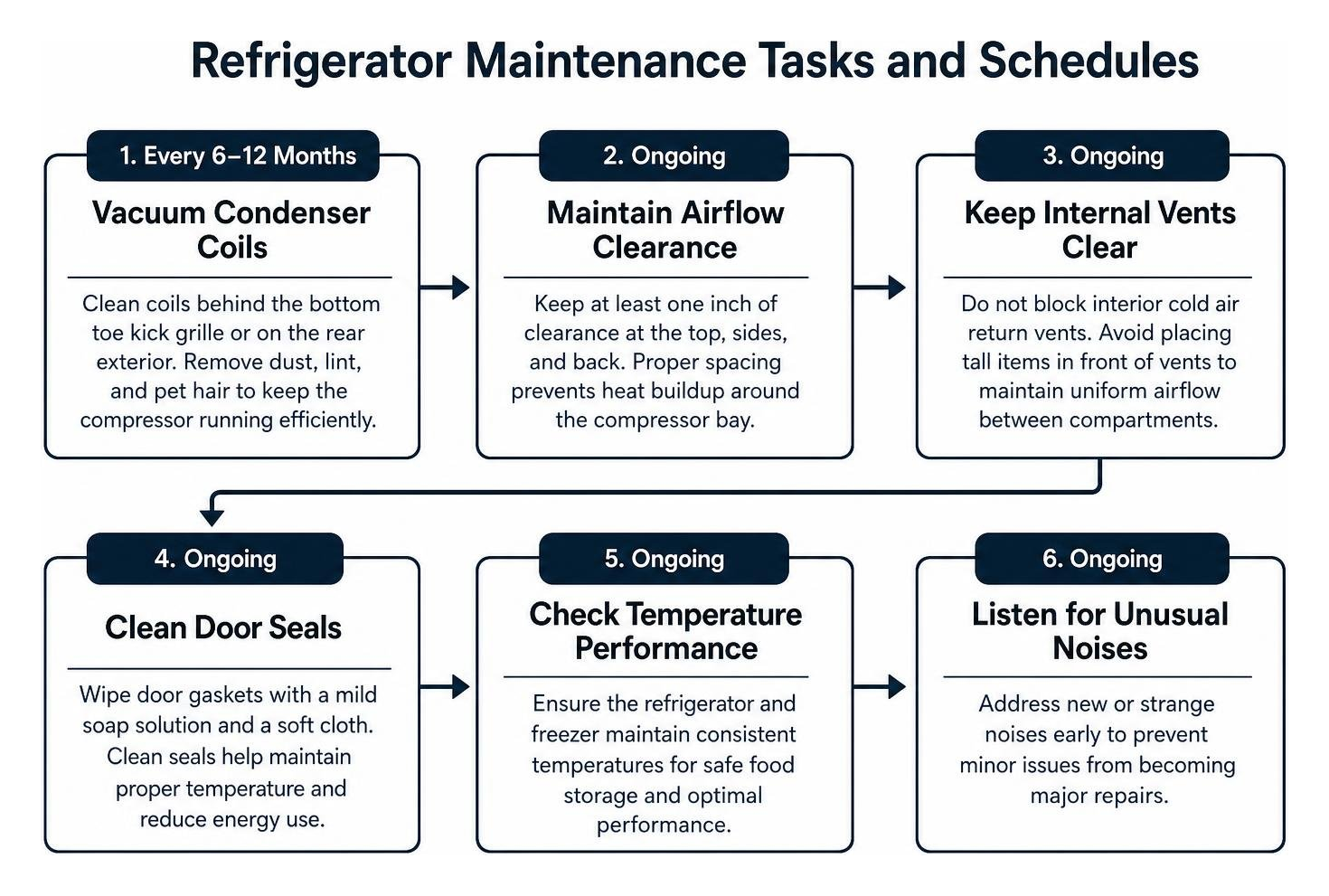
Routine Cleaning and Coil Care
- Vacuum Condenser Coils Every 6 to 12 Months: Condenser coils are located behind the bottom toe kick grille or on the rear exterior of the cabinet. Use a long-handled condenser coil brush and a vacuum hose to clean away pet hair, lint, and dust. Clean coils allow heat to radiate freely, reducing strain on the compressor.
- Maintain Airflow Clearance: Ensure the refrigerator has at least one inch of breathing clearance at the top, sides, and back. Crowding a freestanding unit into tightly fitted cabinetry causes heat to build up around the compressor bay.
- Keep Internal Vents Clear: Avoid stacking tall food items directly in front of the interior cold air return louvers, which disrupts uniform airflow between compartments.
Filter Replacements and Door Seal Maintenance
- Replace Water Filters on Schedule: Swap the internal water filter cartridge every six months. A clogged filter restricts water pressure, straining the internal valve coils and producing undersized or hollow ice cubes.
- Wash and Lubricate Door Gaskets: Wipe door seals monthly using warm water and mild soap to remove sticky residue. Apply a very thin layer of food-grade silicone grease or petroleum jelly along the hinge side of the gasket to keep the rubber pliable and airtight.
- Inspect the Defrost Drain Pan: Periodically check the evaporator drain pan underneath the unit for stagnant water or dust accumulation to prevent musty odors.
Frequently Asked Questions About GE Refrigerator Repair
Is it worth repairing an older GE refrigerator or replacing it?
As a general guideline, apply the 50% rule: if the refrigerator is less than 8 to 10 years old and the total cost of the repair is less than half the price of a comparable new unit, repairing it makes financial sense.
Minor to moderate repairs—such as replacing a start relay, an evaporator fan motor, a defrost thermostat, or a water inlet valve—are cost-effective fixes that can add many years of reliable performance to your unit. However, if an older appliance with extensive cosmetic wear suffers a major sealed system failure (such as an internal refrigerant leak or a seized compressor), purchasing a modern, energy-efficient replacement may be the better option.
What do common GE refrigerator error codes like FF or E2 mean?
Modern GE digital displays alert you to component errors via specific fault codes:
- Code FF (Freezer Fan): Indicates that the freezer compartment temperature is rising because the evaporator fan is not circulating air effectively, often due to heavy frost accumulation or a failed motor.
- Code E2 (Defrost Sensor Error): Indicates that the electronic control board is not receiving proper temperature data from the defrost sensor/thermistor, which can disrupt automated defrost cycles.
- Code E7 / E8 (Fan Motor Errors): Signals an operational failure with either the internal evaporator fan motor (E7) or the lower condenser fan motor (E8).
- Code E9 / E10 (Ice / Water System Errors): Pinpoints a mechanical failure within the ice maker module or an electrical fault in the water inlet valve circuitry.
How much does professional GE refrigerator repair typically cost?
The final cost of a professional repair depends on the failed component, the specific model series (standard GE vs. Café or Profile), and parts availability:
- Diagnostic Service Fee: Typically ranges from $65 to $125 (this fee is often credited toward the final repair if you proceed with service).
- Minor Repairs ($150 – $300): Includes common fixes like replacing a compressor start relay, fixing a door switch, unclogging a defrost drain, or swapping out a water inlet valve.
- Moderate Repairs ($300 – $600): Includes replacing an evaporator fan motor, swapping a main electronic control board, or installing a complete ice maker assembly.
- Major Sealed System Repairs ($700 – $1,200+): Involves compressor replacements, evaporator coil installations, and closed refrigerant line brazing.
Conclusion
A malfunctioning refrigerator can disrupt your daily routine, but you don’t have to let temperature failures or leaking water ruin your week. Understanding common failure symptoms, keeping up with routine maintenance, and knowing when to call a qualified specialist helps protect your food and keeps your appliance running efficiently for years to come.
When you need dependable, professional support for your GE refrigerator, the team at iFix Appliances is ready to help. We provide prompt diagnostics, transparent written estimates, and lasting repairs using genuine factory-approved OEM parts. Book your appointment with our expert GE repair service today to get your kitchen back to normal.
0 Comments