
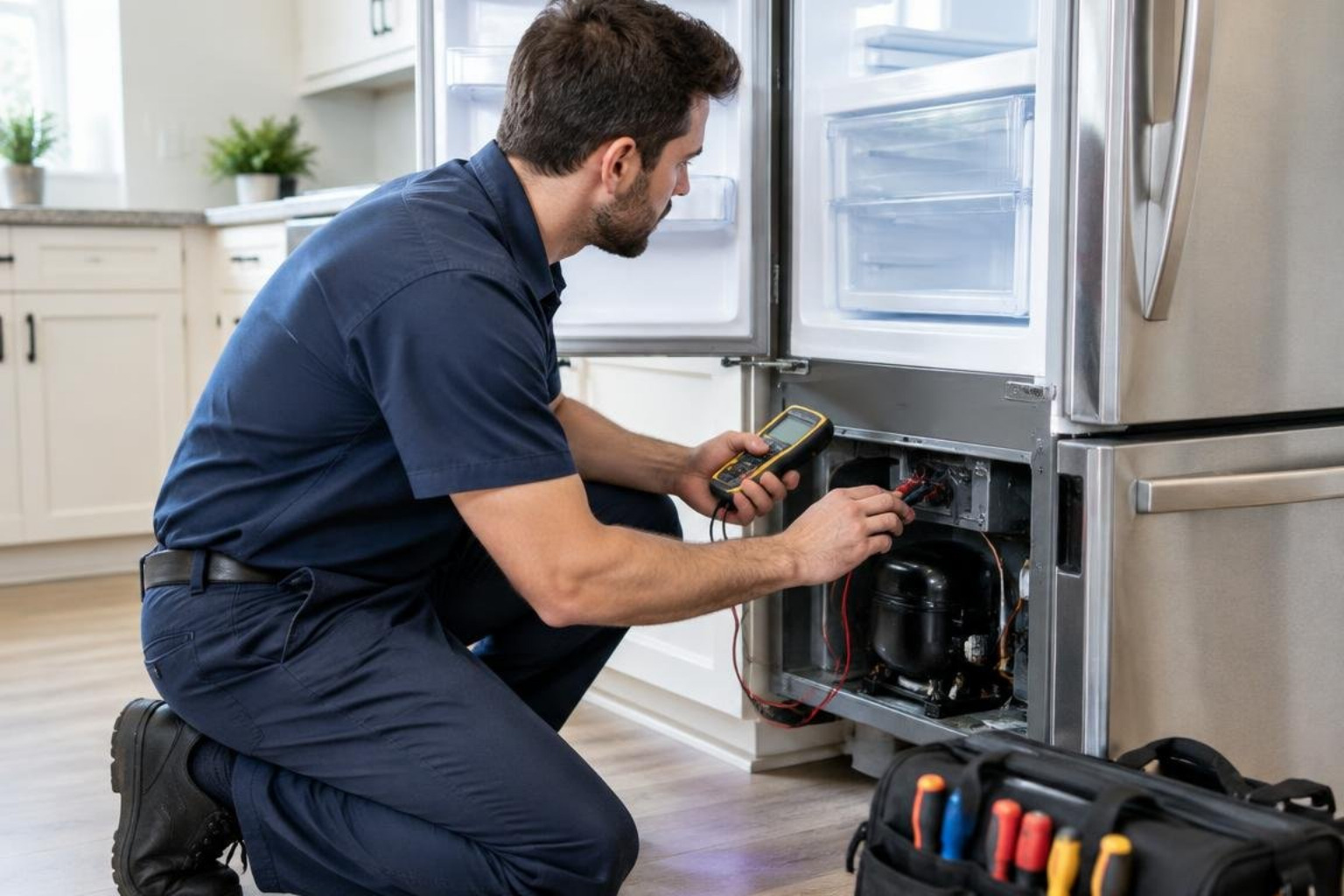
What Should Fridge Service Cost?
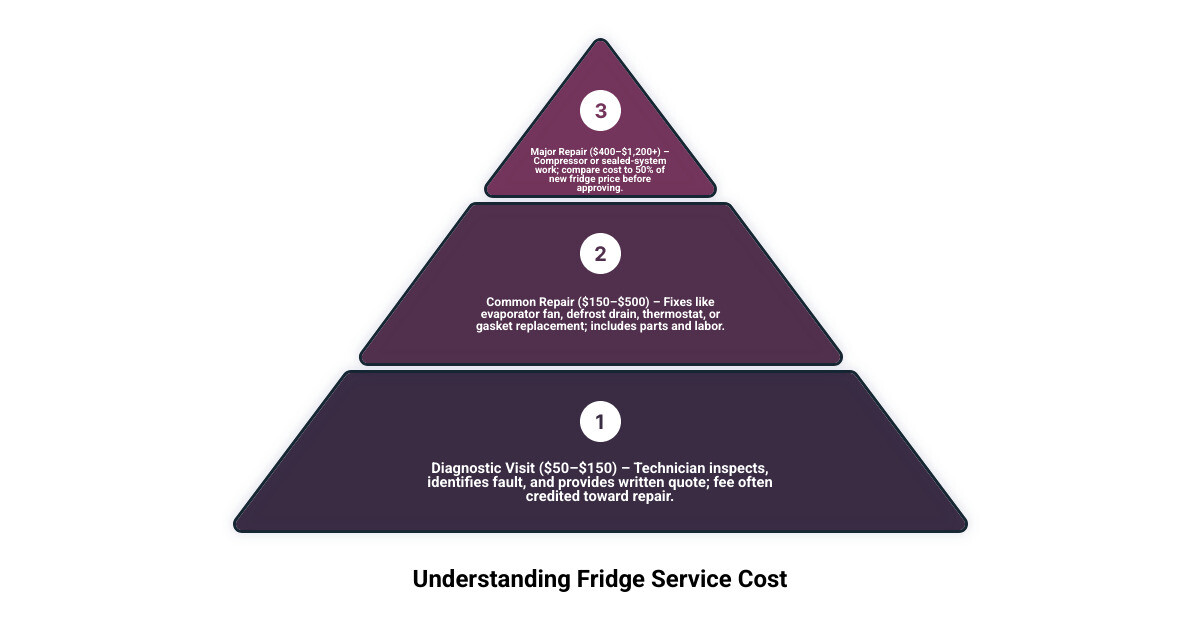
A typical fridge service cost is $150 to $500 for a common repair. A diagnostic visit often costs $50 to $150, while compressor or sealed-system work can reach $400 to $1,200 or more. These are planning ranges, not a quote for your refrigerator.
To estimate your total, ask whether the diagnostic fee is credited toward the repair. Then request a written price that includes parts, labor, and any extra fees before approving the work. Compare that total with the cost of a similar new fridge. If the repair is more than half the replacement price, think carefully about whether it is worth it.
I’m Vasyl Turetsky, founder and appliance repair specialist at iFix Appliances. My work diagnosing refrigerators for homeowners around Raleigh helps me explain fridge service cost in practical terms: what the fault is, what the fix involves, and when a repair makes sense.
Fridge service cost further reading:
Typical Fridge Service Cost Breakdown by Component and Issue
When your refrigerator starts acting up, figuring out what you should reasonably pay can feel overwhelming. A fridge that runs constantly is just trying to stay cool, but without an honest breakdown, it ends up burning a hole in your wallet instead. Refrigerator repairs generally fall into two broad buckets: straightforward mechanical/electrical component swaps, and major sealed-system rebuilds.
The vast majority of everyday refrigerator issues involve standard wear-and-tear parts like thermostats, defrost heaters, door gaskets, and fan motors. Below is a comprehensive breakdown of what you can expect to pay for parts and labor across common repair categories.
| Refrigerator Problem | Affected Components | Typical Repair Cost (Parts & Labor) | Repair Urgency |
|---|---|---|---|
| Water Leaking onto Floor | Defrost drain line, water inlet valve | $150 – $350 | Medium (Risk of floor damage) |
| Fresh Food Section Warm | Evaporator fan motor, defrost thermostat | $200 – $480 | High (Risk of food spoilage) |
| Noisy Operation / Buzzing | Condenser fan, evaporator fan, start relay | $150 – $400 | Medium |
| No Ice Production | Ice maker assembly, dual water valve | $150 – $400 | Low |
| Frost Buildup in Freezer | Defrost heater, bimetal thermostat, timer | $200 – $450 | High |
| Erratic Temperature / Dead Display | Main electronic control board | $250 – $600 | High |
| Door Not Sealing / Sweating | Magnetic door gasket | $100 – $250 | Low to Medium |
| Clicking Sound & Not Cooling | Compressor start relay / overload capacitor | $150 – $300 | High |
| Sealed System / Complete Loss of Cold | Compressor, evaporator coil, refrigerant lines | $400 – $1,200+ | Critical |
Diagnostic and Service Call Fees
Before any wrench touches a bolt, a service technician charges a trip and diagnostic fee to inspect the unit, isolate the root cause, and verify electrical circuits. Across the Triangle area—from Raleigh and Cary to Durham and Chapel Hill—a standard residential diagnostic fee ranges between $50 and $150.
A reputable technician should always credit this diagnostic fee directly toward the total cost of your repair if you decide to proceed with the job. If a contractor insists on charging you a $100+ diagnostic fee on top of an already inflated repair bill without crediting it, take a step back. When you work with a reliable local refrigerator repair service, you receive a flat, transparent quote that outlines exactly what you are paying for labor, genuine replacement parts, and testing.
Average Fridge Service Cost by Issue Type
Different symptoms correspond to specific components inside your refrigerator. Understanding these common failure points helps you evaluate quotes accurately:
- Cooling Loss: If you notice your refrigerator not cooling properly while the interior lights stay illuminated, the problem is frequently an airflow restriction or a failed motor. Carrying out an evaporator fan replacement typically costs between $200 and $450.
- Water Pooling: Puddles inside the crisper drawers or underneath the front kick plate usually point to a frozen or blocked drain tube. Technicians handle clearing clogged defrost drains quickly, typically billing between $150 and $300 for a thorough flush and drain grommet upgrade.
- Electronic Control Board Failures: Modern refrigerators act like computers on cooling duty. When power surges or aged capacitors knock out the main control board, the repair total generally runs between $250 and $600 depending on the complexity of the microprocessors.
- Worn Door Gaskets: A torn or hardened rubber door seal lets warm, humid air seep inside continuously. Replacing a door gasket runs between $100 and $250.
Compressor and Sealed-System Repair Pricing
The compressor is the mechanical heart of your refrigerator. It pumps refrigerant vapor through the evaporator and condenser coils to transfer heat out of the food compartments. When a compressor fails mechanically or develops an internal electrical short, it is the single most expensive fix on any appliance.
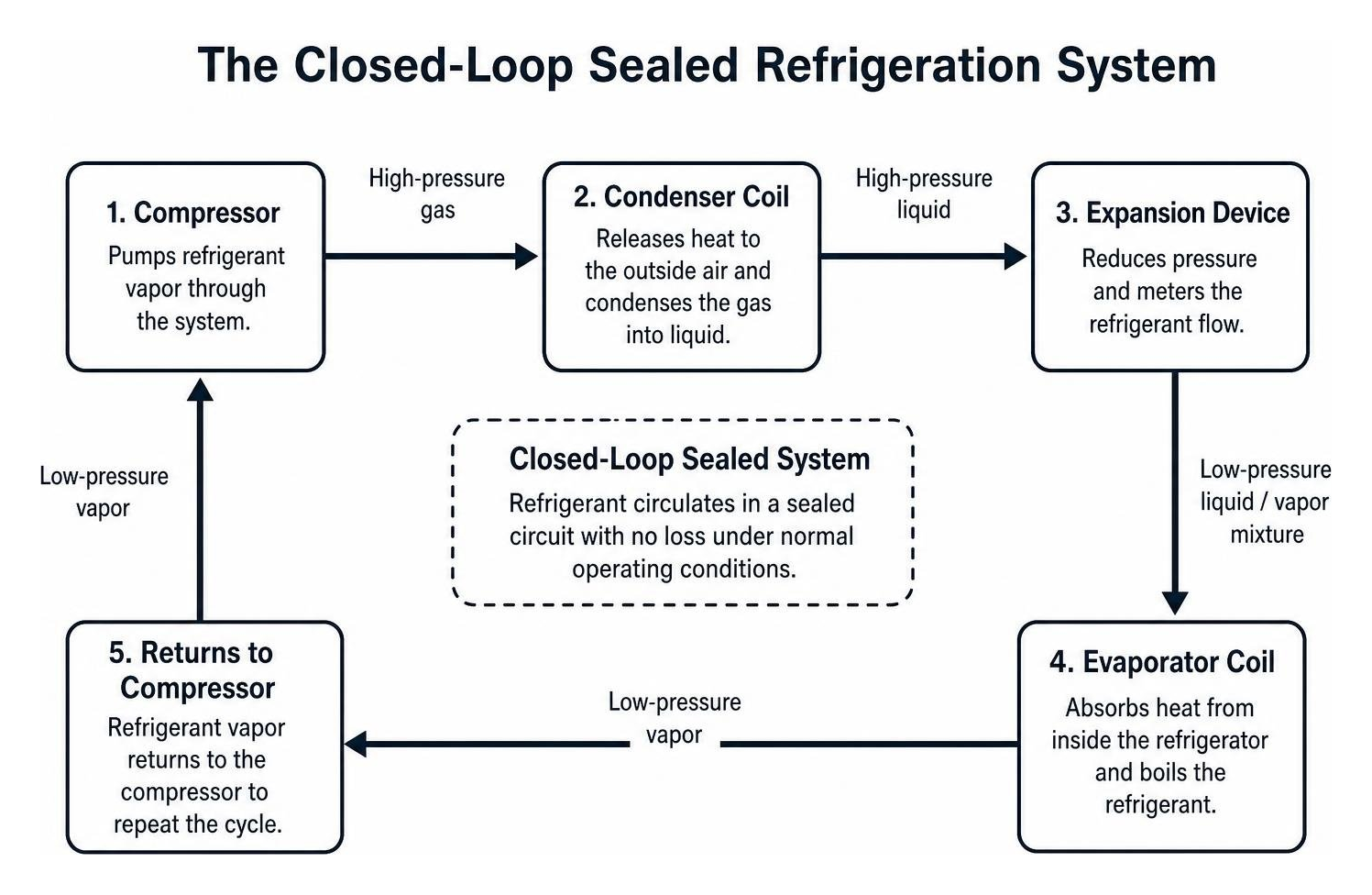
A complete compressor replacement typically runs from $400 to $1,200 or more. This price reflects both the high cost of the replacement compressor and the specialized labor required. Sealed-system repairs demand EPA Section 608 certification, specialized vacuum recovery machines, oxy-acetylene brazing torches, and precise electronic scales to recharge refrigerant to factory specifications.
However, many homeowners are relieved to discover that a “clicking” compressor is not dead at all. In many cases, only the small exterior start relay or capacitor attached to the side of the compressor has burned out. Replacing a failed start relay only costs between $150 and $300, saving you hundreds of dollars compared to a complete compressor swap.
Ice Maker and Freezer Repair Costs
Ice maker issues remain among the most frequent service calls. Problems range from mineral-clogged water lines and failed inlet valves to jammed ejector blades. Standard ice maker troubleshooting and complete module replacements usually land in the $150 to $400 range.
When you run into broader freezer temperature issues, the culprit is often the defrost system. A failed defrost heater element or bimetal thermostat prevents frost from melting off the evaporator coils, forming a solid block of ice that chokes off airflow to the rest of the unit. Restoring proper defrost cycle operation typically costs between $200 and $450.
Key Factors That Influence Total Refrigerator Repair Expenses
No two refrigerator repairs are priced identically because several mechanical and logistical variables dictate the final invoice.
How Refrigerator Brand Tiers Impact Fridge Service Cost
The make and model of your appliance heavily influence both part availability and technician labor rates:
- Standard Domestic Brands: Core household brands such as Whirlpool, Maytag, Frigidaire, and GE benefit from extensive domestic supply chains. Booking a Whirlpool repair service or basic GE refrigerator fixes tends to remain at the lower end of the pricing spectrum ($150 to $500) because replacement components are widely stocked and easy to access.
- Feature-Rich Technology Brands: Advanced consumer brands like Samsung and LG utilize dual-evaporator systems, linear compressors, and complex digital displays. Booking a Samsung appliance service or LG sealed-system repair often averages between $200 and $800 due to brand-specific engineering and specialized control logic.
- Luxury and Built-In Units: Premium built-in appliances—such as Sub-Zero, Viking, Thermador, and Dacor—command premium repair costs ranging from $500 to $1,500+. Dedicated Sub-Zero maintenance and repair requires heavy-duty commercial-grade components, dual compressors, and specialized cabinetry removal, which naturally drives up total service pricing.
Parts Availability, Labor Rates, and Environmental Wear
Beyond the brand name, physical circumstances and local conditions shape your repair quote:

- OEM vs. Aftermarket Parts: Original Equipment Manufacturer (OEM) components are engineered to factory specifications and typically carry solid parts warranties, but they can cost 15% to 35% more than generic aftermarket alternatives.
- Emergency Dispatch: Requesting same-day emergency repairs on weekends or late evenings can incur flat after-hours surcharges ranging from $50 to $100.
- Environmental Factors: Regional environmental conditions dictate how hard your appliances work. For instance, the climate impact on household appliances in North Carolina—marked by intense summer heat and sustained indoor humidity—causes condenser fan motors and coils to accumulate dust and run hot, accelerating mechanical wear.
The 50% Rule: Should You Repair or Replace Your Refrigerator?
One of the toughest dilemmas homeowners face is choosing whether to invest in a repair or cut their losses and purchase a new refrigerator. To make an objective, financially sound choice, industry professionals rely on the established 50% Rule.
| Refrigerator Age Bracket | Repair Cost Under $300 | Repair Cost $300 – $600 | Repair Cost Over $600 (Sealed System) |
|---|---|---|---|
| 0 – 5 Years Old | Repair (High ROI) | Repair (Protects investment) | Repair (Often covered by warranty) |
| 6 – 9 Years Old | Repair (Cost-effective) | Evaluate (Compare to 50% rule) | Replace (Unless luxury built-in) |
| 10+ Years Old | Repair Minor Issues | Replace (Approaching end of life) | Replace (Buy modern efficient unit) |
Calculating the 50% Rule and Lifespan Economics
The average lifespan of a modern residential refrigerator is between 10 and 18 years, with most standard units averaging 10 to 14 years of reliable service. The 50% Rule states: If a repair quote exceeds 50% of the cost of buying a comparable new refrigerator, and the unit is past the midpoint of its expected lifespan, replacement is generally the smarter financial decision.
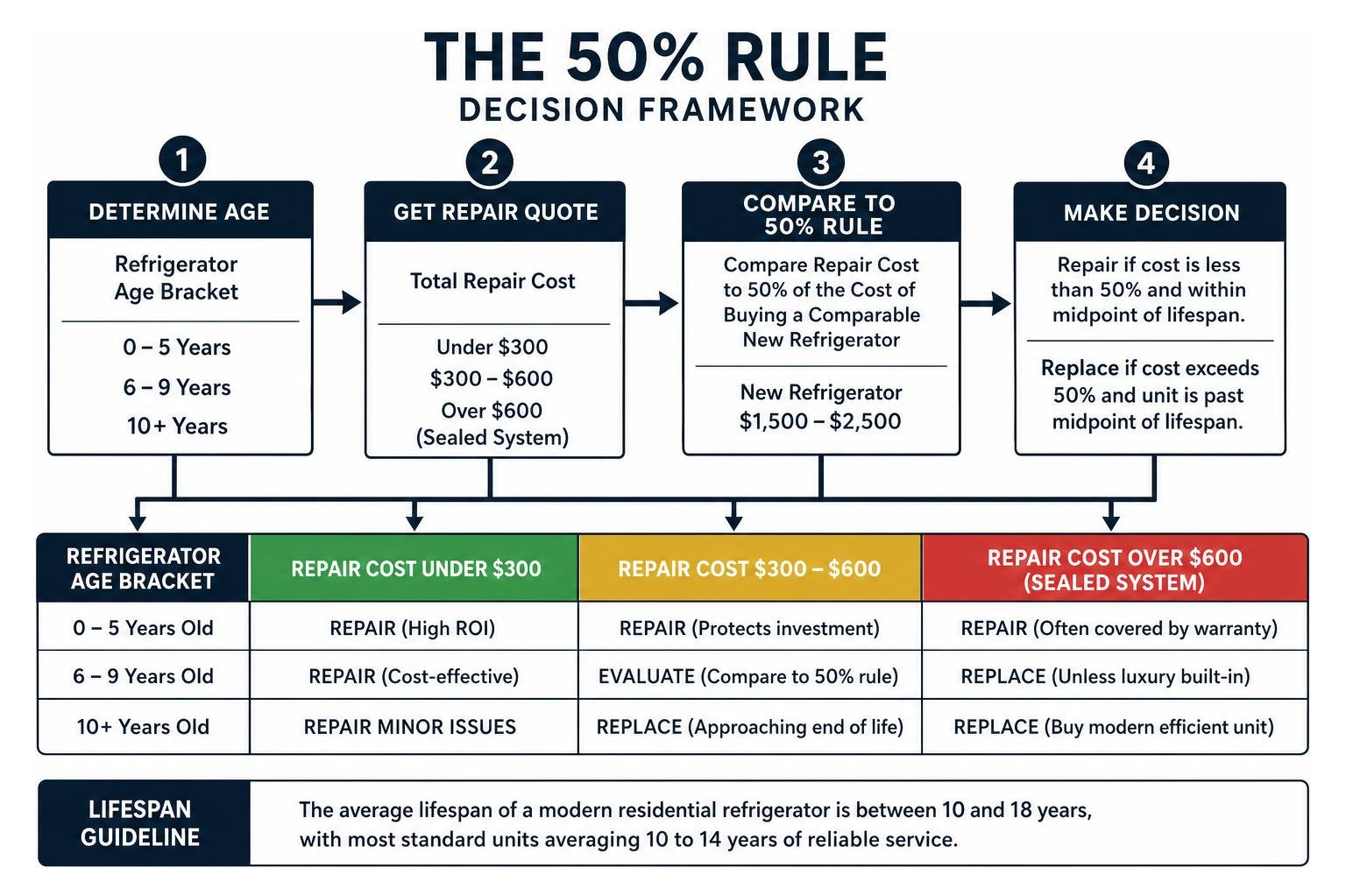
Consider this plain-language math:
- A decent new standalone French-door refrigerator costs between $1,500 and $2,500.
- If your 4-year-old fridge needs a $350 evaporator fan motor, that repair represents only about 15% to 23% of the replacement price. Fixing it is a clear win.
- Conversely, if your 11-year-old refrigerator suffers a sealed-system failure and requires an $850 compressor replacement, you are spending over 50% of the value of a comparable replacement on an appliance that is already nearing the end of its operational life.
Red Flags That Point to Complete Unit Replacement
While many issues are simple to resolve, certain red flags indicate it is time to arrange new appliance installation and removal:
- Multiple Compounding Breakdowns: If you have paid for two or three distinct repairs in the past 12 months, the appliance’s underlying electrical or cooling architecture is deteriorating.
- Sealed-System Leaks Inside Internal Walls: If refrigerant is leaking from copper lines foamed directly into the cabinet walls, the unit cannot be safely repaired.
- Severe Structural Rust and Cabinet Damage: Extensive internal rust compromises the structural insulation, forcing the cooling components to run constantly without maintaining safe food storage temperatures.
DIY Fixes vs. Professional Care and Preventive Maintenance
Homeowners can easily tackle basic cosmetic and structural adjustments without calling a technician. Knowing your limits keeps you safe and helps you avoid accidental damage to sensitive components.

Minor DIY Adjustments vs. Calling a Certified Technician
Minor mechanical adjustments can be rewarding home projects:
- Door and Handle Alignment: Straightening a sagging door via basic door hinge alignment or tightening a wobbly pull bar by repairing loose handles takes only a few minutes with basic screwdrivers.
- Leveling the Unit: Adjusting the front leveling legs with an adjustable wrench ensures doors close automatically under their own weight.
However, you should avoid DIY troubleshooting when tasks involve high-voltage wiring, electronic inverter boards, or sealed refrigerant systems. Federal regulations prohibit venting or handling refrigerants without proper licensing, and incorrect wiring can quickly destroy expensive microprocessors.
Essential Maintenance Habits to Avoid Expensive Repairs
Consistent maintenance prevents premature wear and keeps your energy bills low:
- Clean Condenser Coils Every 6 to 12 Months: Dust and pet hair blanket the condenser coils underneath or behind your fridge. When coils cannot shed heat, the compressor runs longer and hotter. Cleaning them with a coil brush and vacuum prevents unnecessary stress on the motor.
- Check and Clean Door Gaskets: Wipe down rubber seals with warm soapy water to eliminate sticky food residues that tear the rubber.
- Maintain Proper Airflow: Never pack food tightly against the back wall vents of the freezer or fresh food compartment.
- Schedule Periodic Inspections: Booking a professional annual fridge maintenance service allows a technician to verify defrost cycles, test thermistors, clear drain lines, and inspect electrical contacts before minor issues turn into emergency repairs.
Frequently Asked Questions About Refrigerator Repair
What is the standard diagnostic fee for a refrigerator service call?
A standard residential diagnostic fee generally falls between $50 and $150. This covers the technician’s travel, physical inspection, and electrical testing to pinpoint the exact failure. Transparent service companies credit this diagnostic fee toward the total cost of parts and labor when you authorize the repair.
How much does it cost to fix a refrigerator that is not cooling?
Fixing a refrigerator that has stopped cooling typically costs between $150 and $500 for common issues such as a faulty thermostat, failed evaporator fan motor, broken defrost heater, or clogged drain line. If the issue stems from a major sealed-system leak or failed compressor, the total repair cost can range from $400 to $1,200+.
Is it worth replacing a refrigerator compressor on a 10-year-old unit?
In most cases, replacing a compressor on a standard 10-year-old standalone refrigerator is not economically practical. Because a compressor replacement costs between $600 and $1,200, that investment often exceeds 50% of the cost of a new, energy-efficient model. However, if you own a high-end luxury built-in refrigerator (such as a Sub-Zero or Thermador) that costs upwards of $7,000 to replace, installing a new compressor is a sensible, cost-effective choice.
Conclusion
Understanding typical repair costs and recognizing the early warning signs of component wear ensures you never overpay for appliance service. By insisting on upfront diagnostic quotes, asking for diagnostic fee credits, and applying the 50% Rule against the true age of your appliance, you can make confident, cost-effective decisions for your home.
When you need an honest evaluation, fair flat-rate pricing, and lasting repairs anywhere across the Triangle area—including Raleigh, Cary, Durham, Apex, and Chapel Hill—reach out to iFix Appliances to schedule professional refrigerator repair with an experienced local specialist.



0 Comments