
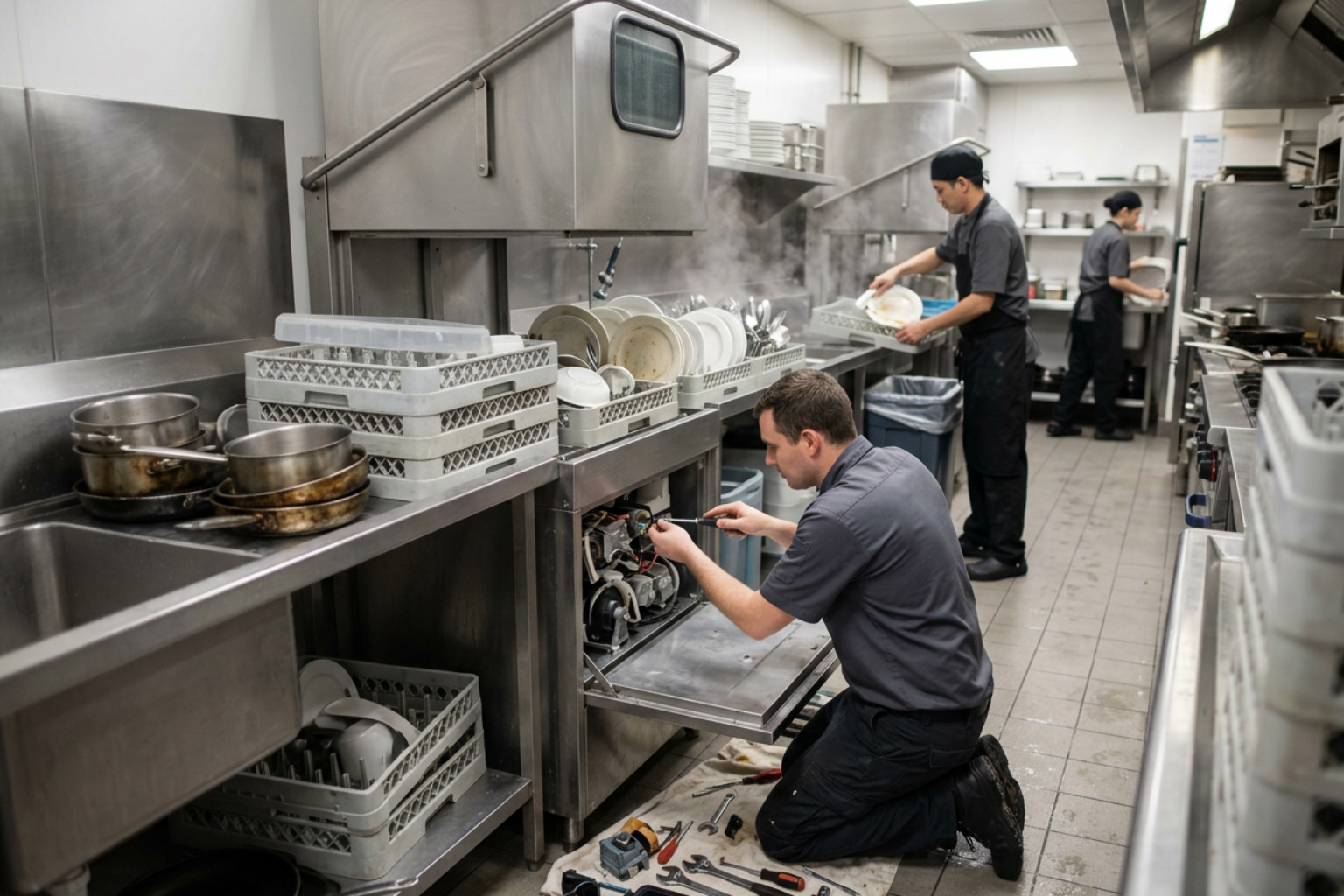
When Your Commercial Dishwasher Goes Down, Every Minute Costs You Money
Commercial kitchen dishwasher repairs are one of the most urgent problems a restaurant owner can face. A broken dish machine during dinner service means dirty plates piling up, tables turning slower, and health code compliance going out the window — fast.
Here are the most common issues that need immediate attention:
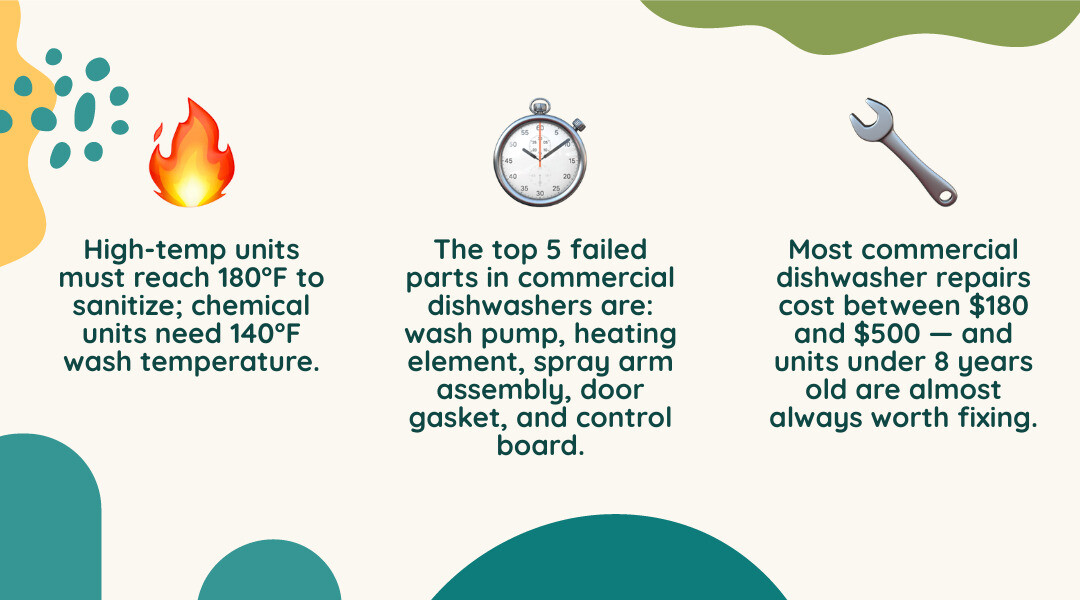
- Not reaching sanitizing temperature — high-temp units must hit 180°F; chemical units require 140°F wash temp
- Not draining — standing water in the wash tank stops all operations
- Leaking water — worn door gaskets or pump seals create slip hazards and equipment damage
- Dishes coming out dirty — clogged spray arms, wrong detergent dosing, or scale buildup
- Unit won’t start — door latch, power supply, or control board failure
- Cloudy glassware — failed rinse aid dispenser or hard water scale
- Error codes on the display — signals a specific fault that needs professional diagnosis
Most repairs fall in the $180–$500 range. Units under 8 years old are almost always worth repairing rather than replacing.
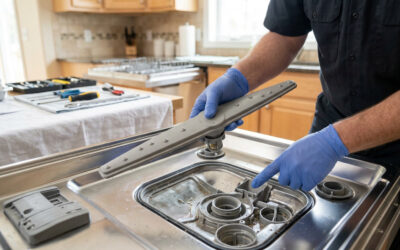
The root cause is usually one of these five parts: the wash pump, heating element, spray arm assembly, door gasket, or control board. Identifying which one failed is the first step to getting your kitchen back online.
I’m Vasyl Turetsky, Founder and Appliance Repair Specialist at iFix Appliances, and I’ve diagnosed and repaired commercial and residential dishwashers across Raleigh, Cary, Durham, and surrounding North Carolina communities for years — commercial kitchen dishwasher repairs are among the most time-sensitive calls we handle. In this guide, I’ll walk you through how to identify what’s wrong, what to do right now, and when to call a professional.
Relevant articles related to commercial kitchen dishwasher repairs:
Understanding Your Machine: Types and Common Failure Points
To troubleshoot your dish machine effectively, we first have to look at what kind of system is powering your dish pit. Commercial warewashing equipment is built far tougher than residential models, but running hundreds of cycles a day takes a toll. Different configurations have highly specialized failure points.
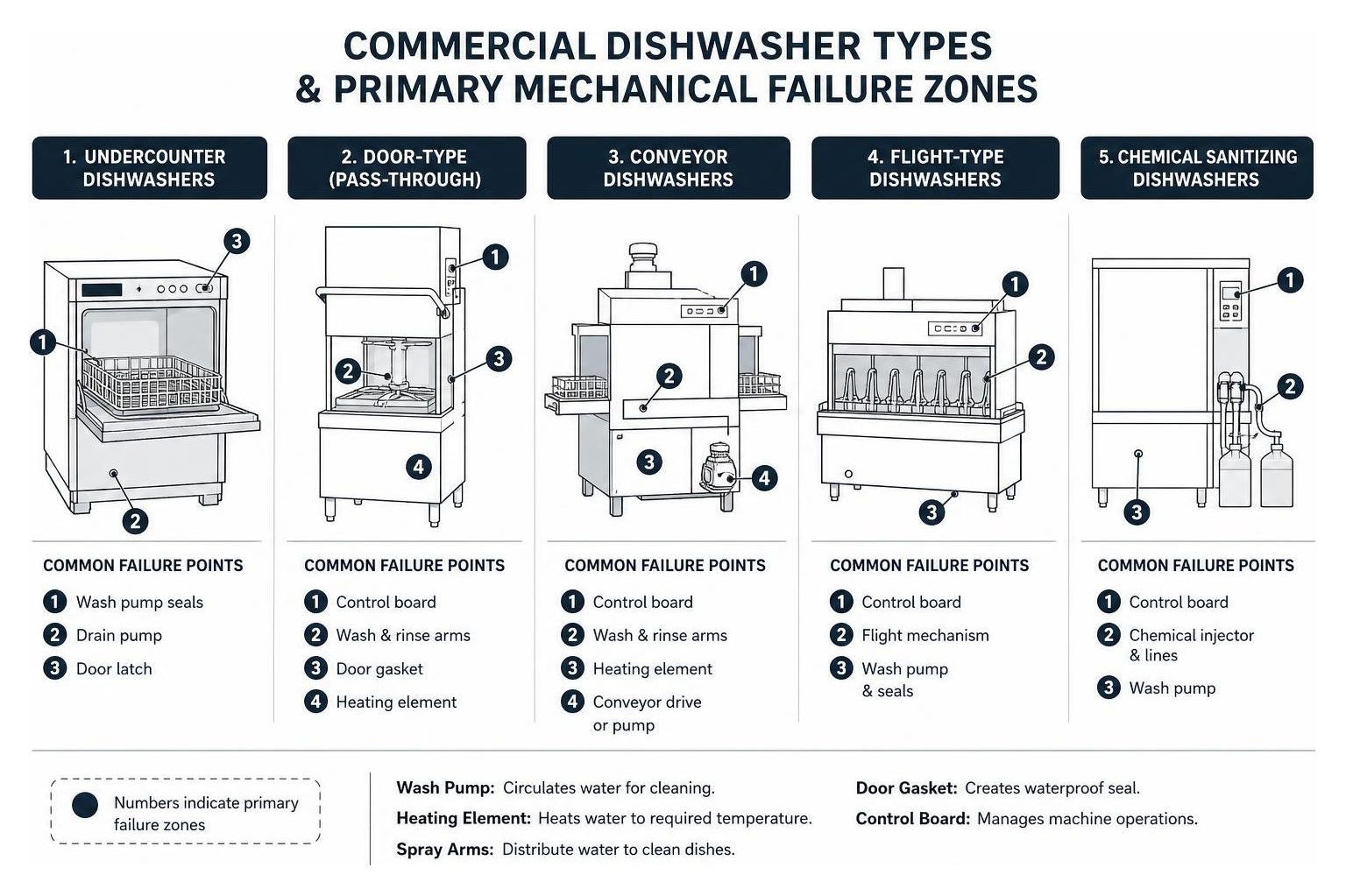
Undercounter Dishwashers
Perfect for bars, small cafes, and quick-service spots, these compact units save space but work incredibly hard.
- Common Failure Points: Wash pump seals, drain pumps, and door latches. Because they sit low to the ground, they are also prone to physical damage from kicked doors or mop water getting into the lower electrical compartments.
Door-Type (Pass-Through) Machines
These single-rack workhorses are the backbone of mid-sized restaurants. They can process 30 to 60 racks per hour.
- Common Failure Points: Door springs, counterweight cables, and chemical dispenser pumps. The constant lifting and lowering of the hood wear out the mechanical lifting components quickly.
Conveyor Systems
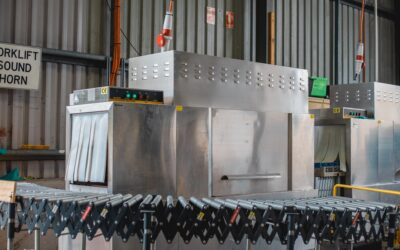
Designed for high-volume operations, conveyor dishwashers pull racks through multiple wash and rinse zones, processing 150 to 300+ racks per hour.
- Common Failure Points: Conveyor drive motors, drive chains, and multi-zone temperature sensors. If the drive motor jams, the entire line halts.
Flight-Type Dishwashers
These massive, continuous-feed machines are found in large banquet halls, hospitals, and universities. Dishes are loaded directly onto a moving peg belt.
- Common Failure Points: Drive belt alignment, complex multi-pump assemblies, and high-limit thermostats.
Glasswashers
Specialized undercounter units designed to protect delicate glassware while spinning out clean, spot-free results.
- Common Failure Points: Rinse aid dosing pumps, water pressure regulators, and heating elements.
Major Commercial Brands We See in North Carolina
Whether you are running a kitchen in downtown Raleigh or a bustling bar in Chapel Hill, you are likely using one of these major brands:
- Hobart: Famous for heavy-duty construction. Typical repairs involve digital control boards or booster heaters.
- Jackson: Highly popular in the Triangle Area due to its reliable Jackson parts availability. Common issues include wash arm bearing wear.
- Champion: Known for fast cycles. They often require float switch or drain valve replacements.
- CMA: Frequently used in chemical sanitizing setups. The peristaltic chemical pumps are standard wear-and-tear parts here.
For more information about keeping your other business appliances running, check out our guide on Commercial Appliance Repair.
Troubleshooting Commercial Kitchen Dishwasher Repairs
When the dish pit slows down, you need answers fast. Let’s look at the operational requirements of high-temperature versus low-temperature (chemical) machines first, as this heavily dictates your troubleshooting path.
| Feature / Requirement | High-Temp Sanitizing Units | Low-Temp (Chemical) Units |
|---|---|---|
| Primary Sanitizing Method | Extreme Heat (180°F final rinse) | Chemical Sanitizer (Chlorine/Quat) |
| Minimum Wash Temp | 150°F to 160°F | 140°F (to activate detergents) |
| Minimum Rinse Temp | 180°F (82°C) | 120°F to 140°F |
| Typical Failure Points | Booster heaters, heating elements | Chemical dosing pumps, vent lines |
| Energy Consumption | Higher (requires booster heater) | Lower (relies on building hot water) |
Now let’s tackle the three most common structural failures we encounter in the Triangle area.
1. Standing Water and Drainage Issues
If water is left pooling in the bottom of your wash tank, your cycle cannot refresh properly. This is often caused by food debris, broken glass, or toothpicks bypassing the scrap screens and clogging the drain pump impeller or drain solenoid valve.
For a step-by-step breakdown of how we diagnose these water-clearing issues locally, see our article on Dishwasher Not Draining Water Left in Bottom in Raleigh NC Causes Fixes.
2. Strange Noises During the Cycle
A grinding, squealing, or loud humming noise is a clear warning sign. Squealing usually indicates that the wash pump motor bearings are failing due to water leaking past a worn shaft seal. Grinding often means a foreign object is trapped inside the impeller housing.
To learn more about what these sounds mean before they turn into a total motor seizure, read Dishwasher Making Strange Noises What It Means When to Call a Pro in Raleigh.
3. Leaking Water Around the Base
Water pooling on your kitchen floor is a massive liability. It creates immediate slip-and-fall hazards for your line cooks and dishwashers. The culprit is almost always a dry, cracked, or misaligned door gasket, or a failing pump seal.
If you want to understand how these seals wear out and how they are replaced, check out How to Replace a Dishwasher Bottom Door Seal Without Flooding Your Kitchen.
Warning Signs Your Unit Needs Commercial Kitchen Dishwasher Repairs
You don’t have to wait for the machine to completely die to know it’s in trouble. Keep an eye out for these early warning signs:
- Cloudy Glassware & Spotted Dishes: This is a classic sign of chemical dispenser failure or severe hard water buildup. If your rinse aid pump stops drawing chemical, water won’t sheet off the glasses, leaving mineral spots behind.
- Longer Cycle Times: If your machine is taking longer than usual to complete a run, it is likely struggling to heat the water to the required operating temperature. The control board will hold the cycle until the thermostat registers the correct temperature.
- Foul Odors: Mold, food waste, and grease can accumulate behind gaskets and under filter screens. If you smell something rotten, your wash water isn’t draining fully or your filters are neglected.
- Temperature Drops: If your temperature gauges are hovering below 150°F during wash or 180°F during rinse, your heating elements are failing or coated in thick lime scale.
Immediate Steps to Take Before Calling for Commercial Kitchen Dishwasher Repairs
If your machine acts up mid-shift, do not panic. Run through these basic safety and troubleshooting steps first:
- Perform a Power Cycle: Turn off the machine’s power switch, then locate the wall breaker and flip it off for 60 seconds. Flip it back on. This can reset glitched control boards.
- Check the Water Supply: Ensure the main water shutoff valves to the machine and the booster heater are fully open. A partially closed valve will cause low water errors.
- Clear the Filters and Scrap Screens: Pull out the scrap trays, empty them, and rinse them thoroughly. Check the sump pump intake underneath for any debris.
- Inspect the Door Switch: If the machine won’t start at all, make sure the door or hood is closing fully and engaging the safety microswitch. A loose magnet or bent switch lever will prevent the cycle from starting.
If these quick steps do not solve the issue, it’s time to call in local experts who know the area’s specific water conditions and commercial codes. For tips on finding the right help, read 5 Ways to Find Local Commercial Appliance Repair Like a Pro.
Health Codes, Sanitization, and the Impact of Hard Water
A commercial dishwasher is not just a cleaning appliance; it is a sanitizing machine regulated by law. Whether your business must comply with local North Carolina environmental health inspectors or general FDA Food Code guidelines, maintaining correct operating temperatures is non-negotiable.
The Sanitization Standards
- High-Temperature Machines: Must reach a minimum of 180°F (82°C) during the final rinse cycle. This extreme heat is what kills pathogens instantly. If your final rinse temperature drops even slightly — say to 168°F — you are technically violating health codes and putting your customers at risk.
- Low-Temperature (Chemical) Machines: Must maintain a wash temperature of at least 140°F to ensure the detergent chemicals activate properly before the chlorine or quaternary ammonium chemical sanitizer is injected.
The Hard Water Problem in North Carolina
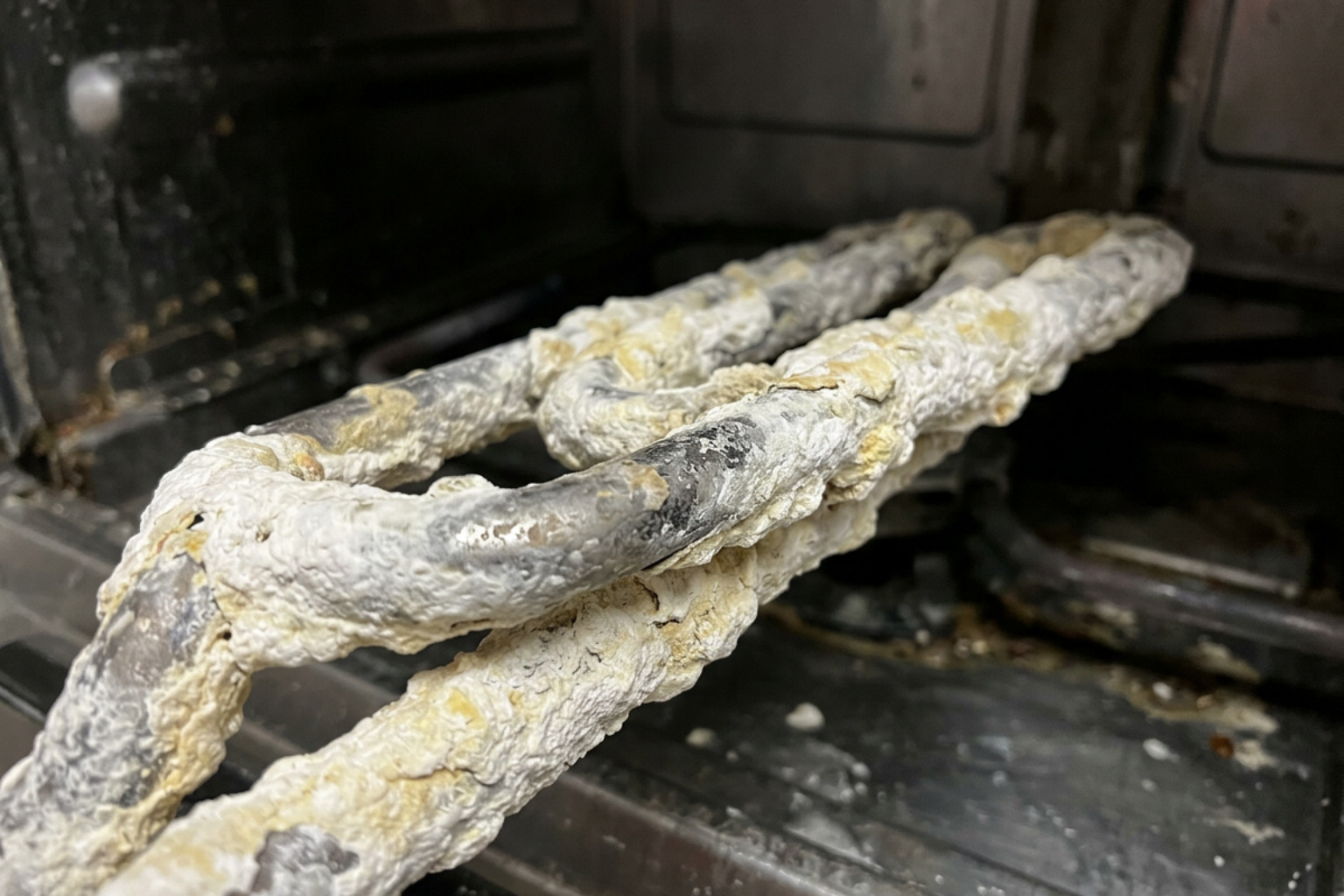
Across the Triangle Area, hard water is a silent killer for commercial kitchen equipment. Water containing high levels of Total Dissolved Solids (TDS) leaves behind calcium and magnesium deposits when heated.
When scale builds up on your dishwasher’s heating elements, it acts as an insulator. The element has to run hotter and longer to heat the water, eventually causing it to burn out completely. Scale also clogs the tiny nozzles on your spray arms, reducing water pressure and leaving food residue on your plates.
- The Fix: If you operate a high-volume kitchen in hard water areas like Cary, Apex, or Wake Forest, you should have your machine professionally descaled every 3 to 4 months. For standard operations, a minimum of every 6 months is recommended.
The Economics of Repair vs. Replacement
When faced with a major repair, every restaurant owner asks: Should I fix this machine, or is it time to buy a new one?
Commercial dishwashers are engineered for a 12 to 15-year service life, provided they receive regular maintenance.
The 8-Year Benchmark
As a general rule of thumb, commercial dishwashers under 8 years old are almost always more cost-effective to repair than replace. A new commercial machine can cost anywhere from $5,000 for a basic undercounter unit to upwards of $25,000+ for a conveyor system.
Typical Repair Costs
Most common commercial dishwasher repairs are highly economical compared to replacement costs:
- Door Gasket & Latch Replacement: From $295
- Drain Pump Replacement: From $350
- Heating Element / Booster Heater: From $395
- Wash Pump Motor Replacement: From $450
If your machine is over 12 years old and multiple expensive components (like the wash pump motor and the main control board) fail at the same time, then investing in a modern, energy-efficient replacement makes sense.
To learn more about budgeting for these appliance decisions, read our guide on How to Get Your Dishwasher Fixed Fast Without Washing Your Savings Away.
Preventative Maintenance: Extending Your Dishwasher’s Lifespan
The best way to handle commercial kitchen dishwasher repairs is to prevent them from happening in the first place. Training your kitchen staff on a few simple daily habits will save you thousands of dollars in emergency service calls.
Daily Maintenance Checklist for Staff
- Scrape Plates Thoroughly: Do not let your dishwasher act as a garbage disposal. Food waste belongs in the trash, not in your machine’s drain line.
- Clean the Screens: At the end of every shift, remove, empty, and wash the scrap screens and filters.
- Wipe the Gaskets: Use a soft, damp cloth to wipe down the door gaskets daily. This prevents grease and chemical buildup from rotting the rubber.
- Leave the Door Ajar Overnight: Keeping the door slightly open when the kitchen is closed allows the interior to dry, preventing mold, mildew, and foul odors.
Professional Preventative Maintenance
For busy restaurants in Raleigh, Durham, and Cary, we highly recommend setting up a preventative maintenance contract. Having a technician service your machine every 3 to 4 months ensures that worn gaskets, failing thermostats, and scale buildup are addressed before they cause a catastrophic mid-service breakdown.
For professional support with your preventative maintenance, explore our comprehensive Dishwasher Repair services.
Frequently Asked Questions About Commercial Dishwashers
What are the most commonly replaced parts in a commercial dishwasher?
The parts that experience the highest physical wear and chemical exposure are the heating elements (due to scale buildup), wash pumps and seals, spray arm bearings, door gaskets, and control boards.
Why should I hire a professional technician instead of attempting a DIY fix?
Commercial dishwashers run on heavy-duty electrical configurations (often three-phase power) and are integrated directly into high-pressure water lines. Attempting a DIY fix on these complex systems poses severe electrical shock and flooding risks. Furthermore, professional repairs ensure your machine remains compliant with local health codes and protects your manufacturer’s warranty.
How quickly can I expect emergency repair service to arrive?
At iFix Appliances, we understand that a broken dishwasher is an absolute operational emergency. We prioritize commercial calls and offer rapid, same-day response times across the Triangle Area to minimize your kitchen’s downtime.
Conclusion
A smoothly running dish pit is the unsung hero of any successful food service business. By understanding your machine’s failure points, training your staff on daily maintenance, and recognizing the warning signs of scale and temperature drops, you can keep your kitchen running efficiently and safely.
When troubleshooting isn’t enough, we are here to help. At iFix Appliances, we provide fast, reliable, and honest diagnostics for commercial kitchen equipment throughout Raleigh, Cary, Durham, Apex, Garner, Morrisville, Wake Forest, Chapel Hill, Fuquay-Varina, and Holly Springs.
Don’t let dirty dishes slow down your business. Schedule your commercial appliance repair today and let our expert technicians get your kitchen back to peak performance!
0 Comments