
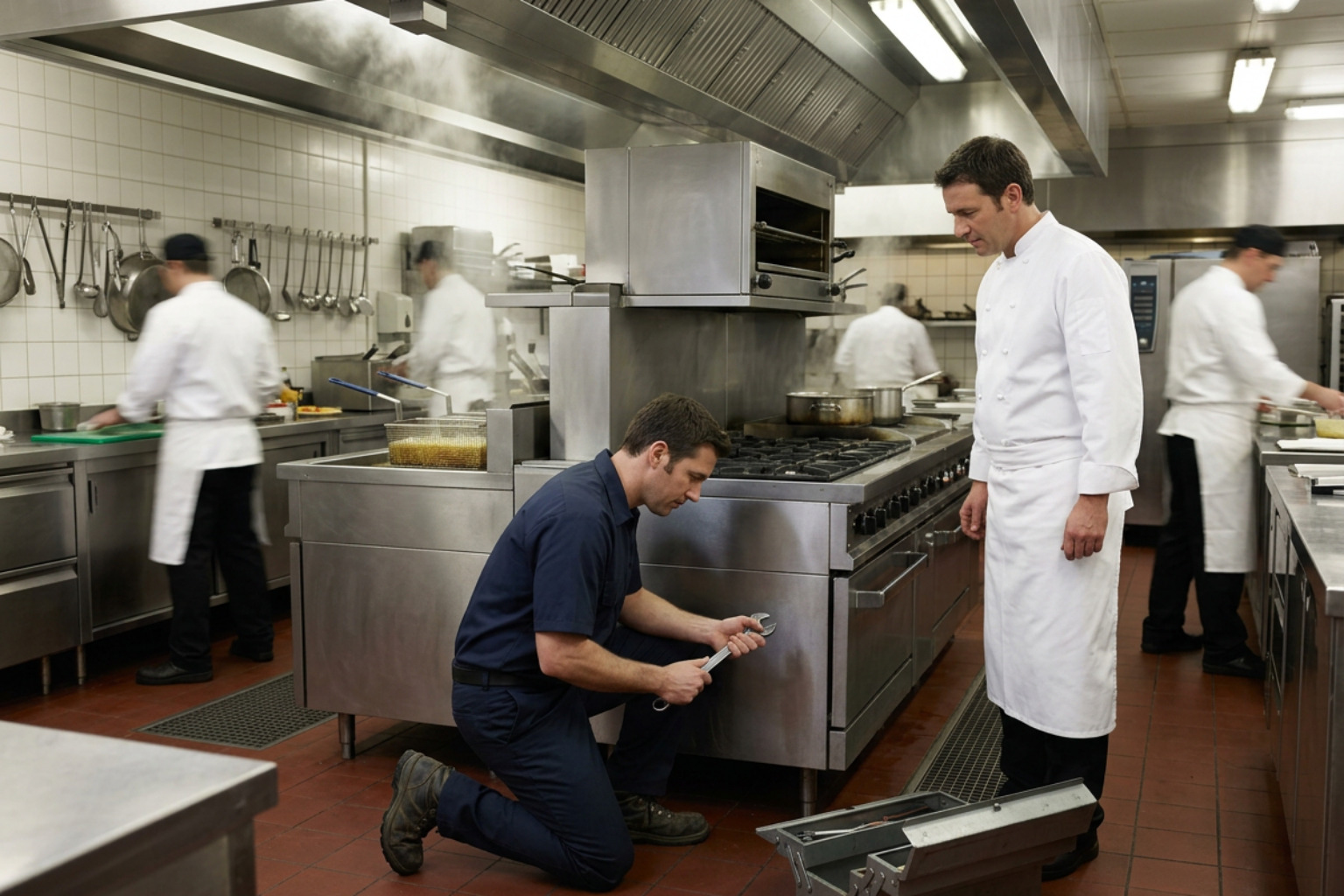
Why Commercial Cooking Equipment Repair Can Make or Break Your Restaurant
Cooking equipment repair is one of the most urgent — and most overlooked — priorities in any restaurant kitchen. When a fryer goes down on a Friday night or an oven stops heating before the lunch rush, every minute of downtime costs you revenue, reputation, and food inventory.
Here’s a quick overview of what you need to know:
| Topic | Key Takeaway |
|---|---|
| Most common equipment repaired | Ovens, ranges, fryers, grills, steamers |
| Top warning signs | Uneven heating, burner won’t ignite, error codes, gas smell |
| Emergency vs. maintenance | Emergency = same-day; Maintenance = scheduled, proactive |
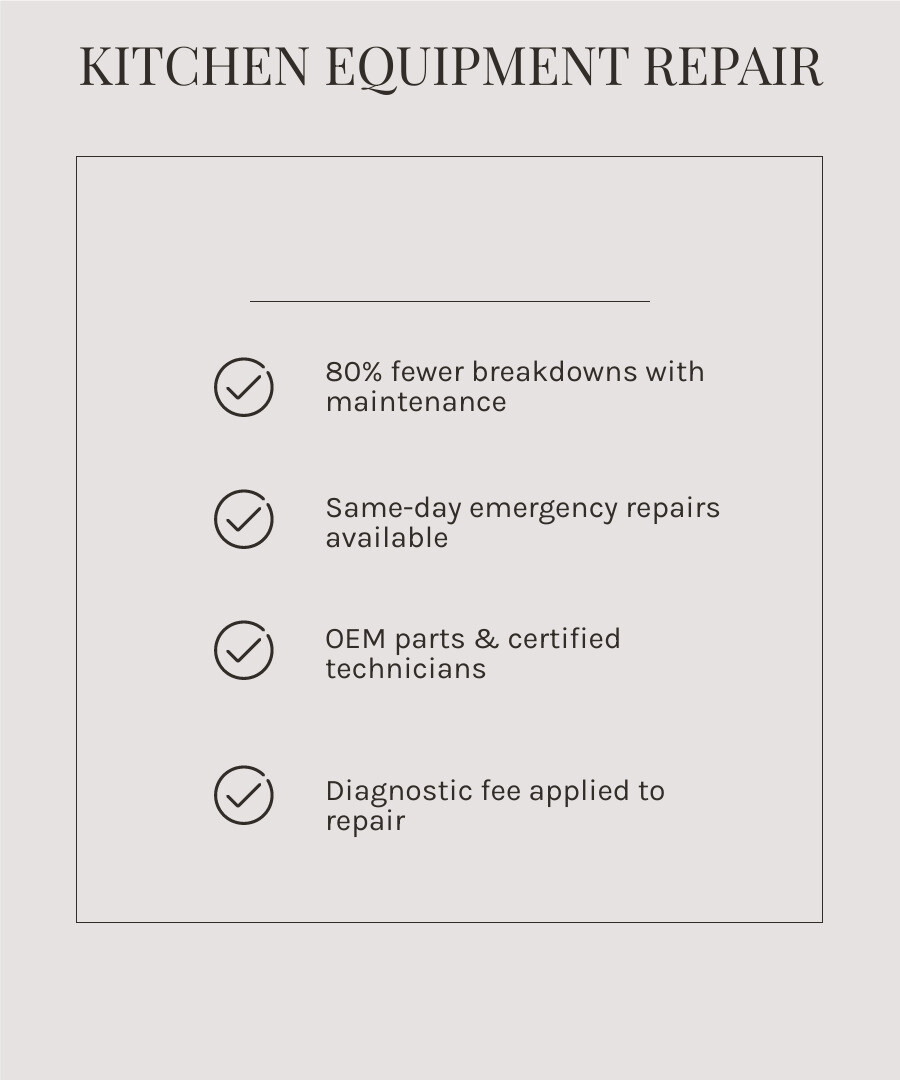
| Preventative maintenance impact | Can reduce breakdowns by up to 80% |
| What to look for in a repair service | Certifications (CFESA, EPA 608), OEM parts, fast response |
| Typical diagnostic fee | $75–$149, often applied toward the repair cost |
| Warranty to expect | 90 days to 1 year on parts and labor |
The good news: most breakdowns are preventable. And when they do happen, knowing who to call — and what to expect — can cut your downtime from days to hours.
I’m Vasyl Turetsky, Founder and Appliance Repair Specialist at iFix Appliances, with years of hands-on experience in cooking equipment repair for homeowners and food service businesses across Raleigh, Cary, Durham, and surrounding North Carolina communities. In this guide, I’ll walk you through exactly how to keep your kitchen running — and what to do when something goes wrong.
Quick cooking equipment repair terms:
The Core Components of Commercial Cooking Equipment Repair
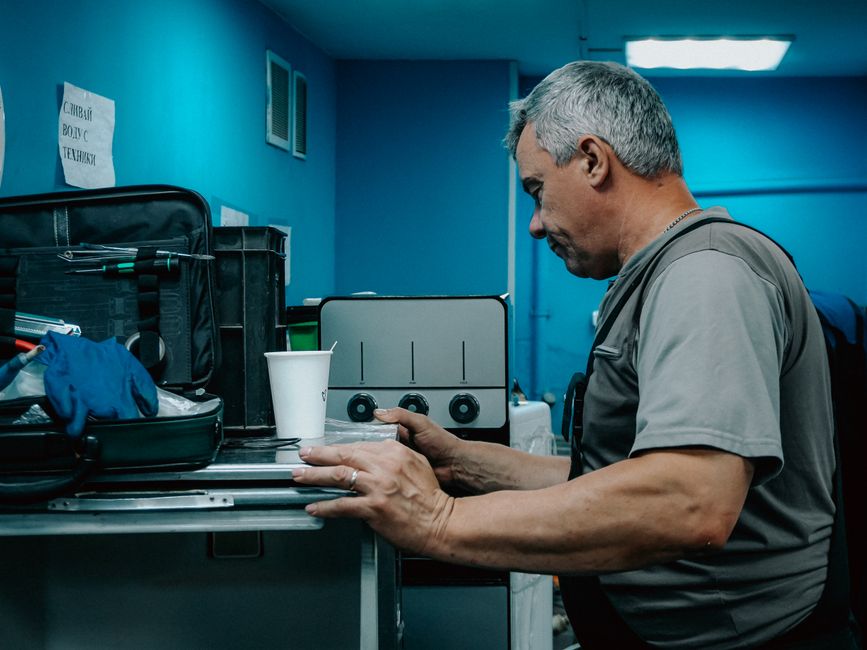
To keep a high-volume kitchen running smoothly in July 2026, you must understand the foundational systems of your hot line. Commercial kitchens rely on a heavy-duty mix of gas, electric, and steam-powered equipment. Because these appliances run continuously for hours on end, their internal components degrade much faster than residential models.
When we talk about cooking equipment repair, we are generally focusing on five core appliances:
- Commercial Ovens (Convection, Combi, and Pizza Ovens): These rely on heavy-duty heating elements or gas burners, complex blower fans to circulate heat, and precise control boards to regulate temperature.
- Commercial Ranges: Whether gas, electric, or modern induction, ranges are the workhorses of the line. They suffer from clogged burners, broken control knobs, and faulty electrical connections.
- Deep Fryers: These use high-output gas burners or immersion electric elements to heat oil. Thermopiles, high-limit thermostats, and gas valves are the most common failure points.
- Grills and Griddles: These require perfectly flat, calibrated surfaces. Uneven heating across the plate is a frequent complaint.
- Steamers and Warmers: Steam units are highly susceptible to scale buildup from local water supplies, which can clog water lines and burn out heating elements.
Maintaining these systems requires a blend of daily staff diligence and professional diagnostic expertise. If one component fails, it can trigger a domino effect that damages surrounding parts.
Troubleshooting Ovens and Ranges
If your kitchen is struggling with uneven baking, or if you are constantly dealing with burners that refuse to light, you are not alone. These are the two most common complaints in the culinary industry.
Uneven heating in a commercial oven is typically caused by a failing temperature sensor, a worn-out convection fan motor, or damaged heating elements. In gas ovens, a misaligned or dirty burner tube can prevent the flame from distributing evenly, leading to cold spots. If you notice your soufflés collapsing or your biscuits burning on one side, it is time to inspect the interior components.
Burner ignition issues on ranges are equally disruptive. For gas ranges, the culprit is often a clogged pilot light or a faulty igniter. Spills from boiling pots can easily block the tiny gas ports, preventing a clean ignition. For electric and induction cooktops, internal wiring faults or failed solid-state relays are usually to blame.
When your range or oven exhibits these symptoms, proactive troubleshooting is essential. You can learn more about specialized solutions on our Oven Stove Repair service page, where we detail how we diagnose and fix these complex heating systems.
Maintaining Commercial Fryers and Grills
Deep fryers and commercial griddles require specialized care because they operate under extreme heat and are constantly exposed to grease.
For commercial fryers, temperature calibration is critical for food safety and quality. If your oil is too hot, you burn the food and degrade the oil quickly; if it is too cold, the food absorbs excess grease and becomes soggy. This balance is managed by the thermostat and the high-limit switch (a safety device that cuts off gas or power if the oil reaches dangerous temperatures). Regular oil filtration is also vital. Built-up food sediment at the bottom of the fry pot acts as an insulating barrier, forcing the heating elements or gas burner tubes to work twice as hard, which eventually causes them to crack or burn out.
Commercial grills and griddles suffer from similar calibration issues. Over time, the thermostat bulb underneath the griddle plate can shift or become coated in carbon buildup, leading to inaccurate temperature readings. Electric grills rely on heavy-duty heating elements clamped to the underside of the plate. If one element fails, you will experience severe cold spots across your cooking surface. Daily scraping, proper seasoning, and weekly calibration checks are the best ways to keep your grills performing at their peak.
Recognizing the Signs Your Kitchen Needs Professional Cooking Equipment Repair
Waiting for an appliance to completely die before calling for help is a recipe for operational disaster. Most major commercial kitchen failures are preceded by subtle warning signs. By training your culinary team to spot these symptoms early, you can schedule a repair during off-peak hours rather than dealing with an emergency shutdown during your busiest shift.
Key warning signs include:
- Inconsistent Temperatures: Food taking longer to cook than normal, or items burning on standard settings.
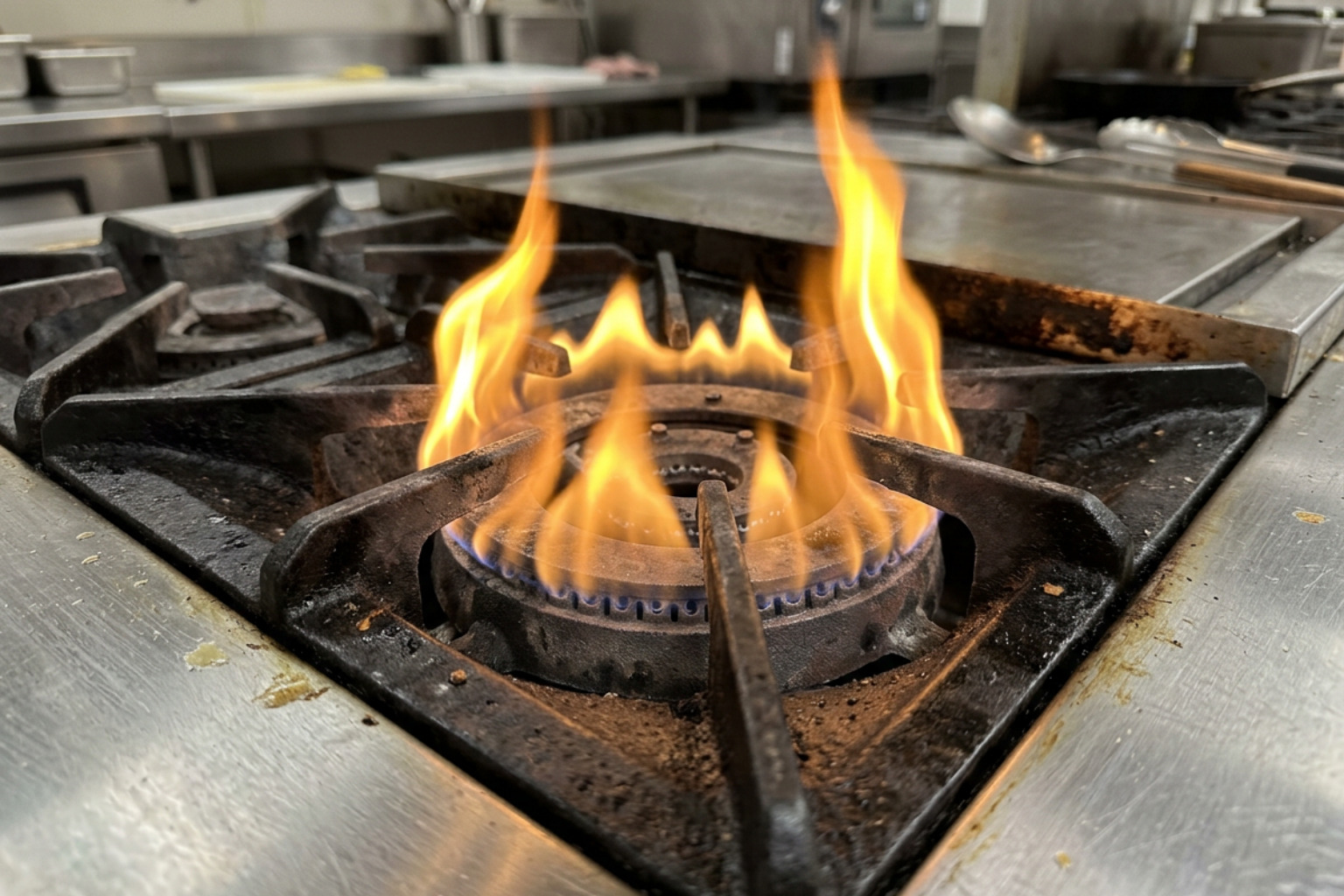
- Yellow or Lazy Flames: On gas equipment, flames should be crisp and blue. A yellow, flickering flame indicates poor combustion, which can release dangerous carbon monoxide.
- Unusual Noises: Squealing convection fans, clicking gas valves, or humming electrical transformers.
- Frequent Error Codes: Digital displays showing repeating error sequences.
- Physical Damage: Cracked door glass, worn door gaskets, or loose control knobs.
When to Call for Emergency Cooking Equipment Repair
Some appliance issues cannot wait until the next business day. If you experience any of the following, you must shut down the equipment immediately and call for emergency cooking equipment repair:
- The Smell of Gas: If you smell gas (a rotten-egg odor) in your kitchen, turn off the main gas supply valve, evacuate the area, and contact your gas utility and a certified technician immediately. Never try to light a pilot or turn on electrical switches when gas is present.
- Complete System Failures during Service: If your primary range or walk-in cooler fails right before a major event or holiday weekend, it constitutes a business emergency.
- Electrical Sparks or Smoking Components: Visible smoke, burning plastic odors, or sparking control panels are severe fire hazards.
- Tripping Circuit Breakers: If an appliance repeatedly trips its breaker, do not keep resetting it. This indicates a direct electrical short or a severely overloaded circuit.
In these high-stakes scenarios, working with a service provider that offers rapid response protocols is essential to keeping your staff safe and preserving your inventory.
Identifying Minor Issues Before They Escalate
While emergency repairs are sometimes unavoidable, the vast majority of them start as minor, ignored issues. Take clicking igniters, for example. If a gas burner clicks repeatedly for 10 to 15 seconds before finally lighting, the spark igniter or the gas valve is starting to fail. Ignoring this means that eventually, the burner will stop lighting altogether—usually right in the middle of a Friday night rush.
Worn door seals on ovens are another classic example of a small problem with massive consequences. When an oven gasket loses its elasticity or tears, hot air constantly escapes. This forces the oven to run continuously to maintain its set temperature, which skyrockets your energy bills and places immense strain on the heating elements and thermostat.
By catching these minor issues early, you save money on both utility bills and replacement parts. If you notice your range burners sparking or struggling to light, check out our Range Repair page to see how addressing these small components early can save your range’s main control board.
Emergency Repair vs. Scheduled Service vs. Preventative Maintenance

Many restaurant owners view kitchen appliance service as a single, reactive category: “something is broken, so I need to fix it.” However, managing a commercial kitchen efficiently in North Carolina requires understanding the distinct differences between emergency repair, scheduled service, and preventative maintenance.
| Service Type | Timing | Cost Level | Operational Impact | Goal |
|---|---|---|---|---|
| Emergency Repair | Immediate (Same-day / 24/7) | High | Severe disruption | Stop the bleeding and restore basic kitchen function. |
| Scheduled Service | Planned (Within 24–48 hours) | Moderate | Managed disruption | Resolve non-critical issues during off-peak hours. |
| Preventative Maintenance | Proactive (Monthly / Quarterly) | Low (Predictable) | Zero disruption | Prevent breakdowns, optimize efficiency, and extend lifespan. |
By shifting your operational focus from reactive emergency repairs to proactive preventative maintenance, you can dramatically stabilize your kitchen’s operating budget and reduce unexpected downtime.
The Financial Benefits of Preventative Maintenance
Investing in a structured preventative maintenance program is one of the smartest financial decisions a restaurant owner can make. Industry data shows that regular maintenance can reduce unexpected equipment breakdowns by up to 80%.
When a technician performs a preventative maintenance visit, they don’t just clean the equipment; they inspect electrical connections for wear, check gas pressure, calibrate thermostats, replace worn gaskets, and lubricate moving parts. This deep-dive approach offers several distinct financial advantages:
- Extended Lifespan: Commercial cooking equipment is a massive capital investment. Regular maintenance can easily add 3 to 5 years of reliable service to your ovens, fryers, and ranges.
- Energy Efficiency: A clean burner, a calibrated thermostat, and a perfectly sealed oven door mean your equipment uses less gas and electricity, directly lowering your monthly utility bills.
- Food Safety and Consistency: Calibrated equipment ensures that food is cooked to precise, safe temperatures every single time, protecting your customers and your brand’s reputation.
- Lower Repair Costs: Replacing a worn sensor during a scheduled maintenance visit is incredibly cheap compared to replacing a completely shorted-out control board during an emergency weekend call-out.
Choosing the Right Cooking Equipment Repair Partner
When a critical appliance goes down, you don’t have time to search the internet and hope you find a reliable technician. You need a trusted partner already on speed dial.
So, what should you look for when choosing a commercial repair service?
- CFESA Training and Certification: The Commercial Food Equipment Service Association (CFESA) is the gold standard for commercial kitchen technicians. CFESA-trained technicians have passed rigorous exams demonstrating their expertise in gas, electric, steam, and refrigeration systems.
- Response Times and Availability: Look for companies that offer rapid response times or prioritized scheduling for commercial clients.
- OEM Parts Usage: Ensure the company uses Original Equipment Manufacturer (OEM) parts rather than cheap, generic alternatives. OEM parts are specifically engineered for your exact appliance model, ensuring safety, efficiency, and longevity.
- Local Expertise: A local company that understands the unique regulatory and environmental conditions of the Triangle area will always provide faster, more personalized service.
To help you navigate this selection process, read our expert guide on 5 Ways to Find Local Commercial Appliance Repair Like a Pro.
Safety Protocols and Brand Specialization in Commercial Kitchens
Commercial kitchens are high-risk environments. Technicians working on commercial cooking equipment must adhere to strict safety protocols to protect themselves, your staff, and your property.
When dealing with gas equipment, technicians must perform thorough gas pressure tests, inspect vent hoods for proper drafting, and check all connections with specialized gas leak detectors. For electric equipment, proper lock-out/tag-out (LOTO) procedures are mandatory to ensure that power cannot be accidentally restored while a technician is working inside an appliance.
Furthermore, any technician handling refrigeration or HVAC systems alongside cooking equipment (such as walk-in coolers or combi-ovens with built-in cooling cycles) must hold an EPA Section 608 certification. This federal certification ensures they are trained in the safe handling, recovery, and disposal of regulated refrigerants.
Servicing High-End and Major Commercial Brands
High-end cooking equipment is a precision-engineered investment. Brands like Wolf, Viking, Thermador, and Dacor require specialized diagnostic tools and deep technical knowledge to repair correctly. Standard, run-of-the-mill repair practices can easily damage the delicate electronic control boards or calibration settings of these luxury appliances.
Using factory-authorized service practices and genuine OEM parts is absolutely critical for these brands. For example, high-end gas ranges feature custom-engineered burners designed for precise heat output; using a generic igniter or burner cap can disrupt the air-to-gas mixture, leading to poor performance or carbon monoxide hazards.
At iFix Appliances, we specialize in servicing these premium brands across the Triangle area. Whether you need specialized Wolf Repair Service for your commercial-style range or precision Viking Repair Service to calibrate your convection oven, our team has the training and tools to get the job done right.
We also provide expert diagnostics and repairs for other major luxury brands, including:
- Thermador Repair Service
- Dacor Repair Service
- GE Monogram Repair Service
- DCS Repair Service
- Marvel Repair Service
- Sub Zero Repair Service
Frequently Asked Questions About Cooking Equipment Repair
How much does a typical commercial cooking equipment repair cost?
The cost of commercial cooking equipment repair varies widely depending on the complexity of the issue and the parts required. Most professional repair companies charge a diagnostic fee (typically ranging from $75 to $149) to send a certified technician to your location to troubleshoot the issue.
At iFix Appliances, we believe in complete financial transparency. We charge a straightforward $75 diagnostic fee, which is fully waived and applied to the labor cost if you choose to proceed with the recommended repair. To protect our clients from unexpected bills, we also eliminate return trip fees—meaning if we have to order a part and return on a different day, you won’t pay an extra service call charge. Additionally, we back our work with an industry-leading warranty package, including a 1-year labor warranty and a lifetime warranty on most replacement parts.
How can restaurant owners minimize downtime during an equipment breakdown?
The best way to minimize downtime is to be proactive. First, establish a relationship with a trusted local repair company before an appliance breaks down. Keep their number handy, and make sure your kitchen managers know who to call.
Second, keep a detailed log of all your kitchen equipment, including the manufacturer, model number, serial number, and any current warranty information. When you call for service, providing this information upfront allows the technician to pre-diagnose the issue and bring the correct OEM parts on the very first trip, significantly increasing the chances of a first-time fix. Finally, consider having small, backup counter-top units (like a portable induction burner or a small warm-up oven) that can help your line get through a busy shift if a primary appliance fails.
What geographic areas do top repair companies typically serve?
Top-tier appliance and commercial kitchen repair companies focus their efforts on a specific regional footprint to ensure rapid response times and consistent quality of service. For a service business, trying to cover too large an area leads to delayed arrivals, high travel fees, and frustrated clients.
In North Carolina, the premier repair specialists focus on the fast-growing Triangle region. At iFix Appliances, we proudly serve local businesses and homeowners throughout Raleigh, Cary, Durham, Wake Forest, Chapel Hill, Fuquay-Varina, Apex, Garner, Holly Springs, and Morrisville. By keeping our service area local, we can guarantee fast, reliable service when you need us most.
Conclusion
In the world of the food service industry, your kitchen equipment is your lifeline. A proactive approach to cooking equipment repair and preventative maintenance is the single most effective way to protect your business from costly downtime, high repair bills, and lost revenue.
When a burner refuses to light, an oven bakes unevenly, or an emergency arises, don’t let it bring your kitchen to a standstill. Our team at iFix Appliances is here to provide the fast, reliable, and transparently priced support you need to keep your kitchen cooking.
If you are experiencing issues with your commercial-grade or high-end residential kitchen appliances in Raleigh, Cary, Durham, or surrounding areas, contact us today to schedule your diagnostic visit. Let us handle the technical details so you can focus on what you do best: serving incredible food to your guests.
For expert assistance with your kitchen’s hot line, visit our Commercial Appliance Repair page or Contact our team directly to schedule a service call.


0 Comments