
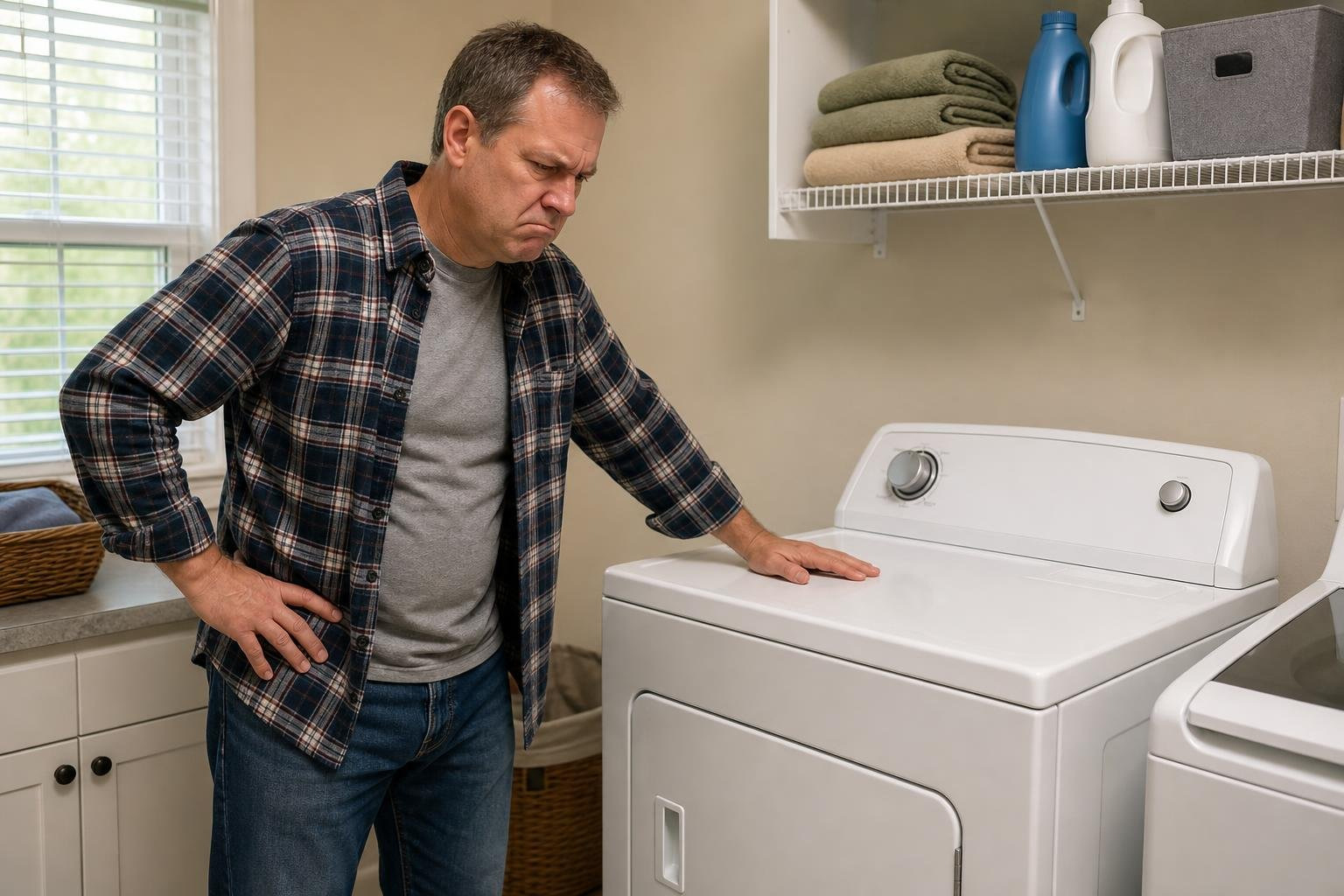
Why Your Dryer Is Not Spinning Only Humming — And What It Means
A dryer not spinning only humming is one of the most common laundry room problems homeowners run into — and the good news is that it’s usually fixable without buying a new machine.
Here’s what that hum is telling you: the motor is getting power and trying to run, but something mechanical is stopping the drum from turning.
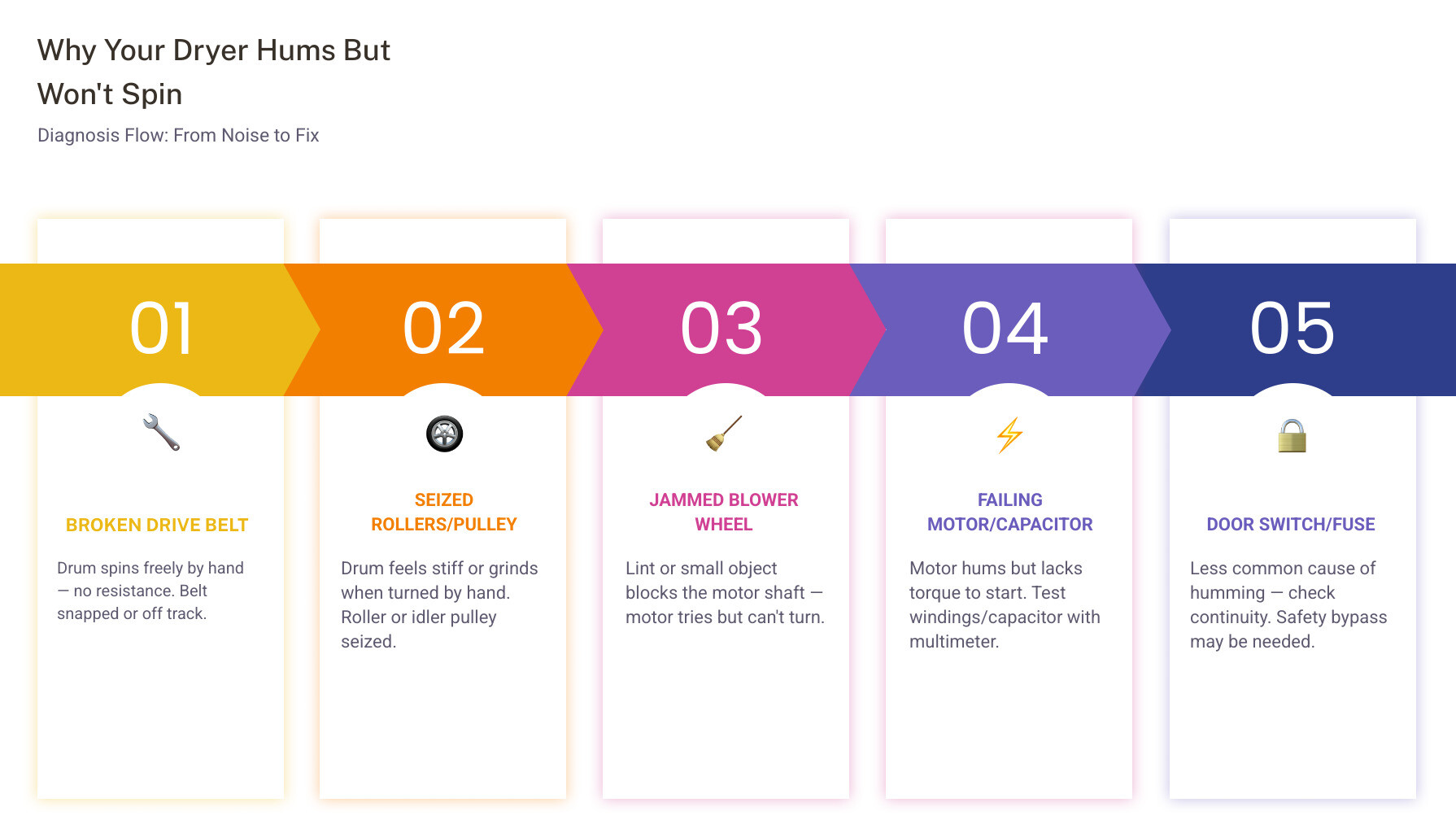
The most common causes, ranked by likelihood:
- Broken drive belt — the drum spins freely by hand with zero resistance
- Seized drum rollers or idler pulley — the drum feels stiff or grinds when turned by hand
- Jammed blower wheel — lint or a small item is blocking the motor shaft
- Failing drive motor or start capacitor — motor hums but can’t generate enough torque to start spinning
- Faulty door switch or blown thermal fuse — less likely to cause humming, but can prevent the cycle from starting
Quick test: Unplug the dryer and try spinning the drum by hand. Spins too easily with no resistance? The belt is likely broken. Feels stiff or won’t budge? You probably have a mechanical blockage or seized component.
Do not keep running the dryer in this condition. Forcing a stalled motor can burn it out completely — turning a simple $80 belt repair into a $300+ motor replacement.
I’m Vasyl Turetsky, Founder and Appliance Repair Specialist at iFix Appliances, and I’ve diagnosed and repaired hundreds of dryer not spinning only humming cases across Raleigh, Cary, Durham, and the surrounding Triangle area. In this guide, I’ll walk you through every likely cause — from a snapped belt to a seized blower wheel — so you can pinpoint the problem fast.
What Causes a Dryer Not Spinning Only Humming Issue?
When you press the start button, your dryer relies on a delicate balance of electrical power and mechanical components to get that heavy drum moving. If you hear a distinct humming noise but the drum remains completely stationary, it means the electrical current is successfully reaching the motor, but a mechanical obstacle or an internal motor failure is preventing rotation.
To help you visualize what is going wrong inside your machine, let’s break down the primary differences between mechanical resistance and electrical component failures:
| Cause Type | Component Involved | What Is Happening | Drum Spin Test Result |
|---|---|---|---|
| Mechanical | Drive Belt | The belt has snapped, slipped off, or stretched out, leaving the motor spinning with nothing to turn the drum. | Spins very easily with no resistance. |
| Mechanical | Drum Rollers / Axles | The roller wheels that support the heavy drum have seized due to wear, hair, or lint buildup. | Stiff, hard to turn, or grinds when rotated. |
| Mechanical | Idler Pulley | The tensioner pulley wheel has melted, lost its bearings, or locked up entirely. | Stiff or squeals loudly when turned. |
| Mechanical | Blower Wheel | A stray sock, coin, or massive lint clump is jammed inside the blower housing, locking the motor shaft. | Locked completely or highly resistant. |
| Electrical | Start Capacitor | The capacitor is weak or dead, failing to give the motor the electrical “push” it needs to start. | Spins freely, may start if manually “jumped.” |
| Electrical | Drive Motor | The motor’s start windings are burned out, or the internal bearings have seized up. | Stiff or hums without any movement. |
Understanding this mechanical-versus-electrical split is the first step toward getting your laundry routine back on track. If you want a deeper dive into how these internal parts interact, you can read more about how these systems fail in this comprehensive guide on Dryer Hums But Won’t Spin: Causes and Fix Options | Armadillo .
The Hand-Spin Drum Test for a Dryer Not Spinning Only Humming
Before you grab your toolbox or call us out to your home in Cary or Wake Forest, there is one incredibly simple diagnostic test you can perform in under ten seconds: the hand-spin drum test.
With your dryer turned off and unplugged, open the door, reach inside, and manually rotate the drum counter-clockwise. Pay close attention to how it feels:
- If the drum spins incredibly easily with almost no resistance: Your dryer’s drive belt has almost certainly snapped or slipped off its pulley. Because there is no belt wrapping around the drum to connect it to the motor, you are spinning a completely free-floating metal cylinder.
- If the drum is incredibly stiff, heavy, or makes a loud grinding/squeaking noise: You are dealing with seized drum rollers, a locked-up idler pulley, or a worn-out drum bearing. The motor is humming because it is trying to spin a drum that is physically locked in place.
- If the drum has normal, moderate resistance but still won’t spin on its own: The belt and mechanical supports are likely fine, pointing the finger toward an electrical issue like a failing start capacitor, a bad drive motor, or a jammed blower wheel.
For step-by-step instructions on performing this test safely and interpreting the results, check out Why Is My Dryer Not Spinning? Easy DIY Fixes 2026 .
Safety First Before Troubleshooting Your Dryer Not Spinning Only Humming
We love helping homeowners learn more about their appliances, but safety is our absolute priority. Dryers are high-voltage appliances that pull 240 volts of electricity—more than enough to cause serious injury if handled incorrectly.
Before you attempt to open your dryer cabinet or touch any internal components, follow these non-negotiable safety rules:
- Disconnect the Power: Unplug the dryer from the wall outlet. If you have a hardwired unit or cannot reach the plug, shut off the dedicated double-pole circuit breaker in your home’s main electrical panel.
- Turn Off the Gas: If you are working on a gas dryer, close the manual gas shutoff valve on the supply line to prevent dangerous leaks.
- Wear Safety Gear: Wear work gloves to protect your hands from the razor-sharp sheet metal edges inside the dryer cabinet, and wear safety glasses to keep dust and stray lint out of your eyes.
A DIY project can quickly turn into an expensive headache if a step is missed. Be sure to review our guide on the 5 Warning Signs Your DIY Appliance Repair Is Headed for Disaster to make sure you aren’t stepping into a common repair trap.
Step-by-Step Diagnostic Guide for Common Mechanical Failures
Now that we have covered the basics and established safety protocols, let’s dive into the physical components that keep your dryer tumbling. When a dryer is humming but refusing to spin, mechanical wear and tear is the culprit about 70% of the time.
Over time, heavy laundry loads, pet hair, and heat degrade the moving parts inside your machine. To understand how these components wear down and what you can do about it, you can read the manufacturer’s perspective on 10 Reasons Your Dryer Won’t Spin & How to Fix It | Whirlpool .
Inspecting and Replacing a Broken Drive Belt
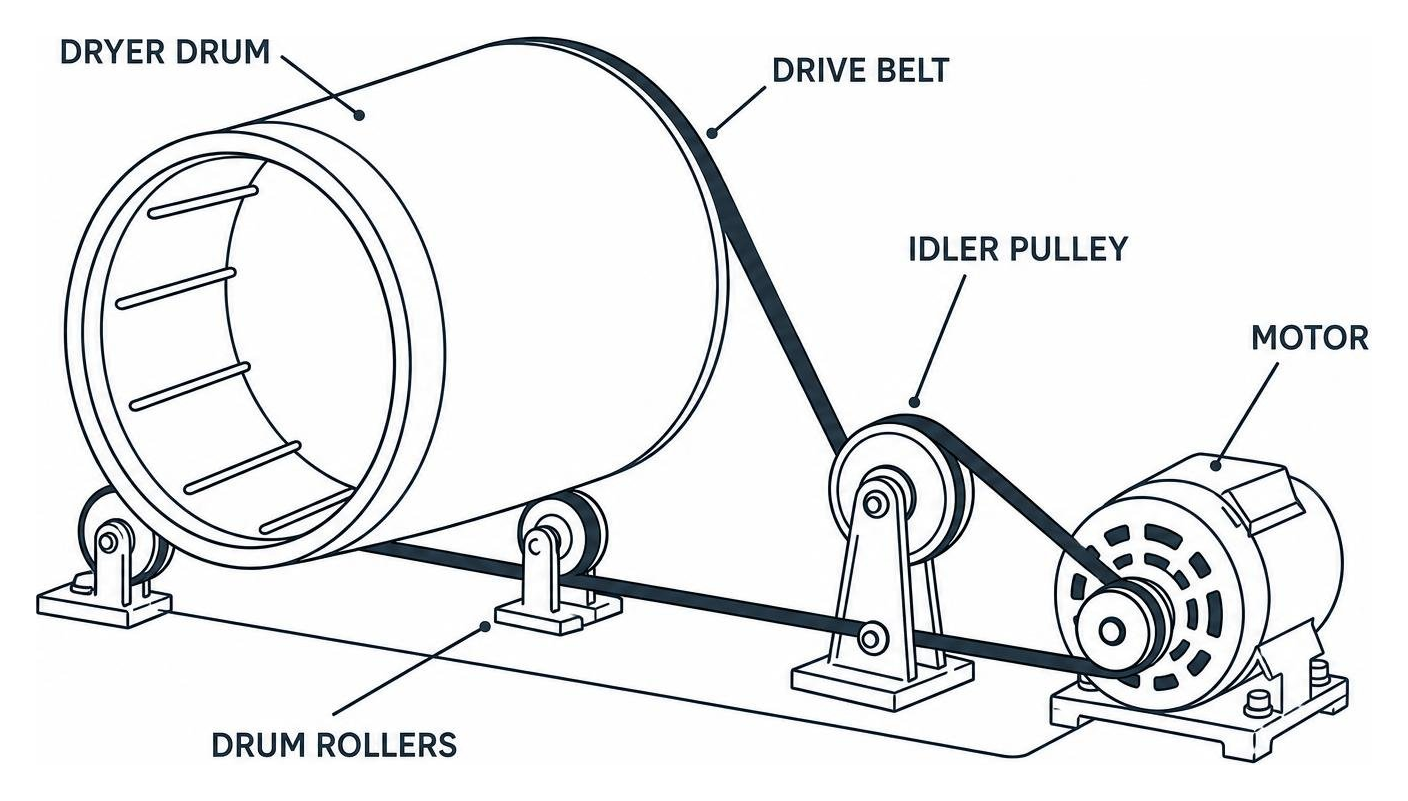
The drive belt is a long, thin rubber band that wraps completely around the dryer drum, loops through a tensioner (idler) pulley, and connects to the drive motor spindle. Over 5 to 15 years of constant use, this rubber belt stretches, frays, and eventually snaps.
When the belt breaks, the motor still spins and hums when you hit start, but the drum stays dead still.
On older dryer models, the motor will hum indefinitely when the belt breaks. However, many modern dryers feature a safety device called a belt switch. This switch is mounted next to the idler pulley; if the belt snaps, the tensioner arm drops, tripping the switch and cutting power to the motor entirely. If you have a newer model and hear absolutely no humming at all, a tripped belt switch is a highly likely cause.
If you decide to replace the belt yourself, be incredibly careful when routing it through the tensioner pulley. It is very easy for the belt to slip off its track during reassembly. If this happens, it will bind up, putting massive strain on the motor and causing it to stall and hum—making you think you have a dead motor when you actually just have a misaligned belt!
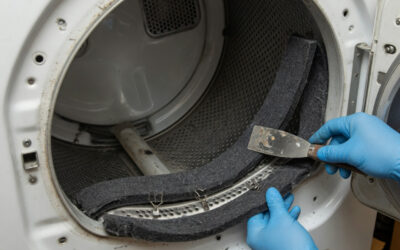
If you are already opening up your dryer to inspect the belt, it is also the perfect time to look at other wear-and-tear items. Learn how to handle related drum maintenance in our guide on How to Replace a Dryer Drum Felt Seal Without Losing Your Mind.
Checking for Seized Drum Rollers and Idler Pulleys
If your hand-spin test revealed that the drum is incredibly stiff and hard to turn, the issue lies with the drum support system. Dryers rely on either roller wheels, drum glides, or a rear drum bearing to support the weight of your wet clothes as the drum rotates.
- Drum Rollers: Most dryers have two to four rubber roller wheels mounted on metal axles at the front and back of the cabinet. Over time, lint, hair, and thread wind around the axles, causing the rollers to bind up and seize. If you have noticed a loud thumping or squeaking noise for several weeks before your dryer stopped spinning, worn-out rollers are the likely cause.
- Idler Pulley: The idler pulley keeps constant tension on the drive belt. If its internal ball bearings fail, the pulley wheel will stop spinning and melt under the friction of the moving belt, locking the entire drive system in place.
Expert Tip: If you discover a seized roller or a bad idler pulley, always replace them as a complete set. If one roller has worn out, the others have experienced the exact same amount of wear and will likely fail shortly after you put the machine back together.
Before you begin, make sure you have the right tools ready:
- Quarter-inch and 5/16-inch nut drivers
- Phillips and flathead screwdrivers
- A digital multimeter (for electrical testing)
- Snap ring pliers (for removing roller wheels)
- High-quality vacuum cleaner (to clear out accumulated lint)
Troubleshooting Electrical and Motor Issues
If the mechanical components are moving freely but your dryer is still stuck in a “hum-only” state, we need to shift our focus to the electrical side of the machine. This is where we test the motor, start capacitor, and safety switches to locate the bottleneck.
To diagnose these issues with precision, you will need a basic understanding of how the motor receives and processes power. You can read a detailed breakdown of motor mechanics at What Should You Do When Your Dryer Only Hums Instead of Starting? | DIY Repair Clinic .
How to Test the Drive Motor and Start Capacitor
The dryer drive motor has a tough job. It has a dual-shaft design: one end of the motor shaft spins the drum via the drive belt, while the other end simultaneously spins the blower wheel to exhaust hot air.
Because starting a heavy drum loaded with wet clothes takes a lot of torque, many dryers utilize a start capacitor. Think of the capacitor as a temporary battery that delivers a quick, high-voltage electrical boost to get the motor spinning. If the capacitor fails, the motor will hum because it doesn’t have the strength to start rotating on its own.
The “Jump-Start” Test: You can often diagnose a bad capacitor or weak motor windings with a quick test. Open the dryer door, press and hold down the door switch button manually, and have a helper press the start button. While the motor is humming, quickly spin the drum counter-clockwise by hand, then let go.
- If the dryer starts running and keeps spinning on its own, your drive motor is physically fine, but your start capacitor is dead or the motor’s start windings have failed.
- If it doesn’t start or immediately stalls, the motor itself is likely seized or bad.
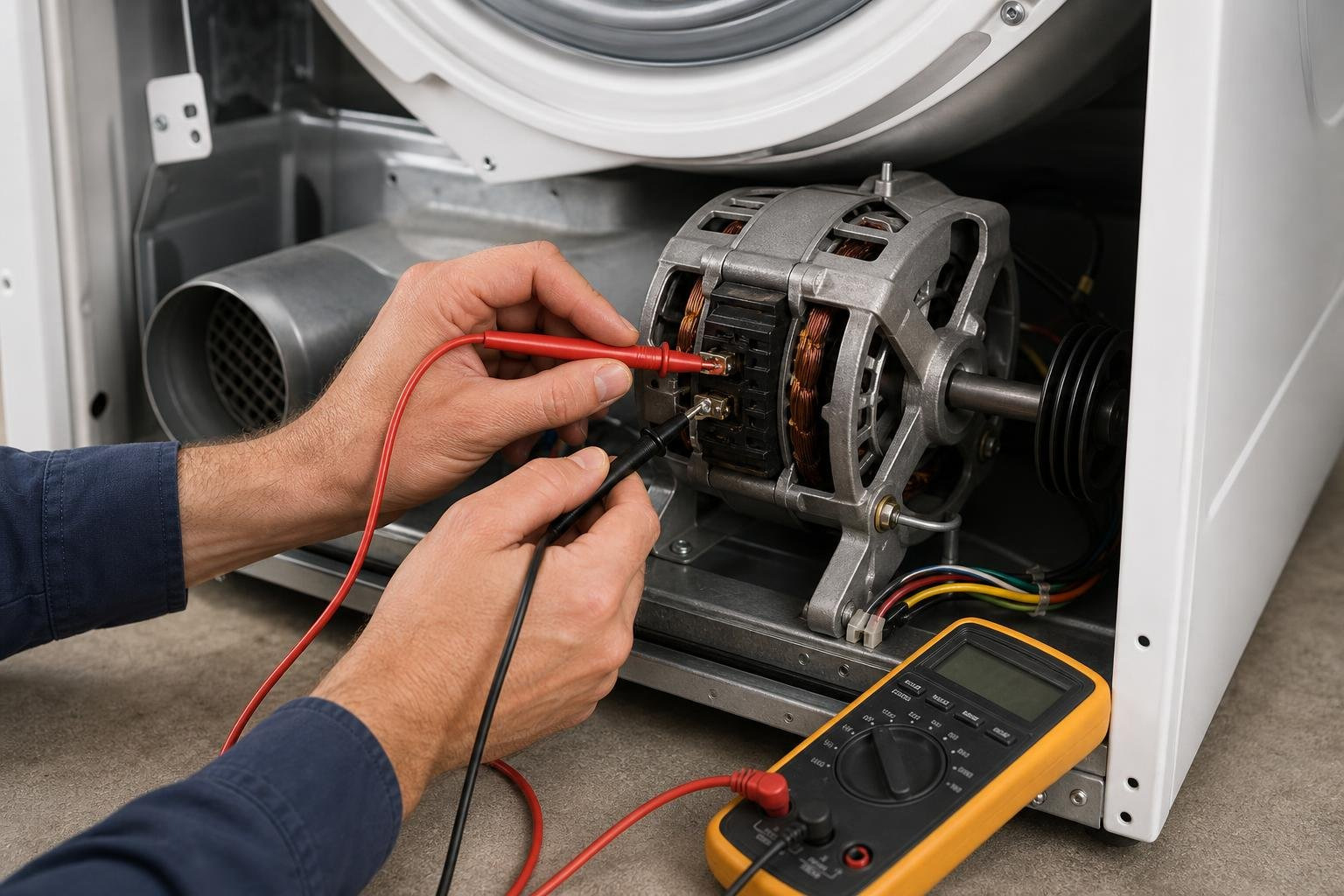
Using a Multimeter to Test the Motor: To confirm a bad motor, unplug the dryer, access the motor housing, and disconnect the wire harness. Set your multimeter to the lowest Ohms setting and test the resistance of the start and run windings:
- A healthy motor winding should read between 2 and 5 ohms of resistance. If your meter shows “OL” (open loop) or no change at all, the winding is broken, and the motor must be replaced.
- Test the motor’s thermal overload protector (thermoprotector) as well; it should show close to 0 ohms of resistance, indicating continuous electrical flow.
Clearing a Jammed Blower Wheel
Sometimes, the motor is perfectly fine, but it is being physically held hostage by a tiny foreign object. Because the blower wheel is attached directly to the motor shaft, any blockage in the blower housing will completely lock the motor.
Small items like coins, keys, buttons, baby socks, or massive, compacted “lint cakes” can slip past the lint filter and wedge themselves inside the blower wheel. When the motor tries to turn, it hits this physical block, stalls, and emits a loud hum.
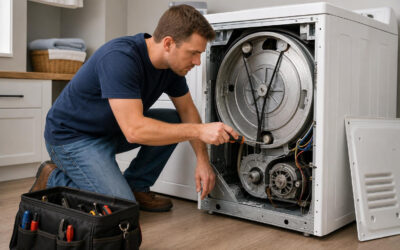
Unplug the dryer, remove the front panel or lower bulkhead (depending on your brand), and open the blower wheel housing. Spin the wheel by hand. If it is locked up, clear out any debris. This is also a critical maintenance step: heavy lint accumulation inside the dryer cabinet is a leading cause of residential house fires in Raleigh, NC, and clearing it out keeps your home safe and your dryer running efficiently.
Evaluating the Door Switch and Thermal Fuse
While a faulty door switch or a blown thermal fuse will usually cause a dryer to remain completely silent rather than hum, they are still important components to rule out during any “no-spin” investigation.
- Door Switch: The door switch is a safety device that tells the control board the door is securely closed. If the switch is broken, the dryer won’t start. Open the door and press the switch with your finger—you should hear a distinct, solid click. If it feels mushy or doesn’t click, it may have failed.
- Thermal Fuse: The thermal fuse is designed to permanently blow (cut power) if the dryer overheats, protecting your home from a fire. Restricted airflow from a clogged dryer vent is the number one cause of blown thermal fuses.
To test both of these parts, use your multimeter to check for continuity (an unbroken electrical path). If either part shows no continuity, it must be replaced.
For a deeper look at how these safety devices can disable your appliance, read our guide on Dryer Not Heating or Spinning? Causes, Fixes, and When to Call a Professional in Raleigh NC.
Cost and Repair Considerations: DIY vs. Professional
When deciding whether to tackle a humming dryer yourself or call in our team at iFix Appliances, it helps to look at the numbers. Let’s compare the typical costs and time investments for the most common repairs in 2026:
| Repair Task | Average DIY Cost (Parts Only) | Average Professional Cost (Parts + Labor) | DIY Difficulty Level | Typical Repair Time |
|---|---|---|---|---|
| Drive Belt Replacement | $15 – $30 | $60 – $150 | Moderate | 45 – 90 Minutes |
| Drum Roller Set Replacement | $20 – $40 | $120 – $200 | Moderate to High | 1 – 2 Hours |
| Start Capacitor Replacement | $10 – $20 | $90 – $150 | Low (Requires safety care) | 30 – 45 Minutes |
| Drive Motor Replacement | $100 – $180 | $200 – $400+ | High | 2 – 3 Hours |
| Blower Wheel Debris Clearing | $0 | $80 – $120 | Moderate | 45 – 60 Minutes |
If your dryer is under 10 years old and the repair cost is less than half the price of a new machine, repairing it is almost always the smartest, most sustainable choice. However, if your dryer is well over a decade old and facing an expensive motor replacement, it might be time to shop for a new unit.
Ignoring these issues can lead to much higher utility bills and progressive damage to other parts of your machine. Discover why taking care of these problems early is so important in our article on Why Ignoring Dryer Problems Can Cost You More in 2025. If you are curious about what other common appliance issues your neighbors are dealing with, take a look at the Raleigh Appliance Problems Homeowners See Most Often – FAQs.
Frequently Asked Questions About Humming Dryers
Is it safe to keep using a dryer that hums but doesn’t spin?
Absolutely not. If your dryer is humming but the drum is stationary, the motor is stalled. Running electrical current through a stalled motor generates extreme heat very quickly. This can permanently burn out the motor windings, melt internal plastic components, and even present a serious electrical fire hazard. If your dryer is humming, unplug it immediately and do not use it until the underlying issue is resolved.
Should we still hear the motor humming with the belt off?
It depends entirely on your dryer’s model and brand. On older dryers, the motor will still receive power and hum happily even if the belt is completely missing. However, many newer models (especially those from Whirlpool, Maytag, and Kenmore) feature a safety “belt switch” connected to the idler pulley. On these models, if the belt breaks or falls off, the switch cuts power to the motor completely, resulting in total silence rather than a hum.
How long do dryer drive belts typically last?
A high-quality dryer drive belt typically lasts between 5 to 15 years. The exact lifespan depends heavily on how often you run your dryer, how large your laundry loads are, and whether you regularly overload the machine. To maximize the life of your belt, rollers, and motor, avoid stuffing heavy comforters or massive loads of wet towels into a single cycle.
Conclusion
A dryer not spinning only humming can put a major wrench in your weekly routine, but it doesn’t have to mean the end of your appliance. Whether you are dealing with a simple snapped belt, a clogged blower wheel, or a worn-out set of drum rollers, identifying the symptoms early will save you time, money, and unnecessary frustration.
If you are comfortable with basic tools and want to try a DIY fix, we wish you the best of luck! But if the repair feels a bit too complex, or if you simply don’t have the time to disassemble your dryer cabinet on a busy weekend, we are here to help.
At iFix Appliances, we provide fast, honest diagnostics and transparent, long-term repair solutions. We proudly serve homeowners across the entire Triangle area, including Raleigh, Cary, Durham, Apex, Morrisville, Wake Forest, Garner, and Chapel Hill.
Don’t let dirty laundry pile up—schedule your professional Dryer Repair with us today, or browse our Category: Dryer Repair for more expert tips!

0 Comments