
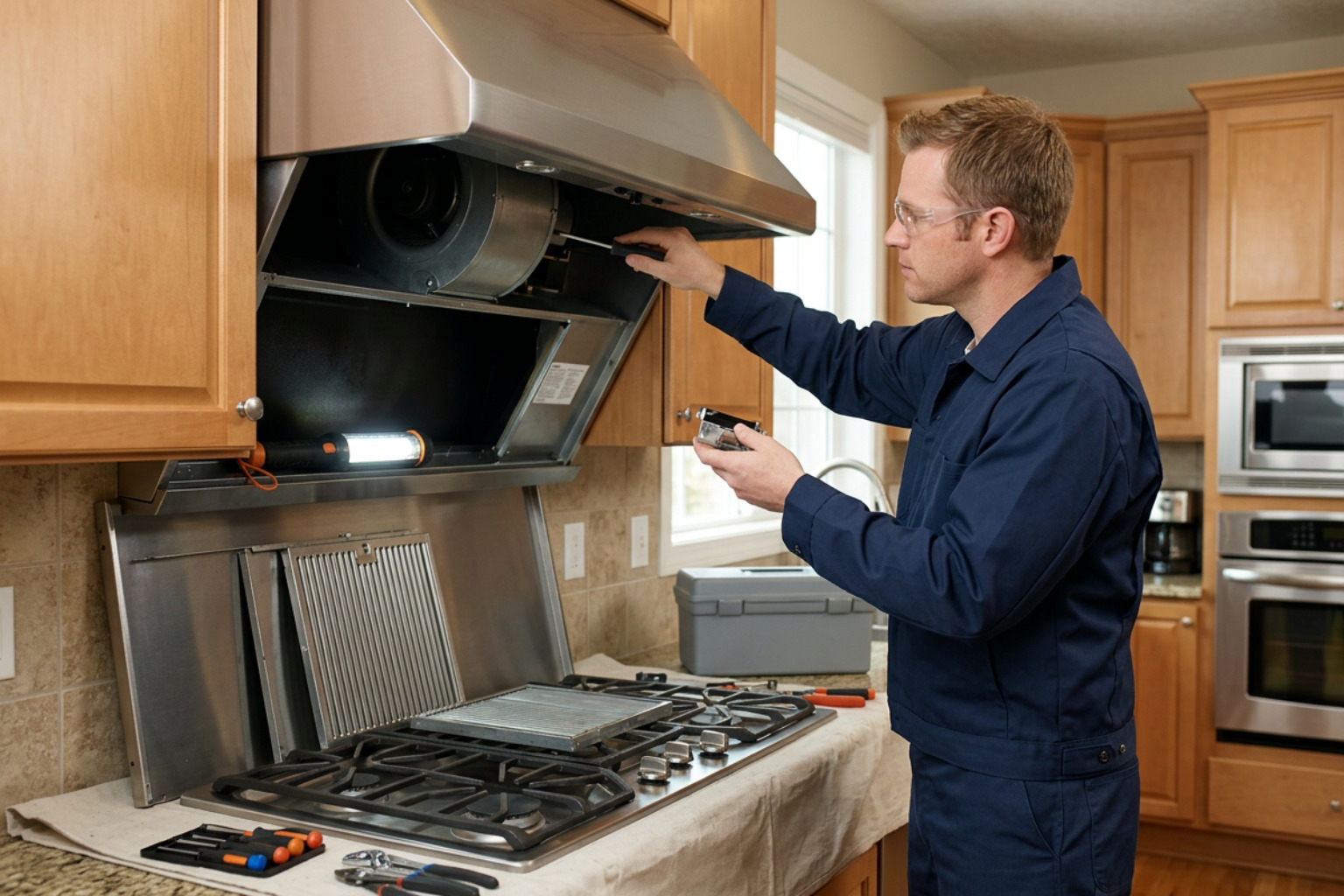
Your Kitchen Exhaust Fan Is More Than Just a Convenience
Kitchen exhaust fan repair is something most homeowners don’t think about — until the fan stops working, starts rattling, or the kitchen fills with smoke and grease-laden air.
Here’s a quick answer to the most common questions:
| Problem | Most Likely Cause | Quick Fix |
|---|---|---|
| Fan won’t turn on | Tripped breaker or unplugged unit | Reset breaker or check cabinet outlet |
| Noisy fan | Loose blade or dry motor bearings | Tighten screws or apply lubricant |
| Lights don’t work | Burned-out bulb or blown fuse | Replace bulb (use tissue for halogen) |
| Fan and lights both dead | Tripped breaker or internal fuse | Reset breaker; call a pro if it persists |
| Weak airflow | Clogged grease filter | Clean or replace the filter |
| Lingering cooking odors | Saturated charcoal filter (ductless) | Replace charcoal filter |
Most common repairs cost between $85 and $210, take about 30 minutes, and can often be handled without calling a professional. That said, some issues — like a burned-out motor, faulty control board, or wiring problem — do require expert help.
This guide walks you through everything: diagnosing the problem, fixing it yourself where safe, knowing when to call a pro, and understanding what repairs should cost.
I’m Vasyl Turetsky, founder and appliance repair specialist at iFix Appliances, and I’ve spent years diagnosing and fixing major household appliances — including kitchen exhaust fan repair — for homeowners across Raleigh, Cary, Apex, Durham, and surrounding communities. Let’s get your range hood working again.
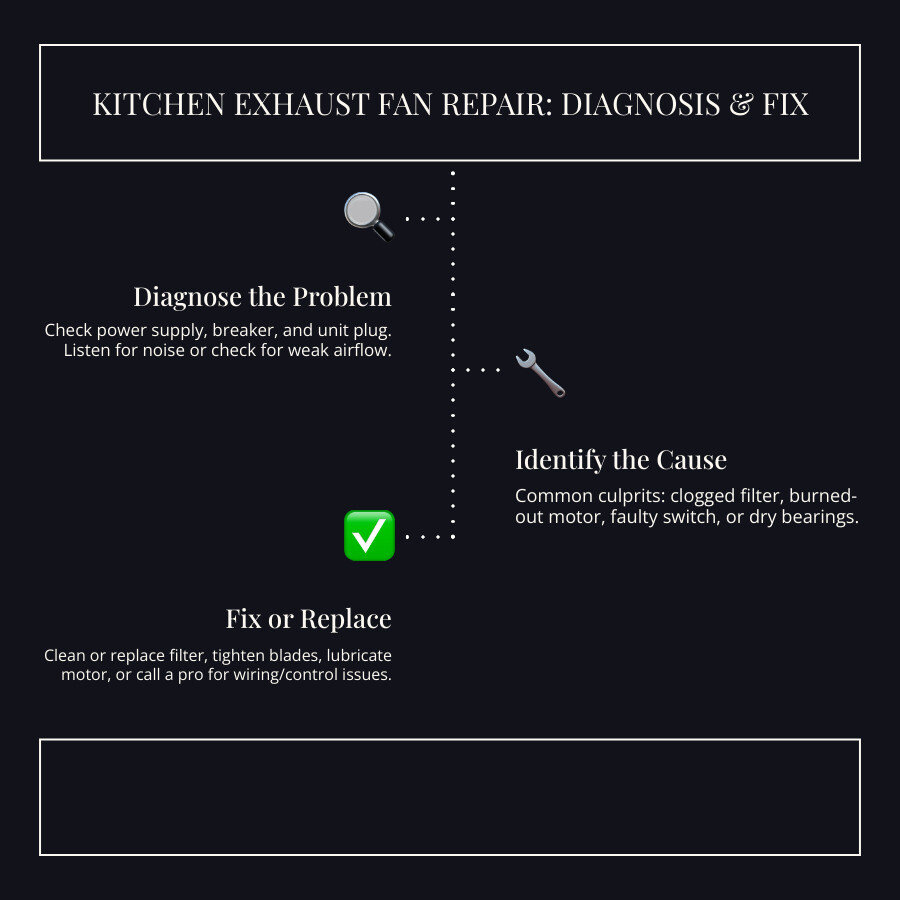
Discover more about kitchen exhaust fan repair:
Common Types of Range Hoods and Their Repair Needs
Before diving into the mechanics of kitchen exhaust fan repair, it is essential to understand the specific type of ventilation system installed in your kitchen. Different configurations have unique structural components, ducting requirements, and typical failure modes.
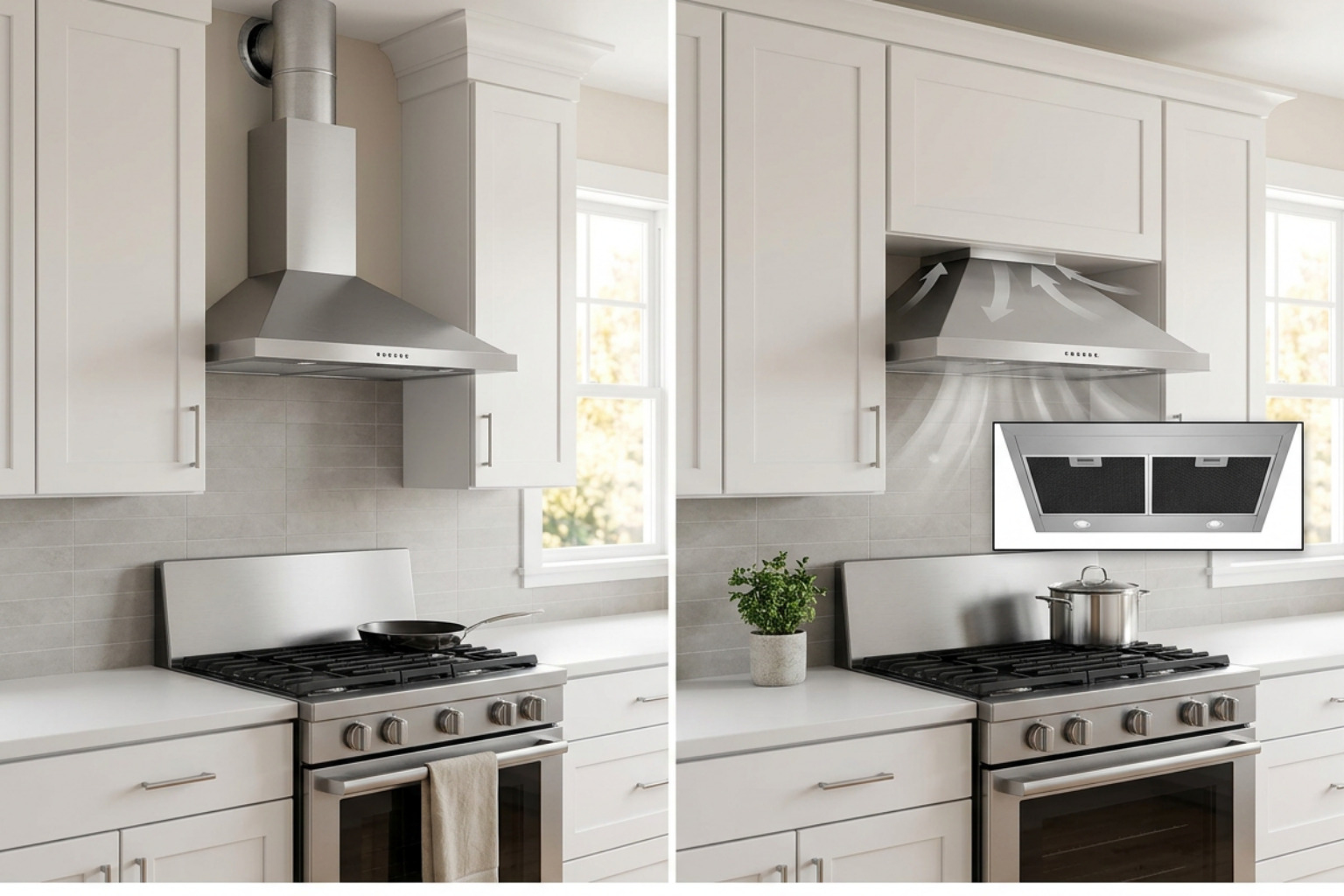
Ducted Hoods
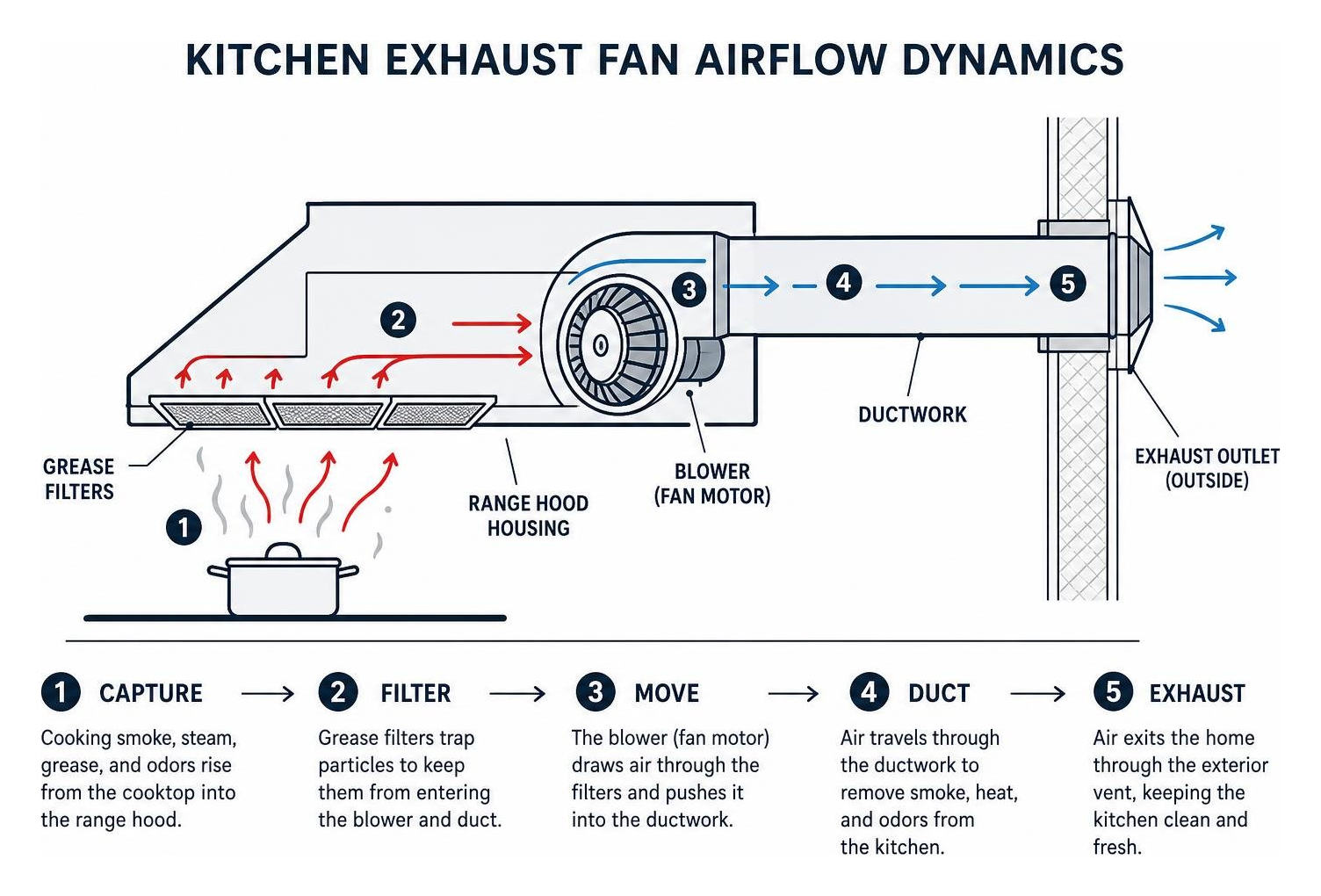
Ducted range hoods are the gold standard for kitchen ventilation. They pull air, grease, and steam out of your kitchen and expel them directly outside through dedicated ductwork. Because they vent externally, they are incredibly efficient at managing heavy cooking odors and moisture.
- Typical Repair Needs: Duct blockages, damper failure (the flap that prevents outside air from blowing back in), and grease accumulation inside the metal ducting.
Recirculating (Ductless) Hoods
If you do not see visible ductwork leading outside or through your upper cabinetry, you likely have a recirculating or ductless hood. Instead of expelling air outside, these systems pull air through a primary grease filter, pass it through an activated charcoal filter to neutralize odors, and then recirculate the cleaned air back into the kitchen.
- Typical Repair Needs: Heavily saturated charcoal filters that restrict airflow, motor strain from trying to pull air through clogged filters, and grease film buildup on the internal blower wheel.
Downdraft Systems
Commonly installed in kitchen islands or cooktops where overhead space is limited, downdraft systems pull steam, smoke, and odors downward through a vent built directly into or adjacent to the cooktop.
- Typical Repair Needs: Motorized gear failures (for pop-up models), internal grease spills entering the motor housing, and duct alignment issues underneath the floorboards.
Type I Hoods (Grease Removal)
In commercial settings—such as restaurants in Raleigh or Durham—Type I hoods are legally mandated over any grease-producing appliance, such as fryers, griddles, and charbroilers. They are equipped with advanced fire suppression systems and are engineered to handle extreme heat and airborne grease.
- Typical Repair Needs: Failed fire suppression sensors, fan belt fraying, and extreme grease buildup throwing the heavy-duty blower wheel off-balance.
Type II Hoods (Heat and Moisture)
Type II hoods are designed to manage heat, steam, and moisture rather than grease. You will typically find these installed over commercial dishwashers, steam tables, or light baking ovens.
- Typical Repair Needs: Rust and corrosion from high moisture exposure, condensate drainage blockages, and fan motor failure due to high humidity.
Comparison of Range Hood Types and Common Failures
| Hood Type | Primary Function | Key Components | Most Common Failure |
|---|---|---|---|
| Ducted | Outdoor air expulsion | Rigid duct, damper, blower motor | Damper stuck closed, exterior vent blockage |
| Ductless | Air filtration & recirculation | Mesh filter, charcoal filter, motor | Saturated filters straining the motor |
| Downdraft | Downward air extraction | Pop-up gears, blower, under-cabinet duct | Motorized lift mechanism failure, grease spills |
| Type I (Comm.) | Grease extraction & fire safety | Baffle filters, fire suppression, belt-drive fan | Broken fan belt, failed health code inspection |
| Type II (Comm.) | Steam & heat management | Condensate hood, direct-drive fan | Corrosion from moisture, drain blockages |
Whether you have a standard residential under-cabinet model or a high-end island hood, keeping these systems in top shape prevents permanent damage to your cooktop area. If your range hood issues are tied to a failing stove or oven, check out our professional Range Repair services to ensure your entire cooking suite functions safely.
Troubleshooting and Kitchen Exhaust Fan Repair Basics
When your kitchen ventilation system begins to act up, you do not always need to reach for your wallet immediately. Many common issues can be traced back to basic electrical or structural problems that can be diagnosed with a little patience.
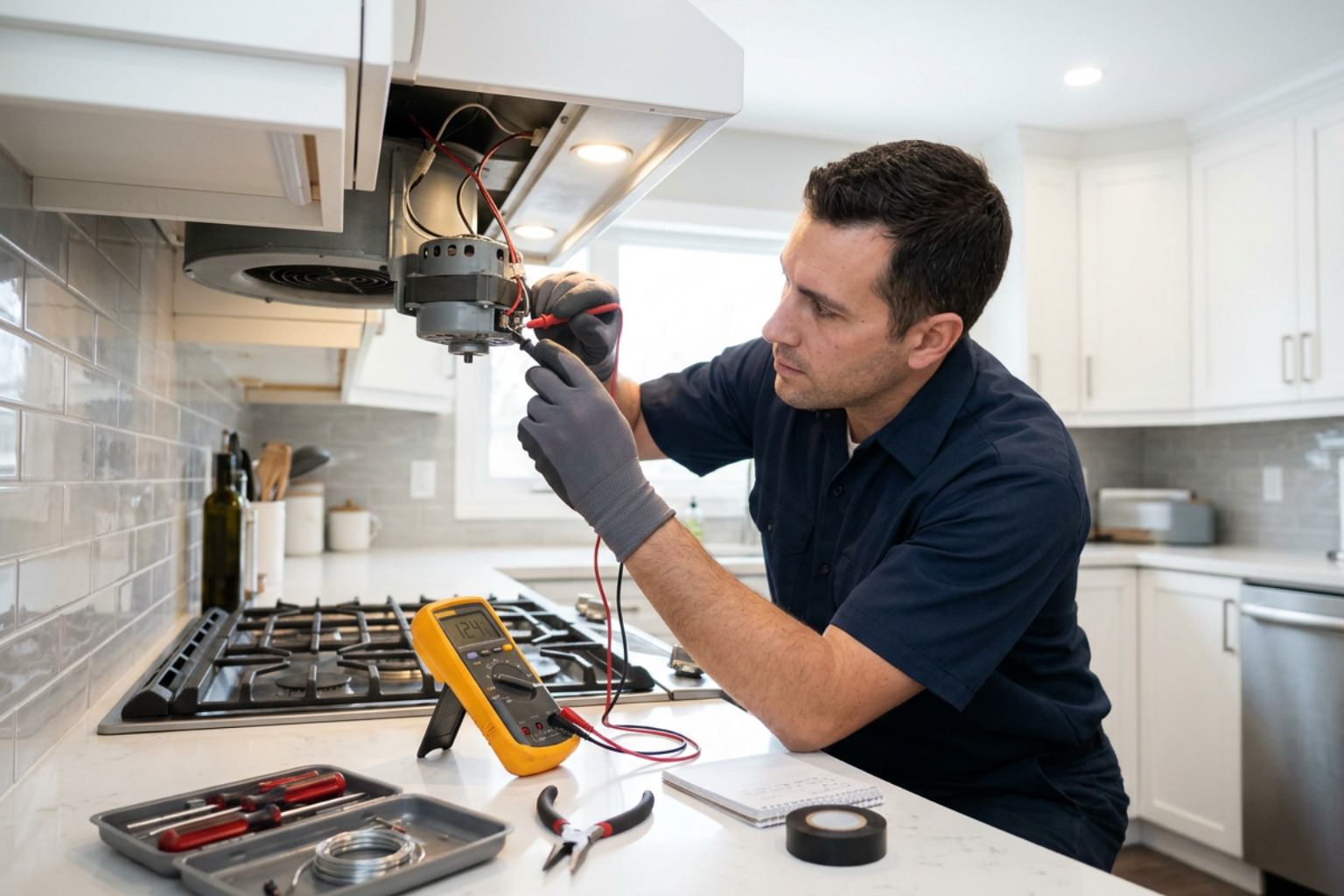
Power Failure
If the entire unit is completely dead—meaning neither the fan turns on nor the lights illuminate—the issue is almost always electrical power.
- Check the Circuit Breaker: Head to your home’s main electrical panel and check for a tripped breaker. Flip it completely off and then back on to reset it.
- Inspect the Hidden Outlet: Many under-cabinet range hoods plug into a standard household outlet hidden inside the cabinet directly above the stove. Open the cabinet door, locate the plug, and ensure it hasn’t been bumped loose by stored pots or pans.
- Test the Outlet: Unplug the range hood and plug in a small, working household device (like a hair dryer or phone charger). If the test device works, the outlet is fine, meaning the issue lies within the hood’s internal wiring or control board.
Control Boards
Modern range hoods utilize electronic control boards or touchpads to manage fan speeds and lighting. If your fan operates intermittently, or if certain speed buttons do not respond, the control board may have suffered a short circuit. Replacing or repairing a control board typically costs between $180 and $475 depending on the brand and complexity of the electronic components.
For commercial kitchens, resolving control board and electrical failures quickly is critical to avoiding costly downtime. If you run a local food service establishment in Cary, Morrisville, or Chapel Hill, you can learn more about our rapid-response Commercial Appliance Repair to keep your line running smoothly. If the issue is affecting your cooking equipment as well, our Oven & Stove Repair team can diagnose both systems during a single service visit.
Why is My Kitchen Exhaust Fan Not Working?
If you have verified that your range hood has power, but the fan motor refuses to spin, several internal components could be at fault:
- Blown Internal Fuse: Many range hoods feature a small, internal thermal fuse designed to blow if the motor overheats. This prevents the unit from catching fire. If the fuse is blown, the electrical circuit to the motor is broken, and the fuse must be replaced.
- Faulty Switch: Over time, the physical switches or slide controls on your range hood can wear down. Grease can also seep behind the control panel, coating the electrical contacts and preventing the switch from completing the circuit to the motor.
- Wiring Issues: Range hoods operate in high-heat, high-moisture environments. Loose wire nuts, corroded terminals, or wires damaged by heat can interrupt the flow of electricity to the fan.
- Motor Burnout: If you turn on the switch and hear a low, electrical hum but the fan blade doesn’t spin, the motor windings have likely burned out, or the internal capacitor has failed. In this scenario, the motor must be replaced.
How to Fix a Noisy Range Hood Fan
A noisy fan is one of the most common complaints homeowners face. Depending on the sound you hear, you can pinpoint the exact cause:
- Rattling or Vibrating Noise: This is usually caused by loose mounting screws, a loose blower wheel, or unbalanced fan blades. Turn off the power, remove the grease filters, and check for any loose screws along the housing or the motor mount. Tighten them with a screwdriver.
- Squealing or Chirping Noise: This points directly to dry or worn motor bearings. Over time, the factory lubricant on the motor shaft dries out. You can often resolve this temporary issue by applying a few drops of high-temperature spray lubricant directly to the motor shaft and rotating the blades by hand to distribute it.
- Grinding or Thumping Noise: This indicates that the fan blades are warped, bent, or out of alignment, causing them to physically strike the plastic or metal housing as they spin. Inspect the fan blades for physical damage or heavy grease buildup that could throw them off-balance.
What to Do When Range Hood Lights Don’t Work
If your exhaust fan runs perfectly but the cooktop lights refuse to turn on, run through this quick troubleshooting checklist:
- Check the Bulbs: It sounds obvious, but bulbs burn out frequently due to the heat rising from the stove. Ensure the bulbs are screwed in tightly. If they are burned out, replace them.
- Handle Halogen Bulbs Safely: If your range hood uses halogen bulbs, never touch the glass with your bare hands. The natural oils on your skin transfer to the bulb, creating a hot spot when turned on, which causes the bulb to burn out prematurely. Always use a clean tissue or wear gloves when installing new halogen bulbs.
- Inspect the Light Sockets: Over time, heat and grease can corrode the contacts inside the light socket, preventing electrical contact. With the power turned off at the breaker, inspect the socket for signs of discoloration or melting.
- Test the Control Switch: If a new bulb doesn’t resolve the issue, the lighting switch on your control panel may be broken, requiring a replacement switch assembly.
Maintenance, Filters, and DIY Safety Precautions
Regular maintenance is the secret to extending the lifespan of your kitchen ventilation system. Without proper care, grease vapor will inevitably coat every internal component, leading to premature motor failure and creating a serious fire hazard.
Safety Precautions Before You Begin
Before attempting any DIY kitchen exhaust fan repair or maintenance, you must prioritize safety:
- Cut the Power: Never work on a range hood with the electrical circuit live. Locate your home’s breaker panel and flip the breaker dedicated to the range hood. Verify the power is off by attempting to turn on the hood’s fan and lights.
- Wear Protective Gloves: The metal edges inside a range hood housing, as well as the edges of the fan blades, can be razor-sharp. Always wear heavy-duty work gloves to protect your hands from cuts.
- Use Proper Eye Protection: When working underneath a range hood, loose debris, dried grease, and cleaning chemicals can easily fall into your eyes. Wear safety goggles.
- Avoid Harsh Cleaners on Stainless Steel: Never use chlorine, bleach, or chloride-based cleaners on stainless steel hoods. These chemicals permanently damage the protective chromium oxide layer of the steel, leading to pitting and rusting that traps grease.
For comprehensive details on safety standards and commercial compliance, you can read the Kitchen Exhaust Hood Repair Guide to understand the strict fire codes governing ventilation systems.
How to Clean or Replace a Range Hood Filter
Your range hood’s filters are designed to capture airborne grease before it can enter the ductwork or coat the motor. If these filters become completely saturated, airflow is severely restricted, causing the motor to work twice as hard and overheat.
- Mesh Metal Filters: These aluminum or stainless steel filters are standard on most ducted residential hoods. To clean them:
- Slide or pop the filter out of the hood housing.
- Place them in the lower rack of your dishwasher and run a cycle on the hottest setting with standard detergent.
- Alternatively, soak them in a sink filled with boiling water, half a cup of baking soda, and a generous squirt of grease-cutting dish soap. Let them soak for 15 minutes, then scrub gently with a non-abrasive brush.
- Baffle Filters: Commonly found in high-end residential and commercial Type I hoods, baffle filters direct grease-laden air through a series of sharp twists, causing the grease to condense onto the metal baffles and drain safely into a collection cup. Clean these weekly in a dishwasher or commercial soak tank.
- Charcoal Filters: Recirculating (ductless) hoods rely on activated charcoal filters to neutralize odors. Charcoal filters cannot be washed or cleaned. They must be replaced every 3 to 6 months depending on how frequently you cook.
DIY Kitchen Exhaust Fan Repair: Motor and Blade Fixes
If you have determined that your fan motor or fan blade needs to be replaced, you can often tackle this beginner-to-intermediate DIY project in about 30 minutes.
Tools Required:
- Screwdriver set (Phillips and flathead)
- Nut driver or socket set
- Needle-nose pliers
- High-temperature spray lubricant
- Work gloves and safety goggles
Step-by-Step Blower Motor Replacement:
- Disconnect Power: Ensure the circuit breaker is shut off.
- Remove Filters: Take out the grease filters to access the internal blower assembly.
- Unplug the Motor: Locate the wire harness connecting the motor to the range hood’s control board. Squeeze the plastic tabs and pull the connector apart.
- Remove the Blower Housing: Unscrew the mounting screws holding the plastic or metal blower housing in place. Carefully lower the housing out of the hood.
- Remove the Fan Blade: Locate the retaining nut or clip holding the fan blade (impeller) to the motor shaft. Remove it and slide the blade off the shaft.
- Swap the Motor: Unscrew the mounting bolts holding the old motor to the housing. Install the new motor, tightening the bolts securely.
- Reassemble and Test: Reattach the fan blade, mount the blower housing back into the range hood, plug in the electrical harness, reinstall the filters, and restore power at the breaker to test your handiwork.
Repair Costs and Deciding When to Replace
When faced with a malfunctioning kitchen exhaust fan, homeowners and business owners alike must weigh the cost of repairs against the price of a complete system replacement.
How Much Does Kitchen Exhaust Fan Repair Cost?
The overall cost of a kitchen exhaust fan repair depends heavily on whether the system is residential or commercial, the specific part that has failed, and local labor rates.
- Average Residential Repair Cost: Most standard home range hood repairs range from $85 to $210, including parts and labor.
- DIY Material Costs: If you can handle the fix yourself (such as lubricating a shaft, replacing a bulb, or swapping a basic switch), your material costs are typically just $5 to $10.
- Blower Motor Replacement: A residential blower motor can be professionally replaced for $110 to $230, while a commercial heavy-duty motor replacement ranges from $400 to $1,200.
- Control Board Repair: Replacing a faulty electronic control board generally runs between $180 and $475.
- Labor Rates: Professional appliance repair technicians typically charge between $50 and $150 for the first hour (which often covers the diagnostic fee) and $60 to $175 per hour after that. Labor usually accounts for 30% to 60% of the total repair bill.
To keep your home running efficiently without breaking the bank, explore our affordable options for general Appliance Repair across the Triangle area.
When to Hire a Professional for Kitchen Exhaust Fan Repair
While cleaning filters and tightening loose screws are great DIY projects, certain scenarios require the expertise of a certified technician:
- Electrical Hazards: If you see sparks, smell burning plastic, or if your range hood is repeatedly tripping your home’s main circuit breaker, do not attempt to diagnose this yourself. Complex wiring issues present severe shock and fire risks.
- Complex Control Systems: Modern smart hoods with integrated Wi-Fi, touchscreens, or multi-speed logic boards require specialized diagnostic tools to troubleshoot.
- Ductwork Modifications: If your system has poor airflow due to a crushed, undersized, or improperly routed duct run, an HVAC professional is required to safely redesign and install rigid stainless steel ducting. If you are experiencing broader ventilation or heating issues, our certified HVAC Repair experts are here to help.
How Do I Know If My Range Hood Needs Repair or Replacement?
Range hoods are incredibly durable appliances. When properly maintained, a high-quality range hood can last 15 to 20 years (or even longer) before needing replacement. However, you should opt for a brand-new installation if:
- The Unit Is Nearing the End of Its Lifespan: If your hood is over 15 years old and requires a major repair (like a new motor and control board), investing that money into a modern, energy-efficient model is a smarter long-term decision.
- Frequent Breakdowns Occur: If you find yourself calling a technician multiple times a year for various failures, the internal wiring or structural housing is likely degrading.
- Severe Structural Damage: If the metal housing is heavily rusted, warped, or cracked, it can compromise the physical safety of the unit and its ability to properly contain grease and heat.
- A Kitchen Remodel Is Underway: If you are upgrading your cooktop to a high-BTU gas range, your old hood may not have a high enough CFM (Cubic Feet per Minute) rating to safely handle the increased heat and exhaust.
Frequently Asked Questions About Kitchen Ventilation
Can I use a flexible duct for a range hood?
No, you should never use flexible ducting (such as plastic or foil ducts commonly used for dryers) for a kitchen range hood. Flexible ducts have ribbed inner walls that create extreme airflow restriction, reducing the fan’s efficiency. More importantly, grease vapor easily accumulates in the ridges of flexible ducts, creating a severe fire hazard that is nearly impossible to clean. Always use a rigid duct made of galvanized steel or stainless steel.
Why does my kitchen smell like food long after cooking?
If cooking odors linger for hours, your ventilation system is not working efficiently. The most common causes are:
- Clogged Grease Filters: Saturated metal mesh filters block air from entering the exhaust system.
- Saturated Charcoal Filters: On recirculating ductless hoods, charcoal filters lose their ability to absorb odors after 3 to 6 months and must be replaced.
- Duct Blockage: A stuck exterior damper or bird’s nest in the roof vent can physically block air from exiting your home.
How often should commercial kitchen exhaust hoods be cleaned?
According to NFPA 96 standards, the required cleaning frequency for commercial kitchen hoods depends entirely on your cooking volume and fuel source:
- Monthly: Systems using solid fuel (like wood or charcoal ovens).
- Quarterly: High-volume operations, such as 24-hour diners, fast-food locations, or kitchens utilizing heavy charbroiling and wok cooking.
- Semi-Annually: Moderate-volume, full-service sit-down restaurants.
- Annually: Low-volume cooking facilities, such as church kitchens, seasonal camps, or daycares.
Conclusion
A properly functioning kitchen exhaust fan is the unsung hero of a clean, safe, and comfortable home. By managing steam, heat, grease, and cooking odors, it protects your cabinetry, keeps your indoor air fresh, and prevents hazardous grease fires.
Whether you need a quick DIY filter cleaning, a blower motor replacement, or complex electrical troubleshooting, taking care of your range hood pays off in the long run.
If you are located in Raleigh, Cary, Apex, Garner, Durham, Morrisville, Wake Forest, Chapel Hill, or surrounding Triangle communities, and you prefer to leave the technical work to the experts, we are here to help. At iFix Appliances, we provide fast, honest diagnostics, transparent pricing, and dependable repair solutions for all major household brands.
Don’t let a noisy or weak fan ruin your cooking experience. Contact us today to schedule your service, or Schedule commercial appliance repair services to keep your business operating at peak performance!

0 Comments