
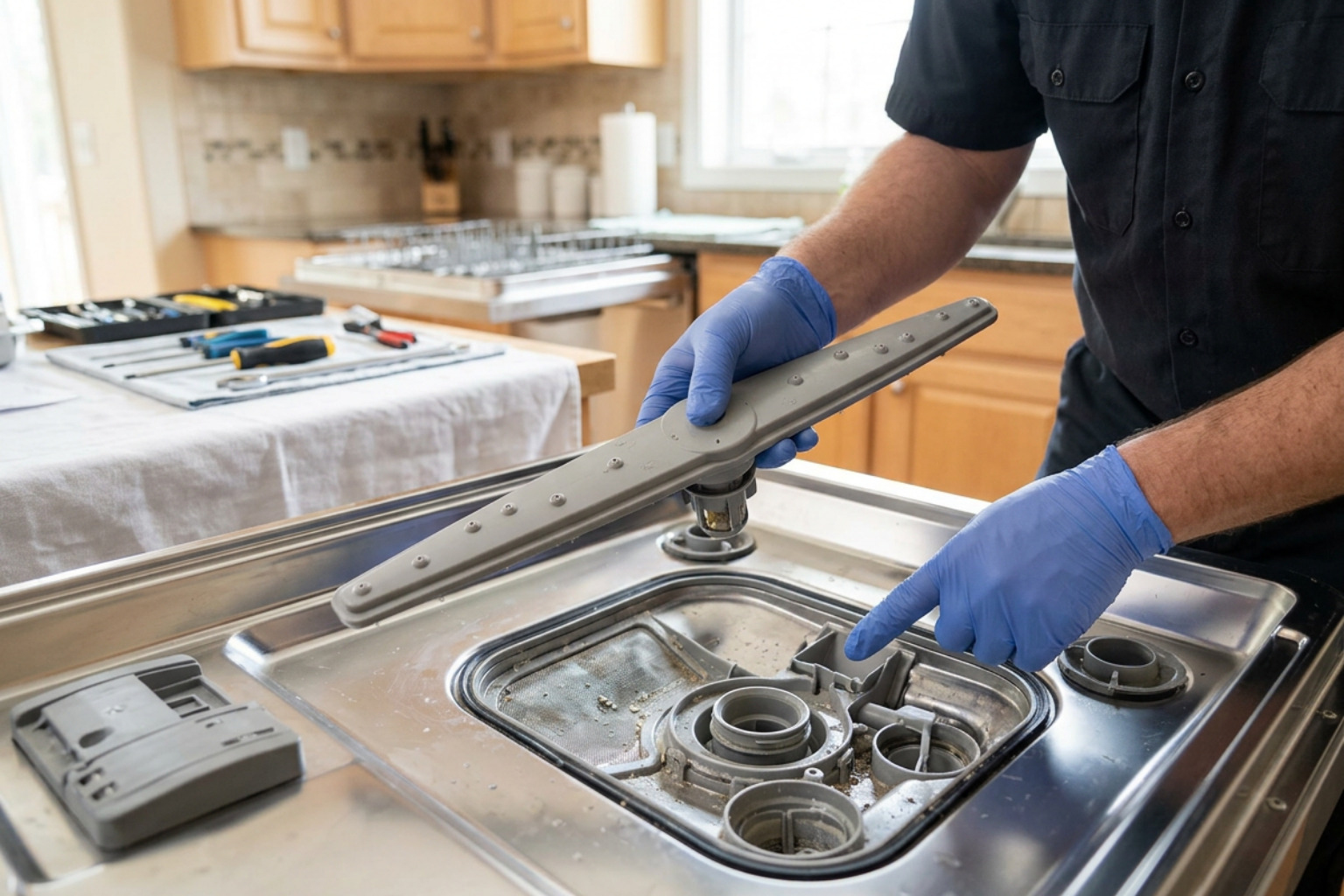
Distinguishing Normal Operational Sounds from Abnormal Problems
To identify the cause of a dishwasher making noise, pinpoint exactly when the sound occurs during the cycle and match the noise type to loading issues or mechanical defects. Rhythmic knocking usually stems from spray arms hitting oversized cookware, while buzzing or grinding during draining indicates trapped debris in the pump impeller. Continuous grinding, squealing, or humming typically signals worn motor bearings or dry seals. To isolate the fault, check spray arm clearance, inspect the cylindrical filter and sump basin for foreign objects, and run an empty cycle to rule out dish placement.
Modern dishwashers operate quietly, but mechanical parts, high-pressure water circulation, and opening valves create a predictable baseline sound. Acoustic dampening also affects perceived volume: appliances nestled snugly between cabinets benefit from natural insulation, whereas units at the exposed end of a counter often sound louder.
| Sound Type | Normal Operational Cause | Abnormal Mechanical Defect |
|---|---|---|
| Humming | Drain pump running, motor cooling fan spinning | Jammed motor, seized impeller, electrical hum from stuck component |
| Swishing / Rushing | Water jets spraying dishes, tub filling with water | Cavitation from low water levels, defective water inlet valve |
| Snapping / Clicking | Detergent dispenser door opening, drain solenoid activating | Broken wash arm clip, cracked chopper blade assembly |
| Grinding / Buzzing | Brief vibration as drain pump clears final waste water | Broken glass in drain impeller, worn wash motor bearings |
| Knocking / Rattling | Water jets striking empty tub walls during low loads | Spray arm striking tall cookware, loose internal mounting hardware |
| Squealing / Whining | Dry seals on a brand-new or long-dormant dishwasher | Failed motor bearings, worn circulation pump drive assembly |
Normal Operating Sounds: Swishing, Humming, and Filling
During everyday operation, you should expect to hear a series of rhythmic, predictable sounds. When a cycle begins, the water inlet valve opens, creating a gentle rushing water sound as the tub fills. As the wash cycle engages, the circulation pump drives water through the upper and lower wash arms, resulting in a continuous, rhythmic swishing sound.
A soft humming sound is also completely standard while the drain pump runs to evacuate dirty water. Furthermore, hearing a distinct mechanical snap mid-cycle is simply the spring-loaded detergent dispenser cup popping open. For more detailed insight into factory baseline audio profiles, consult the troubleshooting manufacturer guide.
Abnormal Mechanical Sounds: Grinding, Rattling, and Squealing
Abnormal sounds demand immediate attention before internal components sustain permanent damage. A continuous, harsh grinding or loud buzzing indicates foreign debris caught in an impeller or failing motor bearings. If a brand-new dishwasher or an appliance left unused for months emits a sharp squealing noise, dry pump seals are usually responsible. Adding two quarts of clean water directly into the bottom of the tub before starting a cycle often lubricates the seals and eliminates the sound.
Persistent squealing or high-pitched whining during active washing typically points to internal bearing failure within the motor assembly, which requires professional diagnostic intervention.
Pinpointing Your Dishwasher Making Noise by Wash Cycle Stage
Diagnosing appliance sounds becomes straightforward once you match the acoustic symptom to the specific stage of the wash cycle: filling, washing/circulating, draining, or drying.

To isolate the source, perform a simple door-open test: open the dishwasher door while the noise occurs. Opening the door instantly cuts electrical power to active motorized components. If the noise stops immediately, the issue is directly tied to a motorized wash component—such as the wash pump, drain pump, or rotating spray arm—rather than external household plumbing vibration or cabinet resonance.
Intermittent Loud Noises During the Wash and Spray Phase
If your dishwasher produces a loud, chaotic noise that comes and goes during the wash phase, an obstruction in the circulation pump is the primary suspect. Unlike a permanent motor failure that produces a steady drone, small pieces of hard debris—such as olive pits, broken glass shards, popcorn kernels, or bone fragments—tumble within the sump housing.
When water flow dynamics shift, these items are sucked into the impeller or chopper blade, producing a loud clicking or clattering sound before dropping back into the well. Similarly, thin jar labels that peel off during washing can flutter rapidly against the chopper screen at high velocity, creating a sound amplified by the hollow wash tub. Detailed steps on identifying these periodic disruptions can be found in our comprehensive appliance sound diagnostics breakdown.
Grinding, Buzzing, or Snapping During the Drain Cycle
When noise occurs exclusively during the final minutes of a cycle or between wash phases, the drain system is the focal point. While a slight buzz is normal as water pushes through the drain hose, a loud, raspy grinding indicates hard debris trapped in the drain pump impeller chamber.
Older appliances equipped with drain solenoids will emit a single loud snap as the mechanical valve shifts into drain mode. However, if the unit buzzes continuously without pumping out water, the drain pump impeller may be fully jammed, leading to a situation where your dishwasher not draining properly and leaves standing water in the bottom of the tub.
Knocking or Rattling from Water Spray and Rack Placement
Rhythmic knocking during the wash cycle is rarely an internal mechanical failure. In most cases, it is caused by improper dish placement:
- Spray Arm Obstruction: A tall baking sheet, oversized cutting board, or spatula protruding through the rack physically strikes the rotating spray arm.
- Lightweight Item Movement: Lightweight plastics, food container lids, or baby bottles get tossed around by high-pressure water jets.
- Underloaded Wash Tub: When running an empty or very low load, high-velocity water jets strike the stainless steel or plastic tub walls directly, creating a loud slapping or knocking sound.
- Cutlery Nesting: Spoons and forks nested tightly together in the cutlery basket rattle against each other under water pressure.
Step-by-Step Guide to Inspecting the Sump, Filter, and Impeller
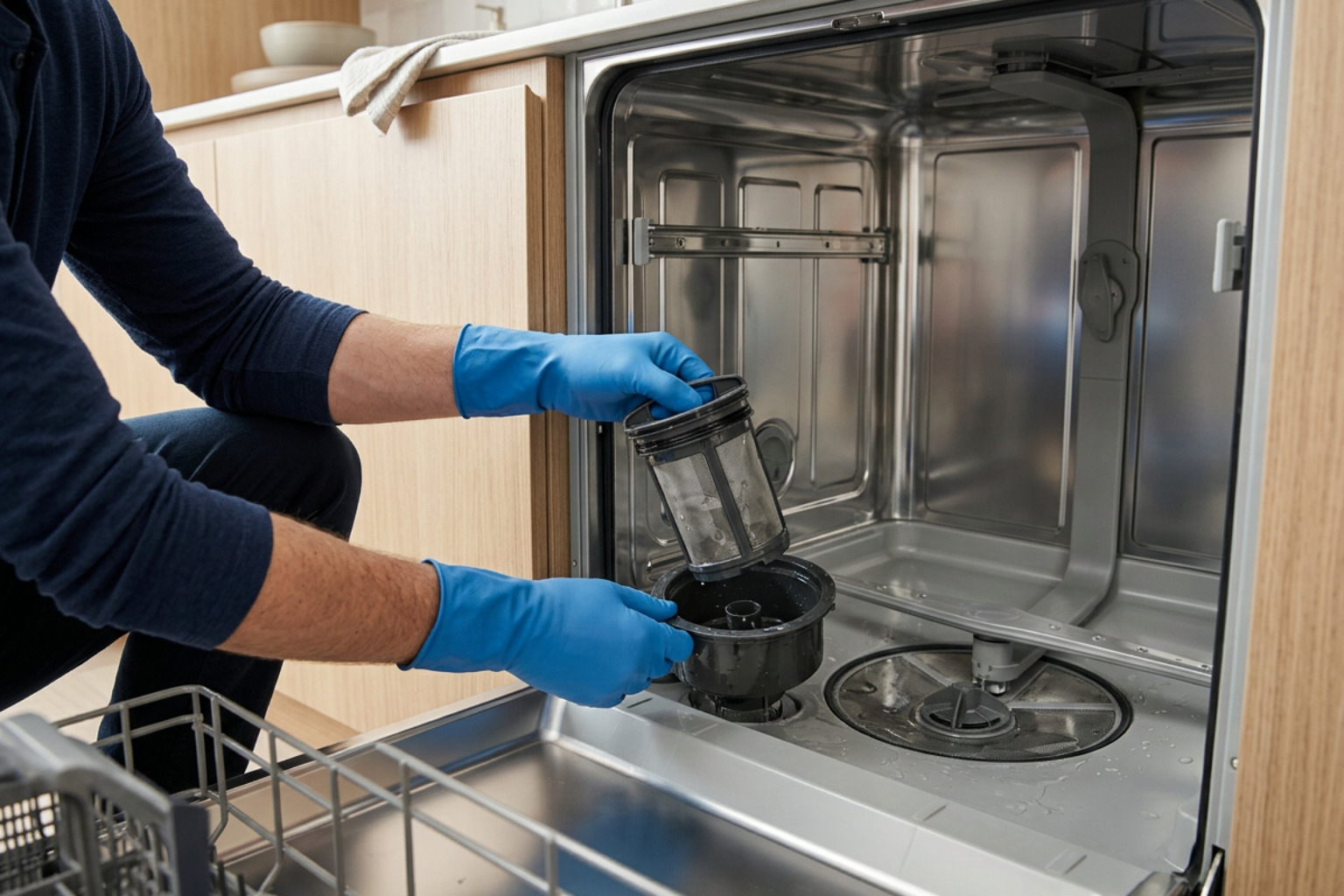
Many noise-causing clogs can be resolved by inspecting and cleaning the sump basin located at the bottom of your dishwasher tub.
Safely Accessing and Cleaning the Drain Pump Basin
Always prioritize safety before attempting maintenance on your appliance:
- Disconnect Electrical Power: Switch off the circuit breaker powering the dishwasher to prevent accidental startup or electrical shock.
- Remove the Bottom Rack and Spray Arm: Slide the lower basket out completely. Unclip or unscrew the lower spray arm according to your model’s design.
- Unlock the Cylindrical Filter: Twist the central filter assembly counterclockwise and lift it out. Rinse the mesh screen thoroughly under warm running water to remove grease and food film.
- Remove Standing Water: Use a sponge or small cup to remove any remaining water sitting inside the sump well.
- Wear Protective Cut-Resistant Gloves: Broken glass shards and sharp ceramic chips frequently collect in the pump well. Always wear protective gloves before reaching into the sump.
- Access the Impeller: On many modern units, a small removable cover protects the drain pump impeller. Use a manual screwdriver or gently pry off the cover using the handle of a teaspoon. Never use electric power tools inside the tub.
- Clear Trapped Debris: Inspect the exposed impeller cavity with a flashlight. Carefully extract foreign objects like seeds, glass fragments, or twist ties. Spin the impeller gently by hand to ensure it turns freely without resistance.
- Reassemble Components: Snap the pump cover securely back into place until it clicks. Reinstall the filter unit, ensuring alignment arrows point directly at each other, and snap the lower spray arm back into position.
Why Is My Dishwasher Making Noise but Showing No Error Code?
A common source of confusion for homeowners is an appliance that roars, grinds, or rattles throughout a cycle without displaying an error code on the control panel.
Dishwasher control boards monitor electrical current draw, temperature sensors, and fill switches. As long as the wash pump motor draws current within factory thresholds and the tub fills and drains on schedule, the electronic board assumes normal operation. The sensors cannot detect physical collisions between an impeller and a glass shard, nor can they measure the acoustic output of a failing motor bearing. Homeowners encountering this symptom can review our guide on mechanical pump diagnostics to understand why internal physical wear remains invisible to electronic self-testing systems. Running an empty test cycle helps isolate mechanical faults from loading issues.
Preventive Maintenance and Correct Loading Techniques
Preventing unwanted noise starts with proper everyday loading habits and routine system maintenance.
How to Prevent Your Dishwasher Making Noise with Smart Loading Habits
- Top Rack Optimization: Secure lightweight plastic containers and lids between rack tines on the upper shelf so water pressure cannot flip them over.
- Bottom Rack Perimeter Placement: Position oversized platters, baking sheets, and refrigerator shelves exclusively along the outer edges of the bottom rack to maintain full clearance for the rotating center spray arm.
- Cutlery Distribution: In standard cutlery baskets, mix forks and spoons to prevent nesting. Always place sharp knives with blades pointing downward for safety and balance. If your machine features a top cutlery drawer, lay utensils flat in individual slots.
- Perform the Spin Test: After loading and before closing the door, manually spin both the upper and lower wash arms with your hand to confirm completely unobstructed rotation.
- Scrape, Do Not Rinse: Scrape large food waste, bones, fruit pits, and toothpicks into the trash. Modern detergents require food enzymes to clean effectively, but hard physical debris must never enter the wash tub. Always peel paper labels off jars before washing.
Sump and Filter Maintenance Schedule
Establish a monthly maintenance routine to keep your dishwasher operating quietly:
- Monthly Filter Rinsing: Remove and scrub the cylindrical micro-filter using warm water, mild dish soap, and a soft nylon brush to eliminate mineral scale and trapped food particles.
- Check Spray Arm Nozzles: Inspect spray arm jet holes for trapped seeds or mineral deposits; clear blockages using a wooden toothpick.
- Run a Tub Cleaning Cycle: Once a month, run a hot cycle with a dedicated dishwasher cleaner to dissolve hard water calcium deposits that can cause internal seal squeaking and spray arm friction.
When to Call a Professional Technician for Mechanical Repairs
While simple loading adjustments and filter cleanings are well within DIY reach, certain noises indicate internal mechanical failure requiring professional tools and certified replacement components:
- Wash Motor Bearing Wear: A continuous roaring, groaning, or deep drone that intensifies as wash water heats up signifies that internal motor bearings have degraded. The circulation pump must be replaced as an entire assembly.
- Worn Impeller Shaft Seals: A high-pitched squeal accompanied by small moisture leaks beneath the front or center of the tub indicates failing mechanical seals.
- Internal Solenoid Failure: Continuous buzzing without water intake points to a jammed or burned-out water inlet valve solenoid.
- Electrical Diagnostic Faults: Intermittent operation accompanied by burning odors or tripped breakers demands immediate professional attention.
When internal components fail, continuing to run the appliance risks damaging surrounding kitchen cabinetry with water leaks or burning out the main control module. Homeowners throughout Raleigh, Cary, Durham, Apex, and Wake Forest can schedule dependable, manufacturer-grade Dishwasher Repair through our certified team to restore quiet, efficient performance.
Frequently Asked Questions About Dishwasher Noise
Why does my dishwasher make a loud noise that comes and goes?
Intermittent noise during active washing is almost always caused by loose, shifting debris trapped inside the pump sump area. Hard items like broken glass shards, olive pits, or toothpicks do not immediately jam the pump; instead, they bounce around inside the housing and intermittently contact the spinning impeller blades. Thin jar labels that peel off during washing can also flutter rapidly against internal intake screens under high water pressure.
What causes a grinding or buzzing noise in a dishwasher?
A brief, low buzzing sound during drainage is normal as the pump forces water out through the drain hose. However, a loud, harsh grinding noise indicates hard foreign objects caught in the drain impeller or wash pump chopper. If the grinding sound persists continuously throughout the wash cycle even when the machine is empty, the circulation pump motor bearings are worn and require replacement.
Can running an empty cycle help diagnose dishwasher noise?
Yes. Running a short test cycle with an entirely empty dishwasher is one of the most effective diagnostic steps you can take. If the knocking or rattling noise disappears when the machine is empty, the cause was an improperly loaded item striking a spray arm or lightweight dishes rattling under water spray. If the grinding, squealing, or roaring noise persists during an empty run, the problem is an internal mechanical issue within the pump, motor, or water valve.
Conclusion
Identifying why your dishwasher is making abnormal sounds is essential for preventing minor clogs from turning into expensive motor replacements. By understanding normal operational acoustics, practicing smart loading habits, and routinely cleaning your sump filter assembly, you can resolve most common kitchen noise issues quickly and safely.
If you have cleaned your filter system, verified spray arm clearance, and confirmed that a grinding or roaring sound persists, do not let worn components cause further damage. Contact our local team at iFix Appliances or schedule service for a dishwasher making strange noises to have our experienced technicians inspect, diagnose, and repair your appliance with long-lasting solutions.
0 Comments