
Why a Clogged Garbage Disposal Can Stop Your Dishwasher From Draining
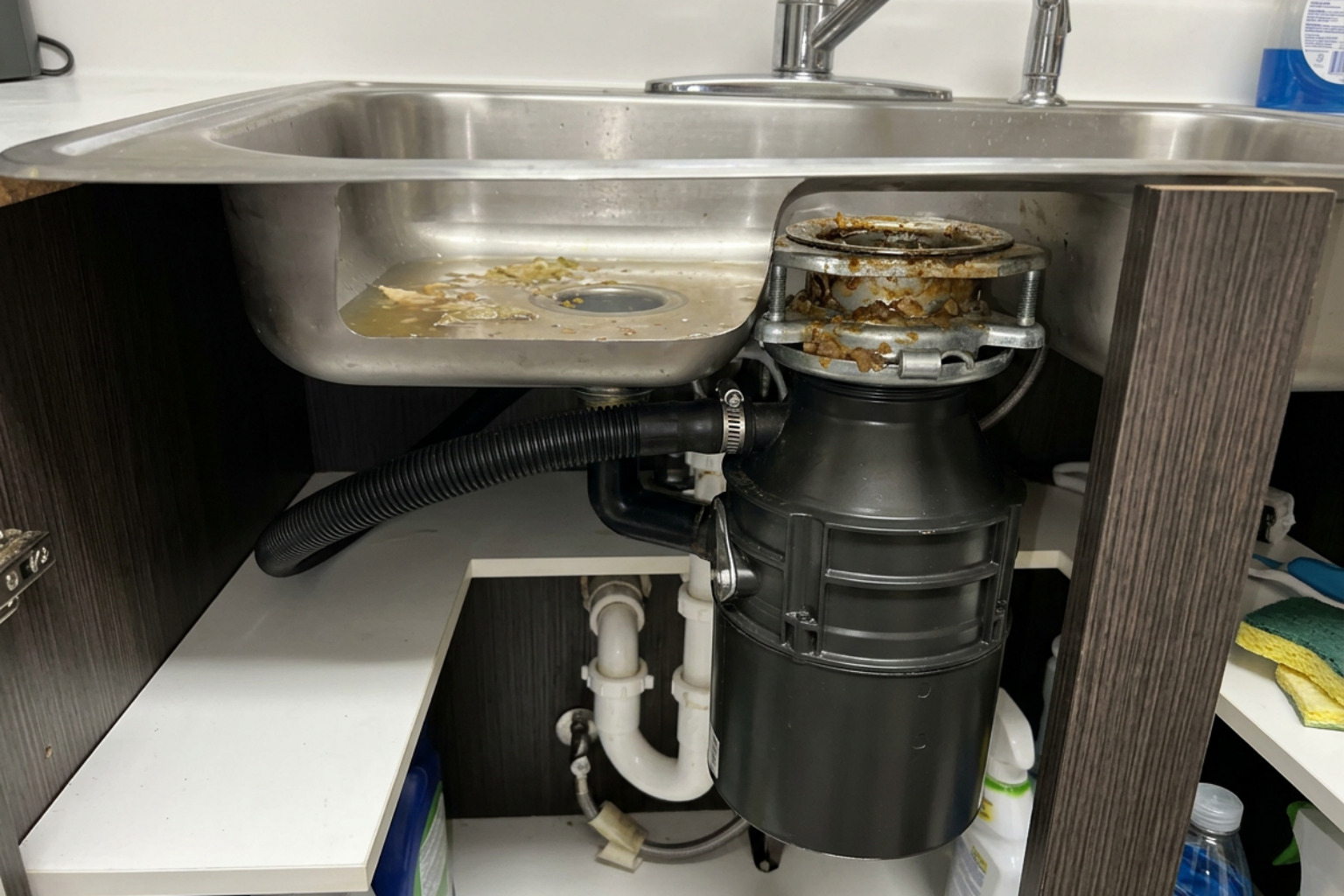
A clogged garbage disposal and dishwasher often point to one shared drainage problem, not two separate appliance failures. In many kitchens, the dishwasher pumps water through a hose connected to the disposal or the same sink drain line. When food debris, grease, or a drain blockage restricts that path, dirty dishwasher water can rise into the sink instead of draining away.
Quick answer: Stop the dishwasher if water is backing up. Run the disposal only if it is not jammed and the sink can drain, then check for a disposal blockage, a blocked P-trap, or a forgotten dishwasher knockout plug after a new disposal installation. If both sink bowls back up or the problem returns, the clog may be farther down the kitchen drain line.
| What you notice | Most likely issue |
|---|---|
| Dishwasher water backs into the disposal-side sink | Disposal chamber, disposal outlet, or shared drain restriction |
| Disposal hums but will not spin | A jammed grinding plate or foreign object |
| Dishwasher has not drained since a new disposal was installed | Dishwasher knockout plug may still be in place |
| Both sides of a double sink fill with water | P-trap, wall pipe, or deeper branch-drain clog |
| Sink drains slowly even when dishwasher is off | Partial clog beyond the disposal |
I am Vasyl Turetsky, Founder and Appliance Repair Specialist at iFix Appliances, and I help Raleigh-area homeowners diagnose dishwasher drainage and clogged garbage disposal and dishwasher issues across major appliance brands. The next sections explain how these connections work and how to narrow down the source safely.
How a Clogged Garbage Disposal and Dishwasher Share Plumbing Connections
To understand why water gathers in the bottom of your dishwasher or fills your sink basin during a wash cycle, it helps to look under the kitchen sink cabinet. Dishwashers do not have their own dedicated underground drain line in standard residential setups. Instead, they rely on your kitchen’s existing wastewater infrastructure.
When your dishwasher reaches its drain cycle, an internal pump pushes wastewater out through a corrugated plastic drain hose. This drain hose climbs up under the cabinet to form either a high loop or connects directly to an air gap mounted on top of the sink counter. From there, the wastewater streams into a small metal or plastic inlet nipple located on the upper side housing of your garbage disposal.
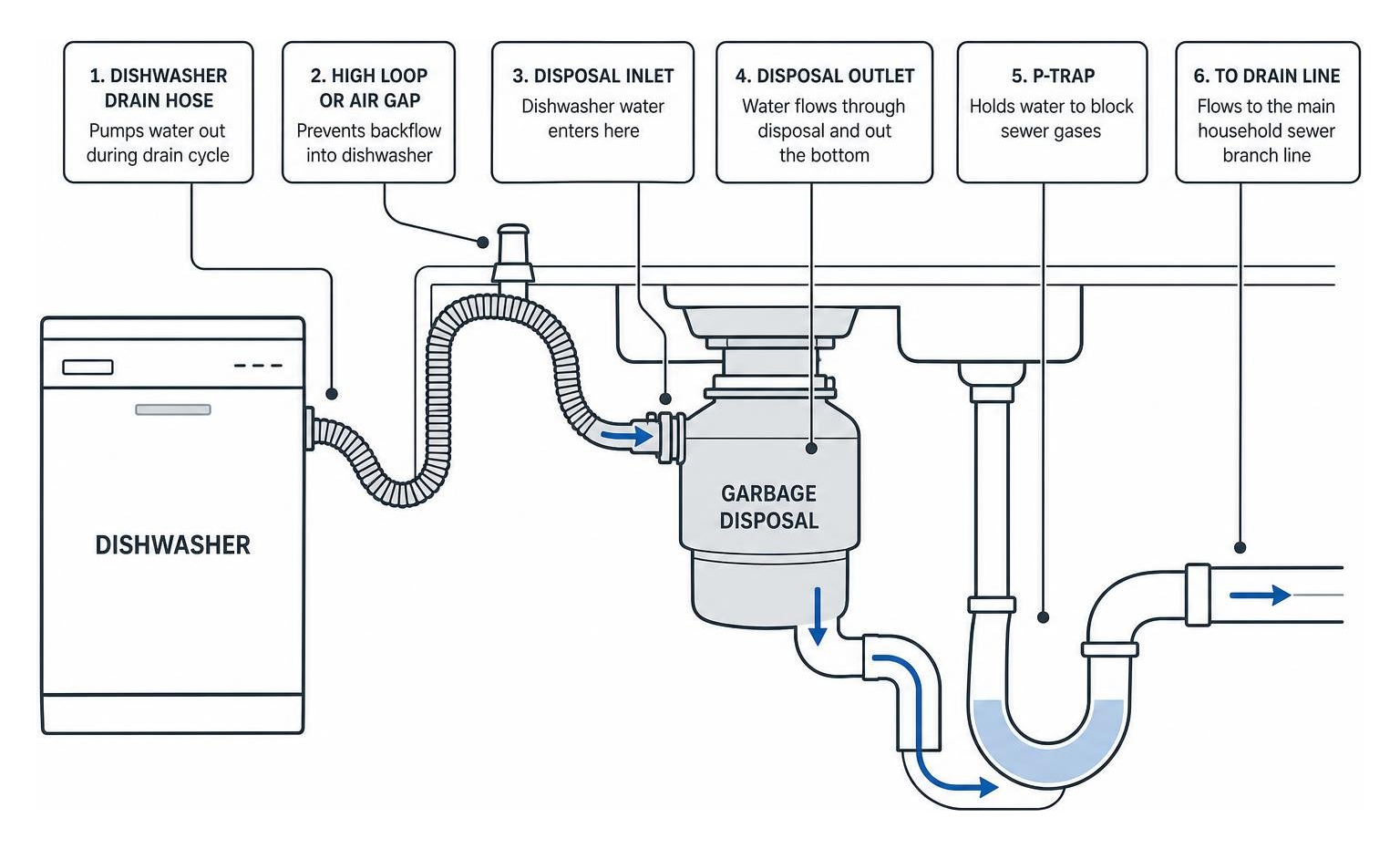
Once inside the upper chamber of the garbage disposal, the discharge flows past the internal impellers, through the bottom discharge elbow, and down into the curved P-trap before heading out to the main household sewer branch line. To explore more about how these interconnected fixtures work together, read this overview on how a dishwasher drains to a garbage disposal.
Because the garbage disposal acts as the entryway for all dishwasher discharge, any sludge, food buildup, or mechanical blockage inside the disposal directly blocks the discharge pathway for your dishwasher.
Why Your Sink Fills Up When the Dishwasher Runs
When the dishwasher drain pump kicks on, it forces wastewater out under positive mechanical pressure. If the path through the disposal chamber or the main sink pipe below is blocked, that pressurized water takes the path of least resistance.
Instead of flowing down the drain line, the wastewater shoots upward into the open sink basin above the disposal. When this happens on a double-basin sink, you will frequently see soapy, dirty water pool on the disposal side while the opposite basin stays clear—at least until the clog affects the shared P-trap line further downstream.
If you are noticing this exact behavior, detailed guidance on why a kitchen sink backs up when running the dishwasher offers additional context on shared plumbing traps.
The Impact of a Clogged Garbage Disposal and Dishwasher Inlet Port
Food waste like stringy vegetables, uncooked rice, eggshells, and congealed grease can quickly turn a disposal chamber into a clogged trap. When heavy food debris settles inside the upper basin of the unit, it blocks the outlet holes in the shredder ring.
Furthermore, the 3/4-inch side inlet port where the dishwasher drain hose connects can accumulate grease and food sludge over time. When this narrow passageway closes off, dirty water cannot even enter the disposal chamber. The dishwasher pump continues trying to force water against this solid barrier, building up backpressure that leaves standing, murky water inside the tub at the end of the wash cycle.
Diagnosing the Source: Disposal, P-Trap, or Main Drain Line?
Before reaching for tools or calling for service, you can isolate the exact location of the blockage using a quick process of elimination.
Testing the Disposal vs P-Trap Clog
Start by taking note of where the standing water is gathering:
- Single Basin Backup (Disposal Side Only): If wastewater fills only the side of the sink equipped with the disposal, the blockage is contained inside the disposal unit itself, the dishwasher inlet port, or the immediate discharge elbow above the P-trap. Learn more about whether a clogged disposal prevents dishwasher drainage.
- Double Basin Backup (Both Sides): If water fills both sink basins simultaneously, the restriction is located past the point where the two sink drains merge. This points directly to a clogged P-trap, a blocked wall trap arm, or grease buildup deeper in the kitchen branch drain line. Check this guide on troubleshooting kitchen sinks backing up on both sides.
- Disposal Motor Status: Turn on the disposal switch for 2 to 3 seconds.
- If it hums quietly without spinning, the grinding plate is mechanically jammed.
- If it makes no noise at all, the internal thermal overload switch has tripped due to overheating.
- If it runs smoothly and grinds, but standing water stays in the sink, the blockage is downstream in the drain pipes.
Identifying the Dishwasher Knockout Plug Problem
Have you recently replaced your garbage disposal or installed a brand-new unit? A forgotten plastic knockout plug is one of the most common installation oversights home repair technicians encounter.
Every new garbage disposal comes from the factory with a solid plastic disc inside the side dishwasher inlet port. This plug keeps the unit watertight for kitchens that do not have a dishwasher attached. When connecting a dishwasher hose, installer instructions require knocking out this plastic disc into the chamber with a screwdriver and hammer and removing the loose piece before attaching the hose.
If the installer forgets to remove this plug:
- The sink will drain normally when using the tap.
- The garbage disposal will operate perfectly when grinding food.
- The dishwasher will fail to drain from its very first run, leaving the tub filled with soapy water or leaking water onto the kitchen floor.
If your appliance issue is linked to a recent setup, schedule our expert Dishwasher Repair services to ensure every line connection is properly configured.
Step-by-Step DIY Guide to Unclogging Your Disposal and Dishwasher
If your clogged garbage disposal and dishwasher setup is stemming from a simple jam or soft waste blockage, you can safely clear it yourself using basic household tools.
Safely Unjamming the Disposal Chamber
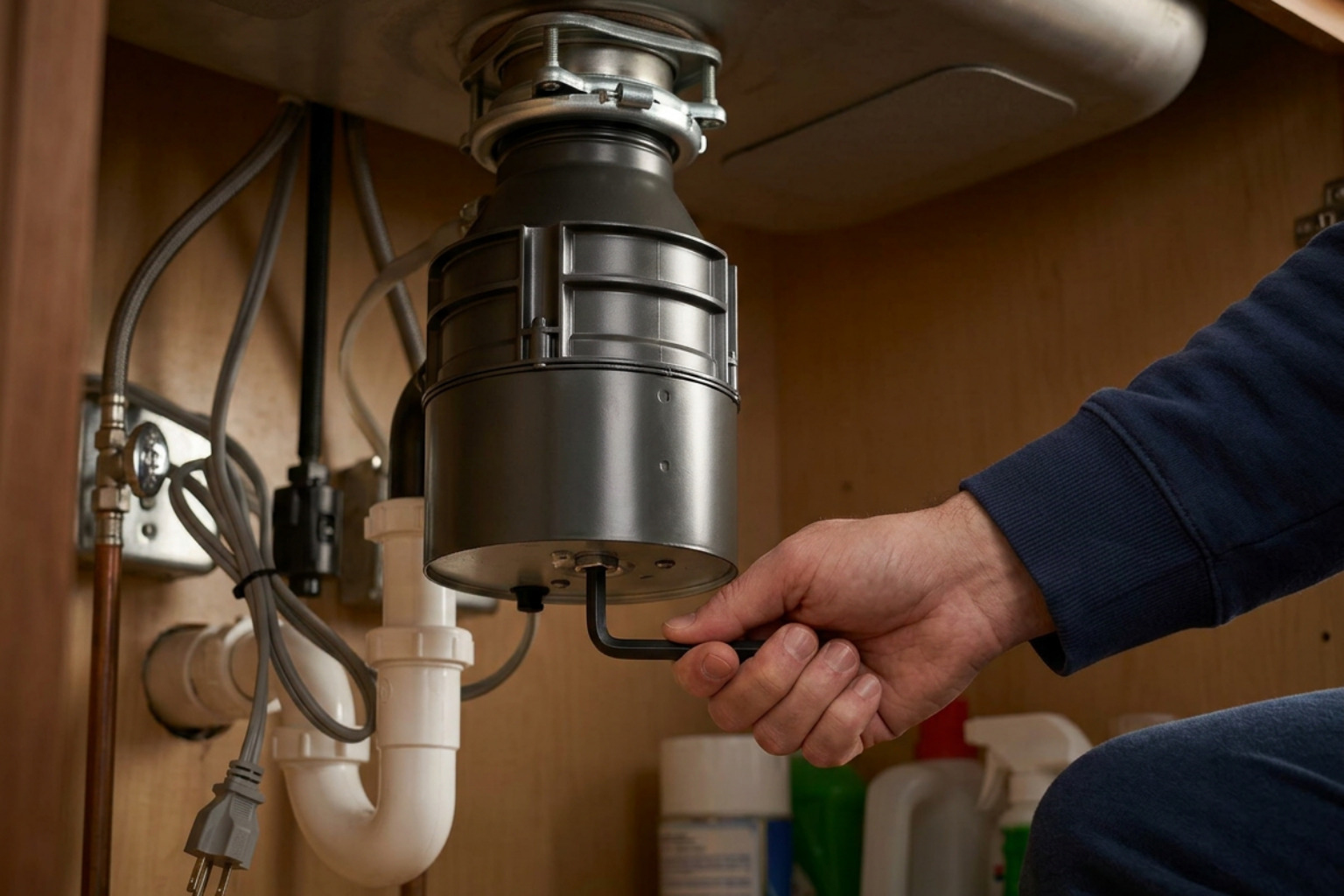
Safety Warning: Never place your hands, fingers, or metal kitchen utensils directly inside a garbage disposal chamber while the unit is connected to electrical power.
Follow these steps to free a jammed grinding flywheel:
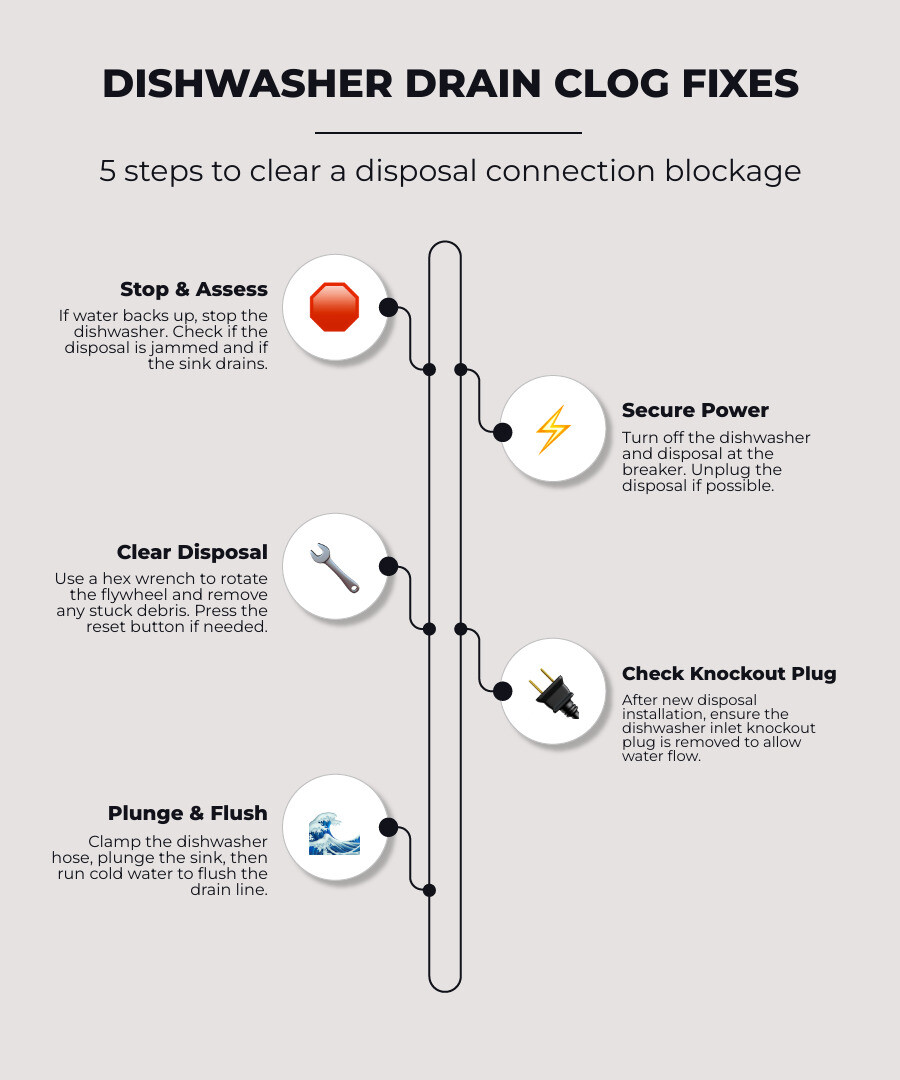
- Disconnect Power: Unplug the garbage disposal from the wall outlet beneath the sink. If it is hardwired directly into your home’s electrical box, switch off the corresponding circuit breaker in your main electrical panel.
- Locate the Manual Hex Socket: Look at the bottom center exterior of the disposal housing beneath your cabinet. You will find a small, square-recessed or 1/4-inch hex socket connected directly to the internal motor shaft.
- Insert a 1/4-inch Allen Wrench: Insert a standard 1/4-inch hex key (Allen wrench) or the specialty jam-clearing wrench that came with the unit into this bottom socket.
- Rock Back and Forth: Work the wrench back and forth in both clockwise and counterclockwise directions. Continue applying firm pressure until the internal flywheel breaks free and rotates 360 degrees smoothly.
- Inspect the Inner Chamber: Shine a bright flashlight down through the sink drain. Use a pair of long-nosed pliers or kitchen tongs—never your fingers—to retrieve foreign objects like stray silverware, bone fragments, fruit pits, or heavy fibrous buildup.
- Reset the Thermal Overload Switch: If the disposal motor motor shut off during operation, press the small red reset button located on the bottom of the disposal housing near the hex socket.
- Test the Connection: Restore electrical power, turn on cold tap water, and flip the disposal switch. Let it run for 30 seconds to flush out remaining debris.
For a comprehensive walkthrough on clearing stubborn drain blockages, review this guide on how to unclog a sink with a disposal and dishwasher.
Plunging a Double Sink with a Clogged Garbage Disposal and Dishwasher
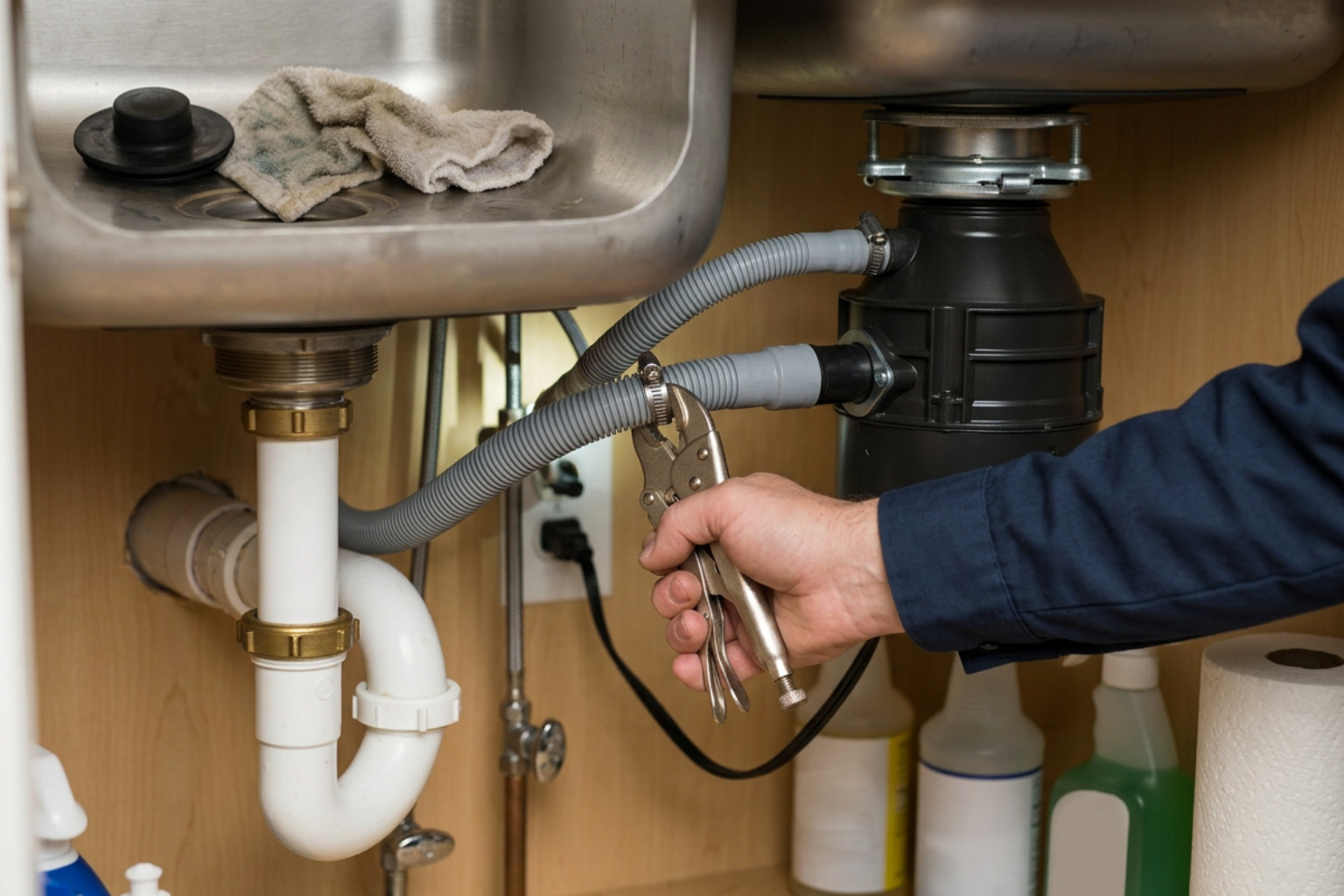
If your disposal is turning freely but water remains trapped in the sink and dishwasher line, plunging can clear soft food sludge stuck in the lower P-trap. Plunging a double-basin sink with connected appliances requires sealing secondary exit routes so pressure forces the clog down the drain rather than blowing back into your dishwasher or out the other basin.
- Clamp the Dishwasher Hose: Place a small hose clamp or locking pliers over the flexible rubber section of the dishwasher drain hose beneath the sink. This prevents dirty water and hydraulic pressure from pushing backward into your dishwasher tub while plunging.
- Seal the Counter Air Gap (If Applicable): If your sink uses a countertop air gap, place a piece of duct tape or hold a heavy wet rag tightly over the chrome air gap cap.
- Block the Non-Clogged Basin: On a double sink, insert a rubber drain stopper into the non-disposal basin and hold it down firmly with a wet washcloth to lock the seal.
- Fill the Sink Basin: Run 2 to 3 inches of standing water into the backed-up disposal sink basin. The water helps create an airtight hydraulic seal around the plunger cup.
- Position a Standard Cup Plunger: Place a standard flat cup plunger completely over the disposal drain opening.
- Plunge Vigorously: Push down firmly and pull up briskly in rapid 15-second cycles. Maintain a continuous seal with the sink bottom so the alternating pressure pushes and pulls the blockage inside the pipe.
- Flush with Water: Remove the plunger, release the hose clamp from the dishwasher drain line, and flush the sink drain with cold water for two minutes.
Safe Maintenance and Prevention Strategies
Preventing a clogged garbage disposal and dishwasher backup comes down to everyday habit changes and maintaining clean drain passages.
What Not to Put Down Your Disposal
Your disposal is designed to process light table scraps—it is not a substitute for a kitchen trash can or compost bin.
Avoid placing these problem materials down your disposal drain:
- Cooking Fats, Oils, and Grease (FOG): Warm liquid grease coats interior pipe walls as it cools, catching food slurry until the pipe narrows shut completely.
- Expanding Starches: Uncooked rice, pasta, oatmeal, and potato peels absorb water inside pipes, expanding into a dense paste that chokes drain lines.
- Fibrous Vegetables: Celery stalks, corn husks, artichoke leaves, and asparagus contain tough threads that wrap around disposal impellers and bind the motor shaft.
- Coffee Grounds: Fine grounds settle inside the curves of your under-sink P-trap, combining with grease to form a thick, concrete-like sludge.
To review remedies for lingering water in your appliance tub, consult our guide on dishwasher not draining water left in bottom in Raleigh NC causes fixes.
Why Chemical Drain Cleaners Should Be Avoided
When faced with a stubborn sink backup, many homeowners immediately pour caustic liquid chemical drain openers down the drain. As appliance repair professionals, we strongly advise against using chemical drain cleaners in any drain tied to a garbage disposal or dishwasher.
Chemical drain openers pose serious risks:
- Corrosive Damage: Strong sodium hydroxide or sulfuric acid solutions generate severe thermal heat that warps rubber gaskets, ruins disposal shaft seals, and damages plastic dishwasher drain hoses.
- Chemical Safety Hazards: If the chemical cleaner fails to clear the clog, your sink basin remains full of caustic, burning acid. If you subsequently try to plunge or disassemble under-sink pipes, this liquid can splash onto your skin or eyes.
- Dishwasher Water Contamination: Chemical residue trapped inside the disposal inlet can back up into your dishwasher during the wash cycle, causing chemical etching on glassware and leaving hazardous film inside the washing tub.
Instead, use natural cleaning methods. Pour one cup of baking soda into the disposal, followed by one cup of plain white vinegar. Let the natural foaming action break down light grease and food residue for 15 minutes, then flush the system thoroughly with a kettle of boiling water.
When to Call a Professional Plumber or Repair Specialist
While basic jams and soft food surface clogs are simple DIY projects, certain scenarios demand trained tools and technical diagnostic expertise.
It is time to seek professional appliance repair or plumbing service if:
- Persistent Backups Occur: Water continues backing up into the sink or dishwasher after manual unjamming, plunging, and clearing the P-trap.
- Electrical or Motor Failure: The garbage disposal hums constantly even after clearing obstructions, refuses to turn on after pressing the red reset button, or trips your main home electrical breaker whenever activated.
- Frequent Water Leaks: You notice standing water pooling along the bottom of your sink cabinet floor coming from the disposal body housing, lower seams, or dishwasher hose connection.
- Deep Pipe Blockages: Both basins of a double sink fill up and stay full despite clearing the immediate P-trap, indicating a heavy grease clog located 10 to 20 feet deep inside your kitchen branch wall pipe.
Our experienced technicians provide comprehensive diagnostics for household appliances across Raleigh, Cary, Apex, Garner, Durham, Morrisville, Wake Forest, and surrounding areas in North Carolina.
Frequently Asked Questions About Clogged Kitchen Plumbing
Can I run my dishwasher if the garbage disposal is clogged?
No, you should never run your dishwasher if your garbage disposal is completely clogged or draining slowly. Because the dishwasher pumps wastewater directly into the disposal housing, running a full wash cycle will push gallons of dirty water against the blockage. This forces soapy wastewater to overflow out of your sink drain onto countertops or flood back into the bottom of your dishwasher tub.
How do I know if the disposal knockout plug wasn’t removed?
You can identify an unremoved knockout plug by two clear symptoms:
- Your garbage disposal and kitchen sink drain water normally, but your dishwasher leaves a full tub of dirty water after its very first use.
- Disconnecting the dishwasher drain hose from the side disposal nipple reveals a solid plastic circular wall blocking the interior passageway.
You can knock this plug out by placing a flathead screwdriver against the plastic disc inside the nipple and tapping it gently with a hammer until it breaks free into the disposal chamber.
Should I run the disposal before starting the dishwasher?
Yes, running your garbage disposal for 5 to 10 seconds with cold tap water before starting a dishwasher cycle is an excellent preventative habit. This clears out lingering food particles and grease slurry from the disposal chamber, ensuring an open path when the dishwasher pump begins expelling wastewater later in the cycle.
Conclusion
A clogged garbage disposal and dishwasher can disrupt your entire kitchen routine, but understanding how these appliances share a drain connection makes troubleshooting straightforward. By performing routine inspection steps—checking for flywheel jams, verifying the dishwasher knockout plug, and keeping improper grease and starches out of your drain—you can maintain smooth performance across all your kitchen appliances.
When drain backups persist or your dishwasher encounters internal mechanical failures, professional care ensures your home is protected against costly water damage.
Contact the local experts at iFix Appliances today by visiting our Contact page or schedule an appointment through our dedicated Dishwasher Repair team for fast, reliable repair solutions throughout Raleigh and the North Carolina Triangle area.

0 Comments