

Why Electrical Services Matter More Than Most Homeowners Realize
Electrical services cover everything from wiring a new home to upgrading an outdated panel, installing EV chargers, and keeping your appliances running safely. If you need to hire the right contractor fast, here’s what to know:
- What they include: Panel upgrades, wiring, circuit installation, lighting, generators, EV chargers, and emergency repairs
- Who needs them: Homeowners, landlords, property managers, and businesses
- What to look for in a contractor: State license, liability insurance, upfront pricing, and a workmanship guarantee
- Warning signs you need service now: Flickering lights, tripping breakers, burning smells, or an older fuse box
- Typical cost drivers: Scope of work, permit requirements, panel size, and parts needed
Most homeowners only think about their electrical system when something goes wrong — a breaker trips, the lights flicker, or an appliance suddenly stops working. But by that point, a small issue can already be a serious safety hazard. Electrical problems don’t wait for a convenient time, and the wrong contractor can make things worse.
This guide walks you through everything you need to know: what electrical services actually are, which ones you’re most likely to need, how to choose a qualified contractor, and when to call for emergency help.
I’m Vasyl Turetsky, founder and appliance repair specialist at iFix Appliances — and in my years of diagnosing appliance failures across the Raleigh area, I’ve seen how faulty wiring, overloaded circuits, and outdated panels are often the real reason a washer, dryer, or refrigerator stops working. Understanding electrical services is a core part of protecting your home and the appliances in it.
What Are Electrical Services and Why Do They Matter?
When we talk about electrical services, we are referring to the entire infrastructure that safely brings power from the utility grid into your property and distributes it to your devices. This isn’t just about the wires hidden behind your drywall; it encompasses the main service panel, individual circuits, grounding and bonding systems, meters, and outlets.
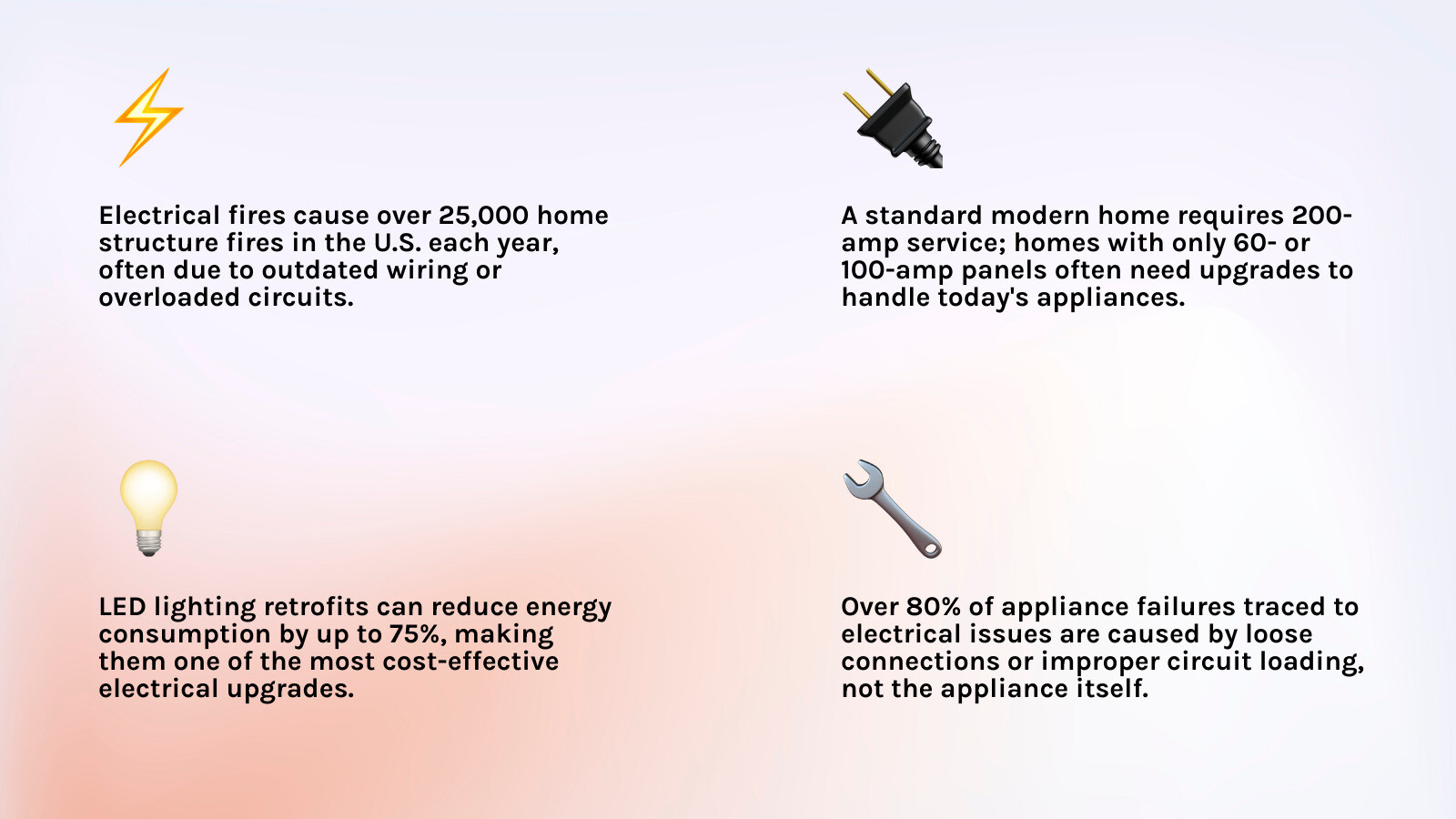
A properly designed and maintained electrical system is the unsung hero of any modern building. It ensures that high-draw appliances receive a steady flow of voltage without risking overheating, electrical fires, or sudden power surges. When an electrical system is neglected, it becomes a ticking clock of safety hazards. Outdated wiring, loose connections, and overloaded panels can damage sensitive electronics, ruin expensive household appliances, and pose severe fire risks.
Residential Electrical Services for Homeowners
For residential properties, the electrical system is tailored to daily household living. Most modern homes require between 100-amp and 200-amp electrical service to safely distribute power. However, as we introduce more high-draw technology into our homes — such as smart systems, hot tubs, and electric vehicles — older 100-amp panels quickly become overwhelmed.
Key residential electrical services include:
- Service Panel Upgrades: Transitioning from outdated fuse boxes to modern circuit breaker panels.
- Grounding and Bonding: Ensuring your system has a safe path to redirect excess electricity into the earth, protecting you from shock hazards.
- Dedicated Appliance Circuits: Running independent lines for heavy-duty appliances to prevent overloaded circuits.
- Safe Hookups: Coordinating professional Appliance Installation Removal to make sure new units are wired safely from day one.
Commercial and Industrial Electrical Services
Commercial and industrial electrical requirements operate on an entirely different scale than residential systems. While your home relies on single-phase power, commercial offices, retail spaces, and restaurants typically require three-phase power systems to run heavy HVAC units, large-scale lighting layouts, and commercial machinery.

In these environments, professional contractors focus on:
- Three-Phase Power Distribution: Balancing heavy electrical loads across three alternating currents to maximize efficiency and reduce energy costs.
- Dedicated Commercial Circuits: Ensuring high-power equipment has isolated lines to prevent interference with sensitive IT server infrastructure.
- Routine Facility Maintenance: Proactively testing systems to avoid costly downtime.
- Specialized Repairs: Working alongside experts who provide Commercial Appliance Repair to keep commercial kitchens and offices running smoothly.
Common Solutions Offered by Professional Contractors
Modern electrical contractors do much more than just fix dead outlets. Today’s electrical services are highly specialized, focusing on energy efficiency, safety, and integration with cutting-edge technology.
Panel Upgrades and Fuse Box Modernization
Your electrical panel is the heart of your home’s power distribution. If your home still relies on an old fuse box or a panel from the 1970s or 1980s, it was never designed to handle the load of modern life. Between smart TVs, computers, dual HVAC systems, and high-power kitchen appliances, older boards simply cannot cope.
Upgrading to a modern 200-amp or 400-amp service panel ensures:
- Code Compliance: Meeting current National Electrical Code (NEC) safety standards.
- Enhanced Safety: Modern circuit breakers shut off power instantly when an overload or short circuit is detected, preventing fires.
- Future-Proofing: Leaving physical space and electrical capacity to add new circuits down the road.
If you are dealing with persistent electrical issues, working with a reputable specialist like Express Electrical Services can help you safely transition to a modern, high-capacity panel.
Specialty Circuits and Dedicated Appliance Lines
Did you know that running a space heater and an electric fireplace on the same circuit can instantly trip your breaker? This happens because high-draw appliances demand more current than a standard shared circuit can safely provide. Heavy-duty appliances require dedicated 240V circuits to operate efficiently and safely.
We always recommend dedicated lines for:
- Kitchen Ranges and Ovens: Preventing voltage drops that cause uneven cooking temperatures.
- Washers and Dryers: Ensuring heavy motor loads do not disrupt other electronics in the home.
- Commercial Kitchen Equipment: As detailed in our comprehensive Commercial Cooking Equipment Repair Guide For Busy Restaurant Owners, proper electrical supply is the first line of defense against premature equipment failure.
Energy-Efficient Lighting and Smart Home Integration
Upgrading your electrical system is also an excellent opportunity to lower your monthly utility bills. Modern electrical contractors can design and install energy-efficient solutions that pay for themselves over time:
- LED Retrofits: Replacing outdated incandescent or halogen bulbs with LEDs reduces lighting energy consumption by up to 80% and extends the lifespan of your fixtures.
- Smart Switches and Automation: Integrating smart dimmers and timers allows you to control your home’s lighting remotely or set automated schedules.
- Occupancy Sensors: Automatically turning off lights in unoccupied rooms is a simple way to prevent wasted electricity in both homes and commercial offices.
How to Choose a Reliable Contractor and Spot Warning Signs
Electricity is not a DIY project. Hiring an unqualified person or attempting to handle complex wiring yourself can lead to severe shocks, ruined appliances, and devastating house fires. Knowing how to select a licensed professional is key to protecting your property.
Essential Credentials to Verify
When searching for a local electrical contractor in the Triangle area—whether you are in Raleigh, Cary, Durham, or Wake Forest—always verify their credentials before they set foot on your property:
- Active State License: Ensure they hold a valid state-issued license (such as a North Carolina Electrical License).
- Liability Insurance: A reputable contractor will carry substantial liability insurance (often $1M or more) to protect your property in the rare event of an accident.
- Positive Local Reputation: Look for contractors with verified reviews. For example, if you are looking for highly rated experts, NJF Electrical Services stands out as a trusted name with decades of proven residential and commercial experience.
Understanding the Project Process from Planning to Commissioning
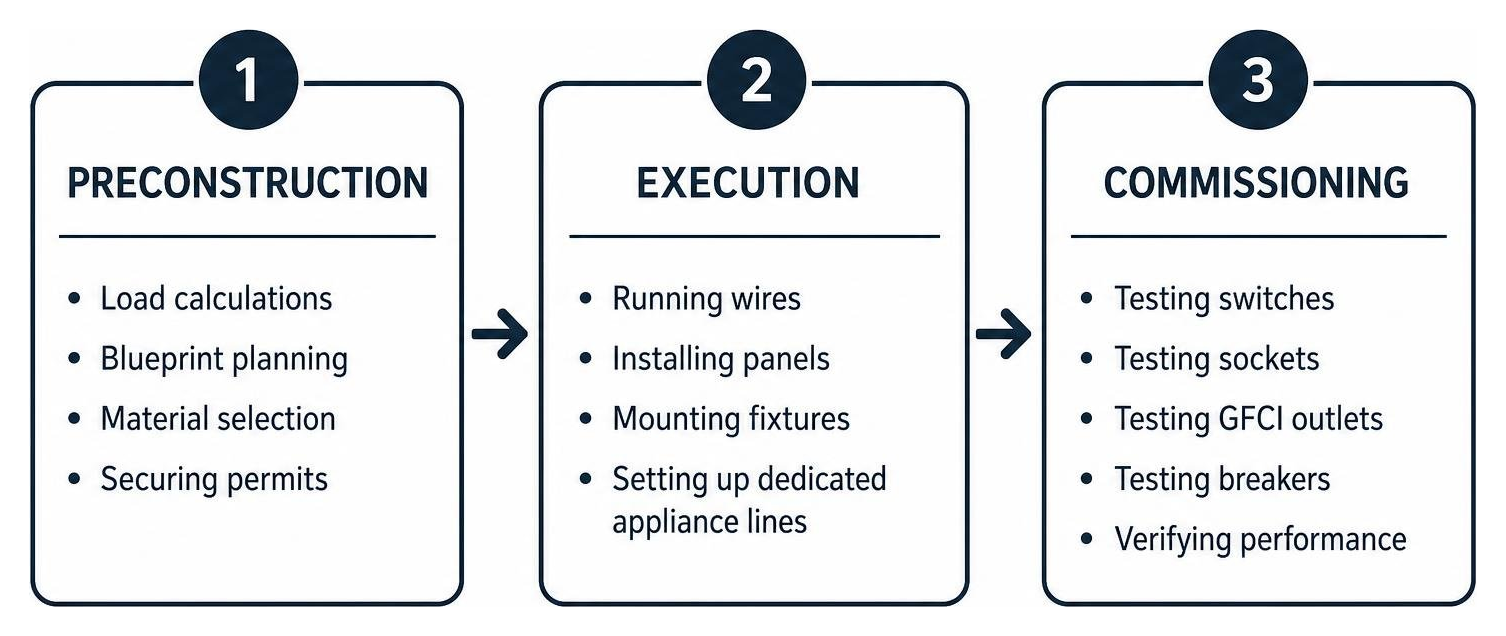
A professional electrical project should follow a structured, transparent journey. This ensures that nothing is left to chance and that the final installation is completely safe.
| Project Phase | Key Deliverables & Activities | Why It Matters |
|---|---|---|
| 1. Preconstruction | Load calculations, blueprint planning, material selection, and securing local permits. | Lays a safe foundation and ensures the system is sized correctly for your actual power demands. |
| 2. Execution | Running wires, installing panels, mounting fixtures, and setting up dedicated appliance lines. | The physical installation phase where certified technicians perform the hands-on electrical work. |
| 3. Commissioning | Meticulous testing of every switch, socket, GFCI outlet, and breaker to verify performance. | The phase of ultimate assurance, confirming that everything is fully functional, safe, and code-compliant. |
By adhering to this rigorous process, professional contractors—similar to the structured approach utilized by Perth Electrical Services—guarantee that your home’s power infrastructure is built to last.
Outdated Wiring and Silent Threats
Older homes throughout historic pockets of North Carolina possess immense charm, but their hidden electrical systems can harbor silent threats. Two major hazards to watch out for include:
- Knob-and-Tube Wiring: Common in homes built before the 1940s, this obsolete system lacks a ground wire, making it highly unsafe for modern electronics and appliances.
- Aluminum Wiring: Popular in the late 1960s and early 1970s, aluminum expands and contracts more than copper, leading to loose connections and a significantly higher risk of fire.
As noted by the experts at Craven Electrical Services, addressing these outdated wiring systems is essential for modern home safety and ensuring your property remains insurable.
Emergency Situations and Rapid Response
Electrical emergencies don’t stick to standard business hours. If you experience a sudden loss of power, smell burning plastic near an outlet, or hear a loud buzzing from your panel, you need help immediately.
A reliable emergency contractor should offer:
- 24/7 Dispatch: Round-the-clock availability to handle dangerous situations.
- Fully Stocked Trucks: Having common replacement parts on hand to resolve the issue on the first visit.
- Storm Readiness: Installing whole-home surge protection and automatic standby generators to keep your home safe during severe weather.
For rapid, dependable help when the unexpected strikes, contractors like Chavis Electrical Services and Gorton Electrical Services are excellent examples of companies dedicated to keeping homes safe and powered up under any conditions.
Frequently Asked Questions
Understanding your home’s electrical needs helps you make smarter decisions. Here are answers to the most common questions homeowners ask about their electrical systems.
What is the difference between a fuse and a circuit breaker?
Both fuses and circuit breakers are designed to protect your home from electrical overloads, but they do so differently:
- Fuses: Contain a small metal strip that melts when too much current flows through it. Once a fuse blows, it must be completely replaced.
- Circuit Breakers: Use an internal electromagnet or bimetallic strip to trip a mechanical switch when an overload is detected. They can simply be reset by flipping the switch back to the “on” position.
Fuses are an older technology and are generally less convenient and less safe than modern circuit breakers, which do not pose the temptation of being bypassed with incorrect materials.
How do I get an accurate quote for my electrical project?
The best way to get an accurate quote is to request an on-site assessment. A professional electrician will inspect your current panel capacity, evaluate the physical routing for new wires, and calculate the exact materials needed. Avoid contractors who offer firm, blind quotes over the phone without seeing your property, as hidden complexities can quickly lead to unexpected fees.
Why do my breakers keep tripping when I run appliances?
If your breaker trips repeatedly when you turn on your washing machine, dryer, or microwave, it is a clear warning sign of a circuit overload. This means the appliance is trying to pull more electrical current than that specific circuit is rated to handle.
To resolve this, you need a licensed electrician to run a dedicated circuit line directly from your main panel to that specific appliance. Continuing to reset a tripping breaker without fixing the underlying issue can damage your appliance’s internal motor and create a fire hazard.
Conclusion
Your electrical system is the backbone of your home, powering everything from your lighting to your most valuable household appliances. When your electrical infrastructure is outdated or overloaded, your appliances are the first to pay the price.
At iFix Appliances, we are proud to provide fast, reliable, and honest appliance repair services throughout Raleigh, Cary, Apex, Garner, Durham, Morrisville, Wake Forest, and the surrounding Triangle area. Whether you need specialized refrigerator repair, washer or dryer diagnostics, or commercial service, we ensure your household runs smoothly.
If you suspect that poor electrical supply has damaged your household appliances, or if you need expert advice on getting your appliances running efficiently again, we are here to help. Contact iFix Appliances today or explore our professional Commercial Appliance Repair Services to schedule your diagnostic visit!


0 Comments