
Bosch Dishwasher Not Drying? Start With These Quick Checks
A bosch dishwasher not drying dishes is often a settings, rinse aid, or loading issue – not an immediate sign that the appliance is broken. Bosch models commonly use condensation drying: a hot final rinse warms the dishes, while moisture condenses on the cooler stainless-steel tub walls and drains away.
For a quick improvement, check these first:
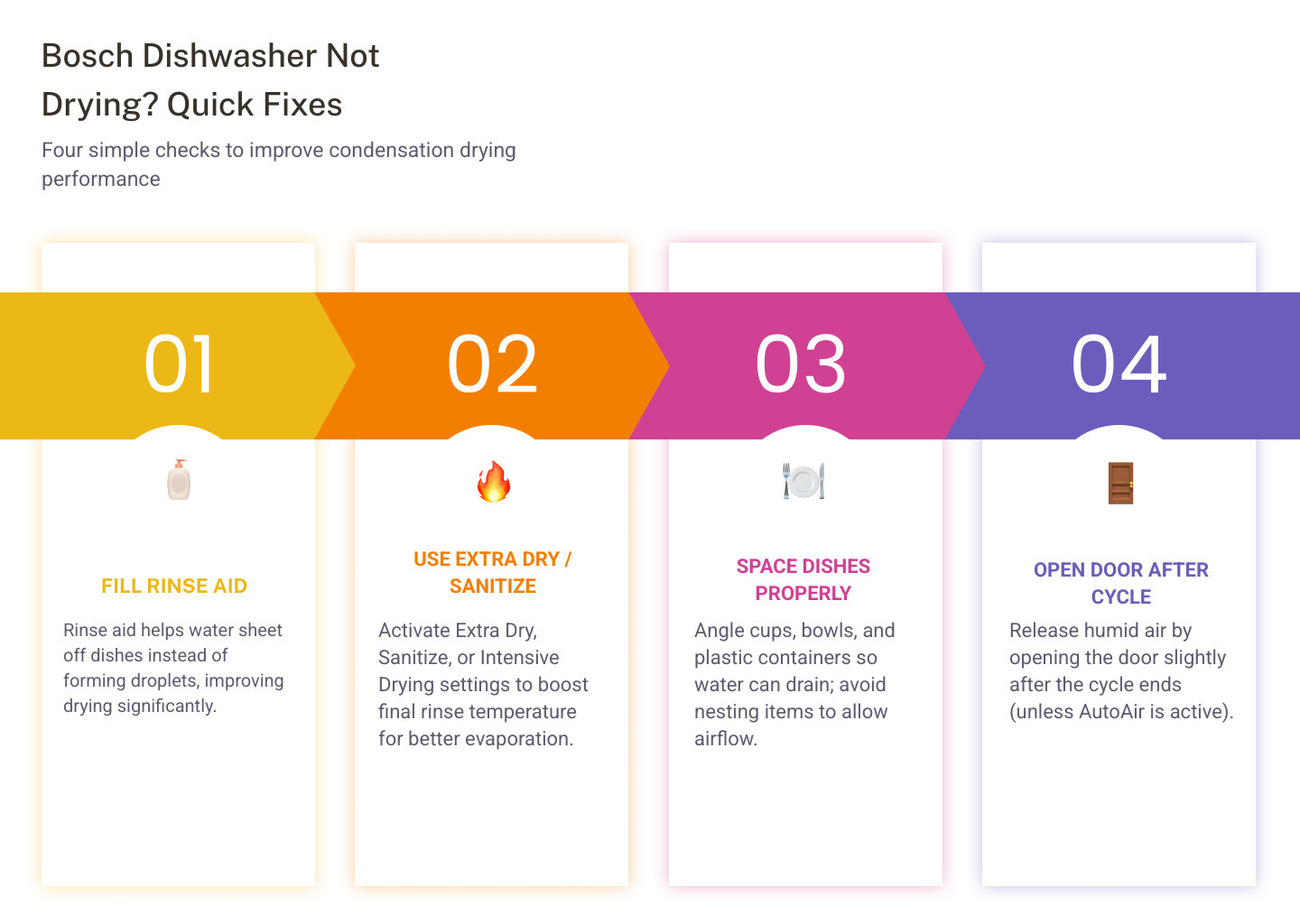
- Fill the rinse aid dispenser. Rinse aid helps water sheet off dishes instead of forming droplets.
- Use Extra Dry, Sanitize, or Intensive Drying if your model offers those options.
- Leave space between dishes and angle cups, bowls, and plastic containers so water can drain.
- Expect some moisture on plastic. Plastic does not hold heat as well as glass or ceramic.
- Open the door after the cycle ends when your model does not have AutoAir door opening. This releases humid air before it settles back onto dishes.
A little moisture, especially on plastic lids and the bottoms of cups, can be normal with Bosch’s condensation-based system. But dishes that are cold, soaking wet, or suddenly much wetter than usual can point to a failed heater, vent, fan, sensor, drainage issue, or another part that needs attention.
I am Vasyl Turetsky, Founder and Appliance Repair Specialist at iFix Appliances, and I help Raleigh-area homeowners diagnose problems such as a bosch dishwasher not drying before they turn into larger repairs. In the steps ahead, I will help you separate normal condensation moisture from a drying problem that needs a real fix.
Why Is Your Bosch Dishwasher Not Drying? Main Causes Explained
When homeowners call us because their dishwasher is leaving plates soaked, the very first thing we explain is how European dishwashers operate. Unlike traditional American dishwashers that feature a visible, red-hot heating element at the bottom of the tub, Bosch dishwashers rely primarily on condensation drying (often referred to as a “sauna dry” system).
To meet strict modern energy efficiency standards, Bosch engineered a system that uses thermodynamic heat transfer rather than an exposed heating rod that consumes massive amounts of electricity. During the final rinse cycle, the dishwasher uses high-temperature water to heat up your dishes. Because dense materials like ceramic, glass, and stainless steel absorb and hold onto that thermal energy, they become quite hot. The inner walls of the dishwasher tub are made of stainless steel, which cools down much faster than your dinnerware. As warm, humid air bounces around the sealed chamber, the moisture naturally migrates to the cooler metal tub walls, condenses into liquid drops, and trickles down into the drain sump.
When everything functions correctly, this process is quiet, gentle on delicate items, and remarkably energy efficient. However, because condensation drying depends heavily on thermal physics, even small disruptions in rinse temperature, water surface tension, or airflow can leave your cycle ending in a soggy disappointment. If your machine suddenly leaves everything drenched, consult Bosch’s official guide on why your dishwasher is not drying to verify basic system requirements before diving into hardware checks.
Is Condensation Drying Normal for a Bosch Dishwasher Not Drying?
It is completely normal to see a small amount of residual moisture on dishware in a condensation-based unit—especially if you open the door immediately after the cycle finishes. Because evaporation relies on the heat retained inside the dishware, items with low thermal mass (like plastic storage containers) simply cannot store enough thermal energy to drive water off their surfaces.
Furthermore, post-cycle handling plays a huge role in condensation drying performance. If the dishwasher finishes its run and sits tightly sealed for several hours, the trapped steam inside the tub gradually cools down. Instead of escaping, that hot humidity turns into heavy moisture droplets that settle back onto your clean dishes like morning dew on a lawn.
To prevent this re-condensation effect, opening the door slightly right after the clean light turns on lets the humid air escape into your kitchen while the dishes are still hot. Premium Bosch models in the 500 and 800 series incorporate features like AutoAir (which automatically pops the door open a few inches at cycle end) or CrystalDry (which uses natural volcanic minerals called zeolite to turn humidity into extreme dry heat). If your model lacks these automated features, manually cracking the door or utilizing proper timing makes a world of difference. You can read more about these differences in this comprehensive breakdown on Bosch condensation drying and CrystalDry mechanics.
Common User Errors Causing a Bosch Dishwasher Not Drying
In our years servicing appliances throughout Raleigh, Cary, and Durham, we have found that nearly 70% to 90% of drying complaints stem from user habits or setting configurations rather than broken mechanical components. Before calling a technician, review these common operational missteps:
- Empty Rinse Aid Dispenser: Condensation drying simply does not work without rinse aid. Without a surfactant to break the surface tension of water, droplets cling tightly to smooth surfaces instead of sheeting off into the sump.
- Running Quick/Express Cycles: Express or quick-wash cycles deliberately shorten or skip the thermal rinse phase to save time. If you run a 30-minute quick cycle, do not expect dry dishes.
- Improper Dish Loading: Nesting spoons together, blocking spray arm rotation, or crowding plates tightly together prevents water from shedding and halts airflow.
- Placing Plastic Items on Bottom Racks: Plastic items cool off instantly once the hot water stops spraying, causing steam to condense on them rapidly.
- Failing to Tilt Concave Items: The concave bottoms of coffee mugs, bowls, and plastic lids act like mini reservoirs. If loaded completely flat, they retain pooling water that spills over dry dishes when you move the rack.
Step-by-Step Fixes for Quick Drying Improvement

If your bosch dishwasher not drying issue is making meal clean-up frustrating, you do not need an engineering degree to fix most performance issues. By making a few quick adjustments to your routine and machine settings, you can dramatically boost drying results overnight.
First and foremost, refill your liquid rinse aid reservoir. Look for high-performance formulas like Jet-Dry TURBO, which are specifically formulated for condensation-drying environments. Make sure you adjust the dispenser dosage setting inside your dishwasher’s electronic control panel or via the physical adjustment dial next to the cap. If you live in an area with hard water, increasing the rinse aid dosage setting from the default level (usually setting 4) up to level 5 or 6 ensures water sheets off dishes smoothly.
Second, change your rack unloading sequence. Always unload the bottom rack first! Water frequently pools on top of turned-over mugs and bowl bottoms on the upper rack. If you pull out the top rack first, you will inadvertently splash trapped water all over the dry plates sitting below.
Optimizing Cycle Settings: Extra Dry, Sanitize, and Intensive Drying
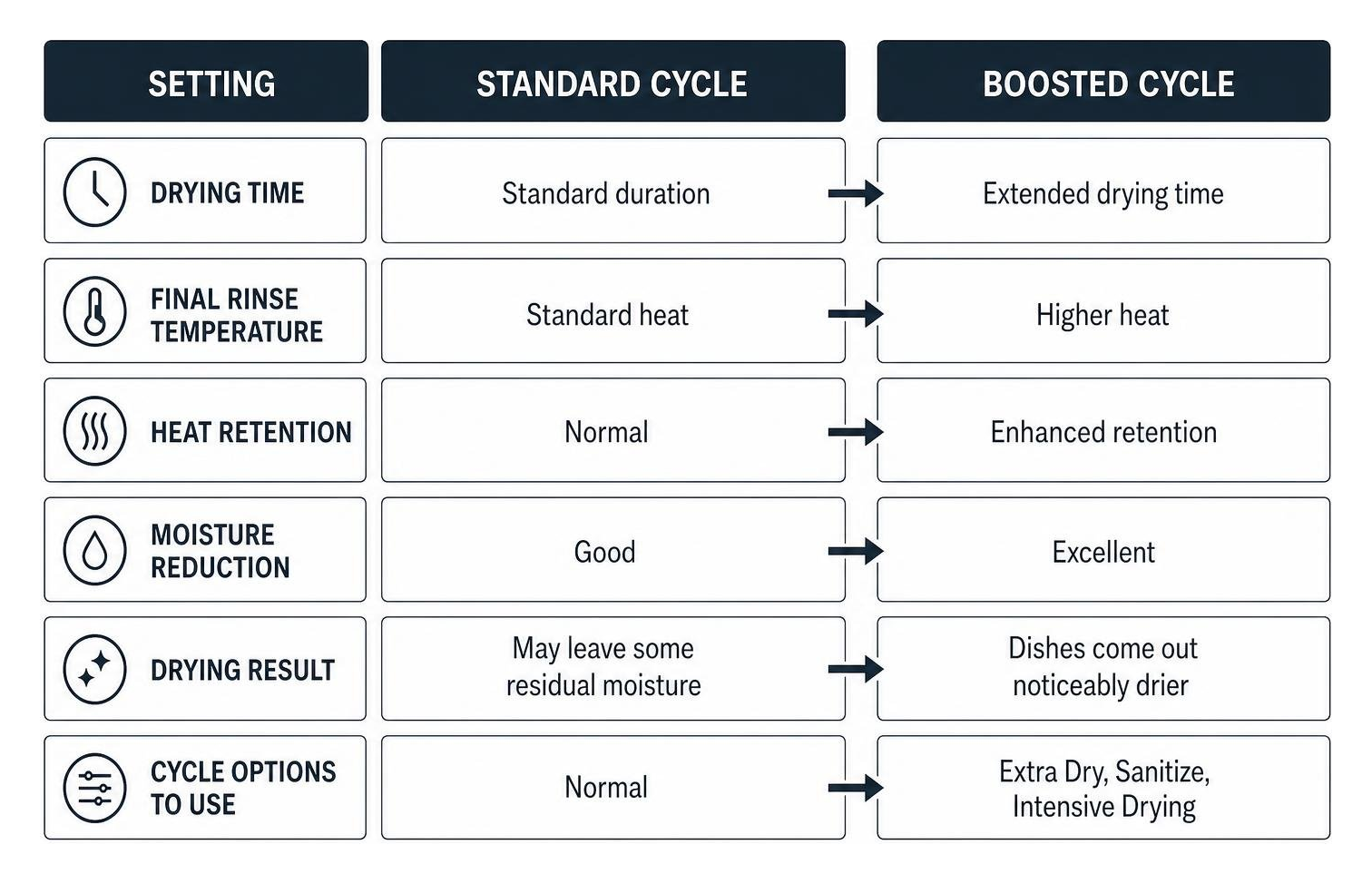
If standard wash cycles leave your dishes damp, your Bosch dishwasher offers built-in digital settings designed to boost heat output during the final rinse stage.
- Extra Dry / Extra Shine Option: Pressing the Extra Dry button on your control panel adds extra heat to the final rinse water and extends the drying period. This simple setting change resolves a massive percentage of wet-dish complaints.
- Sanitize Option: Selecting the Sanitize option forces the heating element to raise the final rinse temperature to approximately 160°F (71°C) to kill bacteria. As an added benefit, the intense heat transfers deep into your ceramic and glass dishes, maximizing condensation evaporation.
- Intensive Drying Menu Configuration: Many Bosch 300, 500, and 800 series models feature a hidden “Intensive Drying” setting inside the digital options menu. To enable it, hold down the Setup 3 Sec or G1 / Program buttons (depending on your model) to enter the options menu, scroll to the drying parameter (often labeled
d:00ord:01), and switch it tod:01(Intensive Dry ON). This elevates the internal water heating profile across all non-quick wash programs.
Correct Loading Practices for Maximum Moisture Evaporation
Loading a dishwasher is an art form, especially when dealing with condensation systems. To give your dishes the best chance of coming out bone-dry:
- Maintain Space Between Items: Overcrowding dishware creates thermal “shadows” where steam gets trapped between tightly packed plates. Ensure air and water flow freely around each dish.
- Angle Concave Items: Load coffee mugs, wine glasses, and deep cereal bowls at a steep angle. Water should slide down the sides rather than pooling in bottom rims.
- Prevent Cutlery Nesting: Mix forks, spoons, and butter knives inside the cutlery basket, or place them individually into the top third rack tray. When spoons nest inside each other, water stays trapped between the metal surfaces.
- Secure Lightweight Plastic: Clip down lightweight plastic lids and baby bottles so they do not flip upside down during high-pressure wash cycles and fill up with water.
Advanced Troubleshooting: Drain Hose and Mechanical Component Failures
When you have filled the rinse aid chamber, optimized your digital cycle settings, and loaded your dishes with absolute precision—yet everything still emerges dripping cold and wet—it is time to investigate hardware issues. When a dishwasher fails to heat the water or cannot evacuate dirty water properly, drying becomes virtually impossible.
If you are dealing with persistent moisture, inspect the bottom tub basin. Standing dirty water left in the sump continually generates humidity throughout the drying cycle, preventing dishes from shedding moisture. For step-by-step instructions on clearing standing sump water, check our guide on Dishwasher Not Draining: Water Left in Bottom.
Checking Drain Hose High Loop and Water Drainage
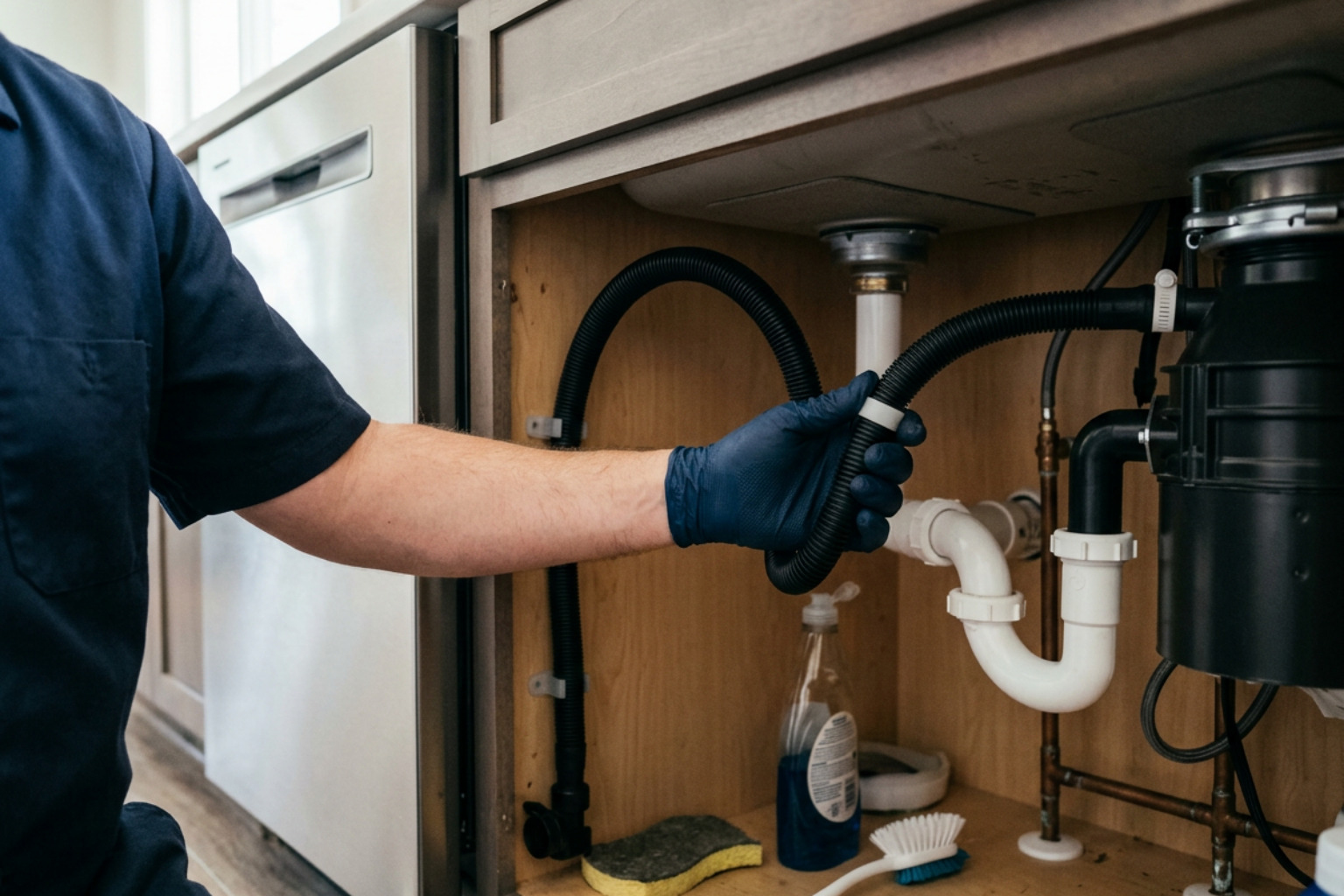
A shockingly common culprit behind poor drying in newly installed or recently moved dishwashers is an incorrectly routed drain hose. Bosch installation guidelines strictly require the flexible drain hose to be installed with a high loop—meaning the hose must curve upward under your kitchen sink, elevated above the height of the sink drain inlet, before connecting to your plumbing stack or garbage disposal.
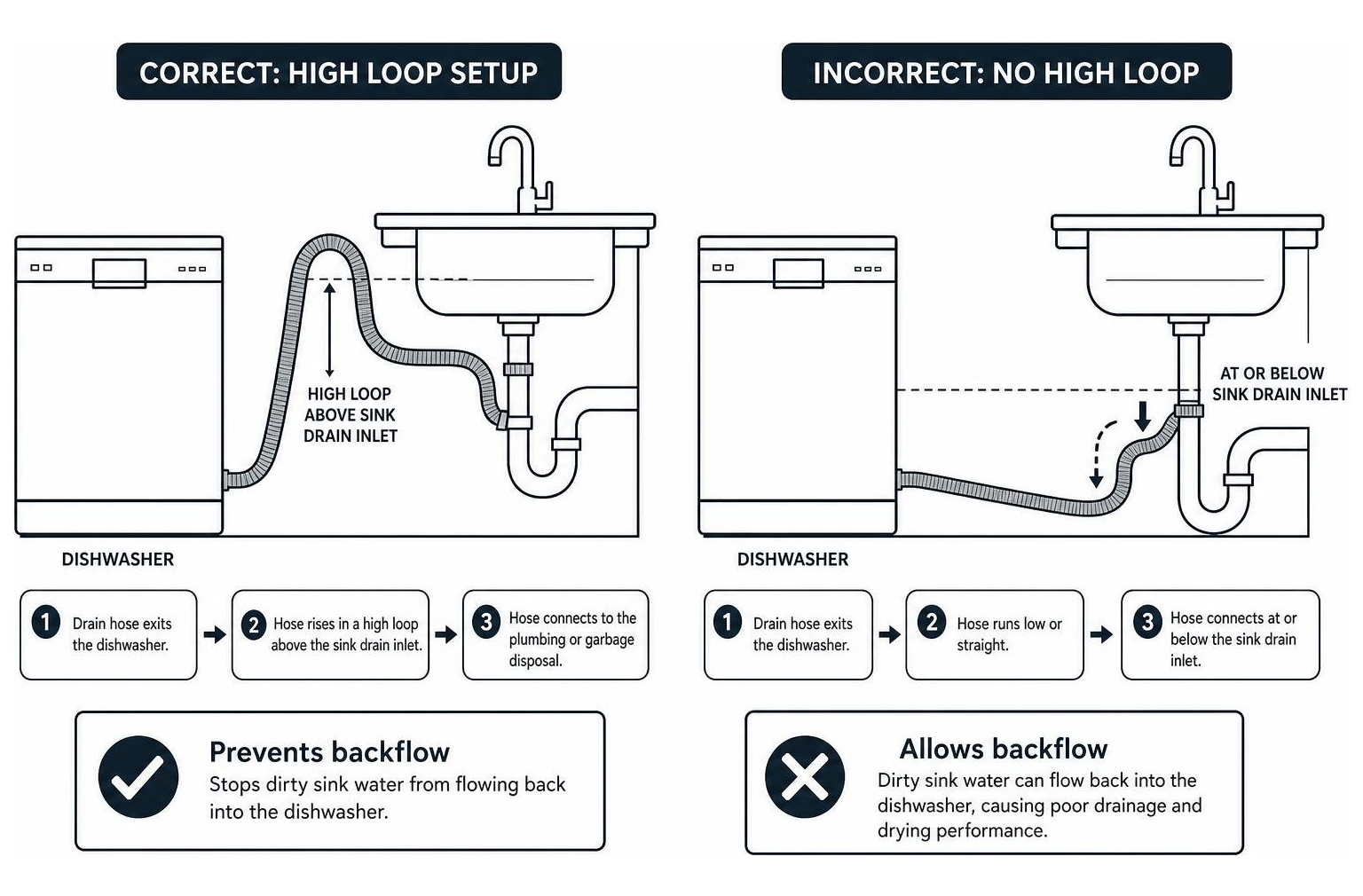
Without a proper high loop:
- Dirty sink water can flow backward down into the dishwasher tub during sink usage or disposal running.
- The dishwasher cannot siphon water out efficiently, leaving excess water sitting in the filter area.
- Cold waste water constantly re-evaporates inside the tub during the dry cycle, destroying performance.
If your dishwasher was recently hooked up to a brand-new garbage disposal unit, ensure the plastic knockout plug inside the disposal’s inlet nipple was knocked out prior to attaching the hose. If the plug is intact, check our tutorial on fixing dishwasher draining disposal connection clogs to clear the restriction.
Identifying Faulty Heating Elements, Vent Fans, and NTC Sensors
If dishes are completely cold to the touch at the end of a long cycle, your machine is not reaching proper wash or rinse temperatures. In modern Bosch dishwashers, water is heated by a flow-through heating element integrated directly into the main circulation heat pump assembly rather than an open rod.
To systematically diagnose internal mechanical failures without a visible error code on screen, review this diagnostic guide on troubleshooting a Bosch dishwasher not drying without error codes.
If you are comfortable using a digital multimeter, test these key components for electrical continuity after turning off power at your circuit breaker:
- Flow-Through Heating Element: Locate the heater terminals on the heat pump housing. A functional element typically displays a resistance reading between 15 and 30 ohms. An infinite reading (OL) indicates a burned-out heating element that requires pump replacement.
- NTC Temperature Sensor (Thermistor): The NTC sensor monitors internal water temperature and reports back to the control board. A functional sensor typically measures between 10,000 and 12,000 ohms (10k-12k Ω) at room temperature. Faulty readings prevent the control board from activating the heating circuit.
- AutoAir Vent / Duct Fan Motor: On Bosch models equipped with an active ventilation fan or AutoAir latch motor, check the small fan motor for physical obstructions or electrical coil failure. If the vent door fails to open or the fan fails to pull humid air out, steam stays trapped inside.
- Control Board Relay: If the heating element tests fine, the solder joints or power relays on the main electronic control board may have failed, preventing voltage from reaching the heater.
Frequently Asked Questions About Bosch Dishwasher Drying Issues
What should I do if my Bosch dishwasher has never dried well since installation?
If your dishwasher has left dishes wet from the day it was installed, do not panic. This rarely means you bought a “lemon.” First, confirm that liquid rinse aid is installed and the dispenser dial is turned up. Second, inspect under your sink to confirm the installer set up the drain hose with a proper high loop at least 20 inches off the cabinet floor. Third, access the settings menu on the front panel and verify that Extra Dry or Intensive Drying mode is switched on. Finally, ensure your home hot water heater is supplying water at roughly 120°F (49°C) to the dishwasher inlet valve.
Why do plastic containers stay wet while glass dishes dry completely?
This boils down to physical properties: plastic has low thermal mass. Glass, ceramic, and metal dishes absorb thermal heat from hot wash water and remain warm for a long time, allowing water droplets to evaporate rapidly off their surfaces. Plastic, however, cools down almost instantly the moment hot water stops spraying. Because the plastic surface is cold, steam inside the tub condenses on the plastic containers rather than the stainless steel tub walls. Using specialized zeolite models (CrystalDry) or enabling the Extra Dry option significantly improves plastic drying results.
When should I call for professional Bosch dishwasher repair or warranty service?
You should schedule a service call with a qualified appliance technician if:
- Your dishes and interior walls remain ice-cold throughout and immediately after an Intensive or Sanitize cycle.
- The control panel flashes error codes related to heating or communication (such as E09 for heating circuit failure or E15 for internal leak detection).
- You hear unusual grinding or buzzing sounds from the ventilation motor or drain pump.
- Water remains standing deep in the bottom basin despite checking sink connections and clean filters.
If you are experiencing any of these mechanical symptoms, visit our dedicated Dishwasher Repair Service page to arrange a fast, reliable diagnostic visit from our local technicians.
Conclusion
A bosch dishwasher not drying dishes properly can certainly take the convenience out of kitchen cleanup, but it is rarely a reason to start shopping for a new appliance. By understanding the thermodynamic principles behind Bosch’s condensation drying system, filling your liquid rinse aid reservoir, fine-tuning your rack loading habits, and activating settings like Extra Dry or Sanitize, you can easily resolve the vast majority of wet-dish issues on your own.
When basic setting tweaks and loading adjustments fail to solve the problem—or if your dishwasher leaves dishes cold, displays an error code, or refuses to drain—the professional team at iFix Appliances is here to help. We provide expert diagnostic testing, transparent pricing, and fast repairs for homeowners across Raleigh, Cary, Apex, Durham, Wake Forest, and surrounding Triangle communities. If you ever need experienced service on your dishwasher or other kitchen appliances, check our comprehensive regional service options at Charlotte Appliance Repair Services or contact our local team today to get your kitchen running smoothly again!

0 Comments