
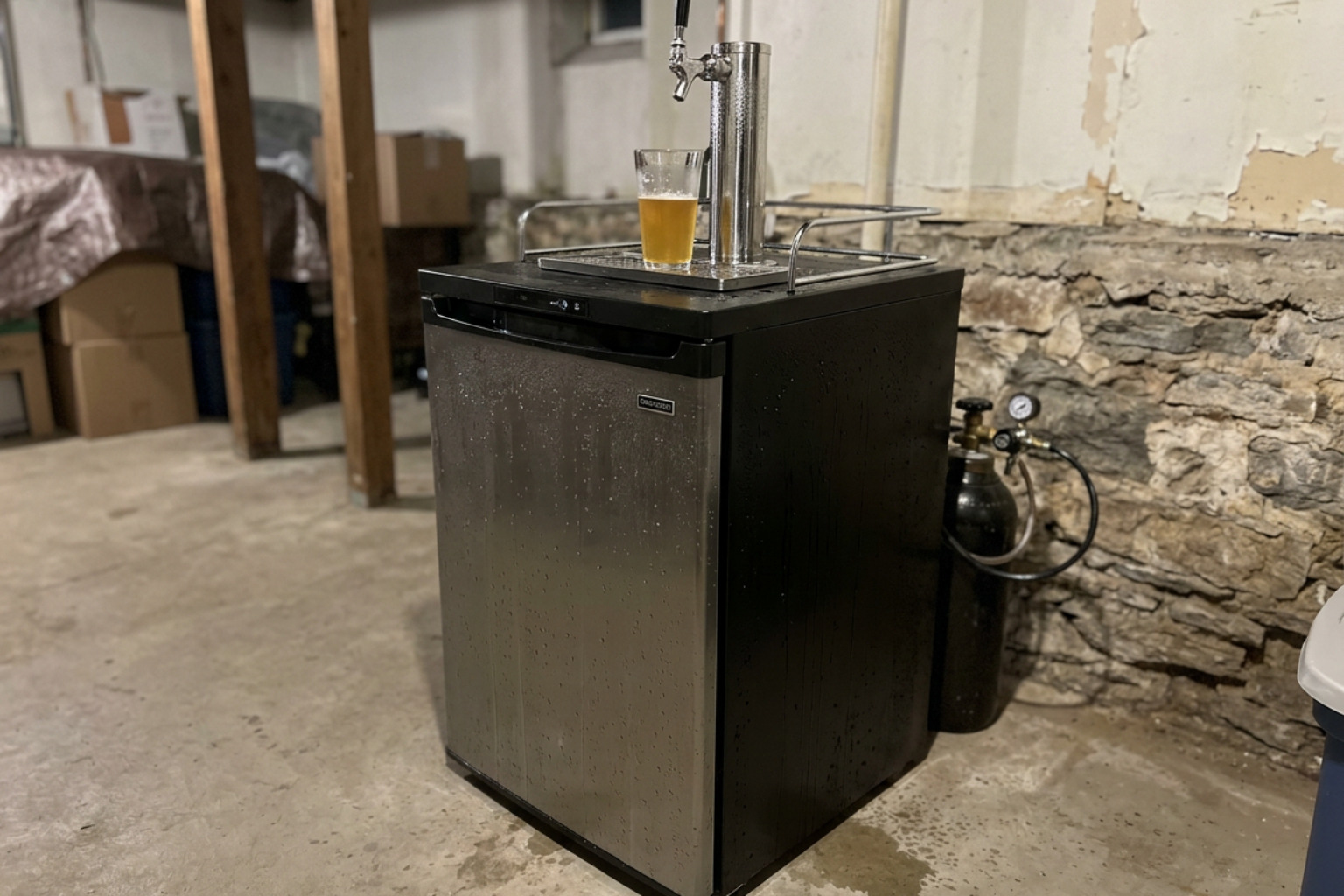
Why Kegerator Basement Humidity Issues Ruin Your Draft Beer (And What to Do About It)
Kegerator basement humidity issues are one of the most common — and most overlooked — problems for homeowners who love draft beer on tap.
Here is a quick summary of the core problem and fixes:
| Problem | Cause | Fix |
|---|---|---|
| Puddles under the kegerator | High ambient humidity + cold exterior | Dehumidify, seal unit |
| Mold inside the unit | Moisture-laden air entering through gaps | Seal draft lines, clean regularly |
| Warm or flat beer | Compressor overworking in humid conditions | Improve ventilation, reduce humidity |
| Sweating exterior | Temperature differential between unit and basement air | Insulate, control ambient RH |
| Rust on hardware | Persistent moisture exposure | Lower humidity below 50% RH |
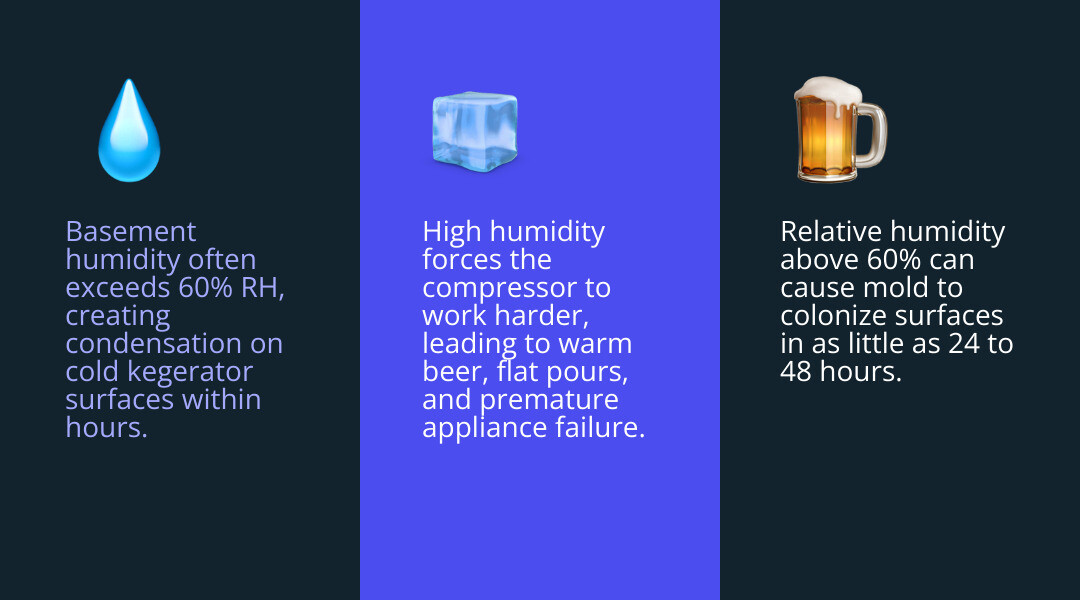
The EPA recommends keeping indoor relative humidity between 30% and 50%. In a basement, that number can easily climb past 60% or even 80% during warm months — and at 60% or above, mold can begin colonizing surfaces in as little as 24 to 48 hours.
A basement kegerator sits in one of the most moisture-prone spots in any home. Cold surfaces, porous concrete walls, and warm humid air sneaking in through gaps in door gaskets or draft line holes create the perfect recipe for condensation, mold, and a ruined pour.
One homebrewer described their fermentation fridge this way: “It rains in there.” That is not an exaggeration — and if you have ever found a puddle under your kegerator or wiped down a moldy interior, you know exactly what they mean.
This guide walks you through every layer of the problem: why basements create these conditions, how to diagnose leaks and seal your unit, and how to control the broader humidity environment so your kegerator — and your beer — stay in great shape.
I’m Vasyl Turetsky, Founder and Appliance Repair Specialist at iFix Appliances, and I’ve repaired hundreds of refrigerators and cooling units across Raleigh, Durham, Cary, and the surrounding Triangle area — many of them damaged by exactly the kind of kegerator basement humidity issues covered in this guide. If the DIY steps ahead don’t fully solve the problem, I’ll also point you toward when it makes sense to call a professional.
Why Basements Cause Kegerator Basement Humidity Issues
To solve the mystery of the sweating beer fridge, we first have to look at the unique climate dynamics of subterranean spaces. Basements do not behave like the rest of your home. They are surrounded by soil, which remains at a relatively stable, cool temperature year-round—typically around 51°F to 55°F.
When hot, moisture-laden outdoor air filters into a cool basement during a humid North Carolina summer, its temperature drops rapidly. Because cold air cannot hold as much water vapor as warm air, the relative humidity (RH) of that air spikes. This is when we run into serious kegerator basement humidity issues.
Concrete is a highly porous material. Think of your basement walls as giant, slow-acting sponges. Through a process known as vapor diffusion, moisture from the damp soil outside continuously migrates through the concrete foundation and evaporates directly into your basement air.
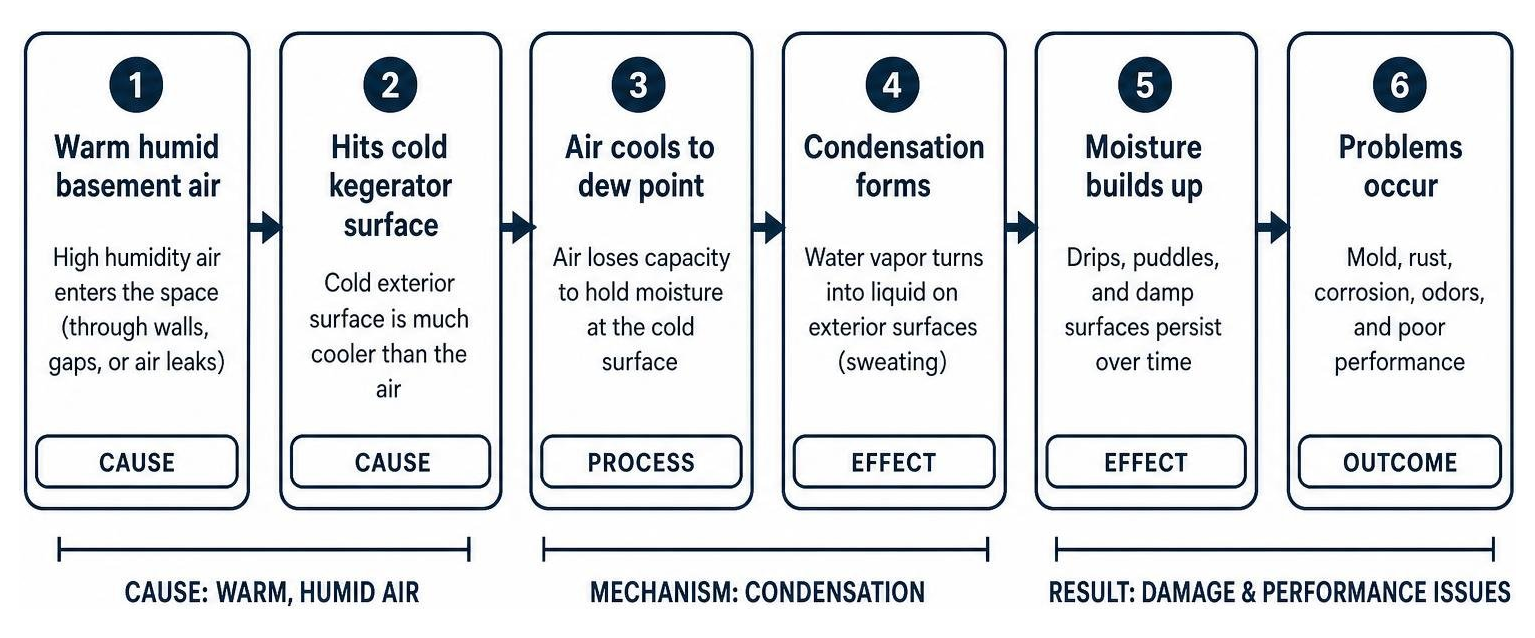
When you place a cold appliance like a kegerator—which is designed to keep beer at a crisp 38°F—in this naturally damp environment, you create an extreme temperature differential. The cold exterior walls or bottom of the appliance rapidly cool the surrounding air down to its “dew point” (the temperature at which air becomes 100% saturated and can no longer hold water vapor). The result? The water vapor turns back into liquid water, leaving your appliance covered in “sweat.”
For a deeper dive into why refrigeration units experience this external moisture buildup, you can read about Why Does Kegerator Sweat On Bottom | Storables.
The Science of Condensation and Sweating
Understanding the difference between liquid water intrusion and condensation is crucial. Condensation occurs when warm, humid air comes into contact with a cold surface.
In a basement, this is compounded by vapor transmission. If your basement walls are not sealed, moisture is constantly being pushed into the room. When your kegerator’s cooling system cycles on, the evaporator coils inside pull heat out of the cabinet. This process makes the evaporator plate or coils incredibly cold.
If humid air is allowed to leak into the kegerator cabinet, it will instantly condense on those cold coils. Over time, this condensation pools at the bottom of the unit, creating a breeding ground for mold and mildew.
To understand how this moisture moves through your home and how to identify it, check out the comprehensive Basement Condensation: Causes & How to Fix It guide.
How High Basement Humidity Affects Kegerator Performance
High ambient humidity does not just look bad; it actively degrades your appliance and ruins your draft beer.
- Compressor Strain: When humidity is high, your kegerator has to work twice as hard. The moisture in the air transfers heat more efficiently than dry air, forcing the compressor to run longer cycles to maintain its target temperature. This extra strain can cause the compressor to overheat and fail prematurely.
- Rust and Corrosion: Constant exposure to moisture will quickly rust out metal components, including your CO2 tank, regulators, couplers, and the appliance’s steel exterior.
- Beer Quality Issues: If your compressor is struggling to keep up due to frost-covered evaporator coils, your beer temperature will fluctuate. Warm draft beer causes carbon dioxide to break out of the liquid inside the line, resulting in excessive foam and flat, stale-tasting pours.
In our local climate, appliances face unique environmental challenges. To learn more about how regional weather patterns affect your household systems, read our article on Why Appliances Break Faster in North Carolina’s Climate.
Diagnosing and Sealing Your Kegerator to Prevent Sweating
Before spending thousands of dollars on basement waterproofing, you should determine if the moisture is originating from inside the appliance or if a failing seal is allowing the basement’s humid air to slip inside.
If your door gasket is warped, torn, or dirty, it cannot form a tight magnetic seal. This allows warm air to continuously enter the cold cabinet, creating a never-ending cycle of condensation and ice buildup. If you suspect your door seal is beyond a simple cleaning, you may need a professional Refrigerator Repair service to replace the gasket and restore an airtight seal.
The Foil Test and Gasket Inspections
To determine if your basement walls are seeping liquid water or if the dampness is purely atmospheric condensation, you can perform the Foil Test.
- Cut a 12-inch square piece of aluminum foil.
- Tape it flat against a damp section of your basement wall, sealing all four edges tightly with duct tape.
- Leave it for 24 to 48 hours.
- Remove the foil and inspect it. If moisture has accumulated on the outer, room-facing side of the foil, you have an atmospheric condensation problem. If moisture is trapped on the back of the foil (the side that was touching the concrete), water is actively seeping through your foundation walls from the outside.
To inspect your kegerator’s door seal, use the Flashlight Test.
Turn on a bright flashlight, place it inside the kegerator facing the door, and close the door. Turn off the lights in your basement. If you can see light leaking out through any section of the door gasket, you have an air leak.
For more tips on troubleshooting these issues, you can read through the community discussions on Condensation issues with my kegerator.
Sealing Draft Lines and Temperature Probes
Many basement kegerators are DIY “keezer” conversions (chest freezers converted into beer dispensers) or standard mini-fridges modified with a draft tower. While these projects are highly rewarding, they are notorious for air leaks.
When builders run draft lines, CO2 gas lines, or temperature controller probes into the unit, they often drill holes through the plastic collar or top lid. If these holes are left unsealed, humid basement air will pour into the cold chamber.
To seal these gaps:
- Spray Foam: Fill larger gaps around draft collars or tower holes with expanding polyurethane spray foam.
- Silicone Sealant: Use 100% food-safe silicone sealant around temperature probe wires and gas lines.
- Avoid “U-Coil” Damage: If you are converting a mini-fridge, be extremely careful not to bend or puncture the freezer’s “U-coil” evaporator plate. Bending this plate can cause micro-fractures, leading to refrigerant leaks and localized condensation pooling.
For step-by-step instructions on keeping converted chambers dry, read about how to Fix Fermentation Chamber Condensation with Eva-Dry – Homebrew Finds.
Controlling Basement Humidity and Ventilation
Once your kegerator is sealed, you must address the surrounding room. Managing the ambient air quality in your basement is the most effective way to protect your draft system over the long term.
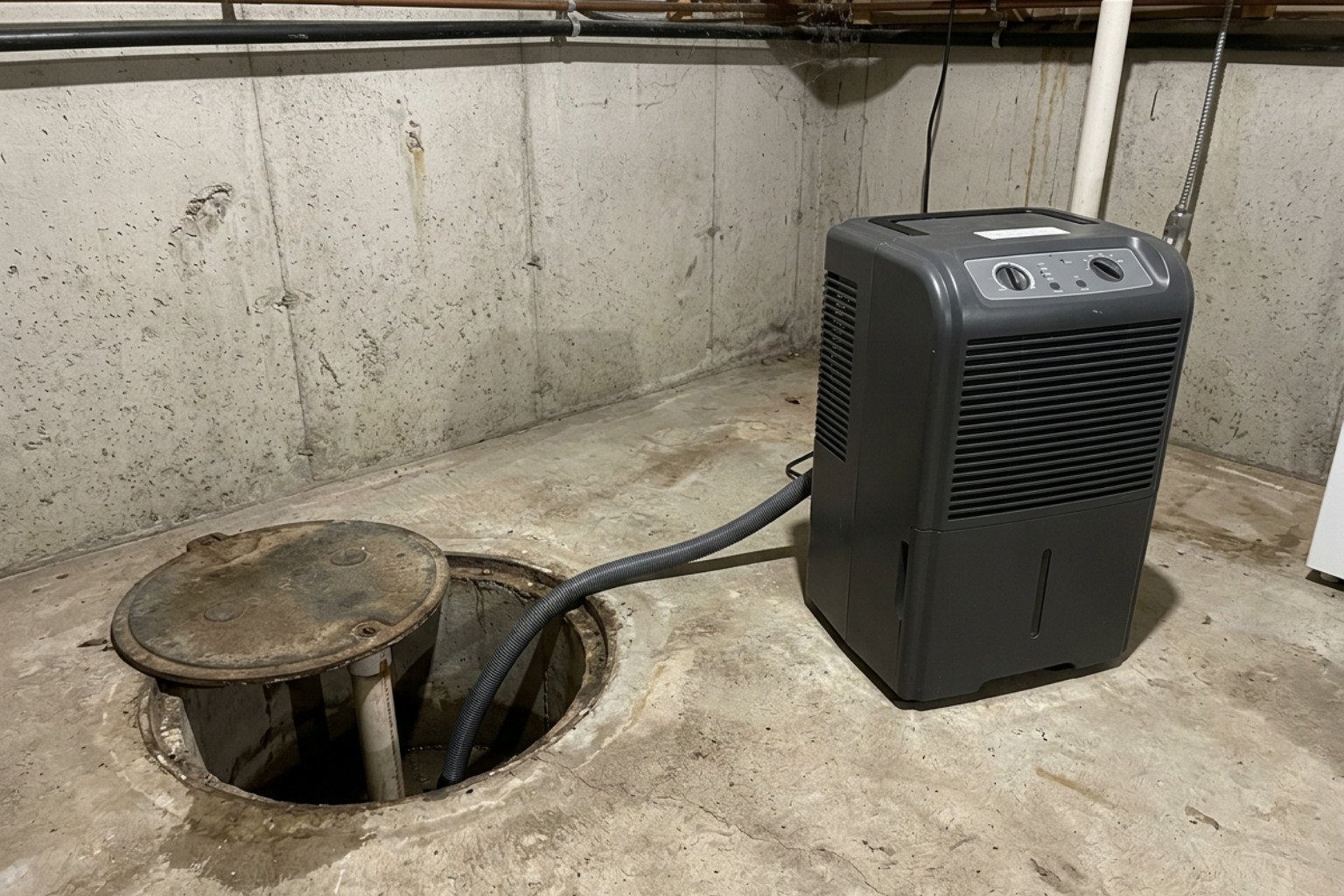
To keep your basement dry and healthy, you should aim to maintain relative humidity between 30% and 50% year-round. If you want to avoid the high energy costs of running a large appliance 24/7, there are several structural steps you can take first. Read our comprehensive guide on How to Keep Your Basement Dry and Humidity Low Without a Dehumidifier for passive strategies.
To stop moisture before it ever reaches your basement floor:
- Extend Downspouts: Ensure your gutter downspouts discharge water at least 4 to 6 feet away from your home’s foundation.
- Improve Yard Grading: Slope the ground away from your foundation walls (aim for a 6-inch drop over the first 10 feet).
- Seal Sump Pumps: Install an airtight lid on your sump pump basin to prevent standing water from evaporating into the basement air.
- Air Seal Rim Joists: Seal the rim joists along the perimeter of your basement with rigid foam board and expanding spray foam to block outdoor drafts.
Passive Moisture Absorbers for Kegerator Basement Humidity Issues
If you are dealing with minor moisture or want to protect the inside of your kegerator cabinet, passive moisture absorbers are a fantastic, low-cost option.
- Calcium Chloride: This active ingredient (found in products like DampRid) naturally draws moisture out of the air and collects it in a liquid reservoir. It is highly effective but must be emptied and replaced regularly.
- Silica Gel Beads: These non-toxic beads absorb moisture without turning into a liquid. Many homebrewers use rechargeable desiccant packs inside their kegerators. When the indicator beads turn from blue to pink (signaling they are saturated), you simply plug the unit into an wall outlet outside the fridge to dry the beads back out.
Active Dehumidification and Ventilation Solutions
If passive methods are not enough to bring your basement humidity below 55% RH, you will need to invest in active mechanical systems.
When choosing a dehumidifier for a cool basement, it is important to understand that traditional condensation units struggle in cooler temperatures. If your basement regularly drops below 65°F, a desiccant dehumidifier is often a much better choice.
To compare your options:
| Feature | Condensation (Compressor) Dehumidifier | Desiccant Dehumidifier |
|---|---|---|
| How it Works | Cools coils to condense water out of the air | Uses a silica gel rotor to absorb moisture |
| Optimal Temp | Best in warm rooms (above 65°F) | Works in cold rooms (down to -20°C) |
| Energy Use | Lower operating cost in warm conditions | Higher energy consumption |
| Lifespan | Moderate (coils can rust in damp air) | High (fewer moving mechanical parts) |
For a deeper look into why desiccant technology is highly recommended for cold, below-ground spaces, read the technical brief on Desiccant dehumidifiers for basements and cellars | Dantherm Group.
If your basement lacks proper airflow, your HVAC system may need an upgrade or repair to help balance the humidity levels throughout your home. If you suspect your home’s ventilation system is failing to pull moisture out of the air, our team at iFix Appliances can assist with professional HVAC Repair to restore proper air balance.
Frequently Asked Questions About Basement Moisture
What is the ideal humidity level for a basement kegerator?
The ideal ambient relative humidity for a basement containing a kegerator is 30% to 50% RH. Keeping the room within this range prevents mold growth on the exterior of the unit and protects the electrical components from moisture damage.
To monitor this accurately, buy a digital hygrometer. These devices cost under $15 and are the single most useful diagnostic tool you can own for managing basement humidity.
How to Prevent Mold and Mildew From Kegerator Basement Humidity Issues
If mold has already started to form inside or around your kegerator, take these immediate steps:
- Clean with Bleach: Wipe down all affected surfaces with a diluted bleach solution (one part bleach to ten parts water) or a 3% hydrogen peroxide solution to kill mold spores.
- Improve Airflow: Install a small, low-voltage internal circulation fan inside your kegerator cabinet. This keeps the air moving, preventing stagnant, cold pockets of air from condensing on the floor of the unit.
- Elevate Equipment: Use interlocking plastic bar mats or floor tiles to elevate your kegs and CO2 tanks off the bottom of the kegerator floor, allowing air to circulate underneath.
Will opening basement windows reduce kegerator condensation?
No! Opening your basement windows during a humid North Carolina summer is highly counterproductive.
When you open a window, you are letting warm, moisture-heavy outdoor air into a cool, subterranean room. As that warm air hits the cool basement air and the cold exterior of your kegerator, it will rapidly reach its dew point and release its moisture, making your condensation problem significantly worse. Only open basement windows when the outdoor air is genuinely cooler and drier than your indoor air.
Conclusion
Managing kegerator basement humidity issues is essential if you want to protect your appliance investment, prevent mold growth in your home, and enjoy perfectly poured, ice-cold draft beer. By sealing your kegerator’s gaskets, insulating draft lines, and addressing the root causes of basement moisture—such as exterior drainage and proper indoor ventilation—you can maintain a dry, clean, and reliable home draft system.
If you have tried these troubleshooting steps and are still dealing with a sweating fridge, a failing compressor, or a door seal that just won’t stay shut, we are here to help.
At iFix Appliances, we provide fast, reliable, and honest appliance repair services throughout Raleigh, Cary, Durham, Wake Forest, Chapel Hill, Fuquay-Varina, Apex, Garner, Holly Springs, Morrisville, and the surrounding Triangle Area. Our experienced technicians specialize in professional Refrigerator Repair to get your cooling systems running perfectly.
Don’t let humidity ruin your next pour. Contact us today to schedule your diagnostic service!


0 Comments