
Start by Matching the Noise to the Cycle
A dishwasher making loud noise when running is often fixable without a repair call. First, note when the sound happens: rattling or rhythmic knocking during washing usually means a spray arm is hitting a dish, while harsh grinding or loud buzzing during washing or draining can mean debris is caught near a pump impeller.
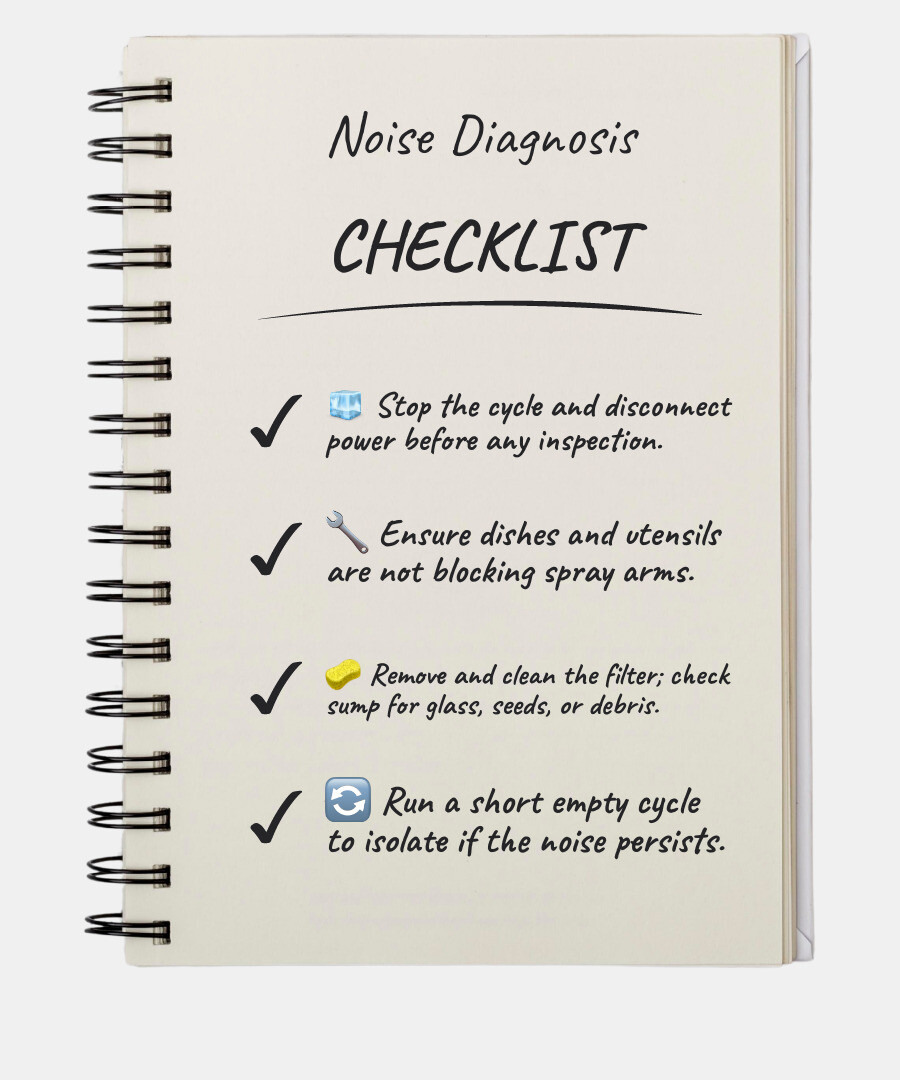
Before inspecting anything:
- Stop the cycle and turn off power to the dishwasher.
- Check that dishes, pans, and utensils are not blocking either spray arm.
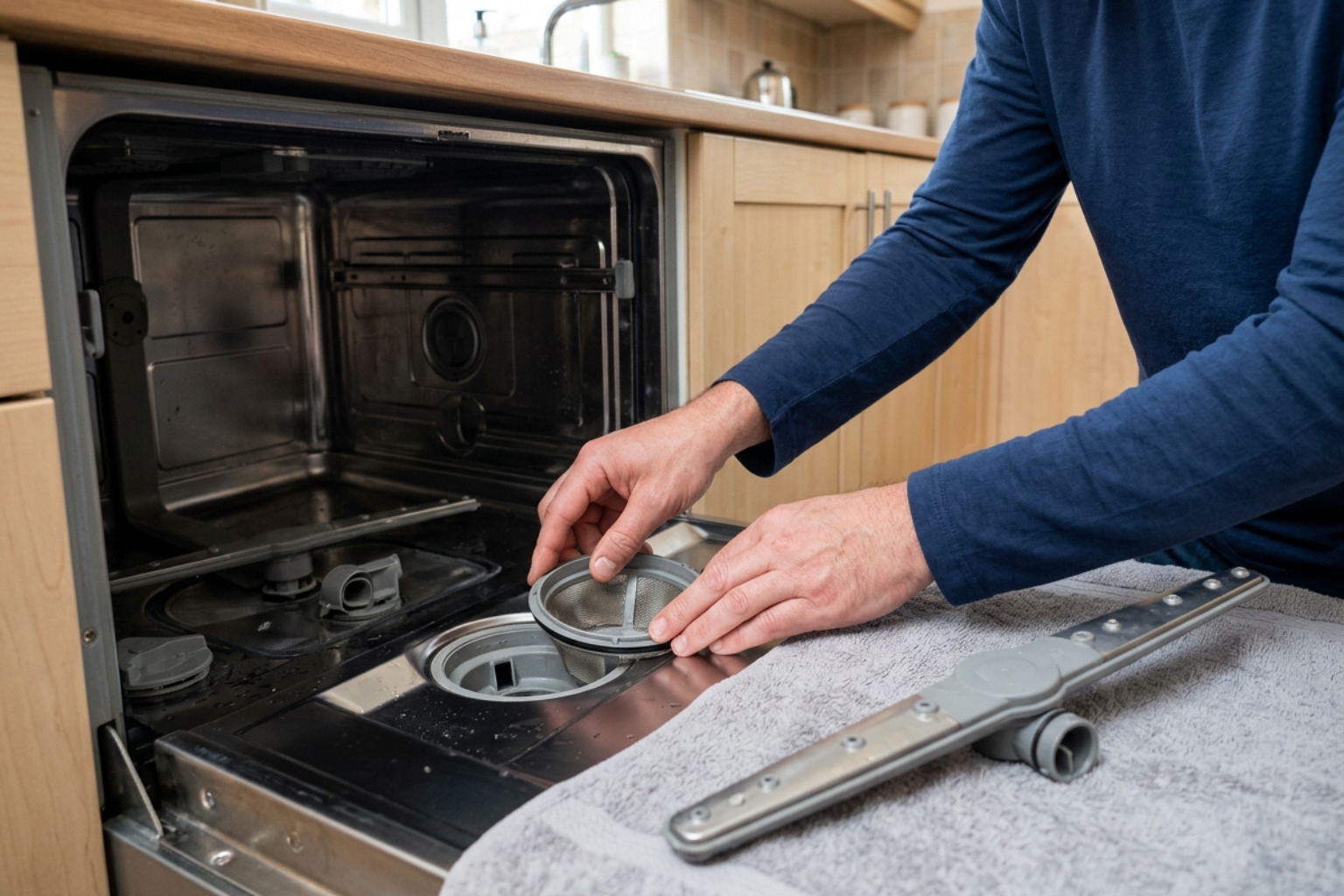
- Remove and clean the filter, then look in the sump for glass, seeds, bones, labels, or small plastic pieces.
- Run a short empty cycle. If the sound remains, listen for whether it occurs during filling, washing, or draining.
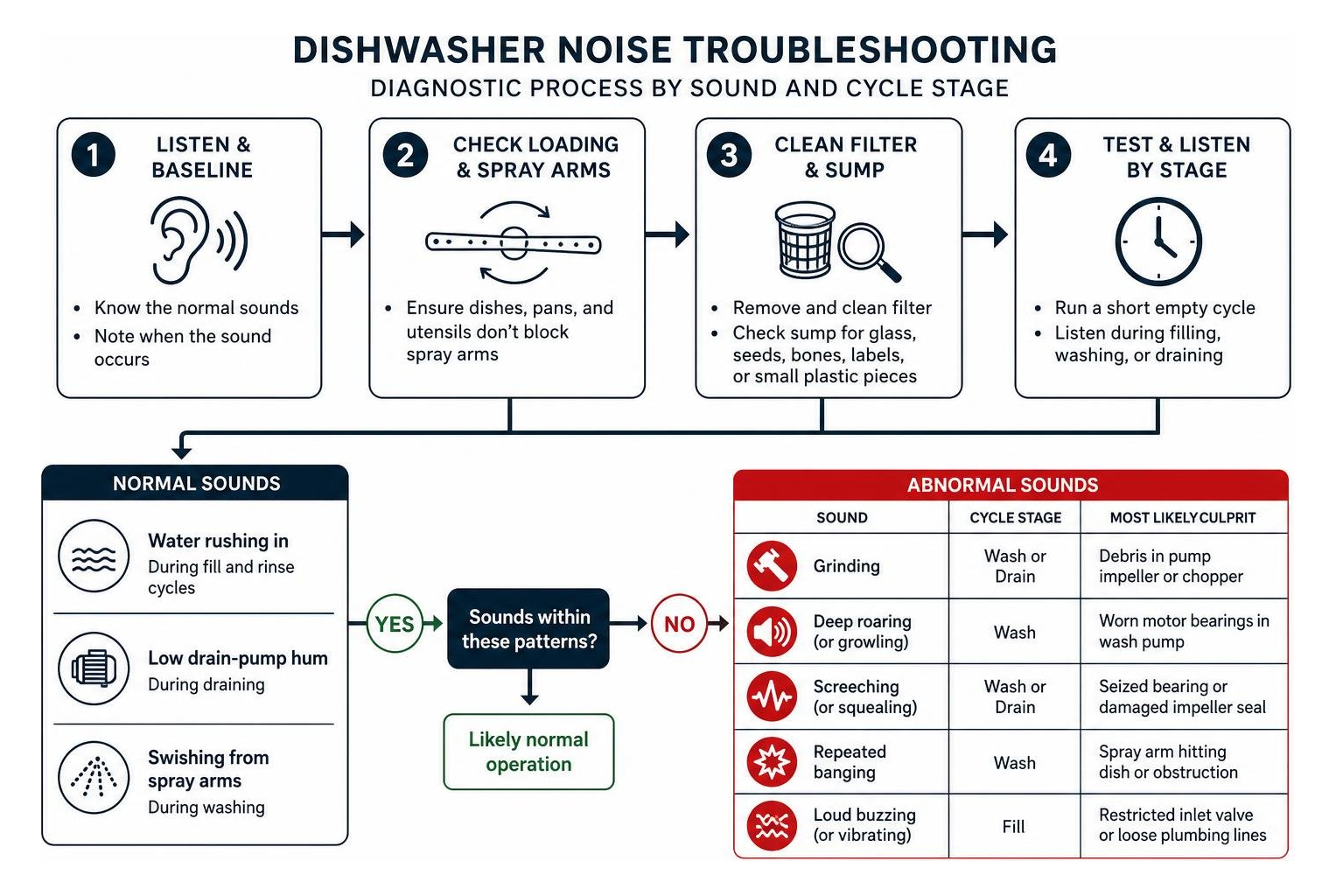
Some sound is normal: water rushing in, a low drain-pump hum, and swishing from the spray arms. Persistent grinding, deep roaring, screeching, or repeated banging is not. A dishwasher can also be very loud without showing an error code because control boards monitor electrical and sensor faults, not every mechanical obstruction or worn bearing.
I am Vasyl Turetsky, Founder and Appliance Repair Specialist at iFix Appliances, and I help Raleigh-area homeowners diagnose issues such as a dishwasher making loud noise when running. The next steps will help you separate a loading problem from debris, pump trouble, or a repair that needs professional attention.
Normal vs. Abnormal Sounds: Why Is Your Dishwasher Making Loud Noise When Running?
Every dishwasher produces acoustic feedback as it works through a cycle. Understanding the baseline operating sounds of your machine helps you immediately spot when a harmless hum turns into a mechanical cry for help.
Modern dishwashers operate within a quiet range of 38 to 50 decibels (dBA). Units enclosed snugly between insulated cabinetry run quieter than those installed at the exposed end of a cabinet run, where sound resonates through the side panel. During a standard cycle, you should expect:
- Rushing water sounds: Occurs during the initial fill and rinse cycles as the water inlet valve opens and pressurized household water enters the tub.
- Swishing and spraying jets: Generated as pressurized water exits the spray arm nozzles and impacts the tub walls and dishware.
- Low, steady humming: Created by the drain pump motor forcing wastewater out through the drain hose and into your garbage disposal or plumbing trap.
When sounds stray outside these predictable acoustic patterns, they indicate an underlying physical issue. According to the appliance operational sound guide, sharp mechanical sounds are distinct warnings that require inspection:
| Sound Profile | Cycle Stage | Most Likely Culprit | Action Required |
|---|---|---|---|
| Rhythmic Knocking / Thumping | Active Wash / Circulation | Spray arm striking an oversized dish or utensil | Rearrange tall dishes and confirm spray arm clearance |
| Harsh Grinding / Scraping | Drain or Wash Cycle | Foreign debris (glass, bone, seed) in pump impeller or chopper | Power off, dismantle filter, and clear the sump housing |
| Loud Buzzing / Vibrating | Water Fill Stage | Restricted water inlet valve or loose plumbing lines | Inspect inlet valve screen; check water pressure |
| Deep Roaring / Continuous Growl | Wash / Circulation Stage | Worn motor bearings in the wash circulation pump | Inspect pump assembly; replace circulation pump |
| High-Pitched Screeching / Squealing | Wash or Drain Cycle | Seized pump bearing or damaged wash impeller seal | Stop cycle immediately to prevent motor burnout |
Spray Arm Blockage and Improper Loading
The most frequent cause of a rhythmic knocking or clicking noise inside the dishwasher tub is an obstructed spray arm. As the wash pump circulates water under pressure, the spray arms rotate at high speeds. If a tall baking sheet, oversized serving platter, or extended ladle handle sits too high on the lower rack—or hangs too low from the upper rack—the rotating arm strikes the object on every revolution.
Silverware nesting in the cutlery basket can also create secondary rattling. When spoons and forks nest tightly together, high-velocity water jets cannot pass between them evenly, causing the entire cutlery basket to vibrate against the tub floor. Similarly, lightweight plastic storage containers, baby bottles, or loose lids can easily flip over and bounce against the stainless steel tub or plastic interior under water pressure.
Sump and Filter Blockages: Dishwasher Making Loud Noise When Running
When hard debris falls past the dislodged or improperly seated filter assembly, it lands directly in the sump basin. Objects such as broken glass shards, popcorn kernels, fruit pits, bone fragments, and peeling jar labels create severe noise when drawn toward the pump intake.
Jar labels and thin plastic films create a rapid, high-speed clicking or fluttering sound as water pressure pushes them against the spinning impeller blades. Heavier objects like fruit pits and glass fragments produce a violent, irregular grinding sound as water turbulence lifts and drops them against the intake housing. These intermittent noise causes often shift as hydraulic pressure fluctuates throughout the wash cycle.
Motor Bearing Wear: Dishwasher Making Loud Noise When Running
If your dishwasher emits a deep, continuous roaring or groaning sound during the main wash stage, the culprit is almost certainly worn internal bearings within the circulation pump motor.
Over years of daily service, high-temperature wash cycles and detergent exposure can slowly degrade the watertight seal protecting the motor shaft. Once water bypasses the seal, it washes away factory lubrication from the ball bearings, leading to metal-on-metal friction. This friction produces a loud drone that steadily intensifies as the wash water heats up and thermal expansion tightens tolerances inside the motor housing.
Because the motor continues to draw an electrical current within standard operational safety thresholds, these mechanical faults without error codes can persist unnoticed by the appliance control board for weeks before the motor finally seizes.
Step-by-Step Diagnostic Process to Pinpoint Dishwasher Noise
To diagnose dishwasher noise efficiently without unnecessary part replacements, follow a structured elimination method. If mechanical problems persist, you can always rely on our professional dishwasher repair team across the Triangle area to step in.
- The Door-Open Test (Motor Isolation): While the dishwasher is operating and actively making the loud noise, unlatch and open the door. The door switch instantly cuts power to the circulation pump and wash motor. If the noise stops immediately, the sound originates from a motorized component (circulation pump, drain pump, or spray arm movement) rather than static household plumbing, cabinet vibration, or a slow drainage backflow.
- The Cancel/Drain Isolation Test: Reset the appliance or hit the “Cancel/Drain” button on the control panel. This forces the unit to bypass the wash circulation motor and engage the drain pump motor exclusively. If the harsh noise continues while the tub drains, the issue lies within the drain pump or chopper blade. If the noise disappears entirely during draining, the problem is isolated to the wash circulation pump or spray arm path.
- The Empty Tub Baseline Test: Remove every plate, cup, pan, and silverware basket from the dishwasher interior. Run a short, standard wash cycle with an empty tub. If the knocking or rattling noise disappears, the problem was caused by dish placement or water jets bouncing loose plastic containers. If a grinding, roaring, or buzzing sound persists in an empty machine, you have confirmed an internal mechanical fault or trapped debris.
Water Fill Stage and Inlet Valve Inspection
If a loud vibrating or harsh buzzing noise occurs only during the first two to three minutes of a cycle—or during the dedicated refill intervals between wash and rinse stages—the water inlet valve is the prime suspect.
The water inlet valve uses an electrical solenoid to open and close the household water supply line into the dishwasher tub. Over time, mineral scale, sediment, or municipal water line debris can clog the fine mesh filter screen inside the valve. When the solenoid activates against a restricted screen or a worn internal diaphragm, it vibrates violently, transmitting a loud mechanical buzz through the front kickplate and kitchen floor.
Rapidly shutting valves can also trigger “water hammer”—a loud banging sound in your home’s copper or PEX plumbing lines caused by sudden pressure shockwaves.
Wash and Circulation Stage Diagnostics
The circulation pump is the mechanical workhorse of the dishwasher, responsible for pulling water from the sump basin and pressurizing the spray arms throughout the 60-to-120-minute wash window.
If the unit fills quietly but immediately erupts into a continuous grinding or loud humming sound once the wash cycle initiates, inspect the circulation pump impeller. Debris trapped in the impeller blades prevents full rotational velocity, starving the spray arms of hydraulic pressure and causing the motor to labor under excessive load. If the pump impeller spins smoothly by hand when clear of debris, but still emits a heavy growl under power, the motor bearing assembly has reached the end of its operational lifespan.
Drain Cycle and Chopper Blade Troubleshooting
Many modern dishwashers utilize a food macerator or chopper blade assembly directly upstream from the drain pump. This high-speed stainless steel blade pulverizes soft food scraps so they easily pass through the drain hose without causing clogs.
When hard items—such as olive pits, toothpicks, twist-ties, or bone chips—bypass the filter screen and contact the chopper blade spinning at thousands of RPMs, they create an alarming, machine-gun grinding noise. If left unaddressed, the debris can jam the blade, causing the drain pump motor to overheat, stall, and fail to empty the tub. If you find your appliance struggling with standing wastewater, follow our guide on dishwasher not draining easy fixes for disposal connection clogs to quickly clear restrictions.
How to Safely Clean the Filter, Sump, and Impeller
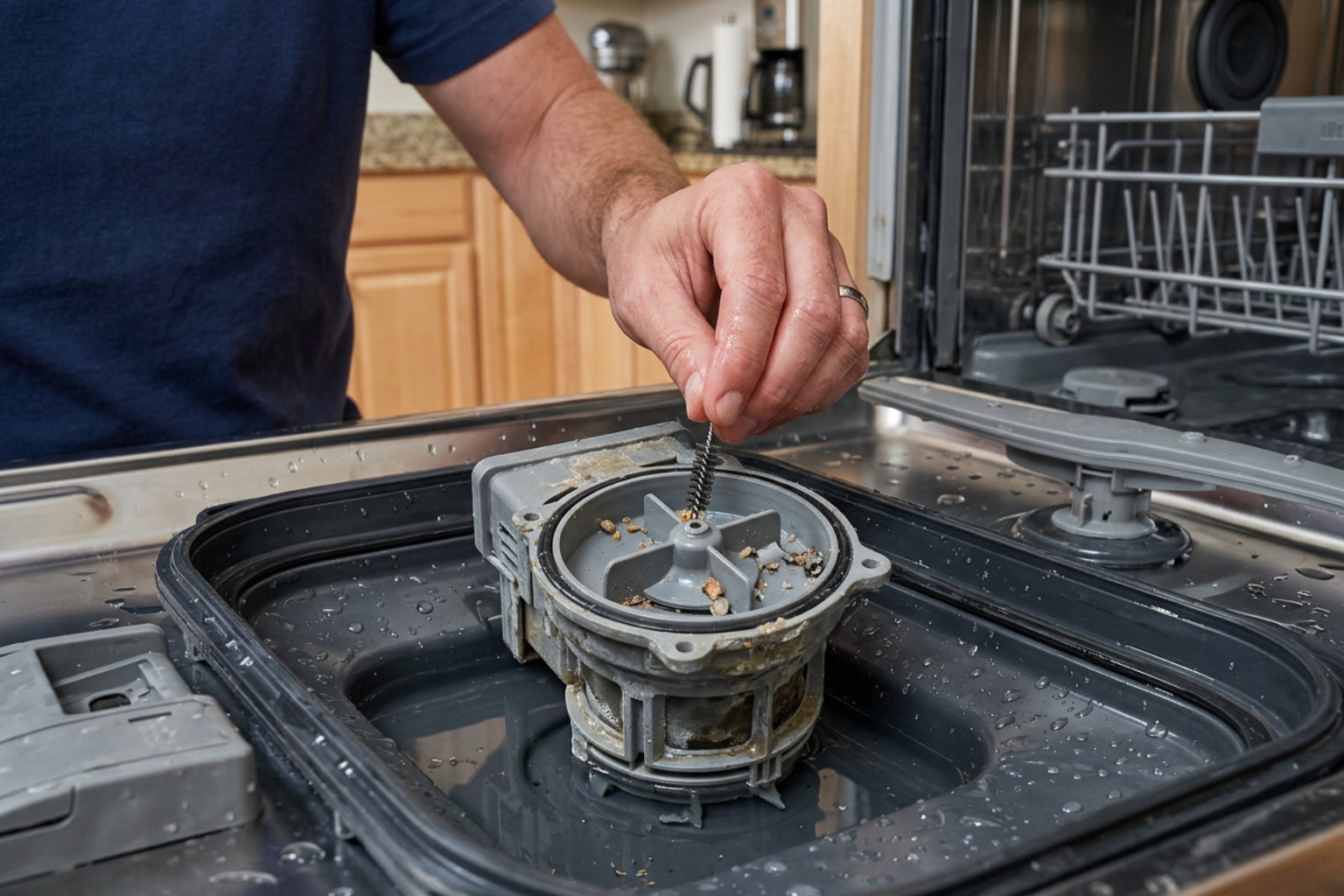
Clearing trapped debris from the filter cup and pump intake is a straightforward task that resolves a significant portion of dishwasher grinding noises. Follow this step-by-step procedure to service the sump safely:
- Disconnect Power: Safety comes first. Unplug the dishwasher from its under-sink wall outlet or switch off the dedicated circuit breaker in your electrical panel.
- Remove Lower Components: Open the dishwasher door fully, slide the bottom dishrack out of the tub, and set it aside. Unclip or unscrew the lower spray arm according to your manufacturer’s design and remove it to access the floor pan.
- Dismantle the Filter Assembly: Rotate the central cylindrical coarse filter counterclockwise a quarter-turn and lift it vertically out of the sump. Remove the surrounding flat stainless steel or plastic fine-mesh filter plate.
- Evacuate Standing Water: Use a soft kitchen sponge, rag, or small cup to soak up and ladle out standing wastewater from the sump well until the basin is dry.
- Protect Your Hands: Always put on heavy-duty, puncture-resistant protective work gloves before reaching into the sump recess. Broken glassware and ceramic shards often settle in the bottom well where they cannot be seen easily.
- Lever Off the Pump Cover: Many modern dishwashers feature a small, protective plastic pump cover securing the impeller chamber. Use a standard kitchen teaspoon as a lever: insert the tip beneath the edge of the clip cover and gently pry upward until the cover snaps free. Never use power tools or excessive force that could crack the plastic housing.
- Extract Debris and Test Impeller Rotation: Use a bright flashlight to inspect the exposed pump cavity. Use needle-nose pliers or a gloved finger to extract seeds, labels, glass chips, or foreign objects. Gently spin the exposed impeller blades with a blunt tool or your finger; the impeller should rotate smoothly with light, regular magnetic resistance, without crunching or binding. For a helpful visual breakdown of this process, watch this video guide on common dishwasher buzzing and grinding causes.
- Reassemble and Align Guide Arrows: Snap the pump cover securely back into place until you hear a distinct click. Position the flat filter plate back onto the tub base, insert the cylindrical filter, and rotate clockwise until the alignment arrows printed on the filter rim line up precisely with the base markers. Reinstall the lower spray arm and dishrack, restore electrical power, and run an empty 5-minute rinse cycle to confirm quiet operation.
Repair vs. Replace: Making the Right Decision for a Noisy Dishwasher
When simple filter maintenance and loading adjustments do not resolve a loud grinding, roaring, or screeching sound, you are likely facing a mechanical failure within the motor or pump assembly. Deciding whether to repair or replace the unit depends on the age of the machine, the estimated part costs, and the overall condition of the appliance.
- The 8-Year Age Rule: The average operational lifespan of a built-in residential dishwasher is between 8 and 12 years. If your noisy machine is under 5 years old, investing in a replacement wash circulation pump, water inlet valve, or drain motor makes clear financial sense. If the appliance is over 8 years old and requires an expensive motor and sump replacement, investing those funds into a modern, energy-efficient model is generally the more cost-effective choice.
- Repair Economics and Inverter Technology: Replacing an individual drain pump or water inlet valve is a straightforward repair with modest component costs. Conversely, replacing an entire circulation pump motor assembly on an aging unit can represent a substantial portion of the appliance’s depreciated value. Newer dishwashers feature advanced brushless digital inverter motors, superior sound-deadening insulation wraps, and precision filtration that operate at whisper-quiet levels below 44 dBA.
- Professional Assessment: If you are unsure whether your appliance warrants a component rebuild or a complete upgrade, consult our comprehensive category/dishwasher repair resources or schedule an in-home evaluation with our certified repair technicians across the Raleigh-Durham area.
Frequently Asked Questions About Noisy Dishwashers
Why does my dishwasher make noise intermittently during a cycle?
Intermittent noise usually occurs when hard foreign debris (such as a fruit seed, small bone fragment, or piece of broken glass) is trapped inside the sump well but is not completely jammed into the pump impeller.
As water circulation surges, changes direction, or enters hydraulic turbulence during different cycle stages, the vortex lifts the debris directly into the spinning impeller or chopper blade, creating a sudden burst of grinding or clicking. When the water pressure drops or pauses between wash and rinse intervals, the debris settles back to the floor of the sump basin, temporarily silencing the machine until the next high-pressure circulation cycle begins.
Why is the dishwasher loud even though no error code appears?
Electronic control boards in modern dishwashers rely on electrical sensors, float switches, and thermistors to detect functional failures such as heating element faults, drainage timeouts, water temperature errors, or water fill overflow conditions.
The control board cannot “hear” acoustic volume, nor can it detect physical friction. If a wash motor bearing has worn out and is emitting a deafening metallic roar, or if a plastic label is fluttering noisily against an impeller, the motor still draws standard electrical wattage and spins near its programmed RPM threshold. Because the electrical parameters remain within normal operating parameters, the control board assumes the cycle is running flawlessly and displays no fault code.
Is it safe to keep running a noisy dishwasher?
Running a dishwasher with an abnormal, loud mechanical sound is never advisable. What begins as a minor foreign obstruction in the sump can quickly chew up plastic impeller blades, score the pump housing, or jam the motor rotor.
A jammed motor continues to draw electrical current without spinning, leading to rapid overheating, motor winding burnout, or tripped electrical breakers. Furthermore, worn motor bearings can compromise the internal watertight shaft seals, resulting in hidden water leaks beneath the appliance that can rot kitchen subflooring and damage cabinetry before the issue is detected.
Conclusion
A noisy dishwasher disrupts the comfort of your home, but catching unusual sounds early prevents costly breakdowns and water damage. By practicing regular preventive maintenance—such as scraping large food debris off dinnerware before loading, peeling paper labels off jars, and rinsing your central filter assembly monthly—you can keep your kitchen running quietly and smoothly year after year.
If you have cleaned your filter, checked your spray arms, and still find yourself dealing with persistent grinding, humming, or roaring sounds, let our local team handle the diagnostic heavy lifting. Schedule professional service for a dishwasher making strange noises in Raleigh with our experienced technicians at iFix Appliances. We proudly provide dependable, long-term appliance repair solutions across Raleigh, Cary, Durham, Apex, Wake Forest, and the entire Triangle area.
0 Comments