
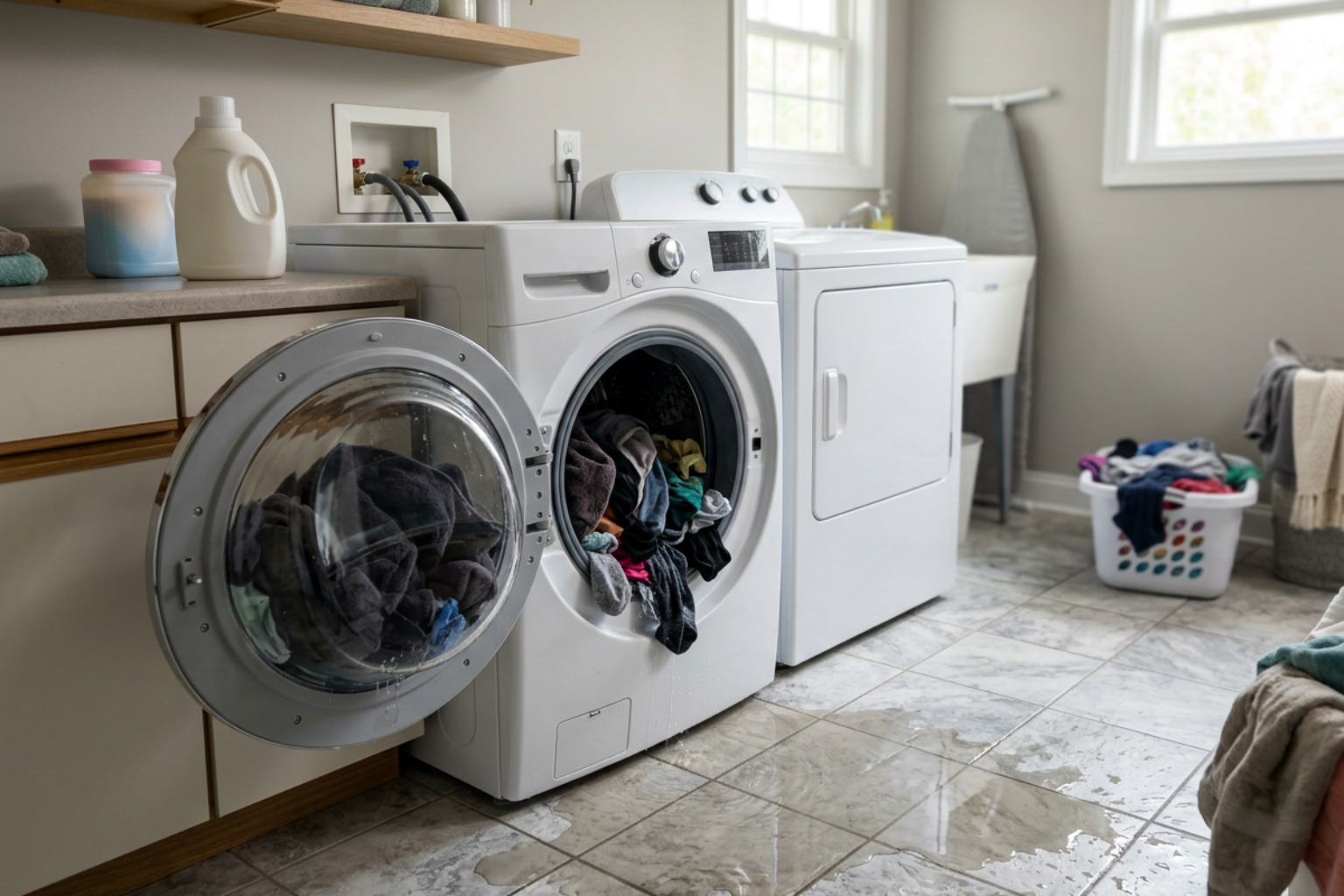
Why Your Bosch Front Loader Is Not Spinning
A bosch front loader not spinning is often protecting itself rather than failing completely. The most common causes are an unbalanced load, a clogged drain pump filter, or a kinked drain hose that stops the washer from draining before spin begins.
| What you notice | Likely cause |
|---|---|
| Clothes are very wet, but the washer finishes | Unbalanced load or reduced spin speed |
| Water remains in the drum | Clogged pump filter or blocked drain hose |
| Washer clicks but the drum does not turn | Door lock, drive belt, motor, or coupling issue |
| Drum turns a few times, then stops | Motor, wiring, speed sensor, or control fault |
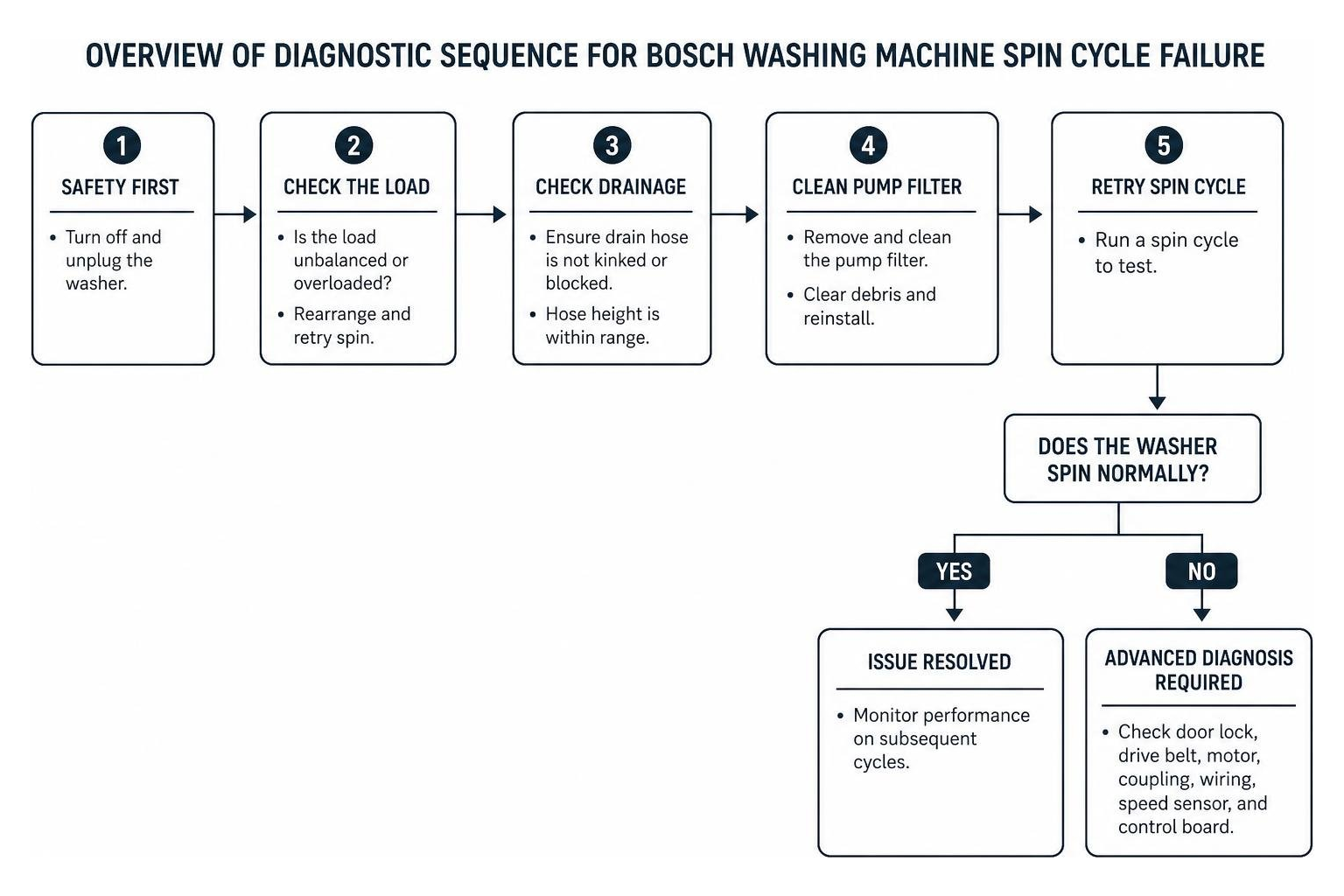
Before touching the filter, hose, or any internal part, turn the washer off and unplug it. Some checks are simple and safe for homeowners; others need a trained appliance technician.
I’m Vasyl Turetsky, Founder and Appliance Repair Specialist at iFix Appliances. I help Raleigh-area homeowners diagnose bosch front loader not spinning problems, from basic drainage clogs and load-balance issues to motor and control faults.
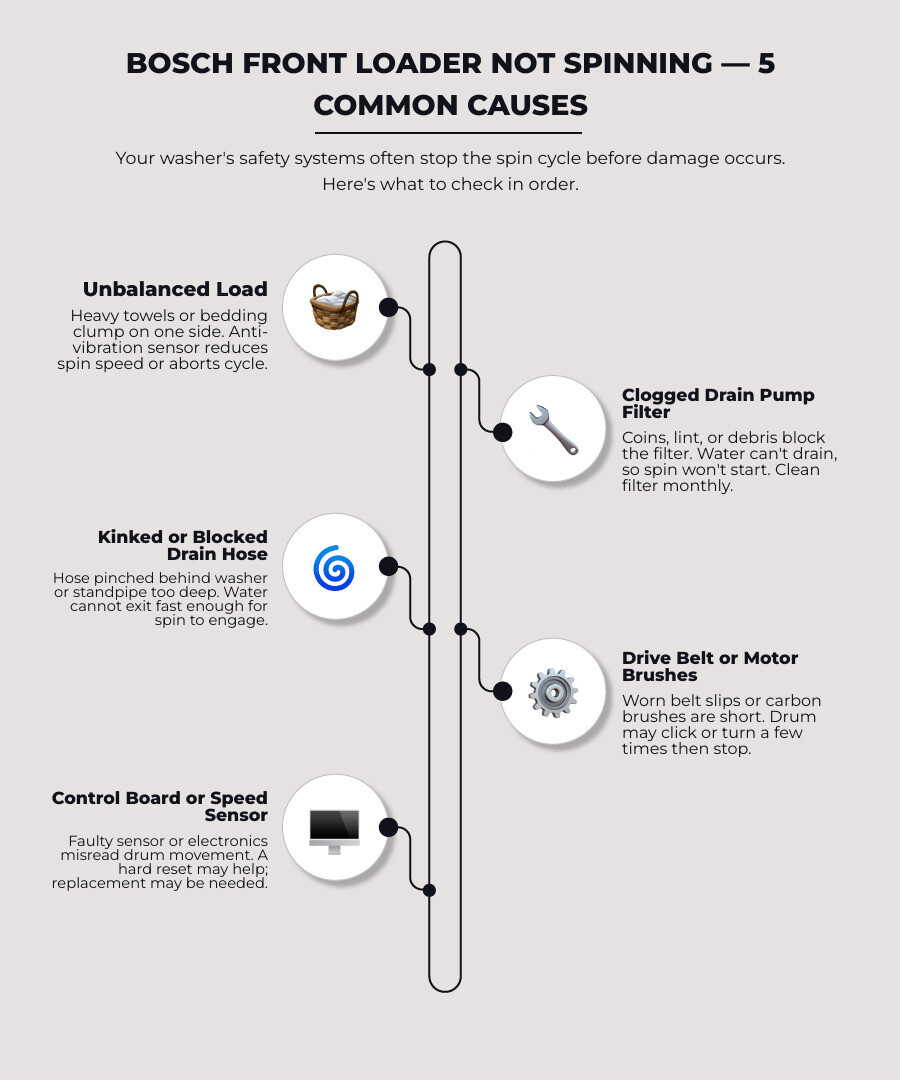
Primary Reasons for Your Bosch Front Loader Not Spinning
When your laundry comes out soaking wet or sitting in a pool of soapy water, it is easy to assume the worst. However, Bosch front-load washing machines feature built-in smart sensors and protective protocols designed to abort or limit the spin cycle whenever conditions could cause mechanical damage.
Modern Bosch washers constantly monitor internal balance, drain speed, and electrical resistance. If the drum cannot clear its water within a set timeframe, or if a heavy bundle of laundry threatens to shake the cabinet off its feet, the control board halts the spin process. Understanding these internal safeguards makes troubleshooting a bosch front loader not spinning much easier.
How Unbalanced Loads Cause a Bosch Front Loader Not Spinning Issue
An unbalanced laundry load is one of the most common reasons a front-load washer fails to reach high speeds. Bosch machines use sophisticated 3D sensor systems to detect weight distribution inside the stainless steel drum. When heavy items—such as bath sheets, heavy denim, or a thick comforter—clump together on one side, centrifugal force creates violent vibrations.
To protect the tub bearings, dampeners, and cabinet structure, the machine executes an anti-vibration protocol:
- Speed reduction: The washer attempts to re-distribute clothes by tumbling gently, then tries to spin again.
- Multiple retry attempts: If the weight remains uneven after several attempts, the washer limits its speed or skips the high-speed extraction phase altogether.
- No error display: The machine may complete the program without displaying an explicit error code, leaving you with soaking wet clothes that feel like they were never spun.
To prevent this, combine large and small items in every load. If you are washing a single heavy blanket or bath mat, toss in two smaller towels to give the drum balanced counterweights during high-speed rotation. Additionally, check that your washer’s leveling feet are locked firmly against the floor.
Drainage Hose and Siphon Spigot Blockages
A Bosch front loader will not enter a high-speed spin cycle if it detects water trapped inside the tub. Water adds significant weight, and spinning a full tub at 1200 or 1400 RPM would place extreme stress on the drive system.
Before suspecting an electrical or mechanical breakdown, verify the wastewater pathway:
- Drain hose kinks: Inspect the flexible hose behind the machine. If the washer was pushed too close to the back wall, the hose might be pinched or kinked, preventing full flow.
- Siphon spigot clogs: If your drain hose connects directly under a sink siphon or spigot, lint and grease build-up can choke the exit port.
- Standpipe insertion depth: Avoid shoving the drain hose too far down into a wall standpipe. Over-inserting can cause siphoning issues or backpressure, preventing smooth drainage.
Perform a bucket flow test to isolate hose blockages. Disconnect the drain hose from the wall pipe or siphon connection, lower the end into a large five-gallon bucket, and run a short “Drain/Spin” program. If water trickles out slowly or fails to discharge entirely, the obstacle lies inside the hose or drain pump.
How to Clean the Drain Pump Filter and Check Hoses
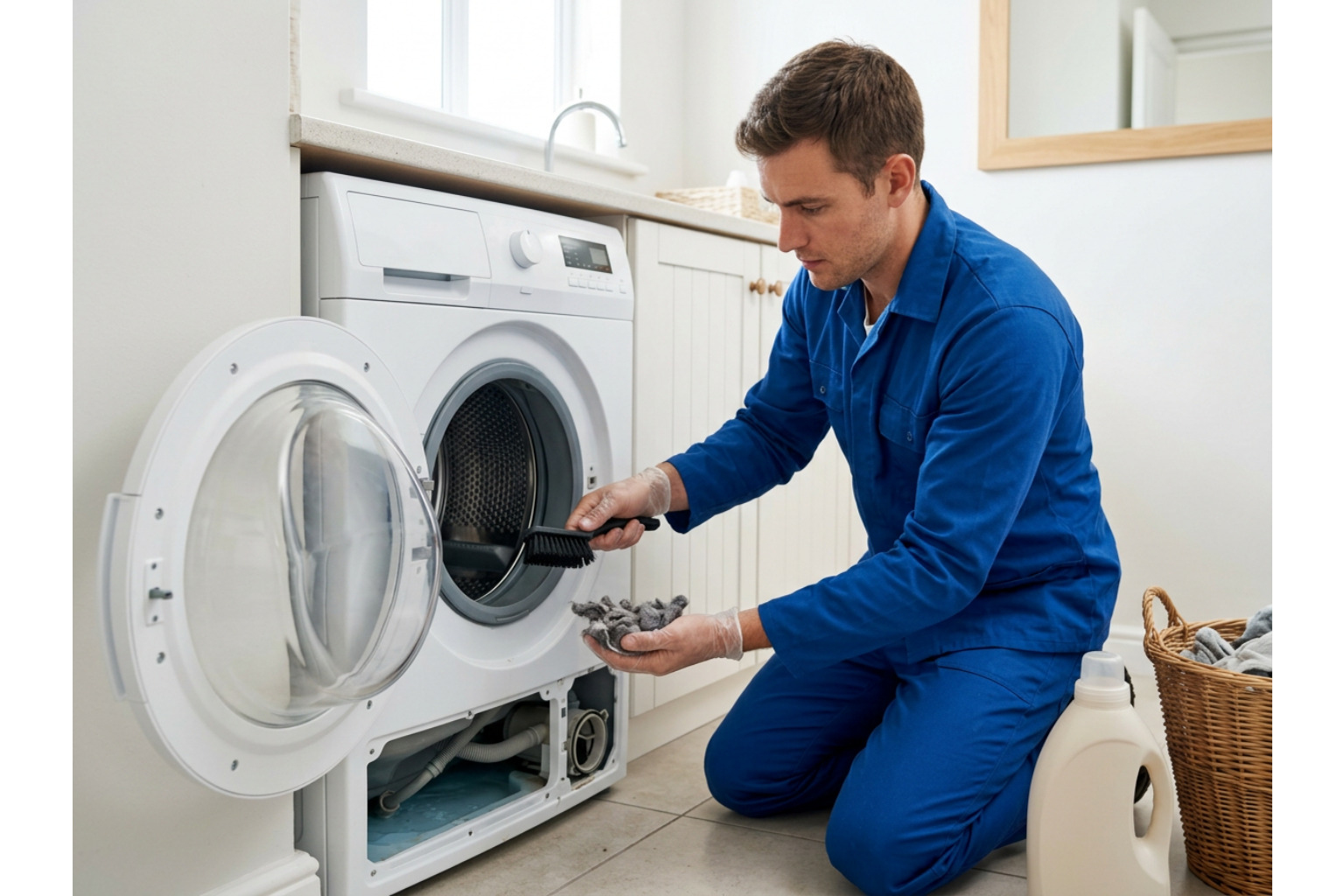
A clogged drain pump filter is the single most frequent culprit when a bosch front loader not spinning leaves standing water in the tub. Items left in pockets—coins, hairpins, keys, or stray socks—slide down between the door seal and drum, landing straight in the drain pump filter housing.
When debris jams the pump impeller wheel, the washer cannot evacuate water, automatically canceling the spin phase.
Step-by-Step Drainage Maintenance for a Bosch Front Loader Not Spinning
Cleaning your Bosch washer filter is a straightforward maintenance task that every homeowner can perform. Follow these steps to safely clear trapped water and debris:
- Safety first: Turn off the washer program and completely unplug the power cord from the wall outlet.
- Access the service flap: Open the small hinged access door located at the bottom front corner of your washer.
- Drain residual water: Place a shallow tray or old towels beneath the flap. Unclip the small emergency drain hose next to the filter cap, pull off the plug, and let trapped water drain completely into a small container.
- Unscrew the pump filter: Carefully turn the main pump cover counterclockwise. Unscrew it slowly to control any remaining trickle of water. Never force the filter handle with a wrench, as plastic threads can snap easily.
- Clear foreign objects: Remove coin debris, buttons, or lint caught inside the chamber. Reaching into the housing, use your fingers to check that the pump impeller wheel spins freely and isn’t jammed by thread or string.
- Reinstall and leak test: Screw the filter cap back into place tightly. Before running a cycle, perform a leak test by pouring 1 liter (approximately 1 quart) of water directly into the detergent drawer dispenser. Check the bottom flap for drips to ensure a watertight seal, then select the “Drain” program.
Routine filter cleaning keeps your pump operating smoothly and prevents unexpected cycle interruptions. For a deeper breakdown of system maintenance, review this complete guide on Bosch Front Loader Not Spinning Properly. If drainage problems persist despite a clean filter, professional Washer Repair may be necessary to inspect internal pump wiring or replace a burned-out drain motor.
Diagnosing Mechanical and Motor Problems
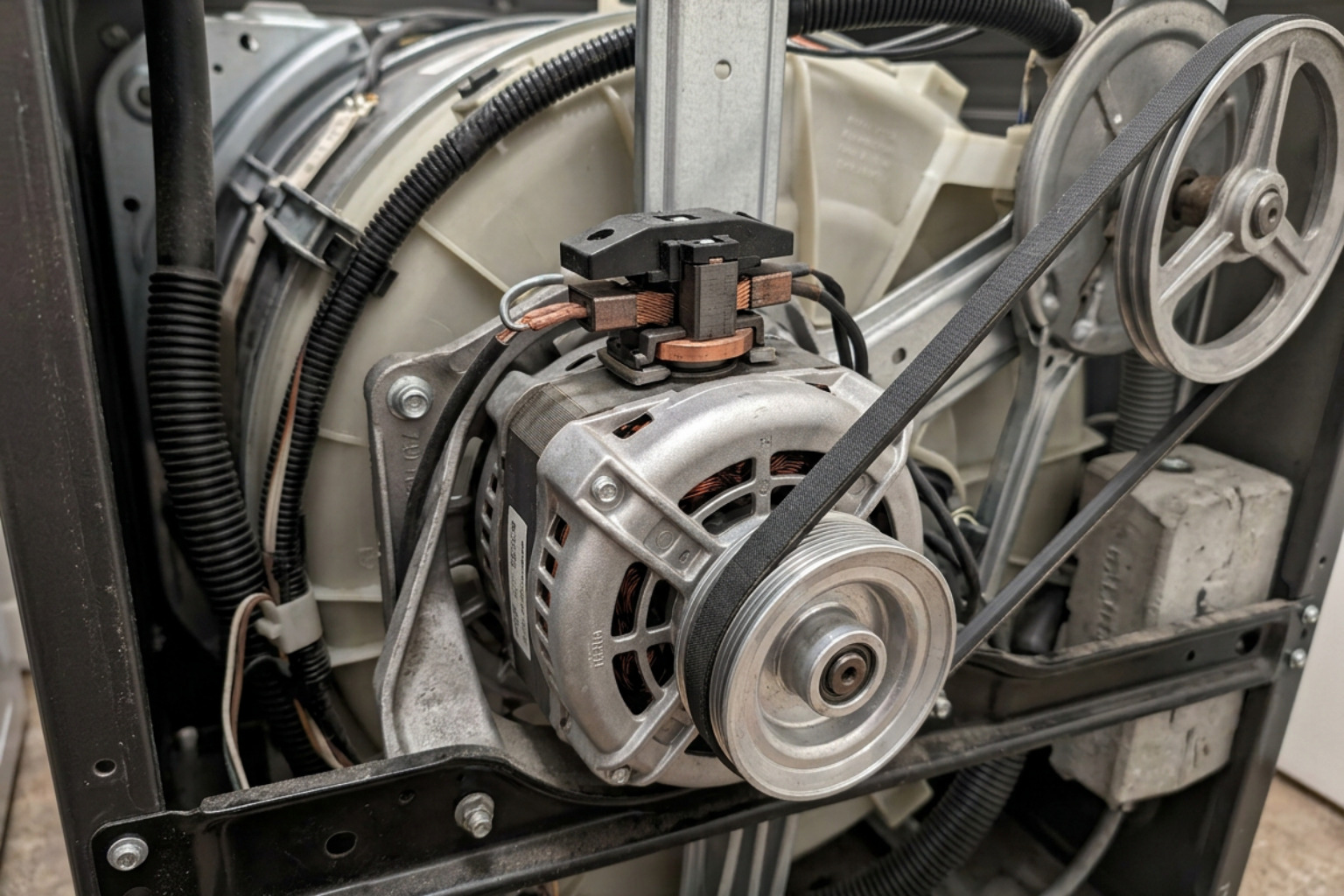
If your machine drains completely and balances its load perfectly yet still refuses to spin, the cause likely involves mechanical drive components or the electric drive motor itself.
What a Clicking Noise During Spin Means
Hearing a distinct clicking sound when the cycle switches over to spin provides valuable diagnostic clues. That clicking noise typically originates from internal switches or electrical relays trying to engage:
- Door lock assembly malfunction: As a safety rule, Bosch front loaders will not engage high-speed drum rotation unless the electronic door latch switch confirms the door is fully locked. A failing latch assembly clicks repeatedly as it tries to lock, aborting the spin sequence if connection fails.
- Worn motor carbon brushes: On traditional brushed motors, carbon blocks wear down over time. When brushes measure under half an inch in length, they make intermittent contact with the motor armature, producing clicking relay noises without turning the drum.
- Drive belt slipping or snapped: If the motor hums or clicks and the drum stays motionless, the drive belt may have slipped off the motor pulley or snapped entirely.
- Motor coupler failure: A worn drive coupler can prevent power transfer from the motor to the transmission, leaving the tub stationary despite motor activation.
If your appliance exhibits these warning signs, review our article on 5 Signs Your Washer Needs Repair and How to Fix It Fast in Raleigh to pinpoint failing mechanical parts. Additional official hardware guidance can also be referenced through the Bosch Washer Troubleshooting Guide.
Testing Drum Movement and Motor Windings
You can perform a quick manual test to isolate motor or bearing failure:
- Turn off the machine and open the door.
- Spin the inner stainless steel drum by hand.
- It should rotate smoothly with minimal resistance.
If manual rotation feels extremely stiff, produces a grinding metal-on-metal noise, or allows the inner drum to wobble vertically relative to the outer tub, the rear tub bearings have likely worn out. Replacing factory-pressed tub bearings on older front loaders often requires replacing the entire tub assembly.
When a washer drum rotates only a few times (1-2 seconds) before shutting off, an electrical motor fault is often responsible. Motor failure can stem from missing electrical phases, tachometer speed sensor faults, or shorted coil windings caused by prior motor jams. Appliance technicians test motor health by disconnecting power and placing a multimeter across motor terminals (measuring resistance across U-V, V-W, and W-U terminals) to confirm balanced coil resistance. You can read more about short rotation symptoms in this technical resource on Bosch Motor Short Rotation Issues.
How to Reset a Bosch Washing Machine Control Panel
Modern electronic control boards can occasionally freeze due to power surges, minor door latch interruptions, or transient electrical glitches. A simple hard reset clears minor software bugs and restores normal system operation.
Follow this reset procedure:
- Turn the cycle selector dial to the OFF position.
- Disconnect the power plug from the wall outlet (or trip the dedicated household circuit breaker).
- Leave the unit disconnected for 5 to 10 minutes to allow control board capacitors to discharge completely and clear the electronic door lock safety memory.
- Plug the power cord back into the wall outlet firmly.
- Close the washer door securely, select a standalone Spin/Drain cycle, and press Start.
If a hard reset clears the error and your machine spins normally, a simple system glitch was the cause. However, if the machine fails to spin again or immediately throws an error code, physical components require diagnostic inspection.
Frequently Asked Questions About Bosch Washer Spin Issues
Why is my Bosch washer leaving clothes soaking wet without an error code?
Your washer’s automated sensor logic adjusts or reduces maximum RPM settings based on detected unbalance, cycle options, or drain flow rates without triggering an explicit error code. Selecting options like SpeedPerfect shortens cycle length and total spin duration, which can leave heavy fabrics damp.
Additionally, partial drain pump blockages slow down water discharge; if the drum isn’t completely empty when the spin phase begins, the controller skips high speeds to prevent mechanical overload.
What should I do if my Bosch washer clicks and stops after draining?
A clicking noise followed by a complete stop usually points to a failing door lock mechanism, worn motor carbon brushes, or a snapped drive belt.
Unplug the washer and check whether the inner drum spins freely by hand. If the drum turns effortlessly without resistance, check the door latch assembly for physical wear or call a professional to inspect internal drive belt tension and motor brush condition.
When should I call a professional for Bosch washing machine repair?
You should seek professional assistance if:
- Basic drain filter clearing and hose kink checks fail to resolve the issue.
- The machine emits loud grinding or roaring sounds (indicating failed tub bearings).
- You suspect control board component failure, motor winding burnouts, or damaged wiring harness connections.
Detailed tips on evaluating repair service options are outlined in our guide on Washer Repair How to Find Local Service in 3 Easy Steps.
Conclusion
A bosch front loader not spinning doesn’t always signal a catastrophic failure. In many cases, cleaning the drain pump filter, clearing a kinked wastewater hose, rearranging an unbalanced bundle of wet towels, or performing a 10-minute control panel hard reset will get your appliance spinning smoothly again.
When DIY troubleshooting falls short—or when faced with failing motor brushes, bad drive belts, worn tub bearings, or faulty electronic controls—our team is ready to help. At iFix Appliances, we provide prompt, reliable, and transparent diagnostic and repair services across Raleigh, Cary, Durham, Wake Forest, Apex, Garner, Holly Springs, Morrisville, and surrounding Triangle communities.
If your washer is leaving laundry soaked, schedule expert washing machine repair in Raleigh, NC with our local specialists today!

0 Comments