
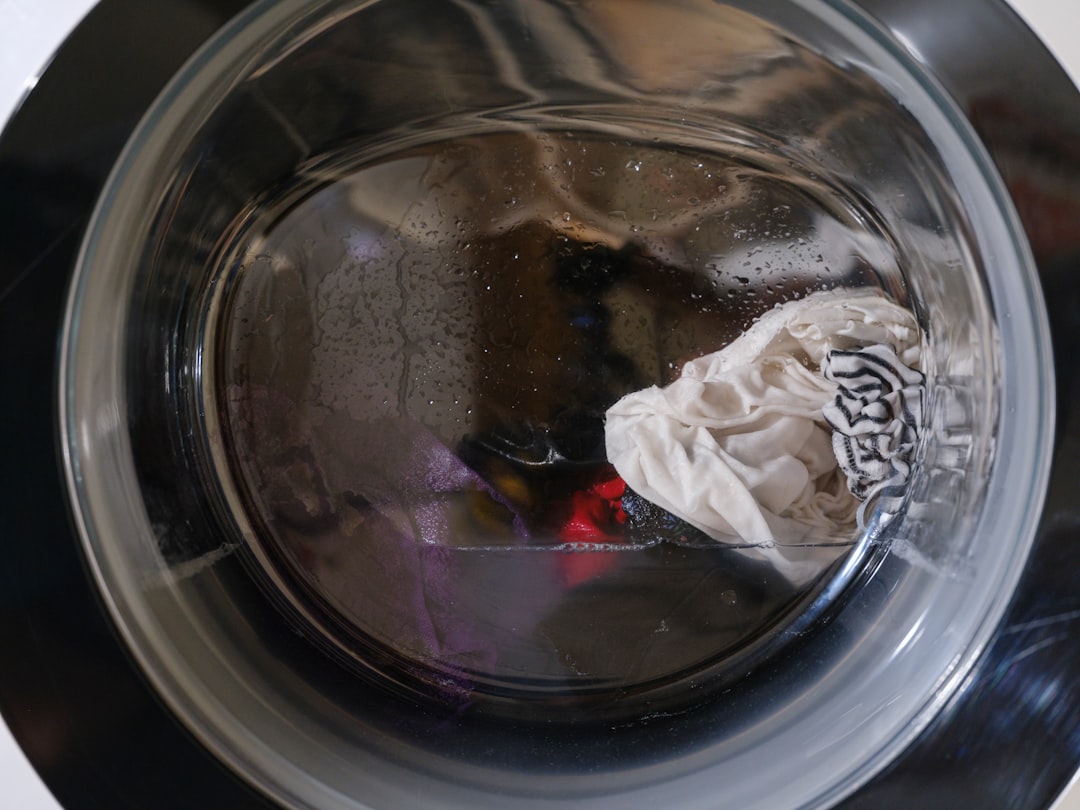
Why a Washer Not Spinning Leaves Clothes Soaked
A washer not spinning usually has a simple cause: an unbalanced load, a drainage problem, a lid or door lock issue, or a worn drive component. Start by checking whether water remains in the tub, redistributing the laundry, confirming the washer is level, and making sure the lid or door closes and locks fully.
| What you notice | Most likely issue |
|---|---|
| Clothes are soaked but the tub is empty | Load imbalance, low-spin setting, or drive problem |
| Water is standing in the tub | Clogged pump filter, drain hose blockage, or pump issue |
| Washer drains but never spins | Lid/door latch, shift actuator, belt, clutch, or motor coupling |
| Washer starts spinning, then stops | Unbalanced load or worn suspension parts |
| Washer shakes or bangs hard | Uneven load, unlevel machine, or weak suspension |
Many modern washers cancel high-speed spin to protect themselves when they sense water, vibration, or an unlocked door. That is frustrating, but it also narrows the diagnosis: the machine is often responding to a condition it considers unsafe, rather than failing without warning.
I am Vasyl Turetsky, Founder and Appliance Repair Specialist at iFix Appliances, and I have diagnosed countless washer not spinning problems across the Raleigh area. From clogged pumps and failed latches to worn belts and suspension parts, I help homeowners identify what is worth fixing before a small laundry problem becomes a larger repair.
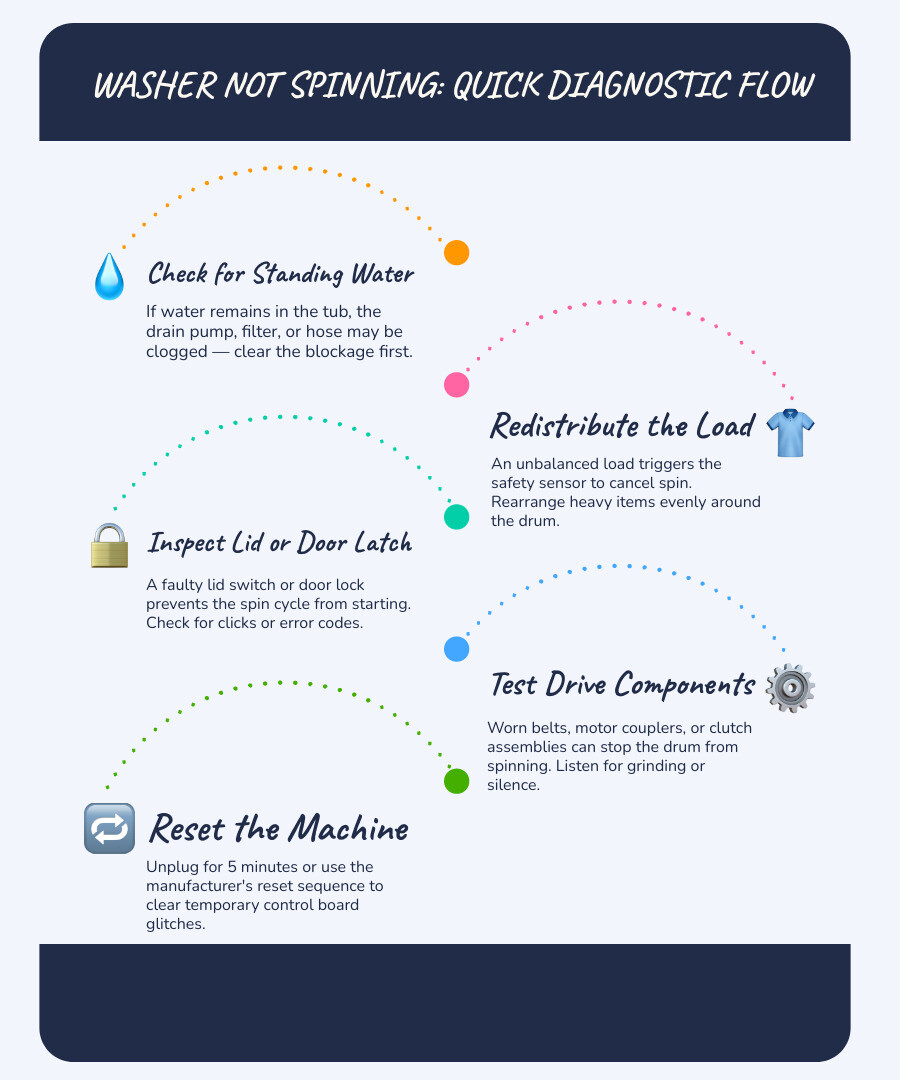
How to Tell If Your Washer Is Not Spinning Properly
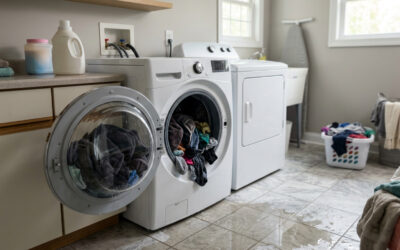
When your washing machine fails to finish a cycle, the symptoms are usually hard to miss. The most obvious sign is opening the lid or door at the end of a wash to discover heavy, soaking wet clothes sloshing in standing water. However, spin cycle problems do not always look like a tub full of water.
Sometimes, your machine completes its regular wash routine, drains out all the dirty water, but fails to reach the high-speed RPM required to extract moisture from heavy fabrics. You are left with soggy jeans or towels that drippingly weigh down your laundry basket. In other cases, you might notice your machine making a loud, deafening roar, excessive vibration, or violent banging sounds as it attempts to accelerate into spin mode before abruptly shutting down.
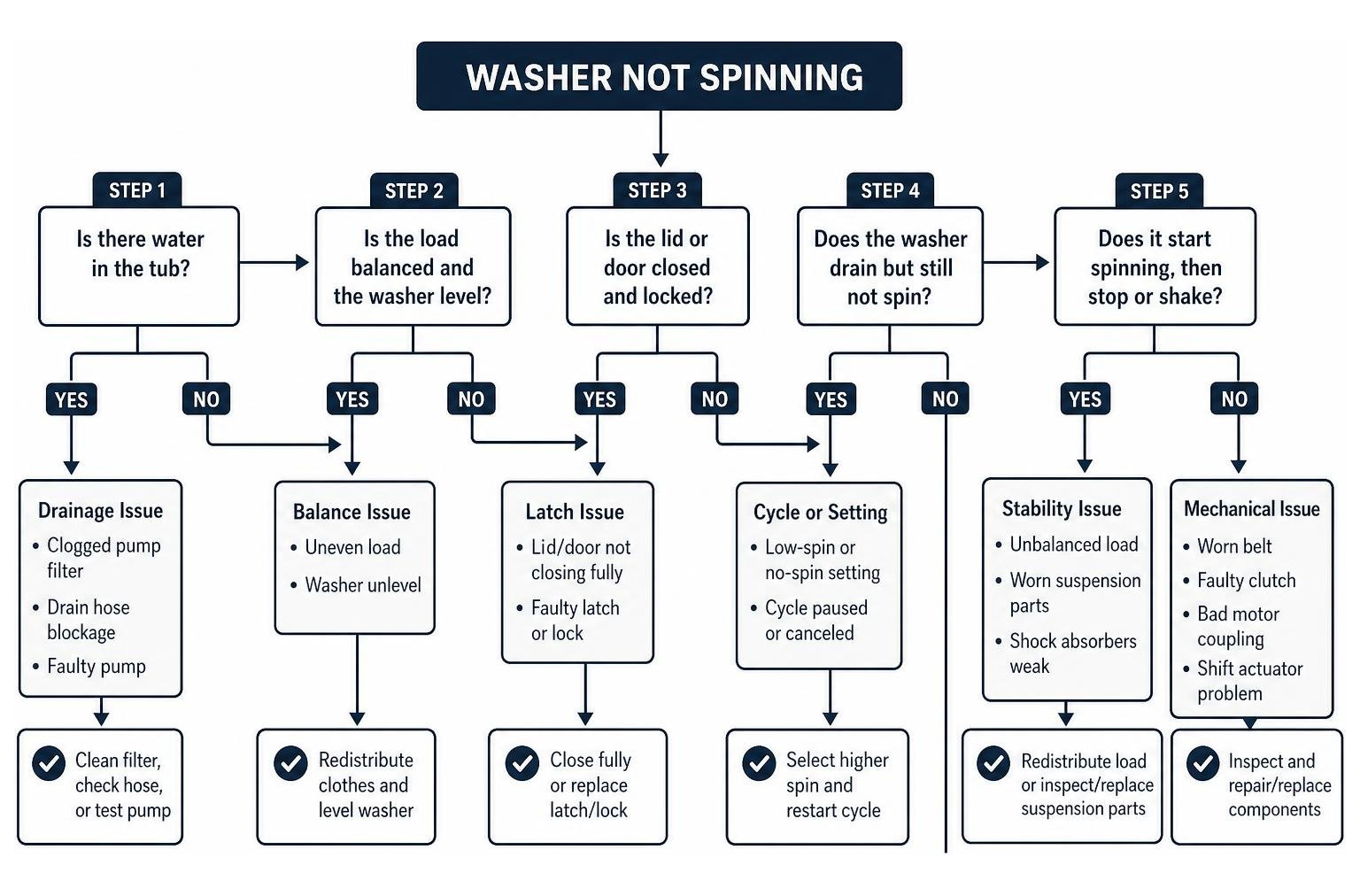
Modern high-efficiency machines rely on internal balance sensors and motor speed checkers. If the drum starts to wobble erratically or if the control board detects that water cannot evacuate fast enough, it intentionally halts or reduces spin performance as a safety cut-off. If you are noticing persistent laundry disruptions in the Triangle area, seeking expert Washer Repair can prevent minor mechanical strains from turning into catastrophic transmission or motor damage.
Top-Load vs Front-Load Washer Not Spinning Differences
While both styles of washing machines exist to clean clothes through rotation, top-loading and front-loading units rely on very different mechanical components and balance systems. Understanding how your specific design works is critical when diagnosing a washer not spinning.
- Top-Load Washers: Traditional top-load washers rely on a lid switch assembly to verify that the lid is securely closed before enabling high-speed agitation and spin. If this plastic switch breaks, snaps, or loses electrical continuity, the washer will fill and drain but will strictly refuse to spin. Direct-drive top-loaders utilize a rubber-and-plastic motor coupling or clutch assembly to transfer rotational power to the drive block, while newer high-efficiency top-loaders rely on a shift actuator to switch the transmission between agitation and spin modes. Furthermore, top-loaders suspend the inner wash tub on four suspension rods equipped with springs; if these rods stretch out or lose dampening tension, the machine will bang violently against the cabinet walls and abort high-speed spinning.
- Front-Load Washers: Front-loaders depend on a heavy-duty door latch assembly that locks the glass door completely tight to prevent water leaks. If the door lock mechanism or motor latch fails, the washer will refuse to start or spin at all. Front-load washing machines extract water through high-RPM centrifugal force while suspending the outer tub on heavy overhead springs and lower hydraulic shock absorbers. When these shock absorbers wear out or leak oil, front-load units vibrate excessively during high-speed extraction, prompting internal sensors to cut off power to protect the drum bearings. Additionally, front-loaders utilize dedicated drain pump filters (coin traps) at the bottom front of the cabinet, which clog far more easily than top-load plumbing systems.
Most Common Causes of a Washer Not Spinning
When an appliance technician approaches a machine that refuses to extract water, we evaluate failure trends. In fact, roughly 60% of all service calls for a washer not spinning turn out to be caused by either a drain pump clog or a dead door latch/lid switch assembly. Modern washing machines are highly defensive appliances; if a safety or drainage prerequisite is not satisfied, the control board actively prevents high-speed spinning to protect your home from flooding or mechanical destruction.
To help you understand where your machine’s failure might lie, here is a quick breakdown comparing common component issues, failure probabilities, and recognizable symptoms:
| Washer Component | Failure Probability | Typical Symptoms Noted |
|---|---|---|
| Drain Pump / Filter Clog | ~40% | Water remains in tub; spin cycle never initiates; hum from bottom panel. |
| Lid Switch / Door Latch | ~25% | Machine drains fine but basket remains completely still; door lock light flashes. |
| Motor Coupler / Drive Belt | ~20% | Agitates fine but won’t spin (coupler); or motor runs without basket turning (belt). |
| Shift Actuator / Tachometer | ~10% | Spins slowly; halts mid-cycle; leaves clothes wet; throws error codes. |
| Suspension Rods / Shocks | ~5% | Bangs violently; shakes off-balance; cuts out during speed ramp-up. |
Simple Non-Hardware Fixes for a Washer Not Spinning
Before taking apart your washing machine panels or pulling out a multimeter, always check for simple operational issues. Many non-spinning complaints are actually triggered by simple loading or chemical mistakes that take less than five minutes to fix.
- Rebalance an Imbalanced Load: Modern washers contain sensitive accelerometers and optical speed sensors. Washing a single heavy item—such as a single bath rug, heavy dog bed, or large blanket—causes all the saturated weight to cluster on one side of the basket. The machine tries to ramp up speed, senses the tub wobbling off-center, slows down, and attempts to redistribute the load. If it fails several times, it cancels spin mode completely. Fix this by pausing the cycle, opening the lid, and adding two or three damp towels to create equal balance around the drum.
- Eliminate Detergent Oversudsing: Using standard non-HE (High-Efficiency) detergent or over-measuring concentrated HE detergent generates massive suds pockets. Oversudsing creates heavy hydraulic drag against the rotating basket, tricking the control board into sensing a drive system lockup. Excess foam also prevents the water pressure sensor from detecting when water has evacuated. If you see a “SUD” or “Sd” error on your screen, run a cold-water Rinse & Spin cycle without adding any soap, and cut your detergent volume in half on future loads.
- Check Leveling Legs: If your washer rocks when pushed diagonally across its top corners, the appliance is unlevel. During high-speed extraction, uneven feet amplify minor load wobbles into severe shaking that triggers safety shut-offs. Adjust the threaded leveling legs at the bottom of the cabinet using a wrench until a spirit level confirms perfect balance in all directions.
- Inspect the Drain Hose: Ensure your external drain hose is not pinched behind the machine or kinked against the wall connection. Pay close attention to standpipe depth: the drain hose should be inserted exactly 4.5 inches into the standpipe, with the pipe height situated between 39 and 96 inches off the floor. If the hose is pushed down too far into the drainpipe, it can create a siphoning effect or trigger a 10-minute pump timeout that locks out spin performance.
If you want to walk through basic visual checks at home, you can review these Simple DIY fixes for washer spin issues to double-check your machine’s basic setup.
Mechanical Component and Hardware Failures
When simple loading and leveling adjustments fail to resolve the issue, internal mechanical components are usually worn out or damaged. Replacing these wearable hardware items restores full functionality to your drive train:
- Lid Switch and Door Latch Assemblies: On top-load models, the lid switch verifies that the lid is shut before allowing the motor to spin the basket. On front-loaders, an electromagnetic door lock secures the door latch handle. If the plastic actuator arm snaps or the internal switch loses electrical continuity, the washer will fill and drain normally but strictly refuse to turn the tub.
- Motor Coupling (Direct-Drive Units): Popular Whirlpool, Maytag, and Kenmore top-load direct-drive washers utilize a heavy-duty rubber-and-plastic coupler seated between the motor and transmission shafts. The drive coupler features sacrificial plastic fingers designed intentionally to snap under severe strain—preventing motor burnout if the machine is overloaded repeatedly. A broken motor coupling almost always means the washer was overloaded with heavy wet towels or blankets over time.
- Drive Belts and Pulleys: Many belt-driven top-loaders and front-loaders rely on a reinforced multi-ribbed drive belt connecting the motor pulley to the large tub drive pulley. Over years of operation, drive belts stretch, fray, slip, or snap entirely. If you hear the drive motor humming loudly during spin mode but the wash drum remains motionless, a broken or thrown drive belt is the prime suspect.
- Clutch Assembly and Shift Actuator: On top-loading machines equipped with a clutch, the clutch pad creates gradual friction to smoothly accelerate the wash basket from zero to high speed. When the clutch lining wears thin or becomes slicked with grease, the inner tub will turn sluggishly or refuse to spin under weight. Modern top-loaders use a shift actuator (or “splutch” assembly) fitted with an optical tachometer sensor. If the shift actuator fails to physically slide the drive gears into spin engagement, or if its speed sensor fails to read motor RPM, the control board aborts spin mode immediately.
- Hall Sensor / Rotor Position Sensor: Found primarily on Samsung and LG direct-drive washers, the Hall sensor monitors the precise speed and position of the brushless DC motor. If this magnetic sensor cracks or fails electrically, it triggers error codes (such as UE, LE, or 3C), leaving your drum motionless during spin cycles.
For a detailed breakdown on diagnosing internal hardware setups across multiple appliance styles, consult this comprehensive Diagnostic guide for top and front load washers.
Why Your Washer Drains But Won’t Spin or Stops Mid-Cycle
One of the most perplexing laundry scenarios occurs when you hear the drain pump run, watch every drop of water leave the drum, but discover that the tub refuses to start spinning. Alternatively, your machine might spin up smoothly for two minutes, only to stop abruptly mid-cycle and leave your clothes wet.
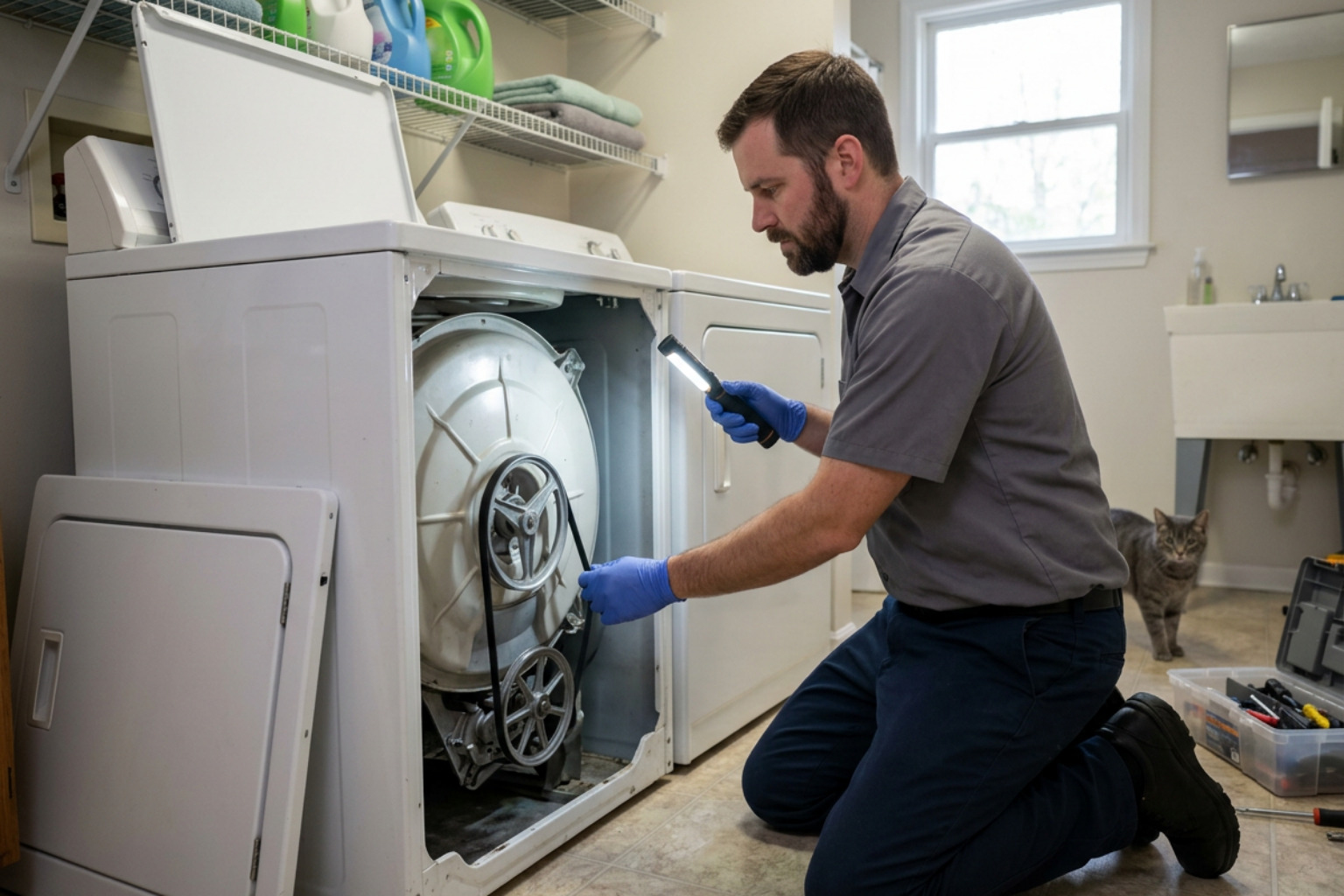
When a washer drains completely but fails to spin, the primary culprit is a component responsible strictly for basket rotation rather than water extraction. On direct-drive top-loaders, this classic “agitates and drains but won’t spin” symptom points directly to a broken motor coupling or a worn clutch assembly. The pump is driven directly by one side of the motor shaft while spin engagement requires physical transmission shifting—so the pump clears water effortlessly while the basket stays stationary.
On modern top-loaders equipped with vertical modular drive systems, a failing shift actuator is usually to blame. The actuator contains a small synchronous motor that physically shifts drive gears between wash agitation and high-speed spin. If its optical tachometer (speed sensor) cannot report accurate drum RPM back to the main control board, the board cuts power as a safety measure. The tub successfully empties, but high-speed extraction never begins.
If your washer stops mid-cycle during speed acceleration, your machine is likely experiencing an out-of-balance cut-off caused by failing suspension. Top-load washers rely on four corner suspension rods with internal dampening springs to center the tub. Front-load units rely on bottom hydraulic shock absorbers. When suspension rods or shocks lose dampening tension, the empty tub moves more than 1 to 2 inches when pushed. As the motor attempts to ramp up to high RPMs, the tub wobbles wildly, striking cabinet sensors that immediately freeze the spin cycle to prevent the machine from tearing itself apart.
To spot critical warning signs early and catch mechanical wear before total breakdown occurs, review our guide on 5 Signs Your Washer Needs Repair and How to Fix It Fast in Raleigh.
Step-by-Step Diagnostic and Reset Sequence
When your washer encounters a spin failure or gets stuck on an error code, performing a structured diagnostic sequence isolates software glitches from hard component failures:
- Perform a Hard Power Reset: Turn off the power switch and unplug the machine’s power cord from the wall outlet. Leave the unit completely unplugged for at least 5 minutes to clear stored capacitor charges across the main control board. On Maytag and Whirlpool units, you can drain residual capacitor charge quickly by unplugging the unit for 1 minute while holding down the Start button for 5 seconds. Plug the unit back in, re-engage power, and select a manual “Drain & Spin” cycle to evaluate whether the control board recovered from a temporary logic freeze.
- Access Diagnostic Mode and Read Stored Error Codes: Modern washers store fault histories that reveal why a cycle was cancelled. For example, Whirlpool and Maytag units allow you to enter field diagnostic mode by turning the cycle selection dial in a specific sequence (Counter-Clockwise once, Clockwise 3 clicks, Counter-Clockwise 1 click, Clockwise 1 click). LG washers display “UE” (Unbalanced Load) or “LE” (Motor Locked), while Samsung models report “UR” or “5C” codes. Cross-referencing active screen codes saves hours of guesswork.
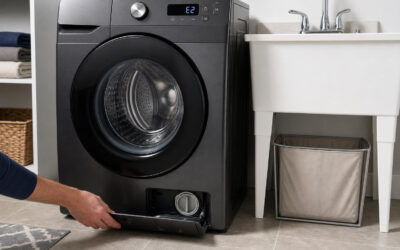
- Inspect the Drain Pump Filter and Drum Mechanics: On front-loading units, open the lower pump access panel, unscrew the debris filter, and clear away trapped coins, hairpins, or buttons. Manually rotate the inner wash basket by hand while the machine is off; if you hear grinding or metal scraping, check for bra underwires or nails jammed between the inner basket and outer tub. If the drum resists turning completely, rear tub bearings may be seized.
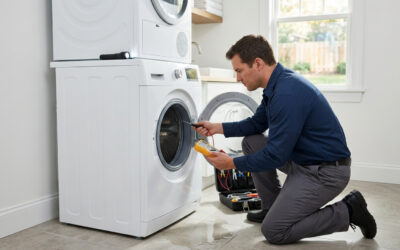
- Test Electrical Components with a Multimeter: Unplug the appliance from electrical power. Disconnect wiring harnesses to major safety components like the top-load lid switch or front-load door lock assembly. Set your digital multimeter to measure Resistance (Ohms). Depress the mechanical plunger on the lid switch; an operational switch should show nearly zero ohms (continuity). If the multimeter reads infinite resistance (open circuit) while the switch is actuated, the component is dead and must be replaced. Never jump wires across door locks or switches on modern units, as proprietary control signals can short-circuit and ruin the main control board!
For comprehensive brand-specific diagnostic code breakdowns and step-by-step electronic troubleshooting procedures, check out Understanding washer spin error codes.
Repair Costs and When to Call a Professional
While resolving an imbalanced towel load or pulling a stray coin out of a front-load pump filter costs nothing, replacing internal wear components involves component and labor fees. Knowing baseline industry costs helps you evaluate whether to repair your existing unit or invest in a replacement appliance:

- Lid Switch or Door Latch Replacement: Total professional repair cost ranges from $150 to $250. (Parts run $40–$80).
- Drive Belt Replacement: Total professional repair cost ranges from $125 to $200. (Parts run $20–$40).
- Motor Coupling Replacement (Direct-Drive Top Loader): Total professional repair cost ranges from $175 to $250.
- Clutch Assembly or Shift Actuator Replacement: Total professional repair cost ranges from $200 to $325.
- Suspension Rods or Shock Absorber Set Replacement: Total professional repair cost ranges from $175 to $300.
- Main Electronic Control Board Replacement: Total professional repair cost ranges from $300 to $500+.
When deciding whether to repair or replace, apply the 50% rule: if your washing machine is over 8 to 10 years old and the estimated repair cost exceeds 50% of the price of a brand-new appliance, purchasing a new unit is usually the smarter long-term financial decision. However, if your washer is under 7 years old and only requires a simple door latch, drive belt, or shift actuator, professional repair provides years of reliable service for a fraction of replacement costs.
When complex electrical testing, control board diagnostics, or heavy transmission teardowns exceed your comfort level, our team is always ready to step in. If you are located in Raleigh, Cary, Durham, Apex, Garner, or surrounding Triangle communities, follow our handy guide on Finding local washer repair service to get your laundry routine running smoothly again.
Frequently Asked Questions About Washer Spin Problems
How do I reset my washing machine after a spin problem?
To reset a washing machine after an aborted cycle, disconnect power by unplugging the unit from the wall outlet for 5 full minutes. While the unit is unplugged, press and hold the Power/Start button for 5 seconds to discharge residual electricity from the circuit board capacitors. Plug the washer back into the wall outlet, select a dedicated “Drain & Spin” cycle, and press Start. If an unbalanced load caused the interruption, rebalance laundry inside the tub before initiating the reset cycle.
Why does my washer stop spinning mid-cycle?
A washer stopping mid-spin is usually triggered by safety sensors detecting an severely unbalanced laundry load. When clothes tangle or pile up on one side of the tub, centrifugal force creates excessive vibration during acceleration. To prevent structural cabinet damage or motor burnout, the control board automatically halts spinning. If this happens continuously with evenly distributed loads, worn-out suspension rods (on top-loaders) or failing hydraulic shock absorbers (on front-loaders) are allowing the drum to move excessively and trip balance sensors.
How much does it cost to fix a washing machine that won’t spin?
The cost to fix a washer that won’t spin depends entirely on the failed component. Minor DIY fixes like clearing a clogged drain pump filter cost $0. Simple professional component replacements—such as a lid switch, door latch assembly, or drive belt—typically cost between $125 and $250 including labor. Drive train components like shift actuators, motor couplings, or suspension rod sets generally cost $175 to $325, while replacing a main electronic control board on premium front-loaders ranges from $300 to $500.
Conclusion
A washer not spinning brings laundry day to a sudden stop, but troubleshooting the issue does not have to be overwhelming. By systematically evaluating operational causes—such as load balance, detergent oversudsing, machine leveling, and drainage flow—you can resolve simple issues in minutes without spending a dime. When underlying component failures like broken door latches, worn drive belts, snapped motor couplings, or failing suspension rods are involved, taking timely action protects your motor and transmission from secondary damage.
When DIY checks do not resolve the issue or when you require fast, expert diagnostic assistance across Raleigh, Cary, Apex, Garner, Durham, Chapel Hill, Wake Forest, or Holly Springs, our experienced technicians at iFix Appliances are here to help. We provide honest diagnostics, upfront pricing, and long-lasting repair solutions to keep your home running smoothly.
For a complete look at maintaining your laundry setup, explore our Washing Machine Repair in Raleigh NC Complete Guide by iFix Appliances or reach out to our local team today to book your service appointment!

0 Comments