

When You Need to Fix a Dishwasher Near Me: What to Do First
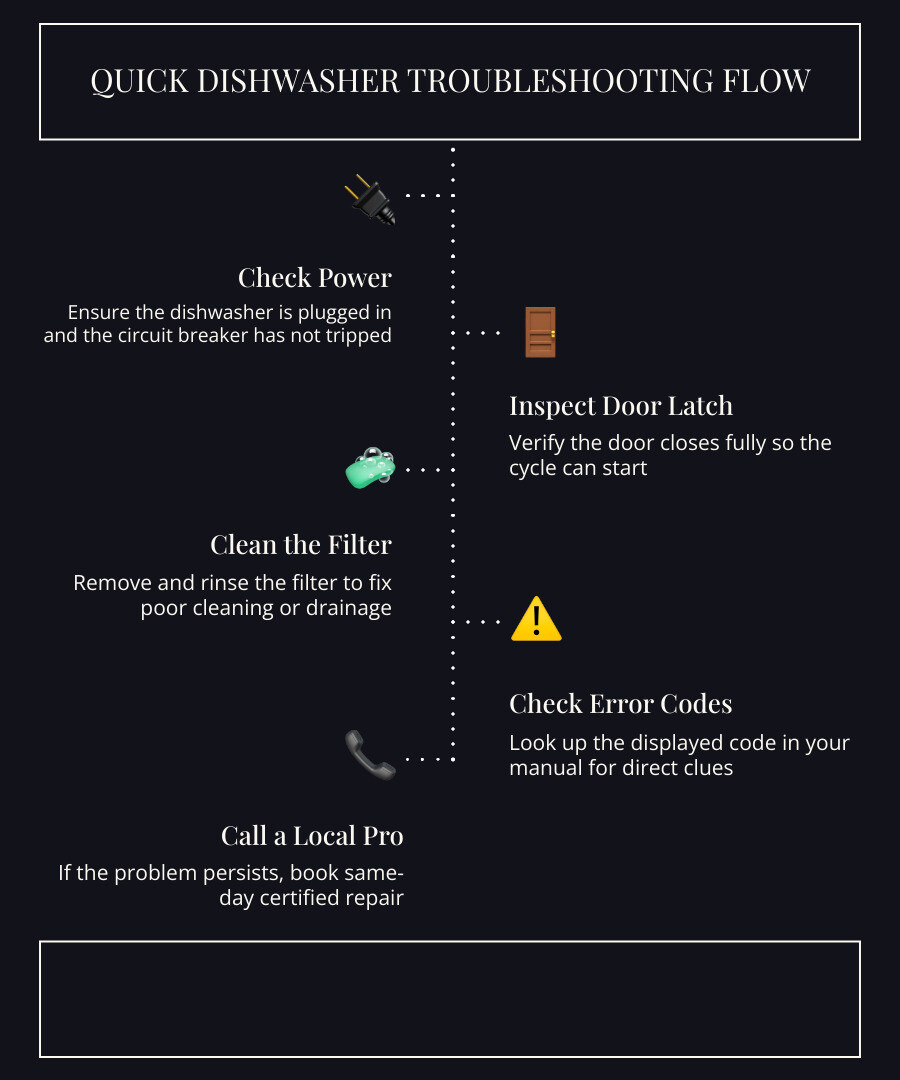
Need to fix a dishwasher near me fast? Here’s what to check before calling a pro:
- Check the power — make sure the dishwasher is plugged in and the circuit breaker hasn’t tripped.
- Inspect the door latch — a door that doesn’t close fully will stop the cycle from starting.
- Clean the filter — a clogged filter is one of the most common causes of poor cleaning and drainage issues.
- Check for error codes — look up the code in your manual; it often points directly to the problem.
- Call a certified local technician — if the issue isn’t obvious, same-day repair is usually available and often costs less than you’d expect.
A broken dishwasher has a way of making itself impossible to ignore. One morning it’s running fine. The next, there’s a puddle on your kitchen floor, a rack full of dirty dishes, and a to-do list that just got longer.
The good news? Most dishwasher problems — leaks, drainage issues, strange noises, dishes that come out still dirty — are fixable. And in most cases, a qualified local technician can diagnose and repair the problem in a single visit.
This guide walks you through the most common issues, what you can safely check yourself, what repairs typically cost, and how to find a reliable technician who won’t waste your time or money.
I’m Vasyl Turetsky, founder and appliance repair specialist at iFix Appliances, and I’ve helped hundreds of Raleigh-area homeowners fix dishwasher near me situations — from simple filter clogs to full pump replacements across brands like Bosch, Samsung, Whirlpool, and LG. Let’s help you figure out exactly what’s going on with yours.
Common Dishwasher Problems Homeowners Face
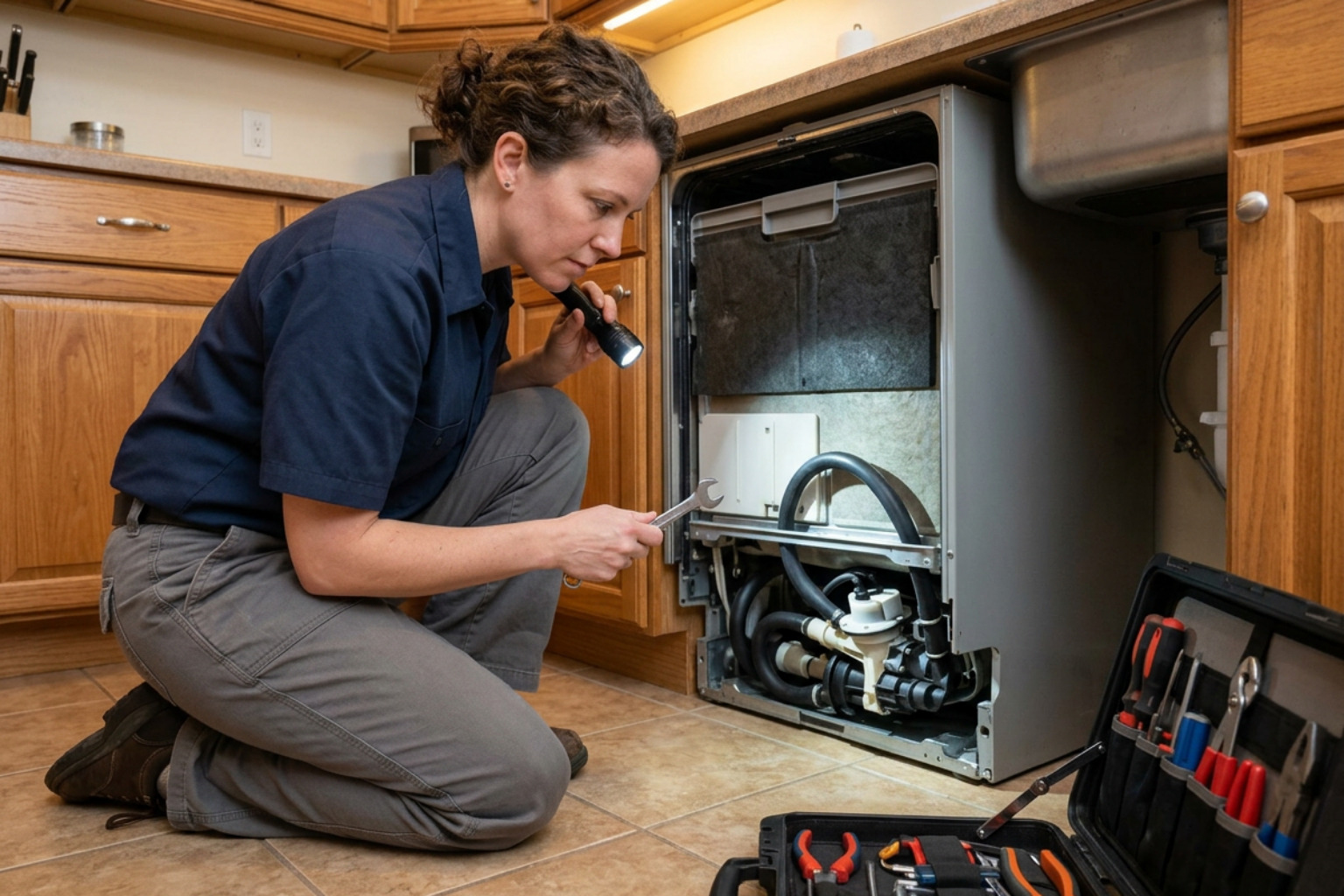
Every week, we receive calls from stressed homeowners throughout the Triangle Area who are staring down a mountain of dirty plates. While modern dishwashers are highly efficient, they are also complex machines. They rely on a precise balance of water pressure, electrical signals, and mechanical movement. When one piece of this puzzle fails, the entire cycle grinds to a halt.
In our years of servicing homes from Chapel Hill to Wake Forest, we have found that most dishwasher complaints boil down to a few primary issues. Some of these are quick, five-minute fixes, while others require a deeper dive into the appliance’s internal components.
- Poor Cleaning Performance: You open the door expecting sparkling glasses, but instead find cloudy surfaces, baked-on food particles, or a gritty residue. This is often caused by clogged spray arms, a failing heating element, or a worn-out wash impeller.
- Persistent Leaks: Water pooling on your hardwood or tile is an absolute emergency. Over time, even a slow drip can warp subfloors and cause costly structural damage. Leaks typically stem from cracked door seals, loose hose connections, or a malfunctioning water inlet valve.
- The Door Won’t Latch: If the door switch doesn’t register that the unit is safely closed, the control board will refuse to start the wash cycle. This can be caused by a broken plastic latch, a misaligned door hinge, or worn-out door tension springs.
- Unpleasant Odors: If your dishwasher smells like a swamp, food debris is likely trapped somewhere inside the machine. Common culprits include a dirty filter, standing water in the sump, or grease buildup along the door gasket.
- Dishes Come Out Wet: If your plates are soaking wet at the end of a cycle, your heating element, high-limit thermostat, or rinse aid dispenser may be broken.
Understanding these common failure points is the first step toward getting your kitchen back in order. Let’s look closer at two of the most frustrating issues: drainage failures and strange noises.
Why Is My Dishwasher Not Draining?
If you open your dishwasher and find a dirty lake of standing water at the bottom, you are not alone. This is one of the most common reasons homeowners search for a professional to fix dishwasher near me.
A dishwasher that won’t drain is usually dealing with a physical blockage or a mechanical failure. The process starts at the filter. Modern dishwashers have manual-clean filters that trap food particles. If you don’t clean this filter regularly, it will eventually choke the water flow, leaving dirty water trapped in the tub.
Beyond the filter lies the drain pump and the drain hose. The drain pump uses a small motor to force water out of the machine and into your home’s plumbing. If a hard object, like a popcorn kernel, a broken piece of glass, or a stray twist-tie, slips past the filter, it can jam the pump impeller. You might hear the pump humming or buzzing as it tries — and fails — to spin.
Another common culprit is the drain hose itself. This flexible plastic line runs from the bottom of your dishwasher to your sink drain or garbage disposal. If the hose gets kinked behind the machine, or if a thick plug of grease and food debris builds up inside it, water cannot pass through.
For a complete breakdown of why this happens and how to resolve it, check out our detailed guide on Dishwasher Not Draining Water Left in Bottom in Raleigh NC Causes Fixes.
What It Means When Your Dishwasher Makes Strange Noises
A healthy dishwasher should run with a predictable, rhythmic hum, punctuated by the gentle sloshing of water. If your machine starts squealing, thumping, grinding, or rattling, it is trying to tell you that something is wrong.
- Rattling or Clomping: This is often the simplest issue to resolve. It usually means a spray arm is hitting a tall plate, a baking sheet, or a stray utensil that slipped through the rack.
- Squealing or High-Pitched Whining: This sound typically points to worn-out motor bearings or a failing wash pump. Over time, water seals can degrade, allowing moisture to seep into the motor bearings. This strips away their lubrication and causes metal-on-metal friction.
- Grinding or Buzzing: A loud grinding sound often indicates that a hard object is trapped in the chopper blade area or the wash impeller. Many dishwashers have a small macerator blade designed to grind up soft food particles. If a hard object like a bone or fruit pit gets in there, the grinding sound can be alarming.
- Thumping or Bumping: If you hear a heavy thumping sound during the drain cycle, the drain hose may be violently shaking against your kitchen cabinetry as water is pumped through it. Securing the hose can quickly silence this annoyance.
Ignoring these sounds can turn a minor repair into a major headache. A pump with failing bearings will eventually seize completely, potentially damaging the main control board due to electrical overload. For more details on diagnosing these sounds, read our article on Dishwasher Making Strange Noises What It Means When to Call a Pro in Raleigh.
How to Safely Troubleshoot Before You Call to Fix Dishwasher Near Me
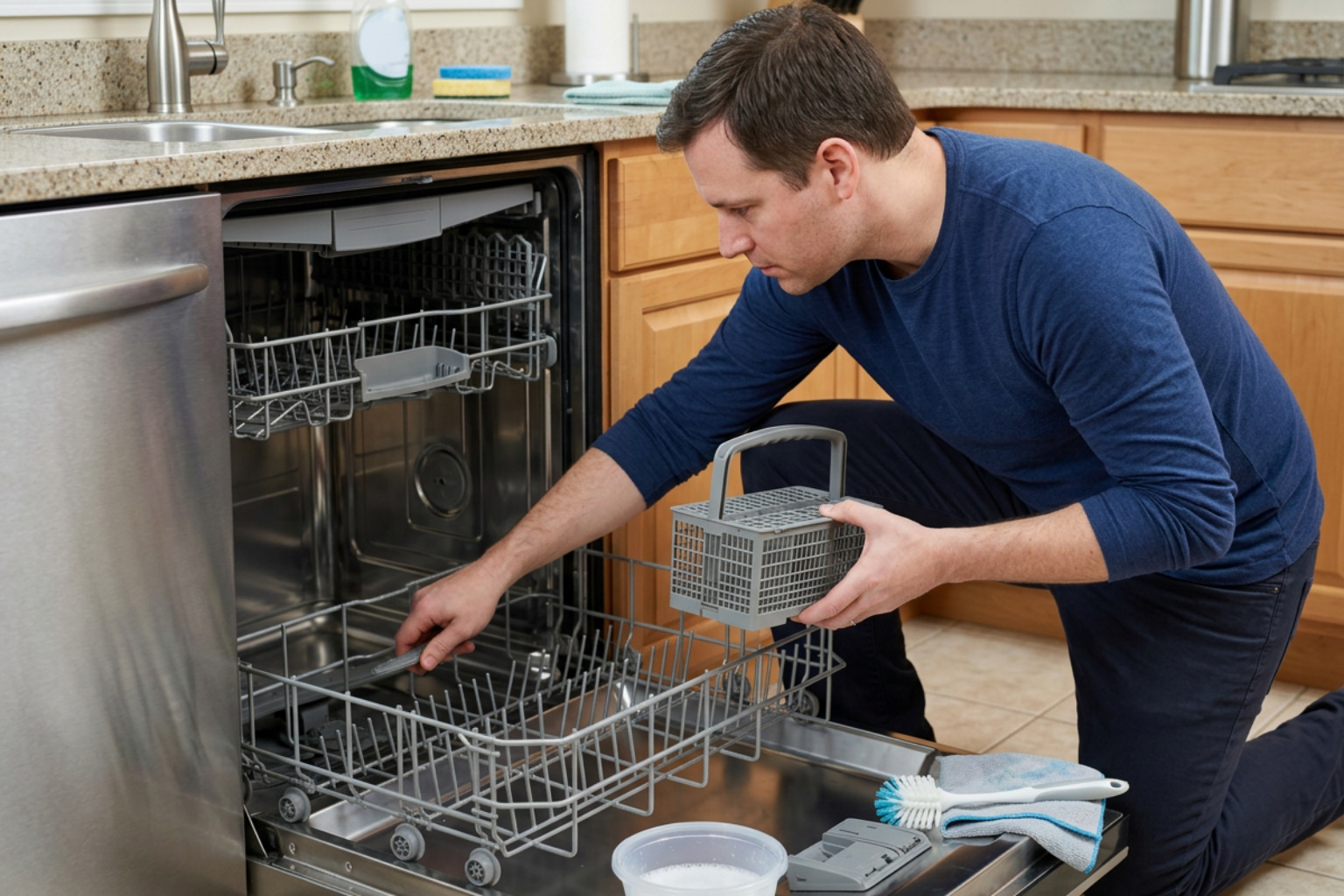
Before you pick up the phone to schedule a professional repair, there are several safe, simple troubleshooting steps you can perform yourself. Many “broken” dishwashers are actually just suffering from minor maintenance oversights that do not require tools or advanced technical knowledge to resolve.
Safety First: Before inspecting any mechanical or electrical component, always disconnect the power. You can do this by unplugging the unit from the wall outlet (usually located under the kitchen sink) or by switching off the dedicated circuit breaker in your home’s main electrical panel. Additionally, turn off the water supply valve, which is also typically located under the sink.
Once you have secured the appliance, start with these basic checks:
- Verify the Power Supply: It sounds obvious, but you would be surprised how many service calls end with simply plugging the machine back in. If the dishwasher won’t turn on or show any lights, check your home’s electrical panel to ensure the breaker hasn’t tripped. If you have a GFCI outlet under the sink, make sure it hasn’t tripped as well.
- Inspect the Water Inlet Valve: If your dishwasher starts a cycle but doesn’t fill with water, check the water supply valve under your sink. Ensure it is fully open. If the valve is open but no water enters, the water inlet valve on the machine may be clogged with sediment or electrically dead.
- Examine the Spray Arms: Take the racks out and inspect the plastic or metal spray arms. Spin them by hand to make sure they rotate freely without hitting anything. If the tiny water nozzles on the arms are clogged with mineral deposits or food debris, use a toothpick or a sewing needle to gently clear them out.
- Clean the Filter System: Located at the very bottom of the tub, the filter assembly usually twists out counterclockwise. Take it to your sink and scrub it gently with warm water, dish soap, and an old toothbrush. Rinse it thoroughly before locking it back into place.
Simple Steps to Fix Dishwasher Near Me Issues on Your Own
If your basic inspection didn’t solve the problem, here are a few advanced DIY steps that target specific, common failure points:
- Clear the Air Gap or Garbage Disposal Connection: If your dishwasher is struggling to drain, the issue might actually be in your sink’s plumbing. If you have an air gap (the small chrome cylinder next to your kitchen faucet), twist off the cap and check for food blockages. If your dishwasher drains directly into a garbage disposal, run the disposal for a few seconds to clear out any food waste. If you recently installed a new garbage disposal, ensure that the plastic drain plug inside the disposal’s inlet tube was knocked out during installation. If left inside, your dishwasher will not be able to drain at all.
- Run a Vinegar and Baking Soda Rinse: If your dishwasher has a stubborn odor or mineral scale buildup, sprinkle a cup of baking soda across the bottom of the tub and let it sit overnight. In the morning, place a dishwasher-safe bowl filled with two cups of white vinegar on the top rack and run a hot, empty cycle. The vinegar and baking soda will dissolve grease, hard water deposits, and soap scum.
- Clean and Inspect the Door Seal: A dirty door gasket is a common cause of minor leaks. Wipe down the rubber seal with a damp cloth and mild soap. Check for cracks, tears, or spots where the gasket has pulled away from its channel. If the rubber feels hard, brittle, or damaged, it needs to be replaced.
- Test the Float Switch: The float switch is a small plastic dome or cylinder located on the bottom floor of the dishwasher tub. As water fills the machine, the float rises. When it reaches a certain level, it triggers a switch to shut off the water. Gently press down on the float to make sure it clicks and moves up and down freely. If it is stuck in the “up” position by dried soap or a stray item, the dishwasher will refuse to fill with water.
What Does It Cost to Fix a Dishwasher?
When your dishwasher breaks down, one of the first questions on your mind is naturally the cost. Understanding appliance repair pricing helps you make an informed decision and avoid unpleasant surprises when the bill arrives.
Appliance repair costs generally consist of three main parts:
- The Diagnostic Fee (Service Charge): This covers the technician’s time, fuel, and expertise to travel to your home, inspect the machine, and pinpoint the exact failure. At iFix Appliances, we provide honest diagnostics and transparent, upfront pricing before any repair work begins.
- Labor Costs: This is the cost of the actual hands-on work required to disassemble the machine, replace the faulty components, reassemble it, and thoroughly test the unit.
- Replacement Parts: The cost of the physical parts needed to complete the repair. Original Equipment Manufacturer (OEM) parts are always highly recommended over cheap aftermarket alternatives, as they are designed specifically for your brand and carry manufacturer warranties.
To help you budget, here is a breakdown of what you can typically expect to pay for common dishwasher repairs in North Carolina:
| Dishwasher Component | Common Symptoms | Average Repair Cost Range (Parts & Labor) |
|---|---|---|
| Door Gasket / Seal | Water leaking from the front door area | $120 – $220 |
| Drain Pump | Water remains in the bottom of the tub | $180 – $320 |
| Water Inlet Valve | Dishwasher won’t fill or continuously fills | $140 – $250 |
| Heating Element | Dishes don’t dry; water doesn’t get hot | $170 – $290 |
| Main Control Board | Unresponsive buttons; completely dead unit | $250 – $450 |
| Wash Pump Motor | Loud grinding noises; spray arms won’t spin | $220 – $400 |
Note: These are general industry estimates. Actual costs can vary depending on your dishwasher’s brand, model complexity, and the specific parts required.
When to Repair vs. Replace Your Appliance
If your dishwasher is getting up there in years, you might wonder if it’s smarter to fix it or simply buy a new one. To make the right choice, we recommend using the 50% Rule.
If the cost of the repair exceeds 50% of the price of a comparable new dishwasher, and the machine is nearing the end of its expected lifespan, replacement is often the more economical choice in the long run. The average lifespan of a modern dishwasher is about 8 to 12 years. If your machine is 10 years old and needs a costly new main control board or wash pump, investing that money into a new, energy-efficient model makes perfect sense.
However, if your dishwasher is only a few years old, or if the repair is a simple fix like a new door seal, water valve, or drain pump, a professional repair is highly cost-effective. It keeps a heavy appliance out of local landfills and gets your kitchen running again for a fraction of the cost of buying, delivering, and installing a brand-new unit.
If you are located in Cary or surrounding areas and need a professional, honest evaluation of your machine’s condition, you can rely on the team at iFix Appliances to give you a straight answer. Explore our Dishwasher Repair services to learn more about how we can help.
Finding Reliable Same-Day Dishwasher Repair Services
When your dishwasher breaks down, you don’t want to wait a week for a technician to show up. You need fast, local service from a company that values your time.
Finding a reliable local repair service doesn’t have to be a gamble. Look for companies that offer:
- Same-Day or Next-Day Availability: Appliance emergencies don’t wait, and neither should you. A quality local service will work hard to fit you into the schedule quickly.
- Fully Stocked Service Vans: A technician who arrives with a van full of common replacement parts can complete your repair in a single visit, saving you from living with a torn-up kitchen for days while waiting for shipping.
- Upfront, Flat-Rate Estimates: Avoid companies that charge by the hour without giving you a clear, written estimate first. You should always know exactly what the job will cost before any work begins.
- Local Office and Dispatch: Choosing a truly local business ensures faster response times and a deeper commitment to the local community compared to national referral networks.
How to Choose a Certified Technician to Fix Dishwasher Near Me
When you invite a service technician into your home, you want to know they are qualified, trustworthy, and insured. Here is what to look for when selecting an appliance repair professional:
- Licensing and Insurance: Never hire an uninsured handyman to work on major home appliances. If they accidentally damage your plumbing or cause an electrical issue, you could be left holding the bill. Always verify that the company carries comprehensive liability insurance.
- Factory Certification: Modern appliances are highly computerized. A certified technician undergoes regular training to stay up-to-date on the latest diagnostic software and repair techniques for major brands.
- Background Checks: Your safety and peace of mind are paramount. Choose companies that perform rigorous background checks and drug screenings on all their field employees.
- Workmanship Warranties: A reputable repair service stands behind its work. Look for companies that offer a clear warranty on both parts and labor. If the same issue returns shortly after the repair, they should come back and fix it at no additional cost to you.
For homeowners in Durham and surrounding communities looking for trusted, vetted professionals, you can check out local directories like Yelp’s list of the best 10 appliances & repair in Durham, NC to see how local providers compare.
Frequently Asked Questions About Dishwasher Repair
What brands of dishwashers do local technicians service?
Professional appliance repair technicians are trained to service a wide variety of brands. At iFix Appliances, we specialize in repairing all major household names, including:
- Standard Brands: Whirlpool, Maytag, GE, Frigidaire, and Kenmore.
- High-Efficiency and Modern Brands: Samsung and LG.
- Premium and European Brands: Bosch, KitchenAid, Miele, and JennAir.
Each brand has its own unique engineering quirks. For example, Bosch dishwashers are known for their quiet operation and advanced condensation drying systems, which require specialized diagnostic tools to service correctly. Samsung and LG units rely heavily on digital control boards and error code readouts. Choosing a technician who is experienced across all these platforms ensures an accurate diagnosis and a lasting repair.
How quickly can I expect a technician to arrive for a repair?
In most cases, we can schedule same-day or next-day service, depending on our current booking availability. We understand that a broken dishwasher is a major disruption to your daily routine, especially for busy families.
When you book a service appointment, we provide a clear, manageable arrival window so you don’t have to waste your entire day waiting around. Our technicians will also call or text you when they are on their way, giving you plenty of time to prepare for their arrival.
Are there guarantees or warranties offered on dishwasher repairs?
Yes. Any reputable appliance repair company should stand behind their work with a solid warranty. At iFix Appliances, we back our repairs with a comprehensive warranty on both the replacement parts and our labor.
Using genuine OEM parts allows us to pass along the manufacturer’s parts guarantees directly to you. If a replaced part fails within the warranty period, we will return to replace it at no charge, giving you complete peace of mind.
Conclusion
A broken dishwasher doesn’t have to mean washing your savings away or spending your evenings scrubbing plates by hand. By understanding the common signs of trouble, performing basic maintenance, and knowing when to call in the professionals, you can keep your kitchen running smoothly and affordably.
If you have tried basic troubleshooting and your dishwasher is still leaking, making strange noises, or refusing to drain, it’s time to bring in the experts.
At iFix Appliances, we are proud to serve homeowners throughout North Carolina, including:
- Location Raleigh
- Cary
- Durham (See top-rated pros on Yelp’s list of the best 10 appliances & repair in Durham, NC)
- Wake Forest (See local listings on the best 10 appliances & repair near Wake Forest, NC directory)
- Apex (Compare local specialists on the best 10 appliances & repair in Apex, NC list)
- Garner
- Chapel Hill (Explore reviews on the best 10 appliances & repair in Chapel Hill, NC page)
- Fuquay-Varina (Browse local experts on the best 10 appliances & repair in Fuquay-Varina, NC list)
- Holly Springs and Morrisville
We specialize in fast, reliable service, honest diagnostics, transparent pricing, and long-term repair solutions. We won’t sell you a repair you don’t need, and we’ll always give you an honest opinion on whether it’s smarter to repair or replace your machine.
Don’t let dirty dishes pile up on your counters. Contact our friendly local team at iFix Appliances today, or visit our main Dishwasher Repair page to schedule your professional diagnostic visit. Let us get your dishwasher back to doing what it does best!

0 Comments