
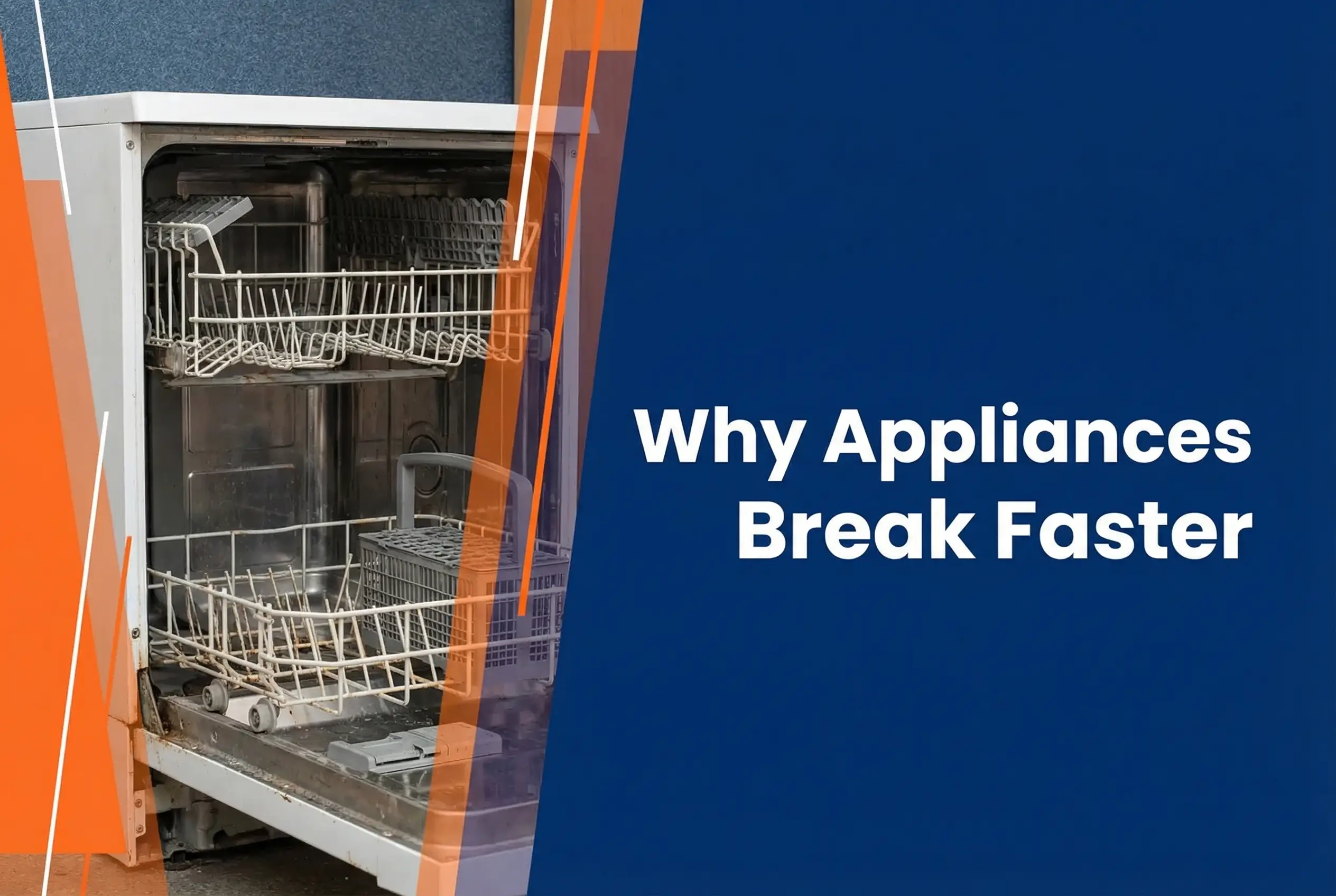
North Carolina is a great place to live. Mild winters, long summers, green landscapes, and a pace of life that feels balanced. But while the climate is comfortable for people, it can be surprisingly hard on home appliances.
Many homeowners in Raleigh, Cary, Apex, and surrounding areas notice something frustrating: washers, dryers, refrigerators, and HVAC-adjacent appliances seem to fail sooner than expected. Units that should last 10–15 years start acting up in year six or seven. Sometimes even earlier. This usually isn’t bad luck. In many cases, it’s the environment. Humidity, heat, and unstable power conditions all interact in ways that slowly wear appliances down. The damage often starts quietly corrosion, electrical stress, weakened insulation long before a machine stops working altogether. Understanding why this happens can help you prevent costly repairs, avoid premature replacements, and extend the life of your appliances.
How North Carolina’s Climate Affects Home Appliances
Appliances are engineered for general conditions, not regional extremes. While manufacturers test equipment for heat and moisture, real-world environments like the southeastern U.S. introduce combinations of stress that accelerate wear.
North Carolina presents three main challenges:
- High humidity for much of the year
- Extended periods of summer heat
- Frequent power fluctuations and storm-related surges
Each of these factors alone can shorten appliance lifespan. Together, they compound the problem.
Humidity: The Silent Appliance Killer
Humidity is often underestimated because it doesn’t cause immediate failure. Instead, it works slowly and invisibly. In North Carolina, indoor humidity frequently stays above ideal levels, especially during spring and summer. Even air-conditioned homes are not immune, particularly in laundry rooms, garages, and kitchens.
Over time, moisture in the air can lead to:
- Corrosion on electrical contacts and connectors
- Rust on metal components and frames
- Swelling or degradation of insulation materials
- Mold growth inside hidden compartments
Refrigerators and washers are especially vulnerable. Refrigerators constantly move air, which allows moisture to settle on coils and electronic boards. Washers operate in damp environments already, so excess humidity amplifies internal wear. It’s not uncommon for control boards or wiring harnesses to fail not because of age, but because moisture slowly compromised them.
Hard Water: How North Carolina’s Water Wears Appliances Down Over Time
In many parts of North Carolina, household water is considered moderately hard. While it may seem harmless, mineral-rich water quietly accelerates wear inside appliances that rely on water for daily operation. Hard water contains dissolved minerals, primarily calcium and magnesium. As water heats up or evaporates, these minerals are left behind, gradually forming scale and buildup inside internal components.
For example:
- Dishwashers develop scale on heating elements and spray arms
- Washers accumulate mineral deposits in drums, hoses, and inlet valves
- Refrigerators with ice makers experience restricted water flow and valve issues
- Water heaters lose efficiency as sediment settles at the bottom of the tank
This mineral buildup can lead to:
- Reduced heating efficiency
- Longer and less effective cycles
- Increased strain on pumps, valves, and sensors
- Premature failure of heating elements and water-related components
Much like heat stress, hard water damage rarely causes sudden breakdowns. Instead, appliances slowly lose efficiency. Cleaning performance drops. Cycles take longer. Energy use increases. Eventually, a key component fails, often earlier than expected.
In North Carolina homes, the effects of hard water are often amplified by high humidity and frequent appliance use, making regular maintenance and early attention especially important.
Heat Stress: When Appliances Work Overtime
North Carolina summers are long, and heat waves can push temperatures well into the 90s for extended periods. Appliances don’t just experience this heat they generate their own. When ambient temperatures rise, appliances must work harder to achieve the same results.
For example:
- Refrigerators run longer cycles to maintain safe food temperatures
- Dryers struggle to vent heat efficiently
- Dishwashers rely more heavily on heating elements
This additional strain increases internal temperatures, which can:
- Break down lubricants faster
- Cause thermal expansion and contraction of parts
- Weaken solder joints on control boards
- Shorten the lifespan of motors and compressors
Heat-related wear doesn’t usually cause instant failure. Instead, it reduces efficiency first. Then, performance drops. Eventually, something critical gives out.
Power Surges and Electrical Instability
Thunderstorms are common in North Carolina, particularly during summer. Even when lightning doesn’t strike your home directly, nearby strikes can cause voltage spikes that travel through power lines. Power issues don’t always appear dramatic. Many homeowners assume a surge only matters if something stops working immediately. In reality, repeated small surges can be just as damaging.
They may:
- Degrade electronic components over time
- Weaken control boards
- Cause sensors to fail intermittently
- Shorten the life of inverter-driven motors
Modern appliances rely heavily on electronics. While older machines were mostly mechanical, today’s models are essentially computers with motors attached. That makes them far more sensitive to power quality.
Why Failures Often Seem “Random”
One of the most frustrating aspects for homeowners is that appliance problems in this climate often feel unpredictable. A refrigerator may cool fine one day and struggle the next. A washer may stop mid-cycle without warning. A dryer might heat inconsistently. This happens because climate-related damage accumulates gradually. Moisture corrodes a connection. Heat weakens a component. A minor surge finishes the job.
From the outside, the failure looks sudden. Internally, it’s been building for years.
Appliances Most Affected by North Carolina Conditions
While all appliances feel the effects of climate, some tend to suffer more than others.
Refrigerators
Constant operation, exposed coils, and sensitive control boards make refrigerators particularly vulnerable to humidity and heat.
Washers and Dryers
Laundry rooms often have poor ventilation. Combined with moisture and heat, this creates ideal conditions for corrosion and motor stress.
Dishwashers
Steam and condensation can damage electronic panels and sensors, especially in humid kitchens.
Garage Appliances
Units stored in garages face the harshest conditions: heat, humidity, dust, and unstable power.
What Homeowners Can Do to Reduce Damage
While climate can’t be changed, its impact can be managed.
A few practical steps may significantly extend appliance lifespan:
- Keep indoor humidity between 40–55% when possible
- Ensure appliances have adequate ventilation
- Clean condenser coils and vents regularly
- Use surge protection for major appliances
- Address minor performance changes early
Preventive maintenance often costs far less than emergency repairs or early replacement.
Why Preventive Repairs Matter More in NC
In milder climates, small appliance issues can sometimes be ignored for months. In North Carolina, delays often make problems worse. A slightly noisy motor, a slow drain, or inconsistent cooling may indicate early damage from heat or moisture. Addressing these signs early can prevent secondary failures that turn minor repairs into major ones.
Final Thoughts
North Carolina’s climate isn’t extreme in a dramatic way. There are no constant freezes or desert-level heat. Yet the steady combination of moisture, warmth, and electrical instability quietly takes a toll on household appliances. When homeowners understand these forces, appliance failures stop feeling random. Patterns emerge. Prevention becomes possible. With proper care, timely maintenance, and awareness of early warning signs, most appliances can still reach or even exceed their expected lifespan, even in North Carolina’s demanding environment.
📞 Call iFix Appliances today or book online to get your oven heating like new — just in time for the holidays!
FAQs
Why do appliances seem to break faster in North Carolina than in other states?
It’s likely due to the combination of humidity, extended heat, and frequent power fluctuations. These factors accelerate wear on both mechanical and electronic components.
Does humidity really affect indoor appliances?
Yes. Even inside climate-controlled homes, moisture can accumulate in enclosed spaces, behind panels, and inside wiring compartments.
Are newer appliances more vulnerable to climate conditions?
In some ways, yes. Modern appliances rely heavily on electronic control boards, which are more sensitive to moisture and power instability than older mechanical systems.
Can surge protectors actually help appliances last longer?
They can. While they don’t prevent all electrical damage, they often reduce the impact of repeated minor surges that slowly degrade electronics.
Is it better to repair or replace appliances damaged by climate stress?
It depends on age, condition, and the specific failure. In many cases, early repairs are far more cost-effective than replacement.
Are garage-installed appliances a bad idea in North Carolina?
Not necessarily, but they require extra care. Better ventilation, insulation, and surge protection are especially important in garages.


0 Comments