
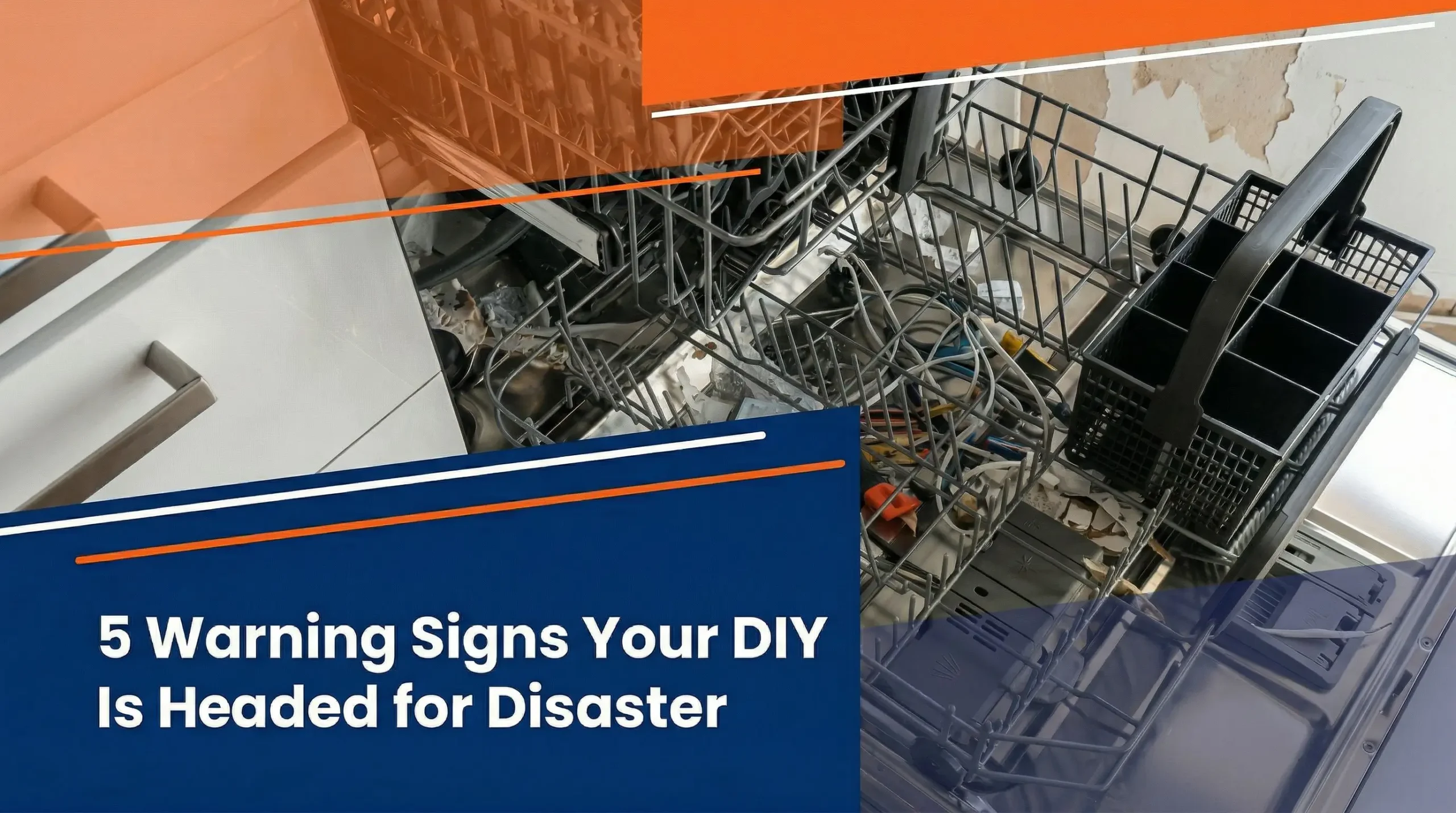
I get it. You pull up a YouTube video at 9 PM, watch someone fix a washing machine in four minutes, and think how hard can this be? After 15+ years repairing appliances across Wake County, I’ve seen this play out hundreds of times. Sometimes the DIY fix works great. But sometimes I get a call two days later from a homeowner in Apex who turned a $180 repair into a $900 nightmare or worse, created a real safety hazard in their home.
I’m not here to talk you out of handling small jobs yourself. A clogged dryer vent, a dirty fridge coil, a water filter swap those are fair game. But there are specific warning signs that your DIY repair is about to go sideways. Recognize them early and you’ll save yourself money, frustration, and in some cases, serious danger.
Here are the five warning signs I see most often in North Carolina homes and what to do when you spot them.
Warning Sign #1: You’ve Already Replaced the Same Part Twice
This is one of the most common red flags I see on second-opinion calls. A homeowner in Cary ordered a new water inlet valve for their washing machine, installed it, and two weeks later the same error code came back. So they ordered another one. Same result.
Here’s what’s actually happening: they’re treating the symptom, not the cause. Parts don’t fail in a vacuum. There’s almost always an underlying reason: a bad control board sending the wrong voltage, a wiring harness with a short, or a pressure issue burning through the same component repeatedly. Replacing parts without diagnosing the root cause is like swapping your car tires every month without fixing the alignment.
Before ordering any part, identify the specific error code and cross-reference it with your appliance’s service manual. Use a multimeter to test electrical components rather than just eyeballing them. If you’ve replaced the same part more than once, the diagnosis is wrong, and you need a trained technician to trace the actual fault.
Warning Sign #2: You Smell Gas, Burning Plastic, or Electrical Odors
I want to be direct: if you smell gas, burning plastic, or any electrical burning odor coming from your appliance, that is not a DIY situation. That’s a stop-what-you’re-doing, step-away-from-the-appliance situation.
I responded to a call in North Raleigh last year where a homeowner assumed a slight sulfur smell from their gas range was just a dirty burner cap. It wasn’t. It was a cracked gas valve, the kind of component that, if disturbed during a DIY attempt, can cause a serious gas leak. I’ve also seen melted wiring harnesses inside dryers that homeowners were poking around in with no electrical training. That’s a fire risk.
The rules here are simple: gas smell means evacuate and call your gas utility company before anyone else. Burning plastic or electrical odor means unplug the appliance immediately and don’t use it until it’s been inspected by a professional. These odors are your appliance telling you something is seriously wrong, not something to troubleshoot with a screwdriver.
Warning Sign #3: Your Appliance Keeps Tripping the Circuit Breaker
A circuit breaker trips for a reason. It’s a safety mechanism when your appliance draws more current than the circuit can safely handle, the breaker cuts power to prevent overheating and fire. If your refrigerator, dishwasher, or dryer keeps tripping the breaker, that’s an electrical fault that needs professional diagnosis.
I was on a service call near I-540 last spring where a homeowner had been resetting their dryer breaker a dozen times, figuring it was just a fluke. It wasn’t. The heating element had shorted against the drum housing, creating a direct path to ground every time the unit ran. Left unaddressed, that’s a house fire waiting to happen.
The most dangerous thing a homeowner can do in this situation is replace the breaker with a higher-rated one. That doesn’t fix the fault, it removes the only thing protecting your home from an electrical fire. Safe DIY checks include verifying no other high-draw appliances share the same circuit and inspecting the power cord for visible damage or melting. If those check out and the breaker keeps tripping, call a certified technician.
Warning Sign #4: You Reassembled It and Now Have Leftover Parts
This one generates a chuckle and the most frantic phone calls. You’ve taken apart your washing machine’s control panel or dishwasher door assembly, done what you needed to do, and now there’s a handful of screws, clips, and a mystery spring sitting on your counter.
Here’s the thing: appliance engineers don’t put extra parts in their designs. Every clip, spring, and bracket serves a purpose. Reassembling with missing components can cause vibration damage over time, allow water to contact electrical parts, prevent safety interlocks from engaging, or create wear that destroys other components. I had a homeowner in Apex bring me a dishwasher door spring she found rolling around her kitchen after her husband fixed a broken latch. Without it, the door slammed down on open and eventually cracked the plastic door liner.
If you have leftover parts, search YouTube for your exact model number plus “disassembly” to see where they go. Your appliance manufacturer’s website often has exploded diagrams in the service manual PDF. If you still can’t place them do not run the appliance. Call a technician to reassemble it correctly. Catching it now is far cheaper than the damage a poorly assembled unit can cause.
Warning Sign #5: Your Repair Involves the Sealed System or Refrigerant Lines
This is a hard stop with no exceptions. If your refrigerator isn’t cooling and your troubleshooting leads you to the compressor, condenser, evaporator, or any soldered refrigerant line stop. You are legally and practically required to.
Under the U.S. Clean Air Act, intentionally venting refrigerants like R-134a or R-410A is a federal violation. Beyond the legal issue, handling refrigerant without an EPA 608 certification and proper recovery equipment can cause frostbite, respiratory damage, and explosive risks in enclosed spaces. Sealed system repairs also require specialized brazing tools, vacuum pumps, and nitrogen purging equipment tools that aren’t in most homeowners’ garages.
Signs you’ve hit the sealed system: the fridge runs constantly but never gets cold after you’ve confirmed both fans are working, the compressor clicks on and off without the temperature dropping, or there’s an oily residue or unexpected frost on the refrigerant lines. At that point, call a certified appliance repair technician. This is not a repair anyone should attempt without proper credentials.
Safe DIY Checks You Actually Can Do Yourself
Not everything needs a technician. Here are appliance troubleshooting tips that are genuinely safe for most homeowners:
- Power cycle first. Unplug, wait 60 seconds, plug back in. More “broken” appliances than you’d think just need a reset.
- Replace water filters. A clogged refrigerator filter is the single most common cause of ice maker and dispenser complaints. Replace it every six months.
- Clean dryer vents. A clogged vent is the leading cause of dryer fires in the U.S. Clean it from the exterior at least once a year.
- Vacuum refrigerator coils. Dusty condenser coils reduce efficiency and cause cooling problems. A vacuum and coil brush handles this in minutes.
- Look up error codes. Modern appliances tell you what’s wrong. Google your model number and the error code before assuming the worst.
When It’s Time to Call the Pros iFix Appliances Has Raleigh Covered
If you’ve spotted any of these warning signs or you’d rather skip the guesswork entirely iFix Appliances is ready to help. Serving Raleigh, NC and surrounding areas, our certified technicians diagnose and repair all major appliance brands: refrigerators, washers, dryers, dishwashers, ovens, and more.
We offer fast scheduling, upfront pricing, and repairs backed by a satisfaction guarantee. No mystery charges. No leftover parts. Just your appliance working the way it should.
📞 Call iFix Appliances: (919) 438-0710
🌐 Book Online: www.ifixappliancesnc.com
📍 Service Area: Raleigh , NC and surrounding communities
Frequently Asked Questions
Is DIY appliance repair ever safe?
Yes for basic maintenance tasks like cleaning filters, clearing clogs, or replacing simple parts like door gaskets. Anything involving electrical faults, gas connections, or sealed refrigerant systems should always be handled by a certified technician.
Should I repair or replace my appliance?
A good rule of thumb is the 50% rule: if the repair cost exceeds 50% of what a new appliance costs, replacement often makes more financial sense. Age matters too; a 3-year-old fridge with a $300 repair is worth fixing; a 14-year-old washer with a $500 sealed system job probably isn’t.
Can DIY repair void my appliance warranty?
Yes, in most cases. Manufacturer warranties typically require repairs to be performed by an authorized technician. Opening the appliance and installing third-party parts can void your warranty entirely. Check your warranty documentation before attempting any repair.
What does professional appliance repair cost in Raleigh, NC?
Most standard repairs of a drain pump, heating element, or water valve run between $150 and $350 including labor. More complex repairs involving control boards or sealed systems can range higher. iFix Appliances provides upfront pricing before any work begins, so you know exactly what you’re paying.
Don’t Let a DIY Repair Turn Into a Bigger Problem
There’s no shame in knowing your limits. The smartest homeowners I work with across Wake County and Raleigh are the ones who tackle the easy stuff themselves and call in a pro when the warning signs show up. If any of these five situations sound familiar, iFix Appliances is ready to help you get it fixed right the first time.

0 Comments